Preview
 Send
Send Share
Share
 Details
 Guide
Guide

 Download
 Similars
 X-Ray
X-Ray Diaporama
 Q&A
Q&A Stats
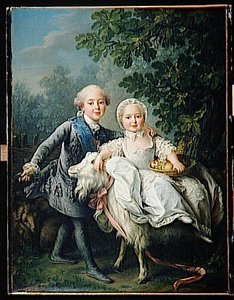
StatsBoy with a Black Spaniel

- 65.0 x 53.0 cm


 Read More
Giclée / Art Print
Museum-quality giclée or canvas print with fast production and flexible finish options. ( Buy Hand Made Painting Switch to Digital Image)




































Pick from our preset sizes that match the artwork's original proportions.

Type the width and the height you need, to fit your frame or your wall. A print can only be cut, never made bigger than the picture, so a size with a different shape loses a part of the image. We send you a digital mockup to approve before we print anything. The picture shown on this page does not show the real cut — only the mockup does.
Worldwide Delivery () in 2 weeks instead of standard 4/5 weeks. (3 November)

Free Worldwide Express Shipping

High-Quality Linen Canvas

Full Shipping Insurance

Customs Tax Refund Guarantee

True Color Matching Guarantee

100-Day Return Policy (Defects Only)

100% Money-Back Guarantee

Bulk Discount Offer
 Glass option is only available in size under 110 CM

Boy with a Black Spaniel
Giclée / Art Print
Reproduction Size
-


Total Price
$ 81
Questions & Answers
What does "Boy with a Black Spaniel" share with the rest of François Hubert Drouais's output?
"Boy with a Black Spaniel" shares with François Hubert Drouais's other works its Rococo style and the recorded themes: rococo elegance, aristocratic taste, childhood innocence, refined society, pet companionship, status symbol, french court portraiture tradition, drouais' signature miniature style.
What does the 1767 date of "Boy with a Black Spaniel" correspond to in François Hubert Drouais's career?
The 1767 date places "Boy with a Black Spaniel" in the Mature Period of François Hubert Drouais's development.
In what year was "Boy with a Black Spaniel" by François Hubert Drouais created?
"Boy with a Black Spaniel" dates from 1767. The date places the work within François Hubert Drouais's career and its era.
Artist Biography
The Master of Rococo Elegance
In the luminous and opulent atmosphere of mid-eighteenth-century France, few artists captured the essence of aristocratic grace as intimately as François Hubert Drouais. A leading portrait painter during the latter years of Louis XV's reign, Drouais possessed a singular ability to translate the refinement and charm of the French court onto canvas. His work serves as a breathtaking window into the Rococo era, a period defined by its pursuit of an idealized sense of beauty and a carefully orchestrated symphony of light and texture.
Born in Paris, France, Drouais was immersed in the world of fine art from his earliest years. He followed in the footsteps of his father, Hubert Drouais, receiving his initial artistic instruction from him. This lineage of portraiture provided a foundation of technical mastery that would later allow him to navigate the highest echelons of Parisian society. His talent was not merely confined to capturing likenesses; he had a profound ability to imbue his subjects with a psychological presence that transcends the centuries, making his portraits feel both personal and timeless.
A Canvas of Aristocratic Splendor
The rise of Drouais's popularity was inextricably linked to his increasing presence at the French court. As his reputation grew, his clientele expanded to include the French royal family, the nobility, foreign aristocracy, and the wealthy fermiers-généraux. His portraits became a fashionable necessity for the members of Parisian society and their favorites, who sought to immortalize their status through his exquisite brushwork.
Drouais's technique was characterized by a delicate layering of thin, translucent glazes of oil paint. This method allowed him to achieve a porcelain-like luminosity in the skin of his subjects, creating a soft, diffused lighting that seemed to emanate from within the canvas. His mastery extended beyond the human form to the very textures of the Rococo lifestyle:
- Luminous Skin Tones: The use of glazes to create a radiant, lifelike glow.
- Textural Realism: A tactile approach to depicting fine fabrics, silks, and lace.
- Atmospheric Light: The interplay of light and shadow to create depth and emotional resonance.
- Color Palette: A preference for the soft, muted tones characteristic of the era, such as beiges, grays, blues, and delicate pinks.
Legacy and Historical Significance
The historical significance of François Hubert Drouais lies in his role as a definitive chronicler of the Ancien Régime. Through his eyes, we witness the quiet dignity and understated elegance of figures such as Madame Jacques Benoit Loys and the Comte de Vaudreuil. His work does more than document historical individuals; it captures the very soul of a period defined by its pursuit of refinement.
His influence also extended through his family, notably to his son, Jean Germain Drouais, who continued the tradition of portraiture and historical painting. While the era of the Rococo would eventually give way to new artistic movements, the works of François Hubert Drouais remain enduring monuments to a lost age of French splendor, preserved in prestigious collections such as the National Gallery, London and the National Gallery of Art.

François Hubert Drouais
1727 - 1775 , France
Quick Facts
- Artistic Movement Or Style: Rococo
- Artists Or Movements Influenced By This Artist: ['Jean Germain Drouais']
- Artists Who Influenced This Artist: ['Hubert Drouais']
- Full Name: François-Hubert Drouais
- Notable Artworks:
- Madame Jacques Benoit Loys
- Portrait d'homme, dit autrefois Antoine Michaut
- Marie-Joséphine de Savoie
- Madame Drouais
- Portrait of the Comte de Vaudreuil
- Family Portrait
- Place Of Birth: Paris, France
- Date Of Birth: 1727
- Date Of Death: 1775
Related Articles

The Elegance of Rococo: A Journey Through Pastel Dreams and Ornate Splendor
Embark on an elegant journey through the Rococo era. Discover the delicate beauty of pastel masterpieces, the intricate artistry of 18th-century French masters, and how this era of ornate splendor continues to inspire timeless luxury in fine art collecting.
The Elegance of Rococo Portraiture: A Journey Through Grace, Soft Light, and Pastel Dreams
Discover the exquisite world of Rococo portraiture. Explore the delicate beauty of 18th-century French art, from pastel light to graceful asymmetry, and learn how to bring this era of elegance into your home through masterfully hand-painted oil reproductions.

Rococo's Radiant Legacy: 10 Masterpieces for Your Home |
Indulge in the elegance of Rococo! Explore 10 masterpieces by Fragonard, Boucher & Watteau. Discover the stories behind these iconic paintings and bring timeless art to your home with museum-quality reproductions from .

The Rococo Aesthetic: Opulence, Rebellion & the Pursuit of Pleasure in 18th-Century Art
Explore the opulent world of Rococo art! Discover its origins, key artists like Watteau & Boucher, and lasting influence on design. Expert insights for collectors & enthusiasts.

The Subdued Radiance of Pastel: Exploring Nuance & Emotion in Art
Explore the nuanced world of pastel art! Discover its history, techniques & emotional power with expert insights from OriginalUniqueArt.com. Find museum-quality reproductions and learn about collecting this delicate medium.