A Delicate Medium: The Historical Roots of Pastel
 Wikipedia: Pastel
A pastel (US: ) is an art medium that consists of powdered pigment and a binder. It can exist in a variety of forms, including a stick, a square, a pebble, and a pan of color, among other forms. The pigments used in pastels are similar to those used ...
The allure of pastel lies not merely in its visual softness, but in a fascinating history that intertwines artistic innovation with evolving societal tastes. Though the technique itself dates back to Renaissance sketches – Leonardo da Vinci himself experimented with dry coloring methods – it was during the 18th century that pastel truly blossomed into a celebrated medium. Before this period, pastels served primarily as preparatory studies, fleeting impressions captured before the more permanent application of oil paint. The shift towards recognizing pastel *as* the finished artwork reflects a broader cultural move away from the grand narratives and imposing scale of the Baroque era toward intimacy, grace, and a heightened sensitivity to color and light.
The very composition of pastel – powdered pigment held together by a minimal binder – contributes to its unique character. Unlike oil paints which blend through layering and opacity, pastels offer a directness, a tactile connection between artist and surface. This immediacy resonated with an era increasingly focused on personal expression and the fleeting beauty of everyday life. Early formulations were often created by artists themselves, demanding a deep understanding of pigment properties and their interaction with various supports. The resulting sticks, squares, or even pans of color possessed a vibrancy that captivated audiences accustomed to more restrained palettes.
Rococo Reverie: Pastel's Flourishing in 18th-Century France
 The Rococo Aesthetic: Opulence, Rebellion & the Pursuit of Pleasure in 18th-Century Art
Explore the opulent world of Rococo art! Discover its origins, key artists like Watteau & Boucher, and lasting influence on design. Expert insights for collectors & enthusiasts.
The Rococo period (roughly the early to late 18th century) witnessed pastel ascend to its zenith, becoming inextricably linked with the aristocratic salons of Paris. This was an age defined by opulence, rebellion against formal constraints, and a passionate pursuit of pleasure – qualities perfectly embodied in the medium’s delicate touch and luminous hues. Artists like François Boucher and Rosalba Carriera became synonymous with pastel painting, their works adorning the walls of noble residences and capturing the essence of refined leisure.
Madame Bergeret, by Boucher, exemplifies this aesthetic. The subject, a portrait of a fashionable woman, isn’t presented as a symbol of power or status but rather as an embodiment of charm and elegance. The pastel's soft tones create a sense of intimacy, drawing the viewer into her world. Similarly, Autumn, by Carriera, showcases the medium’s ability to render textures with remarkable sensitivity – the rustling silk, the delicate blush on the subject’s cheeks. These weren’t simply portraits; they were celebrations of beauty, grace, and the ephemeral nature of existence.
The Rococo aesthetic, as explored in detail by art historians, wasn't merely about visual delight. It represented a deliberate shift away from the formality of Louis XIV’s court, embracing asymmetry, curved lines, and a playful lightness that reflected the changing social landscape. Pastel, with its inherent softness and ability to capture fleeting moments, became the perfect vehicle for expressing these new sensibilities.
Beyond Technique: Capturing Grace and Elegance with Soft Hues
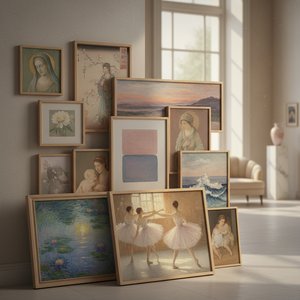 Soft Hues & Masterpieces: 10 Artworks That Define Delicate Color |
Explore 10 iconic artworks celebrated for their soft color intensity! From Monet's Impressionism to Renoir & Sargent, discover the stories behind these masterpieces. Find museum-quality art reproductions and curated decor ideas at .
The technical mastery required to work in pastel is often underestimated. While seemingly simple – applying colored sticks to paper – achieving a convincing sense of depth, form, and luminosity demands exceptional skill. Pastel artists don’t mix colors on a palette; instead, they layer pigments directly onto the surface, relying on optical mixing—the blending of hues perceived by the eye rather than physically combined. This requires an intuitive understanding of color theory and how different shades interact with one another.
The choice of support is also crucial. Paper with a pronounced “tooth” – a slightly rough texture – provides the necessary grip for the pastel particles to adhere. Artists often employed tinted papers, using the underlying hue to create subtle variations in tone and depth. Fixatives, though controversial (as they can alter the color intensity), were used to bind the pigments and prevent smudging. However, many artists preferred to leave their pastels unfixed, embracing the inherent fragility of the medium as part of its charm.
The Psychology of Pastel: Evoking Mood and Sentiment
Beyond its technical characteristics, pastel possesses a unique psychological impact. The soft hues and delicate textures evoke feelings of tranquility, intimacy, and nostalgia. This is perhaps why it became so popular for portraiture – the medium’s ability to capture not just likeness but also *character*. The subtle gradations of color can convey emotions with remarkable nuance, suggesting inner thoughts and hidden depths.
The association of pastel with femininity has been a recurring theme in art history. Some scholars argue that this stems from its perceived connection to color – historically linked with emotion and the senses, as opposed to line which was considered more rational and masculine. However, it’s important to note that many male artists also excelled in pastel painting, demonstrating that the medium transcends gender boundaries. Regardless of these debates, pastel undeniably possesses a certain sensitivity and delicacy that resonates deeply with viewers.
Mastering the Medium: Artists Who Defined Pastel Painting
While Boucher and Carriera stand as pivotal figures, numerous other artists contributed to pastel’s rich legacy. Jean-Étienne Liotard revolutionized portraiture with his remarkably lifelike depictions, employing a technique known as “stump blending” to create incredibly smooth surfaces. Maurice Quentin de La Tour pushed the boundaries of realism, capturing the subtle nuances of skin tone and expression with unparalleled precision.
Later artists, such as Edgar Degas, embraced pastel for its immediacy and expressive potential. He used it extensively in his depictions of ballet dancers, capturing their fleeting movements and ethereal beauty. Even John Singer Sargent, renowned for his oil portraits, turned to pastel for studies and finished works, recognizing its unique ability to convey light and atmosphere.
Preserving the Ephemeral: Caring for Pastel Artworks
The inherent fragility of pastel necessitates careful handling and preservation. Unlike oil paintings which are protected by a varnish layer, pastels remain vulnerable to smudging and abrasion. Framing under glass is essential, providing a barrier against dust and physical damage. However, it’s crucial to use archival-quality materials – acid-free matting and UV-protective glazing – to prevent discoloration over time.
Exposure to direct sunlight should be avoided, as this can fade the pigments. Regular dusting with a soft brush is recommended, but harsh cleaning methods should never be employed. Ultimately, preserving a pastel artwork requires a delicate touch—respecting its inherent fragility and recognizing it as a testament to the artist’s skill and sensitivity.
At OriginalUniqueArt.com, we are dedicated to bringing the beauty of these masterpieces into your home with museum-quality reproductions. Whether you seek a classic Rococo portrait or a vibrant Impressionist landscape, our skilled artists meticulously recreate each artwork using traditional techniques and premium materials. Explore our collection today and discover the enduring allure of pastel art.