Read More


 For artworks or reproductions larger than 105 cm (approximately 41 inches) on any side, the frame will be shipped as a kit, disassembled. This method ensures safe delivery and prevents damage during transport.


More about this painting
Text size

() ·
A painting made for you, by hand
Hand Made Oil Reproduction
Hand-painted oil on canvas in your size and frame, made to order by our artists. ( Switch to Print Switch to Digital Image)
Artist Biography
Francis Frith (1822-1898) was a pioneering English photographer famed for his large-format scenic views of Egypt, Palestine & the Middle East. Discover stunning Orientalist landscapes and a legacy as a leading photographic publisher.
from ·
Chapter 1
How large should it be?
Slide to change the size; the picture on the left shows the frame at its real width. The proportions of the original are kept.
Standard
custom
CM
INCH
Pick from our preset sizes that match the artwork's original proportions.
Loading sizes...

width
height
Type the width and the height you need, to fit your frame or your wall. This is hand-painted, so for a size with a different shape the artist can paint a bit more around the picture, or cut a bit — you choose. We send you a digital mockup to approve before the painting starts. The picture shown on this page does not show the real result — only the mockup does.
Chapter 2
How should it arrive?
Choose the edges of the stretched canvas
Choose your frame

White $1

Blurside $1

Extended $1

P118B $10

P118H $10

P118W $10

P438Z $10

P508JH $12

P508YH $12

P805H $10

P805Z $10

P919BZ $10

P919G $10

P919XJ $10

P959ZH $10

P968JZ $12

W106C $8

W218G $10

W218JH $8

W218Y $10

W307PJ $10

W316G $10

W316PJ $8

W316Y $10

W398PJ $8

W4111J $10

W500HY $15

W500JH $15

W692G $12

W849H $8

W940BG $15

W953PJ $8

H24-GOLD $30

H24-SILVER $30

H36-GOLD $45

H36-SILVER $45
Framed
Moulding: . Overall size with the frame: .
Chapter 3
Who paints it, and should anything change?
Examples of what can be changed: Replace face with customer photo; Add pet (e.g., replace cat with dog); Include hidden message in background; Change background landscape or elements.
After order, OriginalUniqueArt.com team will email client for instructions and provide a mockup preview
After order, OriginalUniqueArt.com team will email client for instructions and provide a mockup preview
Worldwide Delivery () in 3/4 weeks instead of standard 5 weeks. (3 November). No compromise on quality.
Chapter 4
The finishing touches
A nameplate, as in a museum?
Engraved Bronze Plaque Details
This elegant plaque features the artist's name and the title of the artwork, finely engraved for a timeless presentation.
It is made from bronze with a refined, elegant finish. The text is precisely laser-engraved for a sharp and permanent result. Measuring 9x2 cm, the plaque is compact yet easy to read. It's built to be durable and scratch-resistant, offering a professional, museum-quality look. Mounting is simple thanks to the included adhesive backing.
Transparent Acrylic Plaque Details
The plaque includes essential engraved details such as the artist's name, the title of the artwork, the date it was created, the type of media used-like oil on canvas or watercolor-a brief description of the piece, and a QR code that links to the complete artwork information.
It is crafted from clear acrylic, offering a sleek, modern appearance. The text is UV-engraved in black to ensure strong visual contrast. With a size of 10x15 cm, it ensures optimal readability. It comes equipped with two metal hooks for secure wall mounting. The plaque is designed to be weather-resistant, making it suitable for various environments, and it includes interactive features that work seamlessly with smartphone scanning.
Black Acrylic Plaque Details
This elegant plaque includes engraved information such as the artist's name, the title of the artwork, the date it was created, the type of media used (like oil on canvas or watercolor), a short description of the artwork, and a QR code for quick access to more information.
The plaque itself is made from refined black acrylic with a premium finish. The text is laser-engraved in white for high contrast and readability. Its size is 10x15 cm, designed to be easy to read. It comes with two metal hooks for professional mounting. The design is sleek and fits any interior style. It is also weather-resistant and durable, with built-in digital integration for mobile compatibility.
A protective varnish?
When do you need it?
Chapter 5
Your painting, as you ordered it
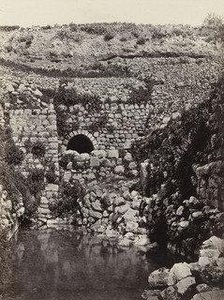
Mount Hermon
Reproduction Medium
Reproduction Size
-
Elite Senior Artist
More detail, finesse, and extra production time
-
Reproduction Frame
-
-
For artworks or reproductions larger than 105 cm (approximately 41 inches) on any side, the frame will be shipped as a kit, disassembled. This method ensures safe delivery and prevents damage during transport.
Professional assembly required - this is not a DIY product.
The kit must be assembled and the canvas stretched by an experienced professional framer, using wood glue (not supplied), a canvas stretching plier and clamps to hold the bars square while the glue dries. Incorrect assembly or uneven canvas tension can permanently damage the artwork and is not covered by our warranty.
All solid wood bars are included, precisely cut to size.
Assembled with the screws provided, plus wood glue for the corner joints, which is not supplied and must be sourced by your framer.
Professional tools are required and not included: a canvas stretching plier (tensioner) and clamps to hold the bars square while the glue dries.
Important:
The corner joints require wood glue, the bars must be held with clamps until the glue is fully dry, and tightening the canvas on the assembled frame requires a canvas stretching plier. None of these are included in the kit. Please arrange an experienced professional framer before ordering this size.
Nameplate
-
-
Protective Varnish
Glossy Varnish (enhances colors, protects against light/moisture)
-
Customize My Artwork
Examples of what can be changed: Replace face with customer photo; Add pet (e.g., replace cat with dog); Include hidden message in background; Change background landscape or elements.
-
Urgent
Worldwide Delivery () in 3/4 weeks instead of standard 5 weeks. (3 November). No compromise on quality.
-
Express Shipping
Worldwide Delivery () in 5 weeks. (10 November).
Included
Total Price
$ 325
Glass option is only available in size under 110 CM
Included with every order
- Free Worldwide Express Shipping
- High-Quality Linen Canvas
- Full Shipping Insurance
- Customs Tax Refund Guarantee
- True Color Matching Guarantee
- 100-Day Return Policy (Defects Only)
- 100% Money-Back Guarantee
- Bulk Discount Offer
 Preview
 Send
Send Share
Share
 Details
 Guide
Guide

 Download
 Similars
 X-Ray
X-Ray Diaporama
 Q&A
Q&A Stats
StatsIn numbers
- 1855the year it was painted
- 29frames to choose from
- standard sizes, in its own proportions
- 5weeks to paint and deliver it
About the original

- 16.0 x 21.0 cm


Francis Frith
1822 - 1898
Quick facts about Francis Frith
- Artistic Movement Or Style: Orientalism
- Artists Or Movements Influenced By This Artist: ['Photographic Realism']
- Artists Who Influenced This Artist: ['William Henry Fox Talbot']
- Date Of Birth: 1822
- Date Of Death: 1898
- Full Name: Francis Frith
- Nationality: English
- Notable Artworks:
- The Valley of Jehoshaphat, Jerusalem (Plate 14)
- Melrose Abbey
- Place Of Birth: England
Artist Biography
The Visionary of the Nile: The Life and Legacy of Francis Frith
In the mid-nineteenth century, as the Victorian era began to expand its horizons through exploration and industrial prowess, a new kind of artist emerged—one who used the lens rather than the brush to capture the sublime. Francis Frith, born in Chesterfield, Derbyshire, in 1822, was far more than a mere businessman or a pioneer of photography; he was a visual storyteller whose expeditions brought the ancient wonders of the Orient into the parlors of Europe. Though his early life was rooted in the practicalities of the Quaker tradition and even involved apprenticeships in the cutlery trade and success as a wholesale grocer, Frith possessed an innate curiosity that would eventually lead him to the sun-drenched landscapes of Egypt, Palestine, and Syria.
The transition from commerce to the arts was not merely a change in profession but a profound evolution of perspective. After establishing himself in the photographic studio scene in Liverpool during the early 1850s, Frith felt the pull of the distant unknown. His journeys between 1856 and 1860 were Herculean feats of both physical endurance and technical mastery. Carrying heavy glass plate cameras through blistering heat and swirling desert sands, he utilized the challenging collodion process to document monuments that had remained largely unseen by Western eyes. These were not simple snapshots; they were meticulously composed architectural studies that demanded immense patience, as each exposure required a portable wicker darkroom to prepare the wet plates in situ.
A Master of Light and Scale
What distinguishes Frith’s work from the mere documentation of his contemporaries is his profound sense of composition and scale. He did not simply photograph ruins; he orchestrated scenes that evoked the grandeur of classical painting. Influenced by the sweeping landscapes of masters like Turner and Constable, Frith understood how to use light and shadow to imbue stone and sand with a sense of eternal mystery. His large-format negatives, some measuring as much as 16 by 20 inches, allowed for an incredible level of detail that could transport a viewer from the grey streets of London directly to the towering pylons of Karnak or the silent majesty of Abu Simbel.
His technical achievements were matched by his entrepreneurial brilliance. Recognizing the immense public appetite for these exotic vistas, he established Francis Frith & Co. in 1860. This venture was revolutionary, aiming to document the very fabric of the British landscape alongside his Middle Eastern discoveries. The company grew into one of the largest photographic publishers in the world, amassing a staggering collection of negatives that covered thousands of population centers across Great Britain and Ireland. Through his publications, such as Egypt and Palestine Photographed and Described, Frith democratized the experience of travel, allowing the burgeoning middle class to participate in the era's fascination with Orientalism.
Historical Significance and Enduring Impact
The historical weight of Francis Frith’s contribution cannot be overstated. He was a foundational figure in the development of landscape photography as an art form, bridging the gap between scientific documentation and aesthetic expression. His work provided a vital visual record of archaeological sites that have since been altered by time, conflict, and environmental change, making his archive an invaluable resource for modern historians and archaeologists alike.
As we reflect on his life, several key elements of his legacy remain prominent:
- Pioneering Exploration: His ability to navigate extreme climatic conditions to capture the first high-quality photographic records of ancient Near Eastern civilizations.
- Technological Innovation: The masterful application of the wet-plate collodion process in environments previously thought impossible for such delicate work.
- The Birth of Photographic Publishing: Creating a commercial model that turned photography from a niche hobby into a global industry of visual information and art.
- Cultural Influence: Shaping the Victorian imagination and the Western perception of the Middle East through a lens of grandeur and romanticism.
Francis Frith passed away in 1898, leaving behind a world that had been forever changed by his vision. He remains a titan of the photographic medium, an artist who mastered the light of distant lands to illuminate the history of humanity.
Explore artworks organized by themes, styles, and characteristics.