

 Preview
 Send
Send Share
Share
 Details
 Guide
Guide

 Download
 Similars
 X-Ray
X-Ray Diaporama
 Q&A
Q&A Stats
StatsVirgin from the Annunciation
 Oil On Canvas
- WallArt
- High Renaissance
 1483
1483- Renaissance
 110.0 x 110.0 cm
 Museo Civico
 Read More
Giclée / Art Print
Museum-quality giclée or canvas print with fast production and flexible finish options. ( Buy Hand Made Painting Switch to Digital Image)




P118B $10

P118H $10

P118W $10

P438Z $10

P508JH $12

P508YH $12

P805H $10

P805Z $10

P919BZ $10

P919G $10

P919XJ $10

P959ZH $10

P968JZ $12

W106C $8

W218G $10

W218JH $8

W218Y $10

W307PJ $10

W316G $10

W316PJ $8

W316Y $10

W398PJ $8

W4111J $10

W500HY $15

W500JH $15

W692G $12

W849H $8

W940BG $15

W953PJ $8




Pick from our preset sizes that match the artwork's original proportions.

Type the width and the height you need, to fit your frame or your wall. A print can only be cut, never made bigger than the picture, so a size with a different shape loses a part of the image. We send you a digital mockup to approve before we print anything. The picture shown on this page does not show the real cut — only the mockup does.
Worldwide Delivery () in 2 weeks instead of standard 4/5 weeks. (30 October)

Free Worldwide Express Shipping

High-Quality Linen Canvas

Full Shipping Insurance

Customs Tax Refund Guarantee

True Color Matching Guarantee

100-Day Return Policy (Defects Only)

100% Money-Back Guarantee

Bulk Discount Offer
 Glass option is only available in size under 110 CM

Virgin from the Annunciation
Giclée / Art Print
Reproduction Size
-


Total Price
$ 81
The Sacred Moment Captured: An Encounter with Divine Grace
To gaze upon this depiction of the Virgin from the Annunciation is to step across the threshold of time and into a moment suspended by divine will. The scene itself, rendered with exquisite detail, portrays Mary kneeling in profound contemplation, her hands folded in an attitude of prayer that speaks volumes without uttering a single word. Filippino Lippi masterfully captures not merely the physical act of devotion, but the very soul's receptivity to the miraculous. The rich folds of her red garments draw the eye, providing a vibrant counterpoint to the serene, intellectual atmosphere established by the surrounding architectural elements.
A Tapestry of Renaissance Detail and Symbolism
What elevates this work beyond simple portraiture is the meticulous integration of its setting. Observe the background: it unfolds with the quiet grandeur of an educated scholar's chamber. The visible window suggests a connection to the outside world, yet the focus remains inward, toward the sacred dialogue taking place. More captivating are the bookshelves, laden with volumes whose very presence speaks to accumulated knowledge—the intersection of divine revelation and human intellect. Each book, varying in size and placement, contributes to a sense of learned piety. Near the upper right corner, the delicate inclusion of a vase adds a touch of naturalistic beauty, grounding the ethereal event within a tangible, domestic space.
Mastery of Technique: The Hand of Filippino Lippi
Painted in 1483, this piece stands as a testament to the burgeoning genius of Filippino Lippi. While his career saw him evolve from early works toward the sophisticated heights of the High Renaissance, here we see a masterful balance between narrative clarity and delicate execution. The technique employed allows for both the luminosity of skin tones and the deep, saturated color found in Mary's robes. His ability to imbue inanimate objects—the wood grain of the shelves, the texture of the paper—with such convincing realism anchors the spiritual drama, inviting the viewer into a palpable reality.
Echoes of Devotion for the Modern Sanctuary
For the collector or designer seeking an object that transcends mere decoration, this reproduction offers profound resonance. It is not simply art to hang on a wall; it is a meditation piece. The quiet intensity emanating from Mary’s posture and the scholarly backdrop make it ideal for creating a sanctuary within any room—a space dedicated to thought, contemplation, or quiet gathering. Owning this work allows one to connect with the profound spiritual currents of the Italian Renaissance, bringing an air of timeless grace and intellectual depth into your modern life.
Questions & Answers
Does "Virgin from the Annunciation" show strong light-dark contrasts?
The light-dark contrast of "Virgin from the Annunciation" is recorded as statement. Contrast describes how strongly light and dark areas differ.
Where in Filippino Lippi's career does "Virgin from the Annunciation" fall, given its date?
Given its 1483 date, "Virgin from the Annunciation" falls in Filippino Lippi's Maturity.
What art movement does "Virgin from the Annunciation" by Filippino Lippi belong to?
"Virgin from the Annunciation" by Filippino Lippi belongs to the High Renaissance movement. This movement provides the stylistic context of the work.
Artist Biography
Early Life and Training
- Born: April 1457, Prato, Italy
- Died: April 1504
- Parents: Fra Filippo Lippi (painter) and Lucrezia Buti
- Filippino was the illegitimate son of a renowned painter.
- Early training under his father laid the foundation for his artistic career.
Artistic Career and Development
- Early Period (1475-1480): Initial works, such as Madonnas, showed a less refined style. These were initially attributed to an anonymous artist known as "amico di Sandro."
- Evolution (1480-1485): Development of a more personal and effective approach in works like the *Journeys of Tobias*.
- Maturity (1485-1504): Mastery of the High Renaissance style, exemplified by *The Apparition of Christ to the Virgin*.
Major Works and Collaborations
- Collaboration with Perugino, Ghirlandaio, and Botticelli on frescoes at Lorenzo de' Medici’s villa.
- Completion of Masaccio's unfinished decoration in the Brancacci Chapel alongside Masolino.
- Notable works include: *The Coronation of the Virgin*, *Tobias and the Angel*, *St Jerome*, and *Scene from the Life of St Thomas Aquinas*.
Influences and Artistic Style
- Early Influences: Sandro Botticelli, Fra Filippo Lippi.
- Style Characteristics: Animated form and line, warm colorism, detailed landscapes, expressive figures, and a blend of perspective geometry with intimate interiors.
- Roman Antiquities: Studies after Roman antiquities during his time in Rome influenced his work, incorporating an antique vocabulary into his art.
Historical Significance and Legacy
- A leading Florentine exponent of the tradition of great fresco cycles.
- His influence on the High Renaissance is undeniable.
- Works are found in museums worldwide, including the Uffizi Gallery in Florence.
- Known for bridging the gap between earlier Renaissance styles and the emerging High Renaissance aesthetic.
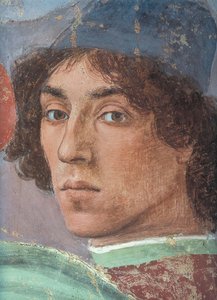
Filippino Lippi
1457 - 1504 , Italy
Quick Facts
- Full Name: Filippino Lippi
- Nationality: Italian
- Date Of Birth: 1457
- Date Of Death: 1504
- Place Of Birth: Prato, Italy
- Notable Artworks:
- The Coronation of the Virgin
- Tobias and the Angel
- Scene from the Life of St Thomas Aquinas
- St Jerome
- Artistic Movement Or Style: High Renaissance
- Artists Who Influenced This Artist:
- Fra Filippo Lippi
- Sandro Botticelli
- Artists Or Movements Influenced By This Artist: ['Raffaellino del Garbo']
Related Articles

OriginalUniqueArt.com F.A.Q.: Elevate Your Decor with Premium Textured Giclée Prints
Discover the distinction of OriginalUniqueArt.com premium textured Giclée prints. Expertly crafted with archival 12-color pigments and museum-grade substrates, our prints offer unparalleled vividness for the discerning collector seeking luxury, durability, and timeless elegance.


