

 Preview
 Send
Send Share
Share
 Details
 Guide
Guide

 Download
 Similars
 X-Ray
X-Ray Diaporama
 Stats
StatsSt Jerome
 Oil On Canvas
- WallArt
- Renaissance Art
 1490
1490- Renaissance
 136.0 x 71.0 cm
 Galleria degli Uffizi
 Read More
Hand Made Oil Reproduction
Hand-painted oil on canvas in your size and frame, made to order by our artists. ( Switch to Print Switch to Digital Image)




P118B $10

P118H $10

P118W $10

P438Z $10

P508JH $12

P508YH $12

P805H $10

P805Z $10

P919BZ $10

P919G $10

P919XJ $10

P959ZH $10

P968JZ $12

W106C $8

W218G $10

W218JH $8

W218Y $10

W307PJ $10

W316G $10

W316PJ $8

W316Y $10

W398PJ $8

W4111J $10

W500HY $15

W500JH $15

W692G $12

W849H $8

W940BG $15

W953PJ $8




Pick from our preset sizes that match the artwork's original proportions.

Type the width and the height you need, to fit your frame or your wall. This is hand-painted, so for a size with a different shape the artist can paint a bit more around the picture, or cut a bit — you choose. We send you a digital mockup to approve before the painting starts. The picture shown on this page does not show the real result — only the mockup does.
After order, OriginalUniqueArt.com team will email client for instructions and provide a mockup preview
Worldwide Delivery () in 3/4 weeks instead of standard 5 weeks. (22 October). No compromise on quality.

Free Worldwide Express Shipping

High-Quality Linen Canvas

Full Shipping Insurance

Customs Tax Refund Guarantee

True Color Matching Guarantee

100-Day Return Policy (Defects Only)

100% Money-Back Guarantee

Bulk Discount Offer
 Glass option is only available in size under 110 CM

St Jerome
Reproduction Medium
Reproduction Size
-


Total Price
$ 300
A Sanctuary of Silence: The Soul of Filippino Lippi’s St Jerome
In the quiet corners of the Galleria degli Uffizi, there exists a window into a world of profound stillness. Filippino Lippi’s St Jerome, executed around 1490, is not merely a portrait of a saint; it is an invitation to pause. As one gazes upon this oil on canvas masterpiece, the frantic pace of the modern world seems to dissolve, replaced by the heavy, sacred atmosphere of the High Renaissance. Lippi, the talented son of Fra Filippo Lippi, possessed a rare ability to bridge the gap between the divine and the human. In this work, he captures the essence of spiritual contemplation, presenting a figure that feels as much a part of our shared humanity as he is a vessel for the divine.
The composition draws the viewer into a moment of deep, internal dialogue. St Jerome is depicted in his characteristic state of scholarly devotion, seated against the rugged textures of a stone wall or rock. His posture—leaning forward with a hand pressed thoughtfully to his forehead—suggests a mind caught in the labyrinth of scripture and prayer. The light in the painting does not strike with harshness; rather, it is a diffused, natural glow that bathes the saint, highlighting the delicate folds of his simple robe and the weathered lines of his face. This masterful use of chiaroscuro creates a palpable sense of three-dimensionality, making the saint’s presence feel almost tangible within the frame.
Symbolism and the Natural World
Lippi weaves a rich tapestry of symbolism into the very landscape that surrounds his subject. The background is far from a mere backdrop; it is a living, breathing extension of Jerome's inner state. Mature trees and lush foliage frame the scene, suggesting the vitality of creation even amidst the saint's solitary asceticism. Perhaps most poignant is the subtle presence of the lion, tucked into the upper corner of the composition. This small but significant detail serves as a powerful nod to the hagiography of St Jerome, recalling the legend of the saint taming the wild beast by removing a thorn from its paw—a metaphor for the power of compassion to subdue even the most ferocious impulses.
The color palette is intentionally subdued, favoring earthy tones and soft shadows that reinforce the mood of penitence and peace. This restraint allows the viewer to focus on the subtle nuances of emotion: the slight furrow of a brow, the weight of a hand, the quiet dignity of age. For the collector or the lover of fine art, this painting offers more than visual beauty; it offers a psychological depth that resonates across centuries. It is a study in how light and shadow can be used to sculpt not just form, but feeling.
An Eternal Inspiration for the Modern Interior
For the discerning interior designer or the dedicated art enthusiast, a high-quality reproduction of St Jerome serves as a profound focal point. This is an artwork that demands a space of reflection—a study, a library, or a quiet corner of a living room where one might seek respite from the day's labors. The painting’s classical elegance and its mastery of Renaissance technique bring a sense of historical weight and intellectual sophistication to any environment.
Integrating such a piece into a contemporary setting allows for a beautiful tension between the old and the new. Whether paired with minimalist modern furniture or nestled within a more traditional, ornate decor, the emotive power of Lippi’s brushwork remains undiminished. To possess a reproduction of this work is to bring a fragment of the Florentine Renaissance into one's own home, ensuring that the spirit of contemplation and the beauty of classical humanism continue to inspire generations to come.
Questions & Answers
Is there a slideshow for "St Jerome" by Filippino Lippi?
"St Jerome" by Filippino Lippi can be viewed as a slideshow on the artwork's Diaporama page.
What orientation does "St Jerome" by Filippino Lippi have?
"St Jerome" by Filippino Lippi has a tall format. The format describes the proportions of the composition.
How do I discover artworks close to "St Jerome" by Filippino Lippi?
The Similars page of "St Jerome" by Filippino Lippi presents related artworks.
Artist Biography
Early Life and Training
- Born: April 1457, Prato, Italy
- Died: April 1504
- Parents: Fra Filippo Lippi (painter) and Lucrezia Buti
- Filippino was the illegitimate son of a renowned painter.
- Early training under his father laid the foundation for his artistic career.
Artistic Career and Development
- Early Period (1475-1480): Initial works, such as Madonnas, showed a less refined style. These were initially attributed to an anonymous artist known as "amico di Sandro."
- Evolution (1480-1485): Development of a more personal and effective approach in works like the *Journeys of Tobias*.
- Maturity (1485-1504): Mastery of the High Renaissance style, exemplified by *The Apparition of Christ to the Virgin*.
Major Works and Collaborations
- Collaboration with Perugino, Ghirlandaio, and Botticelli on frescoes at Lorenzo de' Medici’s villa.
- Completion of Masaccio's unfinished decoration in the Brancacci Chapel alongside Masolino.
- Notable works include: *The Coronation of the Virgin*, *Tobias and the Angel*, *St Jerome*, and *Scene from the Life of St Thomas Aquinas*.
Influences and Artistic Style
- Early Influences: Sandro Botticelli, Fra Filippo Lippi.
- Style Characteristics: Animated form and line, warm colorism, detailed landscapes, expressive figures, and a blend of perspective geometry with intimate interiors.
- Roman Antiquities: Studies after Roman antiquities during his time in Rome influenced his work, incorporating an antique vocabulary into his art.
Historical Significance and Legacy
- A leading Florentine exponent of the tradition of great fresco cycles.
- His influence on the High Renaissance is undeniable.
- Works are found in museums worldwide, including the Uffizi Gallery in Florence.
- Known for bridging the gap between earlier Renaissance styles and the emerging High Renaissance aesthetic.
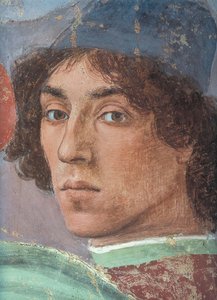
Filippino Lippi
1457 - 1504 , Italy
Quick Facts
- Full Name: Filippino Lippi
- Nationality: Italian
- Date Of Birth: 1457
- Date Of Death: 1504
- Place Of Birth: Prato, Italy
- Notable Artworks:
- The Coronation of the Virgin
- Tobias and the Angel
- Scene from the Life of St Thomas Aquinas
- St Jerome
- Artistic Movement Or Style: High Renaissance
- Artists Who Influenced This Artist:
- Fra Filippo Lippi
- Sandro Botticelli
- Artists Or Movements Influenced By This Artist: ['Raffaellino del Garbo']
Related Articles
Uffizi's 25 Masterpieces: Renaissance Art & Timeless Decor Inspiration
Journey through the Uffizi Gallery's 25 most iconic Renaissance artworks! Explore Botticelli, Leonardo da Vinci & Michelangelo’s masterpieces. Find museum-quality art reproductions and curated decor ideas to bring timeless Italian beauty into your home. Discover all masterpieces on OriginalUniqueArt.com
National Gallery of Art's Masterpieces: 25 Iconic Paintings for Your Home Decor
Explore 25 iconic artworks from Washington DC's National Gallery of Art! Discover masterpieces by Cézanne, Matisse & Picasso. Find museum-quality art reproductions and elevate your home decor with timeless paintings. Explore the full collection online at OriginalUniqueArt.com.

Filippo Lippi: Bridging Renaissance Devotion & Artistic Innovation
Explore the life & revolutionary art of Filippo Lippi, a pivotal Renaissance painter. Discover his masterpieces, influence on Botticelli, and investment potential. Expert analysis at OriginalUniqueArt.
National Gallery London's Masterpieces: 25 Iconic Paintings for Your Home Decor
Journey through the National Gallery London's 25 most iconic paintings! Explore Van Gogh, Monet, Rembrandt & more. Discover art history, techniques & find museum-quality reproductions for your home decor on OriginalUniqueArt.com.

Filippino Lippi: Renaissance Innovation Bridging Faith & Humanism
Explore the captivating world of Filippino Lippi, a Renaissance master bridging faith & humanism through innovative art. Discover his key works, influences, and lasting legacy with OriginalUniqueArt.


