Early Life & Training: The Legacy of Fra Filippo
 Wikipedia: Filippino Lippi
Filippino Lippi (probably 1457 – 18 April 1504) was an Italian Renaissance painter mostly working in Florence, Italy during the later years of the Early Renaissance and first few years of the High Renaissance. He also worked in Rome for a period from...
Filippino Lippi’s story is inextricably linked to that of his father, the celebrated Fra Filippo Lippi—a painter whose own life was as dramatic and unconventional as the sacred scenes he brought to life. Born in Prato around 1457, Filippino inherited not only a prodigious artistic talent but also a complex familial history. His parents, Fra Filippo and Lucrezia Buti, were both members of religious orders who defied their vows, embarking on a clandestine relationship that ultimately led to Filippino’s birth. While the circumstances surrounding his early life are shrouded in some mystery, it is clear that he was immersed in an artistic environment from the very beginning. Following Fra Filippo's move to Spoleto, young Filippino served as his father’s workshop assistant, gaining invaluable experience in fresco painting and absorbing the foundational principles of Renaissance technique. The tragic death of Fra Filippo in 1469, when Filippino was just twelve years old, left a void but also propelled him into a new phase of artistic development. He continued to work alongside other assistants completing the frescoes at Spoleto Cathedral, demonstrating an early aptitude for carrying on his father’s stylistic traditions.
A Florentine Master: Style, Technique, and Key Characteristics
Upon returning to Florence, Filippino entered the workshop of Sandro Botticelli, a pivotal moment that would profoundly shape his artistic trajectory. While already possessing a strong foundation from his father, Botticelli introduced him to a more refined elegance and lyrical quality. However, Filippino was not merely an imitator; he quickly developed a distinctive style characterized by animated form and line, coupled with a warm colorism that set him apart. His figures possess a dynamic energy, often depicted in graceful poses with expressive faces conveying a range of emotions. He masterfully blended technical skill with psychological insight, imbuing his religious subjects with a palpable sense of humanity. Filippino’s technique was remarkably versatile; he excelled in oils, tempera, and fresco, adapting his approach to suit the demands of each medium. His drawings, often executed in metalpoint and white gouache on prepared paper, reveal a meticulous attention to detail and a keen understanding of anatomy. A hallmark of his work is the subtle interplay of light and shadow, creating depth and volume that draws the viewer into the scene.
Religious Narratives & Emotional Depth in Lippi’s Paintings
Filippino Lippi dedicated the majority of his career to religious subjects, approaching these narratives with a unique blend of piety and artistic innovation. His paintings are not simply depictions of biblical stories; they are imbued with emotional depth and psychological realism. He possessed an extraordinary ability to capture moments of profound spiritual significance, conveying the inner turmoil and devotion of his figures. Consider his work on the Brancacci Chapel in Santa Maria del Carmine, where he seamlessly integrated his style with that of Masaccio and Masolino, completing a cycle begun decades earlier. His frescoes depict scenes from the life of Saint Peter with a dramatic intensity and emotional resonance rarely seen in contemporary art. The *Vision of Saint Bernard*, now housed in the Badia Fiorentina, exemplifies his mastery of composition and color, creating an ethereal atmosphere that evokes a sense of divine revelation. He wasn’t afraid to introduce elements of genre detail and landscape into his religious scenes, grounding them in a recognizable reality and making them more relatable to the viewer.
Collaborations & Influences: Botticelli, Perugino, and Beyond
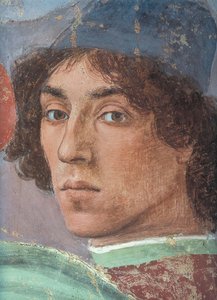 Filippino Lippi
Explore Filippino Lippi (1457-1504), son of Fra Filippo Lippi! Discover his High Renaissance paintings, expressive Madonnas & collaborations with Botticelli & Perugino.
Filippino Lippi was not an artist who worked in isolation. Throughout his career, he engaged in numerous collaborations with other leading Florentine painters, including Sandro Botticelli, Domenico Ghirlandaio, and Pietro Perugino. These partnerships were often complex, involving a sharing of ideas and techniques that enriched the artistic landscape of Florence. His early works bear the unmistakable influence of Botticelli, particularly in their graceful lines and delicate coloring. However, as he matured, Filippino developed his own distinct voice, drawing inspiration from a wider range of sources. His collaboration with Perugino on the decoration of Lorenzo de’ Medici's villa at Spedaletto demonstrates his willingness to experiment and adapt his style. A period spent in Rome from 1488 further broadened his artistic horizons, exposing him to classical antiquities and influencing his use of form and composition. He absorbed these influences not through slavish imitation but through a process of creative synthesis, forging a unique artistic identity that blended tradition with innovation.
The Rest on the Flight into Egypt: A Case Study of Artistic Brilliance
 The Rest on the Flight into Egypt
Experience Filippino Lippi's 'The Rest on the Flight into Egypt,' a stunning Renaissance masterpiece depicting Mary and Jesus in a serene pastoral scene. Hand-painted reproductions available!
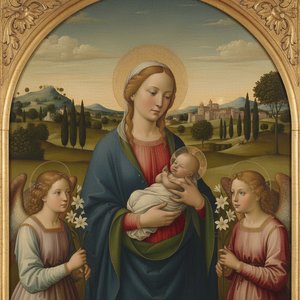
Perhaps one of Filippino Lippi’s most celebrated works is *The Rest on the Flight into Egypt*. This stunning Renaissance masterpiece depicts Mary and Jesus in a serene pastoral scene, capturing a moment of quiet contemplation during their journey to safety. The composition is remarkably balanced, with the figures arranged within a lush landscape that evokes a sense of tranquility and harmony. Lippi’s masterful use of color creates a warm and inviting atmosphere, while his attention to detail—from the delicate folds of Mary’s drapery to the expressive faces of the figures—brings the scene to life. The painting is not merely a depiction of a biblical event; it is an exploration of themes of motherhood, faith, and resilience. The subtle symbolism embedded within the landscape adds another layer of meaning, inviting viewers to contemplate the deeper significance of the narrative. It’s a testament to Lippi's ability to transform religious iconography into deeply moving works of art that resonate with audiences centuries later.
Lippi's Enduring Legacy: Impact on Renaissance Art
Filippino Lippi’s impact on Renaissance art is undeniable. His innovative style, characterized by animated form, warm colorism, and emotional depth, influenced a generation of Florentine painters. Artists like Raffaellino del Garbo directly emulated his techniques, carrying on his artistic traditions. His willingness to experiment with composition and perspective paved the way for new developments in Renaissance painting. Beyond his technical achievements, Lippi’s ability to imbue religious subjects with psychological realism set him apart from his contemporaries. He wasn't simply depicting saints and biblical figures; he was exploring the human condition through a spiritual lens. Today, Filippino Lippi is recognized as one of the most gifted and accomplished Florentine painters of the second half of the fifteenth century—a master whose work continues to inspire and captivate audiences worldwide. His paintings offer a glimpse into the artistic sensibilities of the Renaissance, reminding us of the power of art to transcend time and connect us with the enduring themes of faith, humanity, and beauty. OriginalUniqueArt offers exquisite hand-painted reproductions of Filippino Lippi’s masterpieces, allowing you to experience the brilliance of this Renaissance master in your own home.