Preview
 Send
Send Share
Share
 Details
 Guide
Guide

 Download
 Similars
 X-Ray
X-Ray Diaporama
 Stats
StatsSagittarius


 Read More
Giclée / Art Print
Museum-quality giclée or canvas print with fast production and flexible finish options. ( Buy Hand Made Painting Switch to Digital Image)




P118B $10

P118H $10

P118W $10

P438Z $10

P508JH $12

P508YH $12

P805H $10

P805Z $10

P919BZ $10

P919G $10

P919XJ $10

P959ZH $10

P968JZ $12

W106C $8

W218G $10

W218JH $8

W218Y $10

W307PJ $10

W316G $10

W316PJ $8

W316Y $10

W398PJ $8

W4111J $10

W500HY $15

W500JH $15

W692G $12

W849H $8

W940BG $15

W953PJ $8




Pick from our preset sizes that match the artwork's original proportions.

Type the width and the height you need, to fit your frame or your wall. A print can only be cut, never made bigger than the picture, so a size with a different shape loses a part of the image. We send you a digital mockup to approve before we print anything. The picture shown on this page does not show the real cut — only the mockup does.
Worldwide Delivery () in 2 weeks instead of standard 4/5 weeks. (25 October)

Free Worldwide Express Shipping

High-Quality Linen Canvas

Full Shipping Insurance

Customs Tax Refund Guarantee

True Color Matching Guarantee

100-Day Return Policy (Defects Only)

100% Money-Back Guarantee

Bulk Discount Offer
 Glass option is only available in size under 110 CM

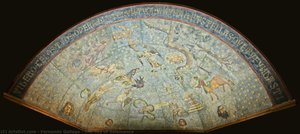
Sagittarius
Giclée / Art Print
Reproduction Size
-


Total Price
$ 81
Fernando Gallego’s Sagittarius: A Tapestry of Myth and Majesty
The painting “Sagittarius,” attributed to the Spanish master Fernando Gallego (c. 1440 – 1507), is not merely a depiction of an archer; it's a vibrant portal into the heart of ancient mythology, rendered with a meticulous realism that speaks volumes about the artistic currents of late 15th-century Castile. Gallego, a pivotal figure in the burgeoning Hispano-Flemish style – a synthesis of Northern European precision and Iberian warmth – crafted this piece likely for an altarpiece, imbuing it with a solemnity and narrative power characteristic of his religious commissions. The painting’s enduring appeal lies not just in its technical skill but also in its ability to distill the essence of Sagittarius, the zodiac sign associated with travel, wisdom, and philosophical inquiry – qualities embodied by the figure at its center.
The subject itself is instantly recognizable: a powerfully built man, clad in armor and helmet, poised to release an arrow. However, Gallego elevates this familiar image through a masterful use of detail and composition. The archer’s stance is dynamic, suggesting both readiness and control; his gaze is fixed on the distant target, inviting the viewer into the scene. Crucially, he's not simply shooting at a mark; he’s engaged in a symbolic act – an embodiment of Sagittarius’s quest for knowledge and truth. The surrounding landscape, rendered with a subtle yet effective illusionistic depth, hints at a vast, open world, mirroring the sign’s association with exploration and adventure. Notice the careful rendering of textures: the gleam of the armor, the rough bark of the trees, the flowing fabric of the man's garments – all contribute to a sense of tangible reality.
The Echoes of Flemish Influence
Gallego’s style is deeply rooted in the artistic innovations sweeping through Northern Europe at the time. Like many Spanish artists working during this period, he was profoundly influenced by the Flemish masters, particularly Rogier van der Weyden and Simon Marmion. This influence manifests itself in several key ways: the meticulous attention to detail, the use of oil paint to achieve rich colors and subtle gradations, and a penchant for depicting figures with a remarkable sense of volume and realism. However, Gallego doesn’t simply mimic his Flemish predecessors; he adapts their techniques to create a distinctly Iberian aesthetic. The palette is warmer, more vibrant than typical Flemish works, reflecting the Spanish tradition of using bright pigments and incorporating gold leaf – elements that add an opulent quality to the painting.
Furthermore, Gallego demonstrates a sophisticated understanding of perspective and spatial relationships, hallmarks of Flemish art. The use of aerial perspective—where distant objects appear paler and less detailed—creates a convincing sense of depth and atmosphere. This technique, combined with the carefully arranged composition, draws the viewer’s eye towards the central figure and invites contemplation.
Symbolism and Mythological Resonance
Beyond its purely visual qualities, “Sagittarius” is rich in symbolic meaning. The archer himself represents Sagittarius's defining characteristic: the pursuit of knowledge and enlightenment. The arrow, a potent symbol of direction and purpose, signifies the path one must follow to achieve wisdom. The distant target embodies the ultimate goal – truth itself. The two stars visible on either side of the scene further enhance this symbolism, representing celestial guidance and divine inspiration. The bird soaring above the archer adds another layer of meaning, suggesting freedom, aspiration, and a connection to the heavens.
Interestingly, Sagittarius is associated with Chiron, the centaur who was renowned for his wisdom and skill as a healer and teacher in Greek mythology. Gallego’s depiction subtly evokes this legendary figure, reinforcing the painting's message of knowledge, guidance, and the pursuit of virtue. The image resonates deeply with the philosophical and spiritual currents of the Renaissance, which emphasized human potential and the importance of seeking truth through reason and experience.
A Legacy in Reproduction
Today, “Sagittarius” by Fernando Gallego stands as a testament to the enduring power of art to capture both the beauty and the complexity of the human experience. Reproductions offer an accessible way to appreciate this remarkable work, bringing its rich symbolism and artistic mastery into homes and galleries worldwide. When selecting a reproduction, consider the quality of materials used – archival-quality prints on canvas or fine art paper will ensure that the colors remain vibrant for generations to come. This painting is more than just a beautiful image; it’s a window into a bygone era, inviting us to contemplate the timeless themes of wisdom, knowledge, and the pursuit of truth.
Questions & Answers
What is the overall mood of "Sagittarius" by Fernando Gallego?
"Sagittarius" by Fernando Gallego is described as calm in mood. This classification can help match the work to a setting.
Which period of Fernando Gallego's career does "Sagittarius" belong to?
"Sagittarius" represents the Late Period of Fernando Gallego.
Who is the artist behind "Sagittarius"?
"Sagittarius" was created by Fernando Gallego. The information on this page describes Fernando Gallego's original work.
Artist Biography
Fernando Gallego: A Master of the Hispano-Flemish Style
Fernando Gallego, a name often shrouded in mystery yet deeply resonant within Spanish art history, was a Castilian painter who flourished during the late 15th and early 16th centuries. Born around 1440 in Salamanca and tragically dying sometime before 1507, his life spanned a pivotal era of artistic transition – the convergence of Northern European realism with burgeoning Italian Renaissance ideals. Gallego’s legacy isn't defined by grand, solitary masterpieces but rather by a prolific output of meticulously crafted religious panels, particularly altarpieces and retablos, that offer invaluable insights into the visual culture of his time. While definitive biographical details remain scarce, tracing his work through attributions and historical records paints a compelling picture of an artist deeply influenced by Flemish painting, especially the works of Rogier van der Weyden, yet firmly rooted in the Spanish artistic tradition.Early Life and Artistic Training – A Shadow of Uncertainty
The precise origins of Fernando Gallego’s artistic training remain elusive, a characteristic that has long intrigued art historians. Despite speculation linking him to workshops in Salamanca and beyond, concrete evidence is remarkably limited. He likely began his career in the vibrant artistic environment of Castile and Extremadura, regions renowned for their rich religious patronage during this period. The prevailing theory suggests a strong connection to Flemish painting, particularly the naturalistic handling of form and technical mastery evident in Rogier van der Weyden’s work – a style characterized by its meticulous detail, deep emotional resonance, and sophisticated use of light and shadow. Early Netherlandish painting, with its vivid illusionism and complex iconography, exerted a profound influence on Gallego's approach to composition and figure depiction. It is believed he may have spent time studying in Flanders, though this remains unconfirmed. Interestingly, the work attributed to him often shares stylistic similarities with Francisco Gallego, his likely workshop assistant – a relationship that adds another layer of complexity to understanding Gallego’s artistic development.A Flourishing Career: Altarpieces and Retablos
Gallego's career was largely dedicated to the creation of small panels intended for incorporation into larger altarpieces, or retablos. These devotional works were central to religious life in 15th-century Spain, serving as focal points for worship and visual narratives within churches and chapels. Gallego’s skill lay not just in his technical proficiency – evidenced by the smooth application of paint, precise rendering of drapery, and realistic portrayal of human figures – but also in his ability to imbue these scenes with a palpable sense of drama and emotional intensity. He frequently depicted biblical stories, saints' lives, and episodes from Christian history, often employing a carefully orchestrated balance between realism and symbolic representation. A particularly noteworthy example is the Retablo of Ciudad Rodrigo, a monumental work undertaken in collaboration with Master Bartolomé, showcasing Gallego’s meticulous attention to detail and his ability to integrate multiple narratives within a single panel. The scale of this project – a testament to the importance of religious art at the time – highlights Gallego's standing as a leading artist in Castile.Notable Works and Artistic Techniques
Among Gallego’s surviving works, several stand out for their artistic merit and historical significance. The “Madonna of the Catholic Kings,” housed at the Getty Museum, exemplifies his masterful use of color, light, and composition to create a deeply moving depiction of the Virgin Mary and Christ Child. The “Ara” (Sky of Salamanca), a vast ceiling mural adorning the University of Salamanca, represents an exceptional achievement – a monumental undertaking that demonstrates Gallego’s ambition and technical skill. This fresco, depicting astronomical scenes and constellations, showcases his ability to translate complex scientific concepts into visually engaging imagery. Gallego primarily worked with oil on panel, though he also utilized tempera in his early works. His meticulous attention to detail, combined with his understanding of perspective and spatial relationships, resulted in a remarkably realistic and lifelike quality in his paintings. He was known for painstakingly individualizing the figures within his scenes, enhancing their dramatic appeal while simultaneously demonstrating his technical prowess.Legacy and Historical Significance
Fernando Gallego’s impact on Spanish art is significant despite the limited documentation surrounding his life. He represents a crucial link between the early Flemish influences that shaped 15th-century Spain and the burgeoning Renaissance style that would soon dominate the artistic landscape. His work provides valuable insights into the religious beliefs, social customs, and artistic practices of his time. While often overshadowed by more celebrated contemporaries, Gallego’s contribution to the development of Spanish painting is undeniable. The continued study of his retablos and panels offers a window into the devotional world of 15th-century Spain, revealing a wealth of information about religious iconography, artistic techniques, and the lives of those who commissioned and viewed these powerful works of art. His legacy endures through the beauty and emotional resonance of his paintings, reminding us of the enduring power of visual storytelling to connect with audiences across centuries.
Fernando Gallego
1440 - 1507 , Spain
Quick Facts
- Full Name: Fernando Gallego
- Nationality: Castilian
- Date Of Birth: 1440
- Date Of Death: 1507
- Place Of Birth: Salamanca, Spain
- Notable Artworks:
- Sky of Salamanca
- Retablo of Ciudad Rodrigo
- Pietà (Getty Museum)
- Artistic Movement Or Style: Hispano-Flemish
- Artists Who Influenced This Artist: ['Rogier van der Weyden']
Related Articles
The Noble Steed on Canvas: A Historical & Artistic Exploration of Horse Painting Across Cultures
Explore the rich history of horse painting! Discover masterpieces from Stubbs to Munnings & learn about symbolism, techniques & artists. Find museum-quality reproductions at OriginalUniqueArt.

The Equine Muse: A Historical & Artistic Exploration of Horses in Painting
Explore the captivating history of horses in painting! Discover Renaissance masterpieces, Baroque grandeur & expert insights for collecting equestrian art. Learn about symbolism, techniques & lasting value with OriginalUniqueArt.
Timeless Elegance: A Visual Journey Through the Romance of Horse Carriage Artworks
Embark on a visual journey through the romantic world of horse carriage art. Discover the mastery of equestrian oil paintings, from Impressionist textures to classical realism, and learn how to bring timeless elegance into your home with museum-quality reproductions.

German Expressionism's 10 Defining Masterpieces | Art for Your Home
Explore 10 defining German Expressionism masterpieces – from Munch's 'The Scream' to Kandinsky’s abstracts. Discover the artists, stories & bold colors behind this powerful art movement. Find museum-quality reproductions at OriginalUniqueArt.com.
The Noble Steed: A Historical and Artistic Exploration of Horses in Fine Art
Explore the rich history of horses in fine art! From ancient depictions to Renaissance masterpieces & beyond, discover iconic artworks and artists. Learn about symbolism, techniques, and find museum-quality reproductions at OriginalUniqueArt.