Preview
 Send
Send Share
Share
 Details
 Guide
Guide

 Download
 Similars
 X-Ray
X-Ray Diaporama
 Stats
StatsDog Turning a Corner
 Oil On Canvas
- WallArt
 1980
1980- Contemporary
 190.0 x 154.0 cm
 Read More
The artwork displayed on this page is protected by copyright law, which means we cannot legally create or sell an identical reproduction. This protection is enforced under international agreements such as the Berne Convention and by national laws, including those outlined by the U.S. Copyright Law - Title 17.
This method fully complies with copyright regulations because it does not involve copying or duplicating the protected artwork. Instead, it is a creative reinterpretation - a new painting that is influenced by the original but not identical to it.
Giclée / Art Print
Museum-quality giclée or canvas print with fast production and flexible finish options. ( Buy Hand Made Painting Switch to Digital Image)




P118B $10

P118H $10

P118W $10

P438Z $10

P508JH $12

P508YH $12

P805H $10

P805Z $10

P919BZ $10

P919G $10

P919XJ $10

P959ZH $10

P968JZ $12

W106C $8

W218G $10

W218JH $8

W218Y $10

W307PJ $10

W316G $10

W316PJ $8

W316Y $10

W398PJ $8

W4111J $10

W500HY $15

W500JH $15

W692G $12

W849H $8

W940BG $15

W953PJ $8




Pick from our preset sizes that match the artwork's original proportions.

Type the width and the height you need, to fit your frame or your wall. A print can only be cut, never made bigger than the picture, so a size with a different shape loses a part of the image. We send you a digital mockup to approve before we print anything. The picture shown on this page does not show the real cut — only the mockup does.
Worldwide Delivery () in 2 weeks instead of standard 4/5 weeks. (23 October)

Free Worldwide Express Shipping

High-Quality Linen Canvas

Full Shipping Insurance

Customs Tax Refund Guarantee

True Color Matching Guarantee

100-Day Return Policy (Defects Only)

100% Money-Back Guarantee

Bulk Discount Offer
 Glass option is only available in size under 110 CM

Dog Turning a Corner
Giclée / Art Print
Reproduction Size
-


Total Price
$ 81
A Vibrant Dance of Volume and Light
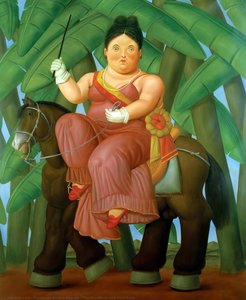
In the masterful hands of Fernando Botero, a simple street corner is transformed into a theatrical stage where life unfolds with exaggerated grace and exuberant color. Dog Turning a Corner invites the viewer into a sun-drenched village scene, captured with the unmistakable warmth that defines the Colombian master's vision. The painting presents a bustling tableau of small-town life, where yellow buildings glow under an unseen sun, casting a nostalgic radiance over the cobblestone paths. At the heart of this rhythmic composition is a curious canine, caught in the mid-motion of navigating a bend, serving as a whimsical protagonist that guides our eyes through the lively architecture and the wandering figures that populate this miniature world.
The essence of this piece lies in its profound use of Boterismo, Botero’s signature style characterized by the deliberate inflation of forms. There is no trace of the skeletal or the thin here; instead, every figure, from the people strolling through the plaza to the very buildings themselves, possesses a magnificent, sculptural volume. This technique does more than just create a visual quirk; it imbues the scene with a sense of abundance, stability, and a playful defiance of reality. The way the dog and the villagers occupy space suggests a world that is heavy with importance and joy, making the painting feel less like a mere observation and more like a celebration of existence itself.
A Symphony of Color and Social Whimsy
Technically, the work is a triumph of color harmony and compositional balance. The vibrant yellows of the architecture act as a luminous backdrop, creating a high-contrast environment that makes the secondary colors pop with life. Small details, such as the delicate presence of birds drifting through the upper reaches of the canvas, add layers of movement and spontaneity to the structured geometry of the street. This careful arrangement ensures that while the scene is densely populated, it never feels cluttered; rather, it feels like a perfectly choreographed dance where every element—the architecture, the animals, and the humans—contributes to a singular, harmonious atmosphere.
For the discerning collector or interior designer, Dog Turning a Corner offers much more than aesthetic beauty. It serves as a powerful focal point that injects energy and a sense of optimistic storytelling into any space. The painting’s emotional impact is one of profound conviviality; it evokes the charm of a Mediterranean or Latin American afternoon, where time slows down and the simple act of turning a corner becomes an adventure. Whether placed in a contemporary gallery setting or as a centerpiece in a sophisticated residential lounge, this reproduction brings with it the legendary spirit of Botero—a legacy of volume, vitality, and an enduring love for the beauty found in the everyday.
Questions & Answers
Is "Dog Turning a Corner" more bright or more dark overall?
The recorded values for "Dog Turning a Corner" by Fernando Botero are: brilliant brightness, gentle luminance luminance.
What underlying hue runs through "Dog Turning a Corner" by Fernando Botero?
A golden yellow range hue runs through "Dog Turning a Corner" by Fernando Botero.
Is "Dog Turning a Corner" by Fernando Botero in the public domain, and why?
The copyright status of "Dog Turning a Corner" - still protected by copyright - follows from the artist's death in 1959.
Artist Biography
A Colombian Visionary: The Life and Art of Fernando Botero
Born in Medellín, Colombia, in 1932, Fernando Botero Angulo emerged as one of Latin America’s most celebrated and internationally recognized artists. His journey began not within the hallowed halls of art academies, but amidst the vibrant life and Baroque splendor of his native city. Isolated from mainstream artistic currents during his youth, young Botero found inspiration in the ornate colonial churches and bustling urban scenes of Medellín—a formative experience that would profoundly shape his unique aesthetic vision. This early exposure instilled a primitivist sensibility, an appreciation for simple yet powerful forms, which became a hallmark of his style. Initially drawn to the drama of bullfighting, he honed his skills through drawing, but quickly realized his path lay beyond the arena and towards a broader exploration of form and volume.The Genesis of ‘Boterismo’
Botero's artistic development was marked by a deliberate rejection of European modernism. After periods studying in Madrid and Paris, he found himself disillusioned with the prevailing avant-garde movements. Instead, he turned inward, seeking inspiration from the Old Masters—Velázquez, Goya, and Titian—and rediscovering the power of classical form. This exploration led to the birth of what would become known as ‘Boterismo,’ a style characterized by generous, exaggerated volumes. It wasn’t merely about depicting “fat people,” as some critics simplistically suggested; it was a conscious manipulation of proportion, a celebration of sensuality and abundance, and a subtle commentary on social and political realities. His figures—human, animal, or still life—possess a monumental presence, radiating both warmth and a quiet dignity. The early 1960s saw the solidification of this style, with paintings like *Presidential Family* (1967) becoming iconic representations of his burgeoning aesthetic. This work, in particular, subtly satirized Colombian political elites while simultaneously showcasing the captivating allure of Botero’s rounded forms.Expanding Horizons: Sculpture and Beyond
While initially renowned for his paintings, Botero's artistic ambition extended to sculpture in 1973 after relocating to Paris. This transition proved transformative, allowing him to explore volume and form in three dimensions. His monumental bronze sculptures began appearing in public spaces around the world—parks in New York, Florence, and Medellín—becoming beloved landmarks and symbols of his artistic vision. These sculptures weren’t merely scaled-up versions of his paintings; they possessed a unique physicality, inviting viewers to engage with them on a tactile level. Beyond painting and sculpture, Botero also demonstrated versatility through drawings and collages, often tackling politically charged subjects. His *Violence* series, created in response to the escalating conflict in Colombia, stands as a powerful testament to his commitment to social commentary. Similarly, his *Abu Ghraib* series directly addressed the abuses at the Iraqi prison, demonstrating his willingness to confront difficult truths through art.Legacy and Influence
Fernando Botero’s impact on the art world is undeniable. He became a cultural icon in Colombia, donating generously to museums and public spaces, solidifying his place as a national treasure. His work transcends geographical boundaries, resonating with audiences worldwide through its universal themes of humanity, sensuality, and social critique. While some initially dismissed ‘Boterismo’ as mere stylistic quirk, it has since been recognized as a significant contribution to figurative art. He challenged conventional notions of beauty and proportion, inviting viewers to reconsider their perceptions of the human form. His influence can be seen in the work of numerous contemporary artists who explore themes of body image, social satire, and cultural identity. Botero’s legacy extends beyond his artistic achievements; he inspired a generation of Latin American artists to embrace their own unique voices and perspectives on the world. He passed away in September 2023 at the age of 91, leaving behind an extraordinary body of work that continues to captivate and provoke thought.Key Characteristics & Notable Works
- Style: Boterismo – characterized by exaggerated volumes and proportions.
- Influences: Baroque art, Old Masters (Velázquez, Goya), Latin American folk art, pre-Columbian art.
- Themes: Colombian culture, social satire, political commentary, sensuality, the human form.
- Notable Works: *Mona Lisa, Age Twelve* (1959), *The Presidential Family* (1967), *Dancers* (1987), *Death of Pablo Escobar* (1999), *La Paloma de la Paz* (2016).
- Awards: International Sculpture Center’s Lifetime Achievement in Contemporary Sculpture Award (2012).

Fernando Botero
1932 - 1959 , Colombia
Quick Facts
- Full Name: Fernando Botero Angulo
- Nationality: Colombian
- Date Of Birth: 1932
- Date Of Death: 1959
- Place Of Birth: Medellín, Colombia
- Notable Artworks:
- Mona Lisa, Age Twelve
- The Presidential Family
- Walk in the hills
- Artistic Movement Or Style: Boterismo, Primitivism
- Artists Who Influenced This Artist:
- Diego Rivera
- Francisco de Goya
- Diego Velázquez
Related Articles
Golden Hues: Top 10 Paintings Dominated by Yellow Ochre |
Explore 10 iconic paintings bathed in golden yellow ochre! From Van Gogh's sunflowers to Monet’s haystacks, discover the stories behind these masterpieces. Find museum-quality art reproductions & elevate your home decor on .
From Walls to Galleries: The Bold Evolution of Street Art and Its Rise into High-End Collectibles
Explore the captivating journey of street art from urban walls to prestigious galleries. Discover how contemporary graffiti has evolved into a high-end collectible movement, redefining modern interior design and global art culture.
Golden Hues: 10 Masterpieces Dominated by Chrome Yellow | OriginalUniqueArt
Immerse yourself in golden light! Explore 10 famous paintings dominated by 'Chrome Yellow', from Van Gogh’s Sunflowers to Monet's Haystacks. Discover the stories behind these iconic Impressionist & Post-Impressionist masterpieces and find museum-quality art reproductions at OriginalUniqueArt.com.
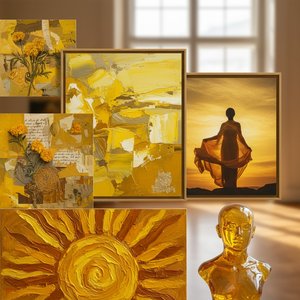
The Golden Hue: Exploring Symbolism & Emotion in Yellow Art
Explore the rich symbolism & emotional power of yellow in art history! From Van Gogh to Kandinsky, discover how artists used this vibrant hue. Expert analysis & high-quality reproductions at OriginalUniqueArt.
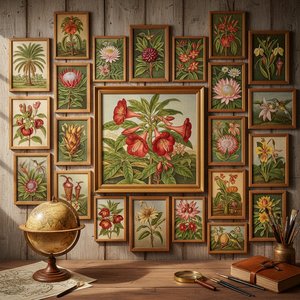
Marianne North's Masterpieces: 25 Botanical Paintings That Bloom With Adventure | OriginalUniqueArt
Journey through the vibrant world of Marianne North’s botanical paintings! Explore 25 iconic artworks from this Victorian artist, celebrating exotic flora & travel. Find museum-quality reproductions and curated decor ideas at OriginalUniqueArt.com.