Preview
 Send
Send Share
Share
 Details
 Guide
Guide

 Download
 Similars
 X-Ray
X-Ray Diaporama
 Q&A
Q&A Stats
StatsMlle Rose

- 81.0 x 65.0 cm


 Read More
Giclée / Art Print
Museum-quality giclée or canvas print with fast production and flexible finish options. ( Buy Hand Made Painting Switch to Digital Image)




P118B $10

P118H $10

P118W $10

P438Z $10

P508JH $12

P508YH $12

P805H $10

P805Z $10

P919BZ $10

P919G $10

P919XJ $10

P959ZH $10

P968JZ $12

W106C $8

W218G $10

W218JH $8

W218Y $10

W307PJ $10

W316G $10

W316PJ $8

W316Y $10

W398PJ $8

W4111J $10

W500HY $15

W500JH $15

W692G $12

W849H $8

W940BG $15

W953PJ $8




Pick from our preset sizes that match the artwork's original proportions.

Type the width and the height you need, to fit your frame or your wall. A print can only be cut, never made bigger than the picture, so a size with a different shape loses a part of the image. We send you a digital mockup to approve before we print anything. The picture shown on this page does not show the real cut — only the mockup does.
Worldwide Delivery () in 2 weeks instead of standard 4/5 weeks. (11 November)

Free Worldwide Express Shipping

High-Quality Linen Canvas

Full Shipping Insurance

Customs Tax Refund Guarantee

True Color Matching Guarantee

100-Day Return Policy (Defects Only)

100% Money-Back Guarantee

Bulk Discount Offer
 Glass option is only available in size under 110 CM

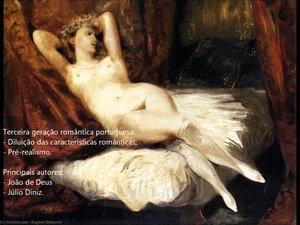
Mlle Rose
Giclée / Art Print
Reproduction Size
-


Total Price
$ 81
A Vision of Romantic Serenity
In the heart of the Louvre Museum resides a masterpiece that whispers rather than shouts, a painting that captures the very essence of a quiet, stolen moment. Eugène Delacroix’s Mlle Rose, completed in 1817, is far more than a mere portrait; it is a cornerstone of French Romanticism, embodying a profound fascination with emotion, beauty, and the ephemeral nature of time. At first glance, the viewer is met with a scene of tranquil repose, where a young woman sits gracefully, her legs crossed in a posture of effortless ease. There is no dramatic upheaval here, no grand historical narrative to decipher—only the soft, intimate atmosphere of a private afternoon. Delacroix masterfully directs our gaze through a carefully constructed space, using two strategically positioned chairs and a subtle bench to create a sense of depth that draws the observer into her quiet world.
The painting’s power lies in its ability to transform the everyday into the sublime. While the subject appears caught in a moment of simple introspection, with her gaze turned upward as if lost in thought, there is an underlying psychological depth that invites endless contemplation. The presence of a single cup resting on a surface hints at a ritual of daily life, grounding the ethereal beauty of the figure in a tangible, human reality. For collectors and designers alike, this piece offers a unique balance: it possesses the classical elegance required for sophisticated interiors while maintaining an emotional warmth that breathes life into any room.
The Alchemy of Color and Light
Delacroix was a revolutionary who sought to break free from the rigid, clinical precision of Neoclassicism. In Mlle Rose, we see the early stirrings of his legendary approach to color—a technique that would later serve as a vital precursor to the Impressionist movement. Eschewing harsh outlines and stark contrasts, he embraced a palette of soft, muted tones that evoke a sense of warmth and gentle light. His brushwork is far from static; through the skillful application of impasto, Delacroix layered thick, textured paint to capture the subtle nuances of shadow and the way light dances across skin and fabric.
This tactile quality gives the work an organic, living energy. The interplay between the soft flesh tones and the more grounded elements of the composition creates a rhythmic harmony that is both soothing and visually stimulating. To possess a reproduction of such a work is to bring a piece of art history’s most vibrant evolution into one's own space. It is a study in how light can define form not through sharp edges, but through the delicate transition of hues, making it an ideal centerpiece for those who appreciate fine art that celebrates the sensory experience of sight.
A Legacy of Emotion and Influence
To understand Mlle Rose is to understand the soul of the Romantic era. Delacroix, a painter driven by the quest for the sublime, drew inspiration from the masters of the Venetian Renaissance, such as Titian and Rubens, yet he infused their lessons with a uniquely French sensibility. His work moved away from the clarity of form toward an emphasis on movement and emotional resonance. This painting serves as a bridge between the structured past and the expressive future, capturing a sense of "romantic tranquility" that remains as potent today as it was in 1817.
For the discerning art lover or interior decorator, this work represents more than just aesthetic beauty; it represents a connection to a pivotal moment in Western art history. Whether placed in a sunlit study or a grand salon, the painting’s ability to evoke introspection and peace makes it a timeless addition. It stands as a testament to Delacroix's genius—a painter who could take a single, quiet figure and imbue her with the weight of an entire movement's longing, beauty, and spirit.
Questions & Answers
Is "Mlle Rose" by Eugène Delacroix in the public domain?
Regarding copyright, "Mlle Rose" is in the public domain - its copyright has expired.
Is "Mlle Rose" by Eugène Delacroix a well-known artwork?
"Mlle Rose" is classified as iconic.
Did "Mlle Rose" stay in its artist's homeland?
Yes - the artwork is kept in the artist's home country. The birth country of Eugène Delacroix is France, and the museum holding the original of "Mlle Rose" is in France.
Artist Biography
The Life and Art of Eugène Delacroix
The air in Charenton-Saint-Maurice near Paris is heavy with the weight of a changing era when Ferdinand Victor Eugène Delacroix enters the world on 26 April 1798. He does not merely inhabit the 19th century; he defines its emotional pulse. As the leader of the French Romantic school, Eugène Delacroix rejects the cold, calculated lines of the previous generation. He seeks something more volatile. His brush moves with a restless energy that mirrors the societal upheavals of France, trading academic restraint for a raw, individualistic expression of the human condition.
His career is a series of intense collisions between vision and reality. He navigates a landscape of political rebellion and personal passion, often finding himself at the center of the era's most turbulent moments. By the time he reaches the end of his life on 13 August 1863, he has fundamentally altered the trajectory of European painting. He leaves behind a legacy of movement and color that challenges the very foundations of classical tradition.
Early Life, Family and Training
The lineage of Eugène Delacroix is rooted in a blend of craftsmanship and diplomacy. His mother, Victoire Oeben, was the daughter of the cabinetmaker Jean-François Oeben. His father, Charles-François Delacroix, moved in influential circles, a fact reflected in the family's social standing. Eugène grew up alongside three much older siblings: Charles-Henri, Henriette, and Henri. This age gap created a household of established adults rather than a nursery of peers.
Education follows a path through the French academic system. He attended the Lycée Louis-le-Grand and the Lycée Pierre Corneille in Rouen. These years of study provided the intellectual foundation for his later explorations. The transition from student to artist begins under Pierre-Narcisse Guérin. A prominent neoclassical painter, Guérin provided the formal training necessary for the Parisian art world. While Guérin emphasized the strictures of Neoclassicism, the seeds of a different, more emotional approach were already being sown through this rigorous academic instruction.
Patrons and Artistic Protectors
The trajectory of Delacroix’s career finds its anchor in the shadow of Charles-Maurice de Talleyrand-Périgord. A man of immense political weight, Talleyrand was a close friend of the family and a figure who claimed a paternal connection to the young artist. This relationship provided more than mere social standing; it offered a direct conduit to the highest echelons of French influence. As Talleyrand navigated the shifting political tides, serving both the Restoration and King Louis-Philippe, he ensured Delacroix remained positioned within the center of Parisian life. Through him, the artist received numerous anonymous commissions, allowing his work to circulate through elite circles under a veil of discretion.
Protection extended into the political machinery of the mid-nineteenth century. Charles Auguste Louis Joseph, duc de Morny, acted as another vital shield for the painter. This support system allowed Delacroix to navigate a landscape of shifting aesthetic values and political upheaval. While the artist’s style often challenged the established order, his access to powerful patrons provided the stability necessary to pursue his specific vision of Romanticism. These connections bridged the gap between the studio and the state, ensuring that his presence in the art world remained constant despite the turbulence of the era.
The Transformative Journey to North Africa
The year 1832 marks a sudden shift in Delacroix's trajectory. He travels to North Africa as part of a diplomatic mission to the Sultan of Morocco. This is no mere sightseeing trip; it is a period of intense observation. While in Algeria, the landscape and its people leave a lasting impression on him. He moves through these territories, absorbing the light and the customs of a world vastly different from the Parisian salons.
The scale of his output during these months is immense. He produces over 100 paintings and drawings, capturing the essence of the region through rapid sketches and finished works. These studies do more than document a trip; they help shape Orientalism. His vision of the East is built from these direct encounters, transforming the way European art perceives North African life. The sketches and paintings from this period provide the visual language for a new movement.
- Jewish Wedding in Morocco (about 1839)
- The Women of Algiers (1834)
Technique and Expressive Style
The canvas becomes a site of friction. Delacroix rejects the rigid, clean lines of Neoclassicism, opting instead for loose brushwork and heavy, rich textures. He prioritizes chromatic intensity and emotional expression over the precision of draftsmanship. Light and shadow do not merely illuminate; they sculpt. Through the use of chiaroscuro, he carves forms out of darkness, creating a sense of depth and psychological weight. This approach moves away from the academic requirement for perfect contours, favoring instead the immediate impact of color.
His influence extends into the mechanics of sight. By studying the optical effects of color, he develops a language of light that later shapes the work of the Impressionists. This focus on how the eye perceives shifting hues marks a departure from the static compositions of his predecessors. Beyond the large-scale oils, his hand is equally precise in other mediums. As a fine lithographer, he translates complex narratives into striking graphic works, illustrating the writings of William Shakespeare and Johann Wolfgang von Goethe.
Key Works and Iconic Masterpieces
The year 1825 marks a sudden shift in his output. He produces The Execution of Doge Marino Faliero and The Odalisque, works that signal a departure from the rigid constraints of the previous era. These pieces prioritize emotional intensity and a departure from academic precision. Chaos and passion begin to define his canvas.
The scale of his ambition expands with The Death of Sardanapalus. Inspired by Lord Byron, the scene erupts in a spectacle of decadent destruction. It is a monumental work of turmoil. By 1830, the focus turns toward the political pulse of France. Liberty Leading the People captures the July Revolution, using an allegorical figure to embody the spirit of rebellion and national identity. The composition is dynamic, pulling the viewer into the center of the struggle.
His gaze eventually turns toward the North African landscape. In 1834, he completes The Women of Algiers. This work reflects the influence of his travels, capturing a sense of atmosphere through a specific use of light and color. His brushwork remains loose, favoring the expression of a mood over the meticulous detail of his predecessors.
- The Execution of Doge Marino Faliero (1825)
- The Odalisque (1825)
- Liberty Leading the People (1830)
- The Women of Algiers (1834)
Legacy and Lasting Influence
The shift in European painting finds its roots in his brushwork. By prioritizing the optical effects of color over the rigid precision of line, he dismantled the dominance of Neoclassicism. This departure created the necessary friction for the emergence of Impressionism and Post-Impressionism. His experiments with chromatic intensity and loose, expressive strokes provided a blueprint for those who would later seek to capture light and atmosphere through pure color.
His fascination with the exotic and the "other" triggered a ripple effect through the late 19th century. This passion for North African landscapes and traditions provided the essential spark for the Symbolist movement. The echoes of his vision reach far into the modern era, influencing a lineage of artists including Henri Matisse, Wassily Kandinsky, and Paul Klee. He remains a bridge between eras, often categorized as one of the last old Masters of painting.
Where to See the Works Today
The traces of Delacroix’s life remain anchored in Paris. At the Musée national Eugène Delacroix, the atmosphere shifts from the public eye to the private sphere. This museum occupies the artist's last apartment, preserving the very studio where he worked. Visitors walk through the space where his palettes and easels once sat, surrounded by his drawings and the personal artifacts collected during his time in North Africa.
Beyond this intimate setting, his presence dominates the halls of the Musée du Louvre. Here, the scale of his vision expands. The museum holds many of his major works, including the massive canvases that defined the Romantic movement. Across the Atlantic, the Metropolitan Museum of Art in New York maintains a significant presence of his output, ensuring his influence reaches far beyond the borders of France. In the United Kingdom, the Fitzwilliam Museum in Cambridge houses The Odalisque, a piece that highlights his fascination with the exotic.
The reach of his brush extends to other specialized collections as well. At the Musée Fabre in Montpellier, the Portrait of Alfred Bruyas remains on view, offering a glimpse into the social circles of his era. To see his work is to encounter the physical remnants of a life spent chasing light and color across continents.
- The Death of Sardanapalus
- Liberty Leading the People
- The Women of Algiers

Eugène Delacroix
1798 - 1863 , France
Related Articles
Serene Masterpieces: 10 Artworks That Define Tranquility | OriginalUniqueArt
Find peace with 10 iconic artworks embodying tranquility! Explore Monet's water lilies, Van Gogh’s starry night & more. Discover the stories behind these serene masterpieces and bring calming art into your home with museum-quality reproductions from OriginalUniqueArt.com.

Ferdinand Delacroix: Romanticism's Revolutionary Brush – A Study of Passion, Politics, and Painterly Innovation
Explore the revolutionary art of Eugène Delacroix, leader of French Romanticism. Discover his masterful use of color, political engagement, and lasting influence on modern painting. Learn about key works & history.
Tranquil Masterpieces: 10 Artworks for Serene Decor & Emotional Well-being |
Find serenity with our Top 10 tranquil artworks! Explore masterpieces by Monet, Van Gogh & more. Discover the stories behind calming Impressionist landscapes and peaceful Japanese art. Museum-quality reproductions at .
Romanticism's Greatest Artworks: 10 Masterpieces for Your Home |
Journey through Romanticism's soul with 10 iconic artworks by Delacroix, Goya & Turner. Explore emotional landscapes and historical drama. Find museum-quality art reproductions to elevate your home at – Discover all masterpieces online!

The Enduring Allure of the Nude: A Historical & Artistic Exploration of the Human Form
Explore the captivating history of nude art! Discover iconic paintings & artists from classical to modern eras. Uncover symbolism, techniques & find museum-quality reproductions at OriginalUniqueArt.