Preview
 Send
Send Share
Share
 Details
 Guide
Guide

 Download
 Similars
 X-Ray
X-Ray Diaporama
 Q&A
Q&A Stats
StatsApollo Slays Python (detail)


 Read More
Giclée / Art Print
Museum-quality giclée or canvas print with fast production and flexible finish options. ( Buy Hand Made Painting Switch to Digital Image)




P118B $10

P118H $10

P118W $10

P438Z $10

P508JH $12

P508YH $12

P805H $10

P805Z $10

P919BZ $10

P919G $10

P919XJ $10

P959ZH $10

P968JZ $12

W106C $8

W218G $10

W218JH $8

W218Y $10

W307PJ $10

W316G $10

W316PJ $8

W316Y $10

W398PJ $8

W4111J $10

W500HY $15

W500JH $15

W692G $12

W849H $8

W940BG $15

W953PJ $8




Pick from our preset sizes that match the artwork's original proportions.

Type the width and the height you need, to fit your frame or your wall. A print can only be cut, never made bigger than the picture, so a size with a different shape loses a part of the image. We send you a digital mockup to approve before we print anything. The picture shown on this page does not show the real cut — only the mockup does.
Worldwide Delivery () in 2 weeks instead of standard 4/5 weeks. (29 October)

Free Worldwide Express Shipping

High-Quality Linen Canvas

Full Shipping Insurance

Customs Tax Refund Guarantee

True Color Matching Guarantee

100-Day Return Policy (Defects Only)

100% Money-Back Guarantee

Bulk Discount Offer
 Glass option is only available in size under 110 CM

Apollo Slays Python (detail)
Giclée / Art Print
Reproduction Size
-


Total Price
$ 81
A Clash of Titans: Delacroix’s Dramatic Vision
This captivating detail from Eugène Delacroix's *Apollo Slays Python* plunges us into a world of raw emotion and dynamic struggle. While often interpreted through the lens of biblical narratives like David and Goliath, the scene draws heavily on classical mythology – specifically, the story of Apollo vanquishing the monstrous serpent Python at Delphi. Completed around 1850, this work exemplifies Delacroix’s mastery of Romantic painting, a style that prioritized feeling and dramatic impact over Neoclassical restraint.Style & Technique: The Essence of French Romanticism
Delacroix, a leading figure in the French Romantic movement, rejected the precise lines and cool palettes favored by his contemporaries like Ingres. Instead, he embraced expressive brushwork, rich color, and dynamic compositions – influences readily apparent here. The painting’s surface is alive with visible strokes, creating a sense of turbulent energy. This *impasto*-like texture isn't merely decorative; it amplifies the emotional intensity of the scene. The artist skillfully employs dramatic chiaroscuro—the strong contrast between light and shadow—to highlight key figures and heighten the drama. The perspective is deliberately flattened, focusing attention on the central conflict rather than striving for strict realism.Decoding the Symbolism
Every element within this composition carries symbolic weight. The serpent, Python, represents chaos, primal fear, and perhaps even temptation – a formidable obstacle to overcome. Apollo, the muscular figure locked in combat, embodies courage, reason, and divine order. The ascending angel signifies hope, salvation, and the intervention of higher powers. This interplay between earthly struggle and celestial assistance is central to the Romantic sensibility. The composition itself guides our eye, beginning with the coiled serpent and culminating in the hopeful ascent of the angelic figure.Historical Context & Artistic Influences
Delacroix’s work was deeply informed by his study of earlier masters, particularly Rubens and the Venetian Renaissance painters. He admired their vibrant color palettes and dynamic compositions, qualities he sought to emulate in his own art. His fascination with exoticism – fueled by travels to North Africa – also infused his paintings with a sense of drama and otherworldliness. Delacroix’s artistic circle included literary giants like Lord Byron and Théodore Géricault, further shaping his Romantic worldview.Emotional Impact & Interior Design Considerations
*Apollo Slays Python* is not merely a depiction of a mythological battle; it's an exploration of the human condition – our struggles against adversity, our yearning for hope, and our capacity for heroism. The painting’s warm color palette—dominated by browns, reds, and golds—evokes feelings of passion, urgency, and even violence.- For interior design, a high-quality reproduction would serve as a powerful focal point in a study, library, or living room.
- The painting’s dramatic composition and rich colors complement both traditional and contemporary settings.
- Consider pairing it with furniture featuring warm wood tones and textured fabrics to enhance its visual impact.
- Its themes of courage and triumph make it an inspiring addition to any space.
Questions & Answers
Does "Apollo Slays Python (detail)" by Eugène Delacroix use strong contrasts or soft harmonies?
The color analysis of "Apollo Slays Python (detail)" by Eugène Delacroix records a statement contrast and a strong color unity harmony.
What is the overall mood of "Apollo Slays Python (detail)" by Eugène Delacroix?
The overall mood of "Apollo Slays Python (detail)" by Eugène Delacroix is dramatic. The mood describes the general atmosphere of the work.
Is "Apollo Slays Python (detail)" by Eugène Delacroix in the public domain?
"Apollo Slays Python (detail)" by Eugène Delacroix is in the public domain - its copyright has expired. This status governs how the image of the work may be reproduced.
Artist Biography
A Revolutionary Brush: The Life and Legacy of Eugène Delacroix
Ferdinand Victor Eugène Delacroix, born in Charenton-Saint-Maurice near Paris in 1798, was more than just a painter; he was the embodiment of Romanticism’s fervent spirit. Emerging as a leading figure in French art during a period of societal upheaval and shifting aesthetic ideals, Delacroix rejected the rigid formalism of Neoclassicism, instead embracing drama, emotion, and a vibrant palette that would forever alter the course of painting. His life, though marked by personal tragedy, became inextricably linked with his artistic vision—a quest to capture the sublime, explore exotic realms, and express the raw power of human experience.
Delacroix’s early years were shaped by a complex family history and a somewhat fragile health. Orphaned at sixteen, he found guidance in the influential figure of Charles-Maurice de Talleyrand-Périgord, who many believed to be his true father. This connection provided him with crucial patronage and access to the Parisian art world. He initially studied under Pierre-Narcisse Guérin, a respected academic painter, but it was the work of Théodore Géricault—particularly his monumental *The Raft of the Medusa*—that truly ignited Delacroix’s artistic passion. He even posed for Géricault, absorbing the elder artist's commitment to realism and emotional intensity.
From Historical Scenes to Exotic Visions
Delacroix burst onto the Salon scene in 1822 with *Dante and Virgil in Hell*, a work that immediately signaled his departure from established norms. Inspired by Dante Alighieri’s *Inferno*, the painting showcased a bold use of color, dynamic composition, and a palpable sense of psychological turmoil. This marked the beginning of a career dedicated to exploring themes of passion, conflict, and the human condition. While initially met with mixed reactions—some critics lauded his originality, others dismissed his work as chaotic and lacking in classical refinement—Delacroix persevered, developing a distinctive style characterized by loose brushwork, rich textures, and an emphasis on movement.
His fascination extended beyond historical and literary subjects. A pivotal journey to North Africa in 1832 profoundly impacted his artistic trajectory. Immersing himself in the vibrant culture of Morocco, Delacroix was captivated by the exotic landscapes, the nomadic lifestyle of the Arab tribes, and the intensity of their traditions. This experience infused his paintings with a newfound sense of color, light, and energy, as seen in works like *Arab Horses Fighting* and numerous studies of Algerian life. He wasn’t merely documenting these scenes; he was seeking to understand the underlying spirit of a culture vastly different from his own.
The Power of Color and Political Engagement
Delacroix's mastery of color is arguably his most enduring legacy. He drew inspiration from the Baroque exuberance of Rubens and the Venetian Renaissance masters, prioritizing chromatic intensity over precise draftsmanship. He understood that color could evoke emotion, create atmosphere, and convey meaning in ways that line alone could not. This innovative approach profoundly influenced subsequent generations of artists, paving the way for Impressionism and Post-Impressionism.
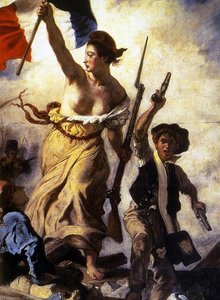
Beyond his aesthetic innovations, Delacroix was a politically engaged artist. His most iconic work, *Liberty Leading the People* (1830), is not simply a depiction of the July Revolution; it’s a powerful allegory for freedom and rebellion. The painting's dynamic composition, allegorical figures, and raw emotional power cemented its place in art history as a symbol of French national identity and revolutionary ideals. It wasn’t just about documenting an event; it was about capturing the spirit of a nation fighting for its liberty.
A Lasting Influence
Delacroix continued to paint prolifically throughout his life, exploring diverse themes ranging from Shakespearean tragedies to biblical narratives. He also made significant contributions as a lithographer, illustrating works by literary giants like William Scott and Johann Wolfgang von Goethe. His studio became a hub for artistic exchange, attracting aspiring painters who were drawn to his unconventional approach.
By the time of his death in 1863, Delacroix had firmly established himself as one of France’s greatest artists. His influence extended far beyond the Romantic movement, shaping the development of modern painting and inspiring countless artists with his bold use of color, dynamic compositions, and unwavering commitment to emotional expression. He remains a pivotal figure in art history—a testament to the power of individual vision and the enduring allure of the sublime.

Eugène Delacroix
1798 - 1863 , France
Quick Facts
- Full Name: Eugène Delacroix
- Nationality: French
- Date Of Birth: 1798
- Date Of Death: 1863
- Place Of Birth: Chantonnay, France
- Notable Artworks:
- Liberty Leading the People
- The Death of Sardanapalus
- Arab Horses Fighting
- Artistic Movement Or Style: Romanticism
- Artists Who Influenced This Artist:
- Rubens
- Venetian Renaissance painters
- Artists Or Movements Influenced By This Artist:
- Impressionism
- Post-Impressionism
Related Articles

Romantic Realism's Finest: 10 Masterpieces for Your Home | OriginalUniqueArt
Explore 10 defining masterpieces of Romantic Realism! Discover Courbet, Millet & Daumier's powerful paintings—capturing emotion and social realities. Find museum-quality reproductions for your home at OriginalUniqueArt.com.

Ferdinand Delacroix: Romanticism's Revolutionary Brush – A Study of Passion, Politics, and Painterly Innovation
Explore the revolutionary art of Eugène Delacroix, leader of French Romanticism. Discover his masterful use of color, political engagement, and lasting influence on modern painting. Learn about key works & history.

Romantic Landscapes: 10 Masterpieces for Your Home | OriginalUniqueArt
Journey through 10 Romantic landscape masterpieces by Friedrich, Turner & Cole. Explore emotional art, sublime nature scenes & iconic 19th-century paintings. Find museum-quality reproductions for your home at OriginalUniqueArt.com – discover the full collection online!

Echoes of Olympus: Mythological Narratives in Western Art Through the Ages
Explore the captivating history of mythological narratives in Western art! From ancient Greece to modern masterpieces, discover iconic artworks & symbolism. Expert analysis and high-quality reproductions at OriginalUniqueArt.
Timeless Legends: A Curated Guide to the Eternal Allure of Mythological Masterpieces
Embark on a sophisticated journey through the eternal allure of mythological art. Discover how master painters breathe life into ancient legends, from Greek deities to Baroque masterpieces, and learn to curate these timeless narratives within your own exquisite art collection.