Preview
 Send
Send Share
Share
 Details
 Guide
Guide

 Download
 Similars
 X-Ray
X-Ray Diaporama
 Stats
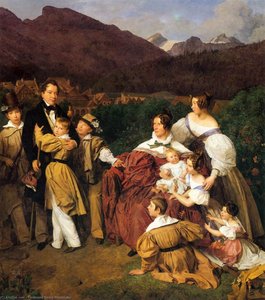
StatsThe Soup Kitchen
 Oil On Canvas
- WallArt
- Biedermeier Realism
 1859
1859 94.0 x 122.0 cm
 Austrian Gallery Belvedere
 Read More
Giclée / Art Print
Museum-quality giclée or canvas print with fast production and flexible finish options. ( Buy Hand Made Painting Switch to Digital Image)




P118B $10

P118H $10

P118W $10

P438Z $10

P508JH $12

P508YH $12

P805H $10

P805Z $10

P919BZ $10

P919G $10

P919XJ $10

P959ZH $10

P968JZ $12

W106C $8

W218G $10

W218JH $8

W218Y $10

W307PJ $10

W316G $10

W316PJ $8

W316Y $10

W398PJ $8

W4111J $10

W500HY $15

W500JH $15

W692G $12

W849H $8

W940BG $15

W953PJ $8




Pick from our preset sizes that match the artwork's original proportions.

Type the width and the height you need, to fit your frame or your wall. A print can only be cut, never made bigger than the picture, so a size with a different shape loses a part of the image. We send you a digital mockup to approve before we print anything. The picture shown on this page does not show the real cut — only the mockup does.
Worldwide Delivery () in 2 weeks instead of standard 4/5 weeks. (23 October)

Free Worldwide Express Shipping

High-Quality Linen Canvas

Full Shipping Insurance

Customs Tax Refund Guarantee

True Color Matching Guarantee

100-Day Return Policy (Defects Only)

100% Money-Back Guarantee

Bulk Discount Offer
 Glass option is only available in size under 110 CM

The Soup Kitchen
Giclée / Art Print
Reproduction Size
-


Total Price
$ 81
A Window into Victorian Charity: Ferdinand Georg Waldmüller’s “The Soup Kitchen”
Ferdinand Georg Waldmüller's "The Soup Kitchen," painted in 1859, isn’t merely a depiction of a charitable institution; it’s a poignant snapshot of Victorian society grappling with poverty and the burgeoning role of public assistance. This oil on canvas, now residing within the Österreichische Galerie Belvedere in Vienna, offers a remarkably intimate glimpse into a world often obscured by grand narratives of progress – a world where simple sustenance was a profound act of compassion.
The scene unfolds within a long, echoing hallway, leading the eye towards an arched doorway that hints at a larger, unseen space. The composition is meticulously structured, drawing us immediately to a central group of women and children patiently awaiting their turn for a meal. Waldmüller’s skill lies not just in his realistic portrayal of these figures – their worn clothing, weathered faces, and expressions ranging from quiet hope to weary resignation – but also in the subtle orchestration of light and shadow. The muted palette, dominated by earthy browns, greys, and ochres, creates a somber yet strangely comforting atmosphere, mirroring the hardships faced by those seeking aid.
The Biedermeier Aesthetic: Intimacy and Everyday Life
“The Soup Kitchen” is firmly rooted in the Biedermeier art movement, a reaction against the grandiosity of Neoclassicism. Biedermeier artists prioritized depicting scenes from everyday life – domestic interiors, landscapes, and portraits of ordinary people – with an emphasis on realism and emotional honesty. Waldmüller masterfully embodies this aesthetic, eschewing dramatic poses or heroic narratives in favor of capturing a quiet moment of shared humanity. The painting’s focus isn't on the act of giving, but rather on the receiving—the dignity and resilience displayed by those who rely on charity.
Notice the details: the worn fabric of the women’s dresses, the small hands clutching bowls, the attentive gazes exchanged between neighbors. These seemingly insignificant elements collectively build a powerful narrative of community and mutual support. The artist's careful attention to texture – the rough wool of the clothing, the smooth surface of the tables – further grounds the scene in tangible reality.
Technique and Composition: A Masterclass in Realism
Waldmüller’s technical prowess is evident throughout the painting. He employs a meticulous approach to rendering form and light, utilizing subtle gradations of color to create a sense of depth and volume. The long hallway, with its receding perspective, draws the viewer into the scene, while the arched doorway offers a tantalizing glimpse beyond – perhaps symbolizing hope or the promise of a brighter future.
The composition is carefully balanced, with the central group of figures anchoring the scene and the background elements providing context. The use of horizontal lines—the hallway floor, the tables—creates a sense of stability, while the verticality of the doorway suggests aspiration. Waldmüller’s ability to capture both the physical details and the emotional nuances of his subjects is truly remarkable.
Symbolism and Historical Context: A Reflection of Victorian Society
“The Soup Kitchen” isn't simply a record of poverty; it’s a commentary on the social conditions of 19th-century Vienna. The rise of industrialization and urbanization had led to widespread unemployment and poverty, creating a significant need for charitable institutions like soup kitchens. These spaces offered not just food but also a sense of community and dignity to those who were marginalized by society.
Interestingly, Waldmüller’s work resonates with the style of Hans Makart, another prominent Austrian painter known for his dramatic landscapes and portraits. However, while Makart often depicted heroic figures and grand scenes, Waldmüller focuses on the quiet dignity of everyday life—a subtle yet powerful shift in artistic perspective. The painting serves as a poignant reminder of the social challenges faced by Victorian society and the importance of compassion and empathy.
High-quality reproductions of “The Soup Kitchen” are available through OriginalUniqueArt.com, allowing art enthusiasts to bring this evocative masterpiece into their homes and connect with its powerful message. The original resides at the Österreichische Galerie Belvedere in Vienna, a testament to Waldmüller’s enduring legacy.
Questions & Answers
How old was Ferdinand Georg Waldmüller when creating "The Soup Kitchen" in 1859?
Ferdinand Georg Waldmüller made "The Soup Kitchen" at the age of 66. The artist was born in 1793 and the work is dated 1859.
How big is the original "The Soup Kitchen"?
The recorded dimensions of "The Soup Kitchen" by Ferdinand Georg Waldmüller are 94 x 122 cm. Reproductions can be ordered in other sizes while keeping the same proportions.
Which artist and which style stand behind "The Soup Kitchen"?
"The Soup Kitchen" was created by Ferdinand Georg Waldmüller in the Biedermeier Realism style. Artist and movement identify the work's tradition.
Artist Biography
Early Life and Artistic Beginnings
Ferdinand Georg Waldmüller entered the world in Vienna, Austria, on January 15, 1793, a period of significant societal shifts and artistic ferment. His early life was unfortunately marked by hardship; the untimely death of his father cast a shadow over the family’s fortunes, instilling in young Ferdinand an early awareness of life's precariousness—a theme that would later resonate deeply within his art. Despite these challenges, Waldmüller demonstrated a clear aptitude for drawing and painting, leading him to enroll at the Academy of Fine Arts Vienna in 1807. However, his attendance proved somewhat erratic, reflecting perhaps a restless spirit or a dissatisfaction with the rigid academic constraints of the time. Initially, he gravitated towards portraiture, a reliable path for an aspiring artist seeking patronage, but it was the allure of landscapes and genre scenes—depictions of everyday life—that truly captured his imagination and would ultimately define his artistic legacy. These early explorations laid the groundwork for a style characterized by meticulous observation and a profound connection to the natural world.A Career Forged in Realism and Controversy
Waldmüller’s career unfolded as a dynamic interplay between artistic innovation and institutional resistance. He supplemented his income during his formative years by working as a set designer and continuing to paint portraits, often while touring with his wife, the singer Katharina Weidner. This itinerant lifestyle exposed him to diverse environments and broadened his artistic horizons. By the 1820s, Waldmüller had begun to develop a distinctive style—a commitment to realistic depictions of everyday life, particularly in rural settings. He wasn’t interested in idealizing or romanticizing; instead, he sought to capture the world as it truly was, with all its beauty and imperfections. This dedication to realism brought him both acclaim and criticism. In 1819, he secured a professorship at the Academy of Fine Arts Vienna, but his tenure was fraught with conflict. Waldmüller passionately advocated for direct observation from nature—plein air painting—and openly criticized the academy’s emphasis on formulaic instruction and adherence to established conventions. His outspokenness led to repeated clashes with the artistic establishment and ultimately contributed to his forced retirement in 1857. Frequent journeys to Italy, beginning in 1825, and the idyllic Salzkammergut region profoundly influenced his landscape painting, refining his ability to capture light, texture, and atmosphere with remarkable precision.Themes of Rural Life and Social Commentary
Waldmüller’s artistic output is remarkably diverse, encompassing portraits, landscapes, and genre scenes, but a common thread unites these varied subjects: a deep engagement with the realities of 19th-century Austrian life. Works like Venetian Fruit Seller (1826), an early example of his genre painting style, demonstrate his skill in capturing fleeting moments of everyday existence. His self-portrait from 1828 reveals a keen understanding of human psychology and the nuances of character. Louise Mayer (1836) stands as a testament to his mastery of portraiture, while View of Ischl (1838) showcases his evolving landscape abilities. However, it was paintings like On All Souls' Day (1839), The Love Letter (1849), and Bathing Women (c. 1848–1849) that truly distinguished him. These works weren’t merely picturesque depictions of rural life; they were imbued with a socially critical perspective, subtly exposing the hardships faced by ordinary people—the impact of poverty, misfortune, and the complexities of family dynamics. He didn't shy away from portraying the less glamorous aspects of existence, offering a more honest and nuanced representation of society than was typically seen in academic art.Legacy and Historical Significance
Ferdinand Georg Waldmüller is rightfully regarded as one of the most important Austrian painters of the Biedermeier period. His unwavering commitment to natural observation and plein air painting anticipated many of the artistic innovations that would characterize Impressionism decades later. He challenged conventional depictions of rural life, injecting a dose of realism and social commentary into a genre often dominated by idealized imagery. Despite facing criticism and setbacks throughout his career—including forced retirement from the Academy—Waldmüller’s work eventually gained international recognition, culminating in exhibitions at the World Exhibition in Paris (1855) and Buckingham Palace (1856), where he received accolades from Emperor Napoleon III and Queen Victoria respectively. He was knighted shortly before his death on August 23, 1865, in Hinterbrühl, a belated acknowledgment of his artistic contributions. Waldmüller’s legacy extends beyond his individual paintings; he influenced generations of artists with his detailed realism, his focus on everyday subjects, and his courageous willingness to challenge the status quo. He remains a pivotal figure in Austrian art history—a true pioneer who paved the way for new approaches to landscape and genre painting.
Ferdinand Georg Waldmüller
1793 - 1865 , Austria
Quick Facts
- Full Name: Ferdinand Georg Waldmüller
- Nationality: Austrian
- Date Of Birth: 1793
- Date Of Death: 1865
- Place Of Birth: Vienna, Austria
- Notable Artworks:
- Venetian Fruit Seller
- Self-Portrait
- Louise Mayer
- View of Ischl
- On All Souls' Day
- The Love Letter
- Bathing Women
- Artistic Movement Or Style: Biedermeier, Realism
- Artists Or Movements Influenced By This Artist: Impressionism
Related Articles

The Enduring Legacy of Oil on Canvas: Technique, History & Aesthetic Impact
Explore the rich history & techniques of oil painting – from Renaissance masters to Impressionism. Discover pigments, layering methods, and why this timeless medium endures. Expert insights for artists & art enthusiasts.

Oil on Canvas: A Historical & Technical Exploration of a Timeless Artistic Medium
Explore the rich history & enduring techniques of oil painting on canvas. Discover the science behind its longevity, conservation practices, and contemporary relevance. Expert insights for art enthusiasts.

The Enduring Power of Painting: A Historical & Contemporary Exploration of Form and Emotion
Explore the rich history & enduring techniques of oil painting with OriginalUniqueArt. Discover masterpieces, learn about art collecting, and find authentic handmade reproductions crafted by skilled artists.
The Soul of Impressionism: Why Oil on Canvas Captures Eternal Light and Timeless Emotion
Discover the enchanting alchemy of Impressionism. Explore how the mastery of oil on canvas, through glazing and impasto, captures eternal light and emotion. Perfect for lovers of Monet and Van Gogh seeking the profound depth of hand-painted fine art.

The Enduring Legacy of Oil on Canvas: Technique, History & Contemporary Practice
Explore the rich history & enduring techniques of oil painting on canvas. Discover the science behind its longevity, conservation practices, and contemporary relevance. Expert insights for art enthusiasts.