Preview
 Send
Send Share
Share
 Details
 Guide
Guide

 Download
 Similars
 X-Ray
X-Ray Diaporama
 Q&A
Q&A Stats
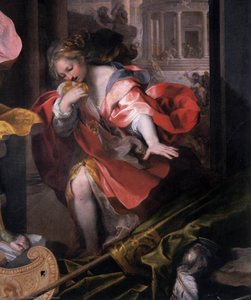
StatsComposition Study (for “Circumcision”, Paris, musée du Louvre)

- 43.0 x 58.0 cm


 Read More
Giclée / Art Print
Museum-quality giclée or canvas print with fast production and flexible finish options. ( Buy Hand Made Painting Switch to Digital Image)




P118B $10

P118H $10

P118W $10

P438Z $10

P508JH $12

P508YH $12

P805H $10

P805Z $10

P919BZ $10

P919G $10

P919XJ $10

P959ZH $10

P968JZ $12

W106C $8

W218G $10

W218JH $8

W218Y $10

W307PJ $10

W316G $10

W316PJ $8

W316Y $10

W398PJ $8

W4111J $10

W500HY $15

W500JH $15

W692G $12

W849H $8

W940BG $15

W953PJ $8




Pick from our preset sizes that match the artwork's original proportions.

Type the width and the height you need, to fit your frame or your wall. A print can only be cut, never made bigger than the picture, so a size with a different shape loses a part of the image. We send you a digital mockup to approve before we print anything. The picture shown on this page does not show the real cut — only the mockup does.
Worldwide Delivery () in 2 weeks instead of standard 4/5 weeks. (4 November)

Free Worldwide Express Shipping

High-Quality Linen Canvas

Full Shipping Insurance

Customs Tax Refund Guarantee

True Color Matching Guarantee

100-Day Return Policy (Defects Only)

100% Money-Back Guarantee

Bulk Discount Offer
 Glass option is only available in size under 110 CM

Composition Study (for “Circumcision”, Paris, musée du Louvre)
Giclée / Art Print
Reproduction Size
-


Total Price
$ 81
A Window into a Sacred Moment: Federico Barocci’s Composition Study
Federico Fiori Barocci's "Composition Study (for ‘Circumcision’, Paris, musée du Louvre)” isn’t merely a preparatory sketch; it’s a profound distillation of the artist’s vision for a monumental work depicting a pivotal scene from biblical history. Completed around 1590, this drawing offers an intimate glimpse into Barocci's meticulous process and reveals a remarkable sensitivity to light, gesture, and the emotional weight of the subject matter – the Circumcision of Isaac. It’s a piece that transcends its status as a study, becoming a miniature masterpiece in itself, brimming with the artist’s characteristic blend of Renaissance restraint and burgeoning Baroque dynamism.
The Master’s Technique: Pastel and the Dawn of a New Era
Barocci's masterful use of pastel is immediately striking. The delicate washes of color – ranging from soft pinks and blues to earthy browns and ochres – create an ethereal atmosphere, imbuing the scene with a sense of otherworldly grace. Unlike the heavier pigments favored by his predecessors, Barocci embraced the pastel’s ability to capture subtle nuances of light and shadow, producing effects that shimmer and glow. This technique wasn't simply a matter of preference; it was revolutionary. Barocci is widely considered one of the earliest artists to fully exploit the medium’s potential, paving the way for its later adoption by Rubens and other Baroque masters. The drawing itself demonstrates this – the layering of pastel creates an incredible depth and luminosity, capturing the texture of fabrics, skin tones, and even the rough surface of the stone altar.
- Pastel Layering: Barocci’s technique involved building up layers of pastel to achieve complex color gradations.
- Light & Shadow: The subtle shifts in tone create a remarkable sense of volume and depth.
- Emotional Resonance: The soft, luminous quality contributes significantly to the drawing's evocative power.
A Scene of Ritual and Reverence
The composition itself is carefully constructed, guiding the viewer’s eye through the scene with a masterful understanding of perspective and spatial relationships. The figures are arranged in a dynamic yet balanced manner, creating a sense of movement and drama. The central focus is clearly Isaac, bathed in a soft light that highlights his youthful vulnerability. Around him gather the key participants – Abraham, his aged servant, and the sacrificial animal. Note the meticulous detail with which Barocci renders each figure’s expression—a mixture of solemnity, reverence, and perhaps even apprehension. The inclusion of the altar and the surrounding objects subtly reinforces the ritualistic nature of the event.
The drawing's historical context is equally important. It was created during a period of intense religious fervor in Italy, as the Counter-Reformation sought to revitalize Catholic faith. Barocci’s work reflects this spirit, conveying a sense of profound spiritual significance and emotional intensity. The scene itself—the sacrifice of Isaac—is a powerful allegory for obedience, faith, and divine grace.
Beyond the Sketch: A Legacy of Emotion
While intended as a preparatory study, "Composition Study (for ‘Circumcision’, Paris, musée du Louvre)” stands as a testament to Barocci’s artistic genius. It's not just a technical exercise; it’s a deeply felt expression of human emotion and spiritual contemplation. The drawing invites us to step into the artist’s mind and witness his creative process firsthand. Reproductions of this work, skillfully executed in high-quality materials, offer a tangible connection to this remarkable artistic achievement – a window into a sacred moment captured with unparalleled sensitivity and artistry.
Questions & Answers
Can I examine "Composition Study (for “Circumcision”, Paris, musée du Louvre)" in more detail?
The X-Ray page of "Composition Study (for “Circumcision”, Paris, musée du Louvre)" by Federico Fiori Barocci is an interactive viewer that lets you slide through eleven optical layers of the artwork's image, including an X-ray style view.
What does "Composition Study (for “Circumcision”, Paris, musée du Louvre)" by Federico Fiori Barocci bring to an interior?
With its calm mood, "Composition Study (for “Circumcision”, Paris, musée du Louvre)" is suggested for a living room.
Where can I find a guide to "Composition Study (for “Circumcision”, Paris, musée du Louvre)"?
A Guide page is available for "Composition Study (for “Circumcision”, Paris, musée du Louvre)" by Federico Fiori Barocci: a printable factsheet about the artwork, designed for students and classroom use.
Artist Biography
Early Life and Training
- Born: Urbino, Italy (1535)
- Died: 1612
- Federico Fiori Barocci, an Italian Renaissance painter and printmaker, was born in 1535 in Urbino, Italy.
- His original name was Federico Fiori, and he was nicknamed "il Baroccio," which means a two-wheel cart drawn by oxen in northwestern Italian dialects.
- Barocci received his earliest apprenticeship with his father, Ambrogio Barocci, a sculptor of some local eminence.
- He was then apprenticed with the painter Battista Franco in Urbino. This training laid the foundation for his future success.
Artistic Career and Influences
- Barocci's work was highly esteemed and influential, foreshadowing the Baroque style of Peter Paul Rubens.
- He worked in the pre-eminent studio of Taddeo and Federico Zuccari in Rome, where he was exposed to various artistic influences.
- His first notable work was a "St. Margaret" executed for the confraternity of the Holy Sacrament.
- He was invited by Pope Pius IV to assist in the decoration of the Vatican Belvedere Palace at Rome, where he painted the Virgin Mary and infant, with several saints and a ceiling in fresco, representing the Annunciation.
- Barocci's style was characterized by a mix of Mannerism and Baroque elements.
Notable Works and Legacy
- Five Studies of Male Figure and two of His Right Hand and Arm (Uffizi Gallery, Florence, Italy) - A testament to Barocci’s skill in capturing the human form.
- Composition Study (for “Circumcision”, Paris, Musée du Louvre) – Demonstrates his ability to balance composition and emotion.
- Man’s Head (for “Calling of Saint Andrew”, Bruxelles, Musées Royaux des Beaux-Arts de Belgique) - Showcases Barocci's attention to detail and expression.
- The Nativity (1597 oil painting at the Prado).
- Madonna del Popolo (Uffizi Gallery, Florence, Italy).
- The Madonna of the Cat (La Madonna del Gatto)
- Annunciation (1582)
Artistic Impact and Followers
- Barocci's influence can be seen in the work of various artists, including Peter Paul Rubens, who was inspired by Barocci’s dramatic and emotive brushwork.
- His legacy continues to be celebrated through his numerous works, now housed in museums such as the Uffizi Gallery (Florence, Italy) and the Musée du Louvre (Paris, France).

Federico Fiori Barocci
1535 - 1612 , Italy
Quick Facts
- Artistic Movement Or Style: Renaissance, Baroque
- Artists Or Movements Influenced By This Artist: ['Peter Paul Rubens']
- Artists Who Influenced This Artist: ['Battista Franco']
- Date Of Birth: 1535
- Date Of Death: 1612
- Full Name: Federico Fiori Barocci
- Nationality: Italian
- Notable Artworks:
- The Nativity
- Madonna del Popolo
- Annunciation
- Stigmatization of Saint Francis
- Rest on the Flight to Egypt
- Place Of Birth: Urbino, Italy
Related Articles

Baroque Drama: Bringing Opulence & Emotion into Contemporary Interiors
Explore the opulent world of Baroque interior design! Discover key elements, modern applications & how to bring dramatic elegance into your home with OriginalUniqueArt.com's authentic reproductions.

The Visceral Stage: Exploring Dramatic Narratives & Emotional Intensity in Baroque Art
Explore the dramatic world of Baroque art! Discover iconic masters like Caravaggio & Rembrandt, their techniques, and the movement's lasting impact. Expert insights for collectors & enthusiasts at OriginalUniqueArt.

The Subtleties of Pastel: A Comprehensive Exploration of Technique, History & Emotional Resonance
Explore the captivating world of pastel art! Discover its rich history, Impressionistic masters like Degas, emotional power & unique techniques. Find museum-quality reproductions at OriginalUniqueArt.

Masterpieces of Genius: The Top 25 Leonardo da Vinci Artworks
Explore 25 legendary Renaissance masterpieces by Leonardo da Vinci. Discover the stories behind each icon on OriginalUniqueArt.com.

Baroque Masterpieces: 10 Paintings That Defined an Era |
Journey through the drama & grandeur of Baroque art! Explore 10 masterpieces by Caravaggio, Rembrandt, Rubens & more. Discover stunning oil paintings, rich colors & timeless stories. Find museum-quality reproductions at .