Preview
 Send
Send Share
Share
 Details
 Guide
Guide

 Download
 Similars
 X-Ray
X-Ray Diaporama
 Stats
StatsDe-Icing Aircraft
 Acrylic On Canvas
- WallArt
- Modernism
 1942
1942 62.0 x 46.0 cm
 Imperial War Museums
 Read More
Hand Made Oil Reproduction
Hand-painted oil on canvas in your size and frame, made to order by our artists. ( Switch to Print Switch to Digital Image)




P118B $10

P118H $10

P118W $10

P438Z $10

P508JH $12

P508YH $12

P805H $10

P805Z $10

P919BZ $10

P919G $10

P919XJ $10

P959ZH $10

P968JZ $12

W106C $8

W218G $10

W218JH $8

W218Y $10

W307PJ $10

W316G $10

W316PJ $8

W316Y $10

W398PJ $8

W4111J $10

W500HY $15

W500JH $15

W692G $12

W849H $8

W940BG $15

W953PJ $8




Pick from our preset sizes that match the artwork's original proportions.

Type the width and the height you need, to fit your frame or your wall. This is hand-painted, so for a size with a different shape the artist can paint a bit more around the picture, or cut a bit — you choose. We send you a digital mockup to approve before the painting starts. The picture shown on this page does not show the real result — only the mockup does.
After order, OriginalUniqueArt.com team will email client for instructions and provide a mockup preview
Worldwide Delivery () in 3/4 weeks instead of standard 5 weeks. (22 October). No compromise on quality.

Free Worldwide Express Shipping

High-Quality Linen Canvas

Full Shipping Insurance

Customs Tax Refund Guarantee

True Color Matching Guarantee

100-Day Return Policy (Defects Only)

100% Money-Back Guarantee

Bulk Discount Offer
 Glass option is only available in size under 110 CM

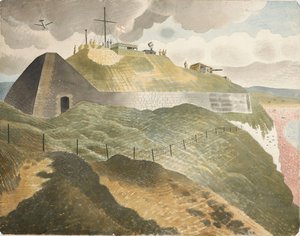
De-Icing Aircraft
Reproduction Medium
Reproduction Size
-


Total Price
$ 325
De-icing Aircraft – A Study in Texture and Isolation
Eric Ravilious’s “De-icing Aircraft” (1942) isn't merely a depiction of a snowy airfield; it’s a masterful distillation of the anxieties and aspirations inherent in wartime Britain. Painted during Ravilious’s stint at RAF Clifton near York – a location chosen partly for its stark, wintry landscapes – this watercolour transcends simple observation to become a poignant meditation on resilience and the precarious beauty of confronting adversity. The artist himself eloquently captured the atmosphere: “Jolly cold, even with two jumpers and and a greatcoat and a warming parachute.”- Subject Matter: The artwork centers around a scene of aviation during winter conditions – specifically, the meticulous process of removing ice from aircraft tails and fuselages. Two vintage airplanes dominate the composition, representing both technological advancement and vulnerability against the elements.
- Style: Ravilious’s style is firmly rooted in Magic Realism, blending realistic detail with an unsettling sense of dreamlike stillness. This juxtaposition creates a palpable tension between the mundane task of de-icing and the grandeur of the aircraft themselves.
- Technique: The artist employed wet-on-wet watercolor application—a technique known for its ability to achieve luminous washes and subtle gradations of color—to imbue the painting with an ethereal quality. Broken brushstrokes contribute to a textured surface that mimics the snowdrifts and icy surfaces depicted, enhancing the visual impact.
Composition and Color Palette – Contrasts of Texture and Light
The dominant element is undoubtedly the tail fin of a Bristol Blenheim light-bomber, positioned prominently on the left side of the image. Its intricate detailing—captured with remarkable precision—contrasts sharply with the vast expanse of white snow in the background. This deliberate juxtaposition underscores Ravilious’s fascination with pattern and design, mirroring the artist's meticulous approach to capturing visual information. The muted tones of grey and beige used for the aircraft’s camouflage further emphasize its isolation against the overwhelming brightness of the snowfall.- Lighting: Diffused lighting from an overcast sky casts a soft glow across the scene, creating an atmosphere of quiet contemplation.
- Perspective: Flattened perspective lends a sense of immediacy to the artwork, suggesting a snapshot of a moment in time rather than a grand panoramic vista. Depth is achieved primarily through atmospheric perspective—objects in the distance appear paler and less defined—a technique Ravilious skillfully utilized to convey spatial relationships.
Symbolism – Resilience Amidst Harsh Conditions
Beyond its aesthetic qualities, “De-icing Aircraft” carries a deeper symbolic resonance. The act of scraping ice represents the effort required to overcome obstacles and maintain functionality in challenging circumstances—a metaphor for Britain’s determination during World War II. Ravilious's masterful use of color and texture communicates not only the visual beauty of the Yorkshire landscape but also an underlying message about perseverance and finding solace in simplicity. The image encapsulates a profound appreciation for the quiet dignity of confronting hardship with courage and ingenuity, cementing Ravilious’s legacy as one of Britain’s most evocative landscape artists.Conclusion – An Artistic Reflection on Wartime Spirit
“De-icing Aircraft” stands as a testament to Ravilious's artistic vision—a captivating blend of realism and dreamlike impressionism that captures the spirit of a nation grappling with uncertainty while simultaneously celebrating the enduring beauty of its natural surroundings. It’s a painting that invites viewers to contemplate not just what is seen but also what it represents: a poignant reminder that even amidst bleakest winters, there remains an unwavering commitment to maintaining composure and embracing the transformative power of observation.Questions & Answers
Which artist is "De-Icing Aircraft" attributed to?
"De-Icing Aircraft" is attributed to Eric William Ravilious.
Does the copyright of "De-Icing Aircraft" by Eric William Ravilious allow reproductions?
"De-Icing Aircraft" by Eric William Ravilious, held at the Imperial War Museums, is in the public domain - its copyright has expired. This status determines whether reproductions of the image may be made.
What type of artwork is "De-Icing Aircraft" by Eric William Ravilious?
"De-Icing Aircraft" by Eric William Ravilious is classified as wall art. The category describes the kind of artwork the original is.
Artist Biography
Eric William Ravilious: A Life in Landscape and Design
Early Life and Education
- Born on July 22, 1903, in Acton, London, Eric William Ravilious spent much of his formative years in Sussex.
- His parents ran an antiques shop, which likely fostered his early appreciation for design and the vernacular arts.
- He was educated at Eastbourne Municipal Secondary School for Boys before winning a scholarship to Eastbourne School of Art.
- In 1922, he furthered his studies at the Design School of the Royal College of Art, where he formed a close friendship with fellow artist Edward Bawden.
Artistic Development and Influences
- Ravilious’s artistic style developed as a unique blend of modernist principles and a deep engagement with English landscape and traditional art forms.
- He was influenced by the work of Paul Nash, particularly in his depictions of the English countryside imbued with a sense of mystery and history.
- The clarity and precision of his wood engravings were also shaped by the Arts and Crafts movement’s emphasis on craftsmanship.
- His early works often featured watercolors of the South Downs and Castle Hedingham, showcasing his meticulous attention to detail and distinctive color palette.
Career and Major Works
- Ravilious began teaching part-time at both Eastbourne School of Art and the Royal College of Art, supplementing his income while pursuing his artistic endeavors.
- In 1930, he married Eileen Lucy “Tirzah” Garwood, who was also an artist and engraver; they had three children together.
- He became known for his watercolors depicting English landscapes, interiors, and scenes of everyday life with a distinctive modernist sensibility.
- Notable works include Rain, Steam and Speed – The Great Western Railway, The Red House on the Hill, and numerous book illustrations and wood engravings.
War Artist and Later Life
- During World War II, Ravilious was commissioned as an official war artist by the Air Ministry.
- He documented scenes of wartime Britain, including aircraft maintenance, coastal defenses, and life on military bases.
- His wartime paintings offer a unique perspective on the conflict, focusing on the everyday realities of those supporting the war effort rather than dramatic battle scenes.
- Tragically, Ravilious died in 1942 while serving as a war artist with the Royal Air Force; his plane went missing over Iceland.
Legacy and Historical Significance
- Despite his relatively short life, Eric Ravilious left a lasting impact on British art.
- His work is celebrated for its unique clarity, precise technique, and evocative depictions of English landscape and culture.
- He helped to bridge the gap between modernist aesthetics and traditional subject matter, creating a distinctly English artistic vision.
- Ravilious’s paintings and engravings are held in major museum collections, including the Tate and the Victoria & Albert Museum, ensuring his continued recognition and appreciation by art lovers worldwide.
- His work continues to inspire artists today, offering a poignant reminder of a bygone era and a testament to the power of observation and artistic skill.

Eric William Ravilious
1903 - 1942 , United Kingdom
Quick Facts
- Name: Eric William Ravilious
- Movement: Modernist Art
- Birth Date: 1903-07-22
- Death Date: 1942
- Birth Place: Acton, United Kingdom
- Nationality: British
- Date Of Birth: 1903
- Date Of Death: 1942
- Influenced By: Edward Bawden
- Notable Works:
- Rain, Steam and Speed – The Great Western Railway
- The Red House on the Hill
- Quentin Bell as a Boy
- Coastal defences
- De-Icing Aircraft
- Place Of Birth: Acton, United Kingdom
Related Articles

The Enduring Appeal of Watercolor: History, Techniques & Contemporary Practice
Explore the captivating world of watercolor painting! Discover its rich history, essential techniques, influential artists, and collecting tips. A comprehensive guide for art enthusiasts.

Watercolor Wonders: 10 Masterpieces That Redefined Art History | OriginalUniqueArt
Journey through 10 legendary watercolor masterpieces by Sargent, Turner & Homer! Explore iconic landscapes, portraits & floral art that redefined history. Find museum-quality reproductions and curated decor ideas at OriginalUniqueArt.com.

Ephemeral Visions: Exploring the Artistic Legacy & Nuances of Watercolor Painting
Explore the captivating world of watercolor painting! Discover its rich history, essential techniques, influential artists & collecting tips from art experts. A comprehensive guide for enthusiasts.

Ephemeral Visions: Exploring the Artistic Legacy & Contemporary Practice of Watercolor Painting
Explore the captivating world of watercolor painting! Discover its rich history, essential techniques, influential artists & collecting tips. A comprehensive guide for art enthusiasts from OriginalUniqueArt.

Ephemeral Visions: Exploring the History & Emotional Resonance of Watercolor Painting
Explore the captivating history of watercolor painting, from ancient techniques to modern masters like Kandinsky & Blake. Discover essential artists, collecting tips & the emotional power of this luminous medium. Expert insights for art enthusiasts.