Expressionism
Light magic (Emil Nolde)
Emil Nolde (1867–1956) made Light magic. It belongs to the Expressionism movement.

 Preview

 Hand Made Oil Painting
 Send
 Share
 Fact sheet


 Download
 Similars
 X-Ray
 Diaporama
 Q&A

 Stats
Light magic, in brief
- Title
- Light magic
- Artist
- Emil Nolde (1867–1956)
- Artist born in
- Nolde, Denmark
- Movement
- Expressionism
- Subject
- portrait, expressionism, melancholy, color contrast, figures, introspection
What does Light magic depict?
A Dance of Inner Light: Exploring Emil Nolde’s ‘Light Magic’
Emil Nolde's ‘Light Magic’ is a captivating example of early Expressionism, radiating an intense emotionality through its bold color palette and dynamic brushwork. This close-up portrait depicts two figures locked in a silent exchange, their faces illuminated with an almost otherworldly glow. The work eschews realistic representation in favor of conveying subjective experience – the feeling of a shared moment steeped in contemplation or perhaps quiet melancholy.
Expressionist Technique and Artistic Influences
- Painterly Impasto: Nolde’s masterful use of oil paint is immediately apparent. The thick, textured application – known as impasto – creates a tactile surface that seems to vibrate with energy. This technique isn't merely decorative; it amplifies the emotional intensity of the scene.
- Color as Emotion: The contrasting hues—warm yellows and oranges against cooler greens and purples—are not descriptive but expressive. Nolde, deeply influenced by Vincent van Gogh and Paul Gauguin, employed color to evoke mood and psychological states rather than accurately depict reality.
- Flattened Perspective & Gestural Lines: The lack of traditional perspective and the loose, gestural lines contribute to a sense of immediacy and rawness. Nolde prioritized capturing the essence of his subjects’ inner lives over precise anatomical detail.
Symbolism and Interpretation
While open to individual interpretation, ‘Light Magic’ invites contemplation on themes of human connection and internal states. The contrasting colors could symbolize opposing personalities or conflicting emotions within the figures themselves. The “light” in the title isn't simply a depiction of illumination; it suggests an inner radiance, perhaps representing spiritual awakening or shared understanding. Nolde frequently explored religious themes throughout his career, and this work hints at a similar depth of feeling.
Nolde’s Place in Art History
Emil Nolde (born Hans Emil Hansen) was a pivotal figure in the development of Expressionism. A founding member of Die Brücke (“The Bridge”), he sought to break away from academic traditions and express inner experience through art. Despite facing censorship during the Nazi regime due to his artistic style being deemed “degenerate,” Nolde continued to create powerful and emotionally resonant works throughout his life. ‘Light Magic’ exemplifies his unique ability to transform observation into a deeply personal and evocative visual statement, solidifying his legacy as one of Germany's most important modern artists.
High-resolution images of Light magic
Emil Nolde, Light magic. Public domain.
Questions on Light magic, answered
What is "Light magic" about?
"Light magic" by Emil Nolde depicts: portrait, expressionism, melancholy, color contrast, figures, introspection, emotional art, gestural painting.
Is "Light magic" by Emil Nolde in the public domain?
"Light magic" by Emil Nolde is in the public domain - its copyright has expired. This status governs how the image of the work may be reproduced.
Who created "Light magic"?
"Light magic" was created by Emil Nolde. The information on this page describes Emil Nolde's original work.
What art movement does "Light magic" by Emil Nolde belong to?
"Light magic" by Emil Nolde belongs to the Expressionism movement. This movement provides the stylistic context of the work.
What stage of Emil Nolde's development does "Light magic" represent?
Within Emil Nolde's career, "Light magic" falls in the Mature Period. The phase helps compare it with the artist's other works.
Why is the copyright status of "Light magic" what it is?
The copyright status of "Light magic" - in the public domain - its copyright has expired - follows from the artist's death in 1956.
Where does "Light magic" sit within Emil Nolde's body of work?
"Light magic" shares with Emil Nolde's other works its Expressionism style and the recorded themes: die brücke, expressionism, bold color, key expressionist work, intense emotion, symbolic imagery, spiritual doubt, social critique.
Where does "Light magic" stand among Emil Nolde's recurring subjects?
Among Emil Nolde's recorded themes - die brücke, expressionism, bold color, key expressionist work, intense emotion, symbolic imagery, spiritual doubt, social critique - "Light magic" brings its own focus on portrait, expressionism, melancholy, color contrast, figures, introspection, emotional art, gestural painting.
About the artist, Emil Nolde
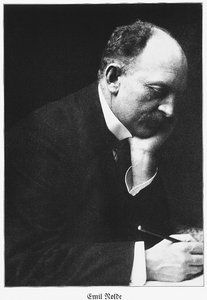
1867–1956, Denmark
Emil Nolde
The Life and Identity of Emile Nolde Born Hans Emil Hansen on 7 August 1867, the man who would become known as Emile Nolde grew up near the village of Nolde in the Duchy of Schleswig. His early years were shaped by the rural, agrarian life of his family. He eventually moved away from this path, choosing instead to work as a wood carver and furniture decorator. This tactile, physical labor preceded his shift toward painting and printmaking.
Also by Emil Nolde
 Sunset
 Sea with Red Sky
 Couple on the beach1903
 Masks1911
Essays around Light magic
 Decoding Impasto: The Power and Texture of Van Gogh's BrushstrokesExplore the visceral power of Van Gogh's impasto technique. Discover how thick, textured brushstrokes convey raw emotion and transform canv…
 Emil Nolde: The 25 Most Powerful Expressionist MasterpiecesExplore 25 iconic Emil Nolde masterpieces. Discover the soul of Expressionism through his vibrant colors. Explore the full collection onlin…
 Comparing Der Blaue Reiter and Die Brücke: Two Paths of German ExpressionismMaster the differences between Die Brücke and Der Blaue Reiter. Explore the roots of German Expressionism now.