Rococo
Tea-time (Emile Eisman Semenovsky)
Emile Eisman Semenovsky (1859–1911) made Tea-time. It belongs to the Rococo movement.

 Preview

 Hand Made Oil Painting
 Send
 Share
 Fact sheet


 Download
 Similars
 X-Ray
 Diaporama
 Q&A

 Stats
Tea-time, in brief
- Title
- Tea-time
- Artist
- Emile Eisman Semenovsky (1859–1911)
- Movement
- Rococo
- Subject
- portrait, rococo, tea time, elegance, woman, luxury
High-resolution images of Tea-time
Emile Eisman Semenovsky, Tea-time. Public domain.
Questions on Tea-time, answered
What does "Tea-time" by Emile Eisman Semenovsky depict?
The themes present in "Tea-time" by Emile Eisman Semenovsky include portrait, rococo, tea time, elegance, woman, luxury, soft colors, russian art. Together they summarize the artwork's subject matter.
Is "Tea-time" free of copyright?
Regarding copyright, "Tea-time" is in the public domain - its copyright has expired.
Which artist is "Tea-time" attributed to?
"Tea-time" is attributed to Emile Eisman Semenovsky.
What style does "Tea-time" belong to?
The movement associated with "Tea-time" by Emile Eisman Semenovsky is Rococo. This classification situates the work among related artists and artworks.
Where does "Tea-time" fall in Emile Eisman Semenovsky's career?
"Tea-time" represents the Mature Period of Emile Eisman Semenovsky.
Why is the copyright status of "Tea-time" what it is?
"Tea-time" by Emile Eisman Semenovsky is in the public domain - its copyright has expired. Copyright duration runs from the artist's death, which occurred in 1911.
How does "Tea-time" fit into Emile Eisman Semenovsky's themes and style?
"Tea-time" shares with Emile Eisman Semenovsky's other works its Rococo style and the recorded themes: genre scenes of russian life, rococo elegance, romantic beauty, classical grace, aristocratic leisure, russian social scene.
Where does "Tea-time" stand among Emile Eisman Semenovsky's recurring subjects?
"Tea-time" depicts portrait, rococo, tea time, elegance, woman, luxury, soft colors, russian art, while Emile Eisman Semenovsky's recorded themes are genre scenes of russian life, rococo elegance, romantic beauty, classical grace, aristocratic leisure, russian social scene. Comparing the two shows how the work relates to the artist's usual subjects.
About the artist, Emile Eisman Semenovsky
1859–1911
Emile Eisman Semenovsky
The Ethereal Vision of Emile Eisman-Semenowsky Émile Eisman-Semenowsky remains a captivating figure in the late nineteenth-century Parisian art scene, an artist whose work serves as a bridge between the rigorous discipline of academic realism and the fleeting, luminous qualities of Impressionism. Born in Poland around 1857, his early life is shrouded in much of the mystery that often surrounds artists of great talent but sparse documentation. Likely of Jewish descent, he moved through the cultural landscapes of Eastern Europe before finding his creative home in France. This movement between worlds—from the traditions of his Polish roots to the avant-garde energy of Paris—imbued his work with a unique perspective, allowing him to capture a sense of "otherness" that would become his artistic hallmark.
About Emile Eisman Semenovsky Notable works by Emile Eisman Semenovsky
Also by Emile Eisman Semenovsky
 The Maiden of Spring1882
 Marguerite1882
 Gypsy Girl1886
 Leisure Moments1890
Essays around Tea-time
 The Rococo Aesthetic: Opulence, Rebellion & the Pursuit of Pleasure in 18th-Century ArtExplore the opulent world of Rococo art! Discover its origins, key artists like Watteau & Boucher, and lasting influence on design. Expert …
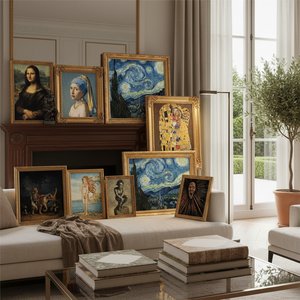 Timeless Masterpieces: 10 Classic Artworks for Elegant Homes |Explore 10 timeless masterpieces – from Van Gogh to Rembrandt – that define classic art & evoke enduring moods. Discover art history, techn…
 Fyodor Rokotov: Intimacy & Enlightenment in Russian PortraitureExplore the captivating portraits of Fyodor Rokotov, a master of 18th-century Russian art. Discover his unique psychological realism, Rococ…