Preview

 Send
 Share
 Details
 Guide


 Download
 Similars
 X-Ray
 Diaporama
 Q&A
 Stats
Marine

- 76.0 x 64.0 cm


 Read More
Giclée / Art Print
Museum-quality giclée or canvas print with fast production and flexible finish options. ( Buy Hand Made Painting Switch to Digital Image)




P118B $10

P118H $10

P118W $10

P438Z $10

P508JH $12

P508YH $12

P805H $10

P805Z $10

P919BZ $10

P919G $10

P919XJ $10

P959ZH $10

P968JZ $12

W106C $8

W218G $10

W218JH $8

W218Y $10

W307PJ $10

W316G $10

W316PJ $8

W316Y $10

W398PJ $8

W4111J $10

W500HY $15

W500JH $15

W692G $12

W849H $8

W940BG $15

W953PJ $8




Pick from our preset sizes that match the artwork's original proportions.

Type the width and the height you need, to fit your frame or your wall. A print can only be cut, never made bigger than the picture, so a size with a different shape loses a part of the image. We send you a digital mockup to approve before we print anything. The picture shown on this page does not show the real cut — only the mockup does.
Worldwide Delivery () in 2 weeks instead of standard 4/5 weeks. (20 November)

Free Worldwide Express Shipping

High-Quality Linen Canvas

Full Shipping Insurance

Customs Tax Refund Guarantee

True Color Matching Guarantee

100-Day Return Policy (Defects Only)

100% Money-Back Guarantee

Bulk Discount Offer
 Glass option is only available in size under 110 CM

Marine
Giclée / Art Print
Reproduction Size
-


Total Price
$ 81
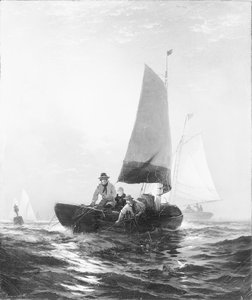
The Depiction of Marine by Edward Moran
Executed about 1871, Marine by Edward Moran presents a monochromatic marine scene. The work focuses on a small sailboat navigating through choppy waters, with several figures visible onboard. This central vessel moves through an expansive ocean, its presence defined by the interplay of light and shadow within a grayscale palette.
In the background, other sailboats appear, receding into a hazy atmosphere. These distant vessels diminish in clarity, creating a sense of depth through atmospheric perspective. The composition captures a specific moment of maritime activity, emphasizing the movement of the water and the positioning of the ships against the vastness of the sea.
Composition and Visual Elements of the Work
The composition centers on a small sailboat positioned prominently in the foreground. Diagonal lines created by the billowing sails draw the eye upward, establishing a sense of motion against the surrounding stillness. A relatively high horizon line emphasizes the vast expanse of the water, situating the vessel within an immense maritime environment.
The work utilizes a monochromatic palette, relying on subtle tonal variations of gray, white, and black to define form and depth. Diffused, soft lighting creates a hazy atmosphere, obscuring sharp boundaries and contributing to the sense of atmospheric perspective. This controlled use of light and shadow renders the choppy texture of the waves and the subtle details of the boat's hull without the need for color.
Technique and Artistic Materials Used
Executed in oil on canvas, the work demonstrates a sophisticated command of tonal gradation and atmospheric perspective. The artist employs traditional painting methods, utilizing layering and blending to establish depth and texture across the composition. These techniques allow for a controlled transition between light and shadow, particularly within the hazy, diffused atmosphere of the sky.
The application of paint is characterized by fine brushstrokes that render the choppy texture of the waves and the subtle structural details of the boat’s hull. While the brushwork remains visible, it is generally subtle, contributing to a smooth overall finish. This precision in rendering the maritime elements balances the broader, more atmospheric treatment of the surrounding environment.
Historical Context and Artistic Movement
The work aligns with the Romantic movement’s fascination with untamed landscapes. It reflects the Victorian era's preoccupation with portraying heroic narratives through the struggle against nature. During this period, navigating treacherous seas was viewed as a means to foster moral fortitude and spiritual enlightenment. The painting captures this intersection of physical challenge and character development.
The piece emerged as the United States was actively establishing itself as a maritime power. This era of rapid industrial expansion and westward exploration shaped the national identity, a sentiment reflected in the focus on seafaring and exploration. Moran’s focus on the sea mirrors the broader cultural interest in the psychological impact of encountering nature's grandeur.
Questions & Answers
Where and for what purpose is "Marine" recommended?
"Marine" is suggested for accent, and the recommended space is a living room.
Which room is "Marine" by Edward Moran recommended for, given its colors?
With its neutrals palette, "Marine" by Edward Moran is recommended for a living room. The colors are part of the reason for this suggestion.
What color intensity does "Marine" by Edward Moran have?
The color intensity of "Marine" is monochromatic. Intensity describes how strong the colors appear.
Artist Biography
A Life Anchored in Maritime Art
Edward Moran, born in Bolton, Lancashire, England on August 19, 1829, was destined to become a pivotal figure in 19th-century American marine painting. His story is one of transatlantic journeys, artistic apprenticeship, and a dedication to capturing the power and beauty of the sea – a narrative deeply intertwined with the burgeoning national identity of the United States. The Moran family’s roots lay in the practical world of handloom weaving, but even as a young boy, Edward demonstrated an inclination towards artistry, sketching on fabric instead of focusing solely on his familial trade. This early impulse foreshadowed a life devoted to visual expression. In 1844, seeking new opportunities, the Morans immigrated to America, initially settling in Maryland before ultimately establishing themselves in Philadelphia. It was here that young Edward’s artistic path began to truly unfold.Formative Years and Artistic Development
Around 1845, Moran embarked on a formal apprenticeship under James Hamilton, a respected marine painter, and Paul Weber, a landscape artist. This dual mentorship proved crucial in shaping his style. Hamilton instilled within him the technical skills necessary to realistically depict the nuances of water, light, and ships, while Weber broadened his understanding of composition and atmospheric perspective. Moran quickly established himself within the Philadelphia art community, sharing studio space with his younger brother, Thomas, who would later achieve renown for his dramatic landscapes of the American West. This period saw Moran gaining commissions and experimenting with lithography, honing his skills and building a reputation. A significant step in his artistic maturation came in 1862 when he traveled to London to study at the Royal Academy. This experience exposed him to European artistic traditions and further refined his technique, solidifying his vision as an artist dedicated to portraying the majesty of the maritime world.Land, Sea, and National Identity
Moran’s career blossomed in the decades following his return from London. He settled permanently in New York City in 1871, a strategic move that placed him at the heart of American artistic life. The year marked a turning point with a significant exhibition showcasing seventy-five of his landscape and marine paintings. This display garnered considerable recognition and established Moran as a leading figure in the genre. However, it was his philanthropic spirit that truly distinguished him. Demonstrating a deep sense of social responsibility, Moran donated the proceeds from both this exhibition and another painting, “The Relief Ship Entering Havre,” to aid victims of the Franco-Prussian War – a testament to his compassion and commitment to humanitarian causes. But perhaps his most enduring legacy lies in *The Thirteen Marine History Paintings*, a monumental series commissioned beginning in 1885. This ambitious project aimed to visually chronicle key moments in United States maritime history, from the voyages of Leif Ericsson and Christopher Columbus to the exploits of Henry Hudson and Admiral Dewey. The choice of thirteen paintings was deliberate, referencing the original colonies and the stars and stripes of the American flag – imbuing the series with potent national symbolism.A Lasting Legacy
Displayed prominently at the 1893 World’s Columbian Exposition in Chicago, *The Thirteen Marine History Paintings* cemented Moran's reputation on a national stage and offered a powerful visual narrative of America’s seafaring past. These works are remarkable not only for their artistic merit but also for the meticulous research that underpinned them. Moran painstakingly recreated historical vessels and events, striving for accuracy while simultaneously imbuing each scene with dramatic flair. While Edward Moran enjoyed considerable acclaim during his lifetime – he was widely considered one of the most important marine painters of his era – his legacy has been somewhat overshadowed by the greater fame achieved by his brother, Thomas. However, contemporary appreciation for Moran’s skill and historical contributions continues to grow. He played a vital role in fostering the early career of Thomas, and the family's artistic lineage extended through several generations, including his sons Edward Percy and John Leon, his brother Peter, and nephew Jean Leon Gerome Ferris. Edward Moran passed away on June 8, 1901, leaving behind a body of work that continues to captivate viewers with its evocative depictions of the sea and its powerful celebration of American maritime history. His paintings remain a testament to his artistic talent, dedication, and enduring vision.
Edward Moran
1829 - 1901 , United Kingdom
Quick Facts
- Full Name: Edward Moran
- Nationality: American
- Date Of Birth: 1829
- Date Of Death: 1901
- Place Of Birth: Bolton, United Kingdom
- Notable Artworks:
- The Battle of New Orleans
- New York Harbor
- Ships at Night
- Artistic Movement Or Style: Marine painting
- Artists Who Influenced This Artist:
- James Hamilton
- Paul Weber
- Artists Or Movements Influenced By This Artist:
- Thomas Moran
- Edward Percy Moran
Related Articles

Vessels of Light: Capturing the Motion of Sailboats in Impressionist Art
Explore the mastery of light and motion in Impressionist maritime art. Discover the beauty of Monet and Sisley today.
Navigating Symbolism & Style: A Comprehensive Exploration of Boats in Art History
Explore the rich history of boats in art! From ancient symbolism to Impressionist masterpieces & modern visions, discover renowned artists & collecting tips at OriginalUniqueArt.

Sails on Canvas: Capturing the Spirit of Maritime History Through Impressionist Art
Explore the evolution of maritime art from Dutch masters to Impressionist light. Discover the soul of the sea through every brushstroke.
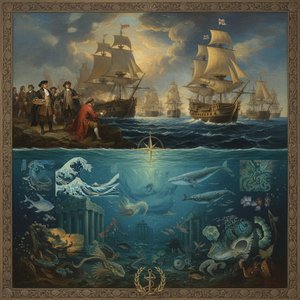
Navigating the Depths of Representation: A Historical Exploration of Marine Painting
Explore the rich history of marine painting with OriginalUniqueArt. Discover Dutch Masters, Romantic seascapes & renowned artists like Wyllie and Harris. Expert guidance for collectors & custom reproductions.

Maritime Traditions: From Dutch Marine Masters to Contemporary Seascape Art
Explore the technical evolution of maritime art from Dutch masters to modern textures. Trace this epic history through expert analysis.