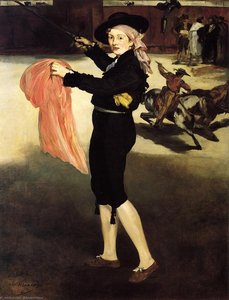
Preview
 Send
Send Share
Share
 Details
 Guide
Guide

 Download
 Similars
 X-Ray
X-Ray Diaporama
 Q&A
Q&A Stats
StatsThe ham


 Read More
Giclée / Art Print
Museum-quality giclée or canvas print with fast production and flexible finish options. ( Buy Hand Made Painting Switch to Digital Image)




P118B $10

P118H $10

P118W $10

P438Z $10

P508JH $12

P508YH $12

P805H $10

P805Z $10

P919BZ $10

P919G $10

P919XJ $10

P959ZH $10

P968JZ $12

W106C $8

W218G $10

W218JH $8

W218Y $10

W307PJ $10

W316G $10

W316PJ $8

W316Y $10

W398PJ $8

W4111J $10

W500HY $15

W500JH $15

W692G $12

W849H $8

W940BG $15

W953PJ $8




Pick from our preset sizes that match the artwork's original proportions.

Type the width and the height you need, to fit your frame or your wall. A print can only be cut, never made bigger than the picture, so a size with a different shape loses a part of the image. We send you a digital mockup to approve before we print anything. The picture shown on this page does not show the real cut — only the mockup does.
Worldwide Delivery () in 2 weeks instead of standard 4/5 weeks. (10 November)

Free Worldwide Express Shipping

High-Quality Linen Canvas

Full Shipping Insurance

Customs Tax Refund Guarantee

True Color Matching Guarantee

100-Day Return Policy (Defects Only)

100% Money-Back Guarantee

Bulk Discount Offer
 Glass option is only available in size under 110 CM

The ham
Giclée / Art Print
Reproduction Size
-


Total Price
$ 81
Édouard Manet’s “The Ham”: A Study in Simplicity and Realism
Édouard Manet's "The Ham," painted in 1880, stands as a cornerstone of Impressionist art—though its stylistic categorization remains debated by scholars. More than just a depiction of food, it embodies Manet’s radical commitment to portraying everyday life with unflinching honesty and capturing the subtle nuances of domestic interiors. The painting resides at the Glasgow Art Gallery and Museum in Scotland, offering visitors a chance to experience firsthand this seminal work.- Subject Matter: At its core, “The Ham” presents a deceptively simple scene—a smoked ham resting on a plate alongside two knives and a spoon. This deliberate choice of subject matter wasn’t merely accidental; Manet consciously rejected the grand narratives favored by academic painters of his time, opting instead for an observation of commonplace objects and activities.
- Style & Technique: Painted in oil on canvas, “The Ham” exemplifies Manet's signature Impressionist style. Characterized by loose brushstrokes and a focus on capturing fleeting moments of light and color, the painting eschews meticulous detail in favor of conveying atmosphere and emotion. The artist’s technique prioritizes immediacy and spontaneity, mirroring the spirit of the era.
- Historical Context: Created during a period of significant artistic experimentation—the Impressionist movement— “The Ham” reflects Manet's desire to break free from traditional conventions. He sought to emulate Caravaggio and Velázquez’s masterful use of chiaroscuro, employing dramatic lighting to sculpt form and heighten visual impact. The painting’s placement within the broader context of Manet’s oeuvre underscores his pioneering role in redefining artistic representation.
- Symbolism: Beyond its aesthetic qualities, “The Ham” carries symbolic weight. The ham itself represents sustenance and abundance—a celebration of the ordinary pleasures of life. Furthermore, the arrangement of objects—the plate, knives, spoon—suggests a scene of preparation or consumption, inviting contemplation on themes of domesticity and ritual.
- Emotional Impact: Despite its apparent simplicity, “The Ham” possesses a profound emotional resonance. Manet’s masterful rendering of light and texture evokes a sense of warmth and intimacy, capturing the quiet beauty of a domestic setting. The painting's understated elegance speaks to an enduring fascination with capturing authentic human experience—a legacy that continues to inspire artists today.
Questions & Answers
Where is the landscape format of "The ham" recommended to be displayed?
The landscape format of "The ham" by Édouard Manet is recommended for a living room. Format and space together guide the placement of a reproduction.
What are the date and style of "The ham" by Édouard Manet?
"The ham" was created in 1880 as a work of the Realism movement. Date and movement anchor the artwork in art history.
Who made "The ham", and when?
The author of "The ham" is Édouard Manet, and the work is dated 1880.
Artist Biography
Early Life, Family and Training
Édouard Manet was born in Paris on January 23, 1832. He grew up in an affluent household, the eldest son of a man who held a position in the French Ministry of Justice. His father had envisioned a different path for him, one involving the navy or the law. The boy attempted to follow this direction, but he failed the entrance exams for the naval academy twice. This failure redirected his focus toward the studio. He eventually presented his father with a portfolio of paintings to prove his commitment to the arts, finally gaining the permission needed to study formally.
From 1850 to 1856, he trained in the studio of Thomas Couture. While he learned the technical foundations of academic painting there, his eyes often wandered toward the Louvre. He spent much of his time in those galleries, standing before the canvases of the Old Masters and copying their methods. He studied the way they handled light and form, absorbing the lessons of the past while preparing to find his own way. This period of intense study provided the technical grounding that would support his later departures from tradition.
Technique and Artistic Style
The surface of a canvas reveals a deliberate departure from the polished, invisible finish required by the Salon. Instead of smoothing away the evidence of the brush, there is a visible, energetic application of pigment known as facture. This approach prioritizes the physical reality of the paint itself. By using the alla prima or wet-on-wet technique, the colors are laid down while still fresh, capturing an immediate quality that avoids the slow, layered buildup of traditional academic methods. This method allows for a certain spontaneity in how light and atmosphere are recorded.
There is a noticeable flatness in the way forms are constructed. A loose handling of the paintbrush avoids the heavy modeling used to create deep, three-dimensional illusions. Instead, the pictorial space often feels compressed. This effect is heightened by the use of strong, contrasting tones. Rather than relying on gradual color scales to define shape, the work often uses stark shifts in value to suggest the fragmented, modern light of the city. This rejection of mathematical perspective and seamless blending creates a sense of immediacy, as if the image is being assembled directly before the eye.
The Scandal of Modern Subjects
The mid-1860s brought a series of confrontations with the public eye. In 1863, the Salon des Refusés provided a stage for works that the official juries had rejected. Among these was Le Déjeuner sur l'herbe, a painting that caused an immediate stir. It did not rely on the usual mythological or biblical excuses to present nudity; instead, it placed a nude woman in a picnic setting alongside two fully clothed men. This refusal to provide a historical or divine context left the viewer with nothing but the raw presence of contemporary life.
The tension only increased in 1865 with the exhibition of Olympia. This work was considered the most shocking piece in the Salon. It took the composition of Titian’s Venus of Urbino and stripped away the protective layer of myth, replacing a goddess with a contemporary prostitute. She did not look away or invite a gaze of admiration; she stared back with a directness that many found unsettling. Critics focused their anger on this lack of idealization and the bluntness of the subject matter.
Beyond the choice of subjects, the way the paint was applied drew heavy criticism. Many observers attacked the visible, energetic brushwork and the lack of a polished, seamless finish. They saw errors in perspective and a failure to follow the traditional rules of decorum. What some called incompetence, others recognized as a deliberate choice to show the reality of the paint on the canvas rather than a window into a dream.
Key Works and Major Paintings
In 1861, he produced The Spanish Singer, a work that earned him an honorable mention at the Salon. The painting shows a model in Andalusian costume, holding a guitar in a way that suggests the chords are being pressed by a left-handed player, even though the instrument is strung for a right-handed one. This small, deliberate error sits alongside a stereotypical Spanish still life placed near the model's feet.
His brushwork often addressed the immediate and the political. In 1867, he painted The Execution of the Emperor Maximilian of Mexico. Later, as his health began to decline in the late 1870s, his focus shifted toward smaller, more intimate subjects. By 1882, he had completed A Bar at the Folies-Bergère, a painting that captures the atmosphere of a modern café with a sense of psychological ambiguity. Near the end of his life, around 1883, he turned his attention to still lifes, such as Two roses on a tablecloth.
- The Spanish Singer (1861)
- The Execution of the Emperor Maximilian of Mexico (1867)
- A Bar at the Folies-Bergère (1882)
- Two roses on a tablecloth (about 1883)
Circle, Rivals and Influences
His brushwork carries the weight of the masters he studied in the Louvre. He looked toward the dramatic light of Caravaggio and the fluid, dark tones of Velázquez to find a way forward. From Goya, he took a certain directness that bypassed the need for polished, academic finishes. These were not mere studies; they were the tools he used to dismantle the expectations of the Salon. He preferred the presence of a single, strong color over the gradual blending of tones.
In the cafes and intellectual circles of Paris, he moved among the very people who would redefine the era. He shared spaces and ideas with Claude Monet and Edgar Degas, men who were also pushing against the boundaries of what a painting could be. His personal life was equally intertwined with the avant-garde; his sister-in-law was the artist Berthe Morisot. While he often sought the approval of the official institutions, his true peers were those working in the shadows of the established academies.
He found an early, vocal defender in a writer who saw the future in his controversial canvases. This supporter published a glowing account of his work, helping to frame his place in a changing art world. Even when the public reacted with hostility to his modern subjects, this support provided a necessary counterweight to the critics who found his style unfinished or his themes improper. He remained a figure caught between the old world of the Academy and the new, restless energy of the streets.
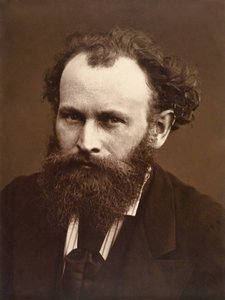
Édouard Manet
1832 - 1883 , France
Quick Facts
- Artistic Movement Or Style: Realism, Impressionism, Avant-garde
- Artists Or Movements Influenced By This Artist:
- Impressionism
- Avant-garde
- Claude Monet
- Berthe Morisot
- Edgar Degas
- Gauguin
- Artists Who Influenced This Artist:
- Caravaggio
- Diego Velázquez
- Francisco Goya
- Titian
- Raphael
- Frans Hals
- Peter Paul Rubens
- Full Name: Édouard Manet
- Nationality: French
- Notable Artworks:
- Olympia
- Le Déjeuner sur l'herbe
- A Bar at the Folies-Bergère
- Place Of Birth: Paris, France
- Date Of Birth: 1832
- Date Of Death: 1883
Related Articles

Mastering Form: The 25 Greatest Paintings by Paul Cézanne
Explore 25 iconic Paul Cézanne masterpieces and his Post-Impressionist legacy. Discover the full collection online at OriginalUniqueArt.com.

25 Masterpieces by Édouard Manet: The Revolutionary Architect of Modern Art
Explore 25 iconic Édouard Manet masterpieces that defined modern art. Discover the full collection online at OriginalUniqueArt.com.
Édouard Manet: Pioneering Modernism & Challenging Artistic Conventions
Explore the life & art of Édouard Manet, a pivotal figure bridging Realism and Impressionism. Discover his revolutionary techniques, controversial masterpieces like 'Olympia,' and lasting impact on modern art history.
Impressionism's Legacy: 10 Masterpieces That Transformed Art & Decor
Journey through Impressionism's radiant world! Explore 10 masterpieces by Monet, Renoir & Degas that revolutionized art. Discover the stories behind these iconic paintings and find museum-quality reproductions for your home at .

Impressionistic Realism's Finest: 10 Masterpieces for Your Home | OriginalUniqueArt
Journey through Impressionistic Realism with 10 iconic masterpieces by Monet, Renoir & Van Gogh. Explore art history, techniques & find museum-quality reproductions for your home at OriginalUniqueArt.com. Discover all masterpieces online!