Menu
Text size

() ·

A painting made for you, by hand

Indian Combat

Hand Made Oil Reproduction

Hand-painted oil on canvas in your size and frame, made to order by our artists. ( Switch to Print Switch to Digital Image)

Collectible Description

A powerful neoclassical marble sculpture depicting a dramatic struggle between Native American warriors by Edmonia Lewis, capturing the intense spirit of the Reconstruction Era for your collection.

Artist Biography

Edmonia Lewis (1844-1907): Pioneering African American & Native American sculptor celebrated for neoclassical works exploring Black history, Indigenous culture & abolition.

from ·

Chapter 1

How large should it be?

Slide to change the size; the picture on the left shows the frame at its real width. The proportions of the original are kept.

Standard
custom
CM
INCH

Pick from our preset sizes that match the artwork's original proportions.

width
height

Type the width and the height you need, to fit your frame or your wall. This is hand-painted, so for a size with a different shape the artist can paint a bit more around the picture, or cut a bit — you choose. We send you a digital mockup to approve before the painting starts. The picture shown on this page does not show the real result — only the mockup does.

Chapter 2

How should it arrive?

Choose the edges of the stretched canvas

Choose your frame

Corner sample of the WhiteWrap canvas edge finish, stretched on solid wood bars
White $1
Corner sample of the BlurSideWrap canvas edge finish, stretched on solid wood bars
Blurside $1
Corner sample of the ExtendedWrap canvas edge finish, stretched on solid wood bars
Extended $1
Corner sample of the P118B picture frame: moulded polystyrene, 5 cm wide and 3 cm thick
P118B $10
Corner sample of the P118H picture frame: moulded polystyrene, 5 cm wide and 3 cm thick
P118H $10
Corner sample of the P118W picture frame: moulded polystyrene, 5 cm wide and 3 cm thick
P118W $10
Corner sample of the P438Z picture frame: moulded polystyrene, 5.5 cm wide and 3.5 cm thick
P438Z $10
Corner sample of the P508JH picture frame: moulded polystyrene, 7 cm wide and 3.5 cm thick
P508JH $12
Corner sample of the P508YH picture frame: moulded polystyrene, 7 cm wide and 3.5 cm thick
P508YH $12
Corner sample of the P805H picture frame: moulded polystyrene, 5 cm wide and 3.5 cm thick
P805H $10
Corner sample of the P805Z picture frame: moulded polystyrene, 5 cm wide and 3.5 cm thick
P805Z $10
Corner sample of the P919BZ picture frame: moulded polystyrene, 7 cm wide and 3.5 cm thick
P919BZ $10
Corner sample of the P919G picture frame: moulded polystyrene, 7 cm wide and 3.5 cm thick
P919G $10
Corner sample of the P919XJ picture frame: moulded polystyrene, 7 cm wide and 3.5 cm thick
P919XJ $10
Corner sample of the P959ZH picture frame: moulded polystyrene, 5 cm wide and 3 cm thick
P959ZH $10
Corner sample of the P968JZ picture frame: moulded polystyrene, 6 cm wide and 4 cm thick
P968JZ $12
Corner sample of the W106C picture frame: solid wood, 5 cm wide and 3 cm thick
W106C $8
Corner sample of the W218G picture frame: solid wood, 5 cm wide and 3 cm thick
W218G $10
Corner sample of the W218JH picture frame: solid wood, 5 cm wide and 3 cm thick
W218JH $8
Corner sample of the W218Y picture frame: solid wood, 5 cm wide and 3 cm thick
W218Y $10
Corner sample of the W307PJ picture frame: solid wood, 6 cm wide and 3 cm thick
W307PJ $10
Corner sample of the W316G picture frame: solid wood, 6 cm wide and 3 cm thick
W316G $10
Corner sample of the W316PJ picture frame: solid wood, 6 cm wide and 3 cm thick
W316PJ $8
Corner sample of the W316Y picture frame: solid wood, 6 cm wide and 3 cm thick
W316Y $10
Corner sample of the W398PJ picture frame: solid wood, 5 cm wide and 3 cm thick
W398PJ $8
Corner sample of the W4111J picture frame: solid wood, 6.5 cm wide and 3.5 cm thick
W4111J $10
Corner sample of the W500HY picture frame: solid wood, 7 cm wide and 5 cm thick
W500HY $15
Corner sample of the W500JH picture frame: solid wood, 7 cm wide and 5 cm thick
W500JH $15
Corner sample of the W692G picture frame: solid wood, 8 cm wide and 4 cm thick
W692G $12
Corner sample of the W849H picture frame: solid wood, 5 cm wide and 3 cm thick
W849H $8
Corner sample of the W940BG picture frame: solid wood, 7.5 cm wide and 4.5 cm thick
W940BG $15
Corner sample of the W953PJ picture frame: solid wood, 6 cm wide and 3.5 cm thick
W953PJ $8
Corner sample of the H24-GOLD picture frame: carved wood with gesso, 10 cm wide and 6 cm thick
H24-GOLD $30
Corner sample of the H24-SILVER picture frame: carved wood with gesso, 10 cm wide and 6 cm thick
H24-SILVER $30
Corner sample of the H36-GOLD picture frame: carved wood with gesso, 15 cm wide and 6.5 cm thick
H36-GOLD $45
Corner sample of the H36-SILVER picture frame: carved wood with gesso, 15 cm wide and 6.5 cm thick
H36-SILVER $45
Frame preview
Framed

Moulding: . Overall size with the frame: .

Chapter 3

Who paints it, and should anything change?

Examples of what can be changed: Replace face with customer photo; Add pet (e.g., replace cat with dog); Include hidden message in background; Change background landscape or elements.
After order, OriginalUniqueArt.com team will email client for instructions and provide a mockup preview

Worldwide Delivery () in 3/4 weeks instead of standard 5 weeks. (31 October). No compromise on quality.

Chapter 4

The finishing touches

A nameplate, as in a museum?

Engraved Bronze Plaque Details

This elegant plaque features the artist's name and the title of the artwork, finely engraved for a timeless presentation.

It is made from bronze with a refined, elegant finish. The text is precisely laser-engraved for a sharp and permanent result. Measuring 9x2 cm, the plaque is compact yet easy to read. It's built to be durable and scratch-resistant, offering a professional, museum-quality look. Mounting is simple thanks to the included adhesive backing.

Transparent Acrylic Plaque Details

The plaque includes essential engraved details such as the artist's name, the title of the artwork, the date it was created, the type of media used-like oil on canvas or watercolor-a brief description of the piece, and a QR code that links to the complete artwork information.

It is crafted from clear acrylic, offering a sleek, modern appearance. The text is UV-engraved in black to ensure strong visual contrast. With a size of 10x15 cm, it ensures optimal readability. It comes equipped with two metal hooks for secure wall mounting. The plaque is designed to be weather-resistant, making it suitable for various environments, and it includes interactive features that work seamlessly with smartphone scanning.

Black Acrylic Plaque Details

This elegant plaque includes engraved information such as the artist's name, the title of the artwork, the date it was created, the type of media used (like oil on canvas or watercolor), a short description of the artwork, and a QR code for quick access to more information.

The plaque itself is made from refined black acrylic with a premium finish. The text is laser-engraved in white for high contrast and readability. Its size is 10x15 cm, designed to be easy to read. It comes with two metal hooks for professional mounting. The design is sleek and fits any interior style. It is also weather-resistant and durable, with built-in digital integration for mobile compatibility.

A protective varnish?

When do you need it?

Chapter 5

Your painting, as you ordered it

Indian Combat

Reproduction Medium

Reproduction Size

-

Elite Senior Artist

More detail, finesse, and extra production time

-

Reproduction Frame

-

-

For artworks or reproductions larger than 105 cm (approximately 41 inches) on any side, the frame will be shipped as a kit, disassembled. This method ensures safe delivery and prevents damage during transport.

Professional assembly required - this is not a DIY product.
The kit must be assembled and the canvas stretched by an experienced professional framer, using wood glue (not supplied), a canvas stretching plier and clamps to hold the bars square while the glue dries. Incorrect assembly or uneven canvas tension can permanently damage the artwork and is not covered by our warranty.

  • All solid wood bars are included, precisely cut to size.

  • Assembled with the screws provided, plus wood glue for the corner joints, which is not supplied and must be sourced by your framer.

  • Professional tools are required and not included: a canvas stretching plier (tensioner) and clamps to hold the bars square while the glue dries.

Important:
The corner joints require wood glue, the bars must be held with clamps until the glue is fully dry, and tightening the canvas on the assembled frame requires a canvas stretching plier. None of these are included in the kit. Please arrange an experienced professional framer before ordering this size.

Nameplate

-

-

Protective Varnish

Glossy Varnish (enhances colors, protects against light/moisture)

-

Customize My Artwork

Examples of what can be changed: Replace face with customer photo; Add pet (e.g., replace cat with dog); Include hidden message in background; Change background landscape or elements.

-

Urgent

Worldwide Delivery () in 3/4 weeks instead of standard 5 weeks. (31 October). No compromise on quality.

-

Express Shipping

Worldwide Delivery () in 5 weeks. (7 November).

Included

Total Price

$ 325

Total Price $ 325

Glass option is only available in size under 110 CM

Included with every order

  • Free Worldwide Express Shipping
  • High-Quality Linen Canvas
  • Full Shipping Insurance
  • Customs Tax Refund Guarantee
  • True Color Matching Guarantee
  • 100-Day Return Policy (Defects Only)
  • 100% Money-Back Guarantee
  • Bulk Discount Offer

Indian Combat by Edmonia Lewis

Edmonia Lewis’s “Indian Combat,” completed in 1868, stands as a testament to the pioneering spirit of African American and Native American art during the Reconstruction Era. More than just a sculpture; it's a poignant meditation on conflict, resilience, and the enduring legacy of Indigenous cultures confronting Western expansion—themes that resonate powerfully even today. The piece resides in the Cleveland Museum of Art’s collection, where its striking visual impact continues to captivate audiences.

  • Subject Matter: At its core, “Indian Combat” depicts a dramatic confrontation between two figures representing Native American warriors. Lewis drew inspiration from Henry Wadsworth Longfellow's poem "The Song of Hiawatha," which explored the clash between Indigenous traditions and encroaching European influence—a narrative deeply rooted in the anxieties surrounding westward settlement and the displacement of Native peoples.
  • Style: The sculpture embodies neoclassical aesthetics, prioritizing idealized human forms and balanced compositions—characteristics prevalent during Lewis’s time as she studied at Oberlin College and honed her craft under influential mentors. However, unlike many neoclassical depictions of historical events, “Indian Combat” eschews grand spectacle for a focused portrayal of intense physical struggle.
  • Technique: Crafted from meticulously carved marble, the sculpture exemplifies Lewis's mastery of sculptural technique. The artist skillfully employed subtle shading and textural variations to convey depth and realism—a deliberate choice reflecting her commitment to capturing the physicality of human emotion and experience.

Composition and Visual Narrative

The sculpture’s pyramidal arrangement anchors its visual narrative, positioning the two figures at opposing ends while intertwining them in a gesture of fierce resistance. This dynamic composition underscores the central conflict—a struggle for dominance symbolized by the intertwined postures of the warriors. A smaller figure kneeling at the base serves as a grounding element, representing vulnerability and perhaps acknowledging defeat—yet simultaneously conveying unwavering determination. The upward angle of the frame emphasizes the height and power of the figures, reinforcing the sculpture’s dramatic impact.

Color Palette and Material Considerations

“Indian Combat” utilizes a predominantly monochromatic palette dominated by shades of white and grey derived from the marble material itself. This deliberate restraint contributes to the sculpture's solemn atmosphere—allowing the contours of the figures and the subtle nuances of light and shadow to command attention. The polished surface of the marble enhances textural contrast, highlighting the sculptor’s meticulous attention to detail and conveying a sense of timelessness.

Symbolism and Emotional Resonance

Beyond its depiction of physical conflict, “Indian Combat” speaks to broader themes of cultural identity and resistance—mirroring Lewis's own experiences as a woman navigating societal prejudices during her time in Rome. The sculpture’s muscular figures embody strength and determination—a defiant assertion against oppression—while the intertwined poses convey palpable tension and vulnerability. As historian Juanita Marie Holland noted, “Lewis took no occasion to remind anyone of important issues: broken treaties, the oppression of increasing European settlement, and the distress of Native sovereignties.” Nevertheless, "Indian Combat" remains a powerful emblem of perseverance and embodies the enduring spirit of Indigenous cultures confronting adversity—a legacy that continues to inspire contemplation and admiration.

Questions & Answers

Is "Indian Combat" by Edmonia Lewis among the sought-after Neoclassical artworks?

"Indian Combat" by Edmonia Lewis is classified as recognized and belongs to the Neoclassical movement.

How do medium and movement combine in "Indian Combat"?

"Indian Combat" by Edmonia Lewis combines the marble technique with the Neoclassical style. Technique and movement describe the making and the style of the work.

Which artistic current is "Indian Combat" by Edmonia Lewis part of?

"Indian Combat" is a work of Neoclassical. The movement indicates the artistic tradition the work is part of.

More about this painting

Switch to Print Switch to Digital Image Send
Details Guide Add to favorites Download Similars Diaporama Q&A Stats

In numbers

  • 1868the year it was painted
  • 29frames to choose from
  • standard sizes, in its own proportions
  • 5weeks to paint and deliver it
Edmonia Lewis

Edmonia Lewis

1844 - 1907, United States of America

Quick facts about Edmonia Lewis

  • Full Name: Mary Edmonia Lewis
  • Nationality: American
  • Date Of Birth: 1844
  • Date Of Death: 1907
  • Place Of Birth: Green Bay, United States of America
  • Notable Artworks:
    • The Death of Cleopatra
    • Hiawatha and Minnehaha
    • Forever Free
    • Hagar
    • Columbus
  • Artistic Movement Or Style: Neoclassical sculpture

Artist Biography

A Pioneer Forged in Marble: The Life and Legacy of Edmonia Lewis

Born around July 4, 1844, in Greenbush, New York—a place that would later be renamed Rensselaer—Mary Edmonia Lewis emerged as a singular voice in the 19th-century art world. Known to many by her Ojibwe name, “Wildfire,” she was a sculptor who defied expectations and shattered barriers, becoming the first African American and Native American artist to achieve international recognition in the fine arts. Her story is one of resilience, artistic passion, and a determined spirit that refused to be confined by the societal constraints of her time. Lewis’s heritage was a rich tapestry woven from diverse threads: her father was Afro-Haitian, while her mother, Catherine Mike Lewis, traced her lineage to both the Mississauga Ojibwe people and African American roots. This blended ancestry profoundly shaped her artistic vision, imbuing her work with themes of identity, cultural heritage, and the struggles for freedom and equality. Orphaned at a young age, she was raised by her maternal aunts and half-brother Samuel, who recognized and nurtured her burgeoning talent, providing crucial support for her education and artistic aspirations. Early experiences selling Ojibwe crafts alongside her family near Niagara Falls instilled in her an appreciation for Indigenous artistry and a connection to her Native American identity—a connection that would resonate throughout her career.

From Abolitionist Activism to Roman Studios

Lewis’s formal education began at New-York Central College, a Baptist abolitionist school in McGrawville, followed by enrollment at Oberlin College in 1859. It was here that she formally adopted the name Mary Edmonia Lewis and embarked on her artistic studies. However, her time at Oberlin was marred by racial prejudice and a deeply unjust accusation of poisoning classmates—an incident that led to a trial, acquittal, but lasting trauma and ultimately prompted her departure in 1863. Despite these hardships, Oberlin exposed her to the fervent abolitionist movement and forged connections with individuals who would later champion her work. Moving to Boston around 1863, Lewis began crafting portrait medallions of prominent abolitionists like William Lloyd Garrison and Charles Sumner, establishing herself as an artist committed to social justice. This early success paved the way for a pivotal move in 1865: she relocated to Rome, Italy, where she would spend the majority of her career. Rome offered a haven—a vibrant artistic community and a degree of freedom from the pervasive racism she had experienced in America. It was here that Lewis truly flourished, honing her neoclassical style and creating some of her most iconic sculptures.

Sculpting Identity: Themes and Techniques

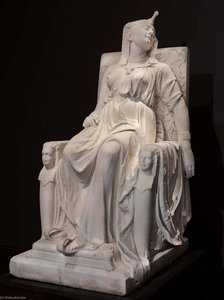
Edmonia Lewis’s work is characterized by its elegant neoclassical forms infused with powerful thematic content. She fearlessly tackled subjects rarely explored by sculptors of her time—particularly those relating to Black people and Indigenous peoples of the Americas. Her sculptures are not merely aesthetic objects; they are poignant statements about race, identity, and the human condition. The Death of Cleopatra, perhaps her most celebrated work, presents a dramatic and unconventional depiction of the Egyptian queen’s final moments, emphasizing agency and dignity rather than despair. Hiawatha and Minnehaha, a sculpture inspired by Longfellow's poem, portrays Native American figures with sensitivity and respect, challenging prevailing stereotypes. Other notable works include busts of historical figures like Abraham Lincoln and Ulysses S. Grant, as well as sculptures exploring biblical narratives. Lewis’s dedication to her craft was remarkable; she insisted on personally executing the entire sculpting process from start to finish—a rare practice for sculptors of that era, who typically relied on assistants for the laborious task of carving marble. This commitment underscored her artistic independence and ensured the authenticity of her vision.

A Lasting Impression: Legacy and Historical Significance

Edmonia Lewis’s achievements were groundbreaking. She was not only a pioneering sculptor but also a symbol of resilience and determination in the face of adversity. Her success challenged societal norms and prejudices, opening doors for future generations of artists from marginalized communities. Though her work fell into relative obscurity for many years after her death in 1907, it has experienced a remarkable resurgence in recent decades, thanks to renewed scholarly interest and a growing appreciation for her unique contribution to art history. In 2002, Molefi Kete Asante included Lewis on his list of “100 Greatest African Americans,” cementing her place as an important figure in American cultural heritage. Today, her sculptures are held in prestigious museum collections around the world, inspiring contemporary artists and scholars alike. Edmonia Lewis’s story is a testament to the power of art to transcend boundaries, challenge conventions, and illuminate the complexities of the human experience—a legacy that continues to resonate with audiences today.
  • Notable Works: The Death of Cleopatra, Hiawatha and Minnehaha, Forever Free, Old Arrowhead.
  • Influences: Neoclassical sculpture, abolitionist movement, Native American storytelling traditions.

Quick Facts

  • Artistic style: Idealized human form; Balanced symmetry
  • Subject or theme: Native American Conflict; Colonialism
  • Medium: Marble Sculpture
  • Title: Indian Combat
  • Artist: Edmonia Lewis

Art Quiz

There is only one correct answer for each question.

Question 1:
What is the title of Edmonia Lewis’s sculpture?
Question 2:
In what medium was Edmonia Lewis's masterpiece created?
Question 3:
Where did Edmonia Lewis study before embarking on her artistic career?
Question 4:
What is a prominent theme explored in Hiawatha and Minnehaha?
Question 5:
Which artistic movement influenced Edmonia Lewis's style?