Preview
 Send
Send Share
Share
 Details
 Guide
Guide

 Download
 Similars
 X-Ray
X-Ray Diaporama
 Stats
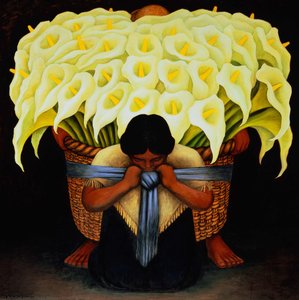
StatsNude with Calla Lilies
 Acrylic On Canvas
- WallArt
- Contemporary Realism
 1942
1942 154.0 x 118.0 cm
 Museo Dolores Olmedo
 Read More
The artwork displayed on this page is protected by copyright law, which means we cannot legally create or sell an identical reproduction. This protection is enforced under international agreements such as the Berne Convention and by national laws, including those outlined by the U.S. Copyright Law - Title 17.
This method fully complies with copyright regulations because it does not involve copying or duplicating the protected artwork. Instead, it is a creative reinterpretation - a new painting that is influenced by the original but not identical to it.
Giclée / Art Print
Museum-quality giclée or canvas print with fast production and flexible finish options. ( Buy Hand Made Painting Switch to Digital Image)




P118B $10

P118H $10

P118W $10

P438Z $10

P508JH $12

P508YH $12

P805H $10

P805Z $10

P919BZ $10

P919G $10

P919XJ $10

P959ZH $10

P968JZ $12

W106C $8

W218G $10

W218JH $8

W218Y $10

W307PJ $10

W316G $10

W316PJ $8

W316Y $10

W398PJ $8

W4111J $10

W500HY $15

W500JH $15

W692G $12

W849H $8

W940BG $15

W953PJ $8




Pick from our preset sizes that match the artwork's original proportions.

Type the width and the height you need, to fit your frame or your wall. A print can only be cut, never made bigger than the picture, so a size with a different shape loses a part of the image. We send you a digital mockup to approve before we print anything. The picture shown on this page does not show the real cut — only the mockup does.
Worldwide Delivery () in 2 weeks instead of standard 4/5 weeks. (23 October)

Free Worldwide Express Shipping

High-Quality Linen Canvas

Full Shipping Insurance

Customs Tax Refund Guarantee

True Color Matching Guarantee

100-Day Return Policy (Defects Only)

100% Money-Back Guarantee

Bulk Discount Offer
 Glass option is only available in size under 110 CM

Nude with Calla Lilies
Giclée / Art Print
Reproduction Size
-


Total Price
$ 81
Diego Rivera’s Nude with Calla Lilies: A Symphony of Sensuality and Symbolism
The painting “Nude with Calla Lilies,” completed in 1942, stands as one of Diego Rivera’s quieter yet profoundly resonant works—a testament to his enduring fascination with the female form intertwined with the evocative beauty of Mexican flora. Unlike many of his monumental murals brimming with political fervor and social critique, this piece offers a more intimate glimpse into Rivera's artistic vision, prioritizing subtle gestures and nuanced expressions within a carefully constructed composition. It’s a painting that whispers rather than shouts, inviting contemplation on themes of femininity, vulnerability, and the harmonious relationship between humanity and nature—concepts central to Rivera’s broader artistic philosophy.A Delicate Balance: Style and Technique
Rivera's masterful technique is evident in the meticulous application of charcoal on paper, resulting in a monochrome image that maximizes tonal variation and emphasizes textural subtleties. The artist eschews bold color palettes characteristic of his larger projects, opting instead for a restrained palette that allows the contours of the nude figure and the surrounding calla lilies to dominate the visual experience. Rivera’s signature style—characterized by expressive brushstrokes and a deliberate flattening of perspective—is skillfully deployed here, creating an illusionistic space that feels both grounded and ethereal. The artist's meticulous attention to detail is particularly noticeable in the rendering of the woman’s skin tones and the delicate petals of the lilies, demonstrating his unwavering commitment to capturing the essence of his subjects with remarkable accuracy.The Symbolism of Lilies: Phallic Echoes and Feminine Grace
The inclusion of calla lilies—a flower frequently associated with phallic symbolism in Rivera's oeuvre—adds a layer of complexity to the painting’s interpretation. However, Rivera transcends simplistic readings of these emblems, presenting them not merely as representations of male potency but rather as conduits for feminine grace and nurturing energy. The lilies surround the nude woman, symbolizing fertility and rebirth, subtly countering any potential suggestion of dominance or aggression. This juxtaposition underscores Rivera's belief in the interconnectedness of masculine and feminine forces—a recurring motif throughout his artistic career—and elevates the painting beyond a mere depiction of beauty to a meditation on fundamental human values.Historical Context: Postwar Reflection and Artistic Evolution
Painted shortly after the Second World War, “Nude with Calla Lilies” reflects Rivera’s evolving artistic sensibilities as he moved away from overtly political statements toward explorations of personal emotion and aesthetic contemplation. It represents a departure from his monumental murals—such as “Man at the Crossroads”—which aimed to galvanize audiences with urgent messages about social justice and revolutionary ideals. Instead, this painting embodies Rivera's desire to capture fleeting moments of beauty and vulnerability—themes that resonated deeply with artists of his time and continue to captivate viewers today. The artwork’s quiet dignity speaks volumes about Rivera’s artistic maturity and his unwavering dedication to conveying profound emotional truths through understated visual language.Emotional Resonance: A Portrait of Inner Beauty
Ultimately, “Nude with Calla Lilies” succeeds in communicating a powerful sense of serenity and introspection. The woman's gaze downward—a gesture of vulnerability and contemplation—draws the viewer into her inner world, inviting us to consider themes of solitude, reflection, and acceptance. Rivera’s masterful use of charcoal creates an atmosphere of hushed intimacy, emphasizing the subtle nuances of emotion conveyed through posture and expression. The painting transcends mere visual representation; it embodies a profound appreciation for the beauty of human experience—a sentiment that aligns perfectly with Rivera's broader artistic mission to celebrate Mexican culture and identity while simultaneously exploring universal themes of compassion and empathy.Questions & Answers
What is "Nude with Calla Lilies" made with?
"Nude with Calla Lilies" is executed in acrylic on canvas.
When was "Nude with Calla Lilies" created, and to which movement does it belong?
"Nude with Calla Lilies" was created in 1942 as a work of the Contemporary Realism movement. Date and movement anchor the artwork in art history.
How does the style of "Nude with Calla Lilies" relate to its creator's era?
In "Nude with Calla Lilies" by Diego Rivera, the Contemporary Realism movement meets the Modern era.
Artist Biography
Early Life and Artistic Awakening
Diego Rivera, born Diego María de la Concepción Juan Nepomuceno Estanislao de la Rivera y Barrientos Acosta y Rodríguez in Guanajuato, Mexico, on December 8, 1886, entered a world already imbued with artistic sensibility. From the tender age of three, an undeniable fascination with art blossomed within him, nurtured by parents who recognized and encouraged his burgeoning talent. His early years were marked by a formal education at the Academy of San Carlos in Mexico City, where he diligently honed his skills in traditional painting and sculpture. A pivotal moment arrived in 1907 when Teodoro A. dehesa Méndez generously sponsored Rivera’s studies abroad, launching him into the heart of Europe's artistic ferment.
His initial sojourn took him to Madrid, Spain, where he studied under Eduardo Chicharro, absorbing the tenets of Realism. However, it was Paris that truly ignited his creative evolution. Immersed in the vibrant Montparnasse community, Rivera encountered a kaleidoscope of artistic perspectives, most notably the revolutionary principles of Cubism after 1912. The influence of Pablo Picasso and Georges Seurat became palpable in his work, as he began to deconstruct forms and explore intersecting planes—a departure from traditional representation that would define a significant phase of his artistic journey.
The Return to Mexico and the Mural Renaissance
A profound shift occurred in 1921 when Rivera returned to his homeland, a nation grappling with the aftermath of revolution. This homecoming wasn’t merely a geographical relocation; it was an ideological awakening. He became a central figure in the burgeoning Mexican Mural Movement, a powerful artistic response to the social and political upheaval of the time. The movement aimed to democratize art, bringing it out of elite circles and into public spaces accessible to all citizens.
Rivera’s murals weren't simply decorative; they were potent narratives of Mexican history, culture, and societal struggles. His early masterpieces, such as “Creation” (1922), showcased his innovative use of encaustic technique, while the monumental works at the Secretaría de Educación Pública in Mexico City revealed a distinctive style characterized by large, simplified figures and bold colors—a deliberate homage to Aztec art and pre-Columbian aesthetics. These murals weren’t just paintings; they were visual manifestos, proclaiming a new national identity forged from its indigenous roots and revolutionary spirit.
A Style Forged in Social Consciousness
Diego Rivera's artistic style is instantly recognizable—a monumental scale that commands attention, simplified forms that convey powerful messages, vibrant colors that evoke the richness of Mexican culture, and an unwavering focus on social and historical narratives. His work wasn’t confined to aesthetic concerns; it was deeply intertwined with his political beliefs, particularly his Marxist convictions.
The “Dreams of a Sunday in the Alameda” is perhaps one of his most iconic works, though also controversial for its depiction of atheism. The Detroit Industry Murals (1933), commissioned for the Detroit Institute of Arts, stand as a testament to his ability to capture the dynamism and complexity of industrial life, portraying both the power of machinery and the dignity of the workers who operated it. He seamlessly blended elements of Mexican folk art with pre-Columbian imagery, creating a visual language that was uniquely his own—a powerful synthesis of tradition and modernity.
Legacy and Enduring Influence
Diego Rivera’s impact on 20th-century art is immeasurable. He isn't merely remembered as one of Mexico’s most important artists, but as a global icon whose work continues to resonate with audiences today. His murals are not just artistic achievements; they are significant examples of social realism and public art—powerful statements about the human condition and the struggle for social justice.
He played a pivotal role in establishing Mexican Muralism as an influential artistic movement, inspiring generations of artists to use their work as a vehicle for social commentary. His personal life, particularly his passionate and often tumultuous relationship with Frida Kahlo, has further cemented his place in popular culture, adding another layer of intrigue to his already captivating legacy.
Rivera’s commitment to portraying the lives and struggles of ordinary people, combined with his innovative artistic techniques, ensures that his work will continue to inspire and provoke thought for generations to come. He left behind a body of work that is not only visually stunning but also deeply meaningful—a testament to the power of art to shape our understanding of history, culture, and ourselves.
Notable Works
- Creation (1922): His first significant mural, utilizing the encaustic technique.
- Dreams of a Sunday in the Alameda: A controversial piece known for its depiction of atheism and historical figures.
- Secretaría de Educación Pública Murals: Showcasing his unique style with large, simplified forms and vibrant colors influenced by Aztec art.
- Detroit Industry Murals (1933): Commissioned for the Detroit Institute of Arts, depicting industrial processes and workers.

Diego Rivera
1886 - 1957 , Mexico
Quick Facts
- Full Name: Diego Rivera
- Nationality: Mexican
- Date Of Birth: 1886
- Date Of Death: 1957
- Place Of Birth: Guanajuato, Mexico
- Notable Artworks:
- Creation
- Detroit Industry Murals
- Dreams of a Sunday in Alameda
- Artistic Movement Or Style: Mexican Muralism, Cubism
- Artists Who Influenced This Artist:
- Pablo Picasso
- Georges Seurat
- Artists Or Movements Influenced By This Artist: ['Mexican Muralism']
Related Articles
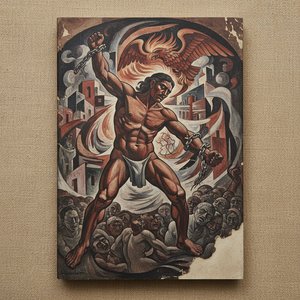
José Clemente Orozco: A Revolutionary Vision of Mexican Muralism & the Human Condition
Explore the powerful world of José Clemente Orozco, a key figure in Mexican Muralism. Discover his revolutionary art, social commentary, and lasting impact on 20th-century painting. Learn about his unique style & legacy.
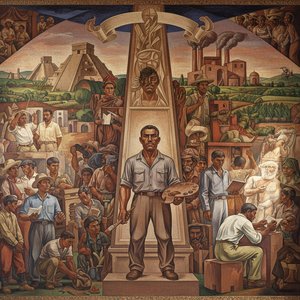
Diego Rivera: A Revolutionary Vision of Mexican Identity Through Muralism
Explore the revolutionary murals of Diego Rivera and his profound impact on Mexican art & identity. Discover his techniques, iconic works like 'Man at the Crossroads,' and lasting legacy with OriginalUniqueArt.

Mexican Muralism for Commercial Interiors: A Procurement Guide to Large-Scale Masterpiece Reproductions
Elevate commercial interiors with premium Mexican Muralism reproductions. Our guide for hotel designers covers large-scale Diego Rivera-style murals, custom sizing, and bulk procurement solutions for high-impact hospitality spaces. Reliable global shipping and professional art consultation.

Elevating Interiors: How Murals are Redefining Kitchens and Bathrooms
Transform your kitchen & bathroom with stunning murals! Explore design trends, durable materials & expert advice. Elevate your interiors with OriginalUniqueArt.com's bespoke mural solutions.
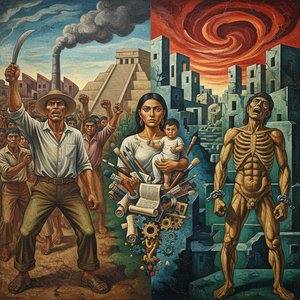
Revolution on Canvas: Exploring the Socio-Political Power & Artistic Legacy of Mexican Muralism
Explore the powerful world of Mexican muralism! Discover Diego Rivera, Frida Kahlo & Orozco's revolutionary art, social impact & lasting legacy. Expert insights & high-quality reproductions at OriginalUniqueArt.