Preview
 Send
Send Share
Share
 Details
 Guide
Guide

 Download
 Similars
 X-Ray
X-Ray Diaporama
 Q&A
Q&A Stats
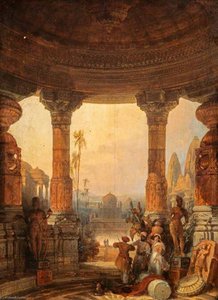
StatsA View in Cairo
 Acrylic On Canvas
- WallArt
- Orientalist Romanticism
 1840
1840 91.0 x 70.0 cm
 Royal Collection
 Read More
Giclée / Art Print
Museum-quality giclée or canvas print with fast production and flexible finish options. ( Buy Hand Made Painting Switch to Digital Image)




P118B $10

P118H $10

P118W $10

P438Z $10

P508JH $12

P508YH $12

P805H $10

P805Z $10

P919BZ $10

P919G $10

P919XJ $10

P959ZH $10

P968JZ $12

W106C $8

W218G $10

W218JH $8

W218Y $10

W307PJ $10

W316G $10

W316PJ $8

W316Y $10

W398PJ $8

W4111J $10

W500HY $15

W500JH $15

W692G $12

W849H $8

W940BG $15

W953PJ $8




Pick from our preset sizes that match the artwork's original proportions.

Type the width and the height you need, to fit your frame or your wall. A print can only be cut, never made bigger than the picture, so a size with a different shape loses a part of the image. We send you a digital mockup to approve before we print anything. The picture shown on this page does not show the real cut — only the mockup does.
Worldwide Delivery () in 2 weeks instead of standard 4/5 weeks. (30 October)

Free Worldwide Express Shipping

High-Quality Linen Canvas

Full Shipping Insurance

Customs Tax Refund Guarantee

True Color Matching Guarantee

100-Day Return Policy (Defects Only)

100% Money-Back Guarantee

Bulk Discount Offer
 Glass option is only available in size under 110 CM

A View in Cairo
Giclée / Art Print
Reproduction Size
-


Total Price
$ 81
A View in Cairo: A Window into Victorian Egypt
David Roberts’s “A View in Cairo,” painted in 1840, is more than just a depiction of an Egyptian cityscape; it's a meticulously crafted window into the Victorian fascination with the Orient. This oil on canvas transports us to the heart of the bustling metropolis of Cairo, capturing not merely its physical appearance but also the atmosphere and cultural nuances that captivated European artists and travelers during this era. Roberts, a Scottish painter who spent several years documenting the Middle East, wasn’t simply recording what he saw; he was actively interpreting it through the lens of his time, blending topographical accuracy with a distinctly Romantic sensibility.
The painting immediately draws the eye to the twin minarets that dominate the skyline – a potent symbol of Islamic faith and power. These towering structures, rendered with remarkable detail, anchor the composition and establish a sense of grandeur against the backdrop of the city’s intricate streetscape. Roberts masterfully employs light and shadow, creating a dynamic interplay between illumination and darkness that breathes life into the scene. The warm glow of the sun highlights the textures of the buildings – the weathered stone, the wooden lattice work, and the vibrant colors of the clothing worn by the figures below. This careful attention to detail speaks volumes about Roberts’s artistic skill and his commitment to capturing the essence of Cairo.
The Language of Orientalism
“A View in Cairo” is a quintessential example of Orientalist painting, a genre that flourished during the 19th century. Orientalism, as it was understood then, wasn’t simply about depicting the East; it involved a complex interplay of fascination, exoticization, and often, colonial power dynamics. Roberts's work reflects this duality. While he presents a vibrant and lively scene, there’s an undeniable sense of distance – a carefully constructed perspective that positions the viewer as an observer rather than a participant. The figures in the foreground are rendered with a degree of formality, suggesting a certain level of social hierarchy, while their activities—shopping, conversing, carrying goods—offer glimpses into daily life.
The painting’s composition also contributes to this sense of otherness. Roberts strategically frames the scene, drawing our attention to specific elements – the minarets, the bustling street, and the figures engaged in various activities. This deliberate framing reinforces the idea that Cairo is a world apart, a place of exotic beauty and mystery that demands careful study and interpretation.
Technique and Detail
Roberts’s technical skill is evident throughout “A View in Cairo.” He demonstrates a remarkable ability to capture the textures and details of the city – from the rough-hewn stone of the buildings to the intricate patterns on the fabrics worn by the figures. His use of color is particularly noteworthy, with subtle gradations of tone creating a sense of depth and realism. The artist’s meticulous observation and skillful brushwork are further enhanced by his use of perspective, which creates a convincing illusion of space.
The painting was created using a layering technique, building up the image gradually through multiple thin washes of paint. This method allowed Roberts to achieve the desired level of detail and luminosity. The result is a richly textured surface that invites close examination – revealing the artist’s patient handiwork and his dedication to capturing the beauty of Cairo.
A Legacy of Vision
“A View in Cairo” remains a significant work of art, offering valuable insights into Victorian perceptions of the Middle East. It's not merely a historical document but also a testament to Roberts’s artistic vision and his ability to capture the spirit of a place and time. Reproductions of this painting continue to be appreciated for their beauty, detail, and evocative atmosphere. Its enduring appeal lies in its ability to transport us back to 1840 Cairo – a vibrant, bustling city brimming with life and mystery.
Questions & Answers
Is "A View in Cairo" available as a fine art print?
To get a print of "A View in Cairo" by David Roberts, simply order it on its Fine Art Print page: a fine art print on cotton canvas or archival canvas paper.
What atmosphere would a reproduction of "A View in Cairo" by David Roberts bring to a room?
With its romantic mood, "A View in Cairo" is suggested for a living room.
What is the luminance of "A View in Cairo" by David Roberts?
"A View in Cairo" by David Roberts has a gentle luminance luminance. Luminance describes how much light the colors appear to reflect.
Artist Biography
David Roberts: A Life in Art
David Roberts (1796-1864) was a Scottish painter celebrated for his detailed Orientalist scenes and meticulous lithographs. His work provides invaluable visual documentation of the Middle East during the 19th century, bridging artistic representation with historical record.
Early Life and Career
Born on October 24, 1796, in Stockbridge near Edinburgh, Roberts’s early life was marked by practical training. At the age of ten, he began an apprenticeship with house painter and decorator Gavin Beugo. This foundational experience instilled a strong technical skill set, which he supplemented through evening art studies.
His initial professional work included redecorating Scone Palace in 1815. He then transitioned to scene painting for James Bannister’s circus, honing his skills in creating immersive environments. These early experiences laid the groundwork for his later success as a prominent Orientalist painter.
Artistic Journey and Influences
Roberts' artistic development was shaped by a growing fascination with different cultures and landscapes. While initially focused on theatrical scenery, he gradually shifted towards more independent artistic pursuits. His travels to Spain in 1832 were formative, sparking an interest in architectural detail and exotic locales.
However, it was his extensive tours of Egypt and the Near East (1838-1840) that truly defined his career. These journeys provided him with a wealth of sketches and observations which he later translated into his most famous works. His style wasn’t heavily influenced by any single artist, but rather developed from careful observation and technical mastery.
Notable Works and Achievements
Roberts is best known for The Holy Land, Syria, Idumea, Arabia, Egypt, and Nubia – a series of meticulously detailed lithograph prints. These images captured the grandeur of ancient sites and the vibrancy of contemporary life in the region.
- Lithographs: His lithographs were widely circulated and became highly influential in shaping European perceptions of the Middle East.
- Paintings: He also produced numerous oil paintings, often large-scale works depicting expansive landscapes and architectural marvels.
In 1841, Roberts was elected as a Royal Academician – a significant recognition of his contributions to the art world.
Artistic Style and Characteristics
Roberts’s artistic style is characterized by:
- Orientalism: A strong focus on depicting scenes from the Middle East, reflecting the European fascination with “the Orient.”
- Attention to Detail: His work is renowned for its precision and accuracy in rendering architectural details, costumes, and landscapes.
- Landscaping & Townscapes: He skillfully combined romantic sensibilities with detailed observation, creating evocative depictions of both natural environments and urban settings.
Legacy and Historical Significance
David Roberts’s work played a crucial role in popularizing the Middle East among European audiences. His images provided a visual window into a region that was largely unknown to many, influencing travel, scholarship, and artistic representation.
His lithographs served as important historical documents, preserving images of sites that have since changed or been lost. He left an indelible mark on the art world, inspiring subsequent generations of artists and continuing to captivate viewers today.

David Roberts
1796 - 1864 , United Kingdom
Quick Facts
- Name: David Roberts
- Movement: Orientalism
- Birth Date: October 24, 1796
- Death Date: 1864
- Influenced: Jenaro Pérez Villaamil, Alexander Nasmyth
- Birth Place: Stockbridge, United Kingdom
- Nationality: Scottish
- Date Of Birth: 1796
- Date Of Death: 1864
- Notable Works: The Holy Land, Syria, Idumea, Arabia, Egypt, and Nubia
- Place Of Birth: Stockbridge, United Kingdom
Related Articles

Jacques-Louis David: Neoclassical Ideals & Revolutionary Witness
Explore the life & art of Jacques-Louis David, leading Neoclassical painter of the French Revolution. Discover iconic works like 'The Death of Marat' and his lasting impact on art history. Expert analysis & high-quality reproductions at OriginalUniqueArt.

David Roberts: A Scottish Pioneer of Topographical Art & Orientalist Vision
Explore the captivating world of David Roberts, a pioneering Scottish painter renowned for his detailed Orientalist scenes & stunning Egyptian landscapes. Discover his legacy and find museum-quality reproductions at OriginalUniqueArt.

Golden Hour on the Nile: Symbolism & Artistic Legacy of Egyptian Sunsets
Explore the rich symbolism of Egyptian sunset paintings & their artistic legacy. Discover how color, ritual, and landscape shaped ancient beliefs – a guide for discerning collectors.

Hubert Robert: Picturing Ruins, Preserving Memory – A Study of Romantic Antiquarianism & Artistic Innovation
Explore the captivating world of Hubert Robert, master of Romantic landscape painting & 'capriccio' ruins. Discover his historical context, artistic innovations, and collecting insights with OriginalUniqueArt.

The Alluring Gaze: Orientalism in 19th-Century Art – Representation, Reception & Construction of the 'Orient'
Explore the complex history of Orientalism in 19th-century art. Discover how Western artists depicted the 'Orient,' its cultural impact, and Edward Said's critical analysis. A deep dive for art lovers & historians.