Preview
 Send
Send Share
Share
 Details
 Guide
Guide

 Download
 Similars
 X-Ray
X-Ray Diaporama
 Stats
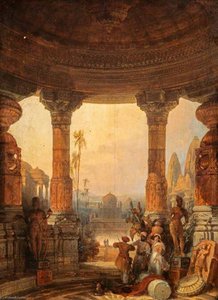
StatsUntitled (AQTNEY)
 Oil On Canvas
- WallArt
- Orientalism
 1859
1859- 19th Century
 121.0 x 90.0 cm
 Read More
Hand Made Oil Reproduction
Hand-painted oil on canvas in your size and frame, made to order by our artists. ( Switch to Print Switch to Digital Image)




































Pick from our preset sizes that match the artwork's original proportions.

Type the width and the height you need, to fit your frame or your wall. This is hand-painted, so for a size with a different shape the artist can paint a bit more around the picture, or cut a bit — you choose. We send you a digital mockup to approve before the painting starts. The picture shown on this page does not show the real result — only the mockup does.
After order, OriginalUniqueArt.com team will email client for instructions and provide a mockup preview
Worldwide Delivery () in 3/4 weeks instead of standard 5 weeks. (23 October). No compromise on quality.

Free Worldwide Express Shipping

High-Quality Linen Canvas

Full Shipping Insurance

Customs Tax Refund Guarantee

True Color Matching Guarantee

100-Day Return Policy (Defects Only)

100% Money-Back Guarantee

Bulk Discount Offer
 Glass option is only available in size under 110 CM

Untitled (AQTNEY)
Reproduction Medium
Reproduction Size
-


Total Price
$ 300
A Glimpse into the Sacred: The Grandeur of David Roberts
In the vast, sweeping history of nineteenth-century Orientalism, few artists captured the intersection of architectural majesty and human devotion as poignantly as David Roberts. His work, Untitled (AQTNEY), serves as a breathtaking window into a world of stone and spirit. Painted in 1859, this large-scale oil on canvas transports the viewer into the heart of a monumental cathedral, where the air seems heavy with the scent of aged incense and the weight of centuries. The composition is dominated by soaring pillars and rhythmic arches that draw the eye upward toward a ceiling lost in shadow, creating a sense of infinite verticality that mimics the very aspiration of prayer itself.
The scene is far from a desolate monument; instead, it is a living, breathing sanctuary. Roberts masterfully populates this cavernous space with figures caught in moments of quiet intimacy and communal ritual. Some souls are seen kneeling in fervent supplication, while others stand in hushed conversation, their small scale emphasizing the overwhelming grandeur of the stone surroundings. This juxtaposition between the ephemeral nature of human life and the enduring permanence of the cathedral’s architecture creates a profound emotional resonance, inviting anyone who gazes upon it to contemplate their own place within the grand tapestry of time.
Mastery of Light and Architectural Detail
Technically, this piece is a triumph of Roberts's ability to manipulate light and shadow to define volume. The artist utilizes a sophisticated palette of earthy tones—deep ochres, muted greys, and warm umbers—to render the textured surfaces of the ancient stone. The play of light filtering through the unseen heights of the nave creates dramatic highlights on the edges of the pillars, lending them a sculptural quality that feels almost tactile. Even the subtle inclusion of two clocks upon the walls serves as a poignant memento mori, a gentle reminder of the passage of time within a space designed to feel eternal.
For the discerning collector or interior designer, this reproduction offers more than mere decoration; it provides an anchor of historical depth and intellectual intrigue. The meticulous detail, characteristic of Roberts’s background in technical painting and lithography, ensures that every brushstroke contributes to a sense of realism and atmosphere. Whether placed in a grand library, a formal dining room, or a contemporary gallery space, the painting acts as a conversational centerpiece, evoking an era of exploration and a deep reverence for the architectural wonders of the world.
To possess such a work is to invite a sense of contemplative stillness into one's environment. It is an invitation to slow down, to look upward, and to lose oneself in the intricate dance of light and shadow that Roberts so expertly choreographed over a century and a half ago. This piece remains a testament to the power of art to bridge the gap between the modern observer and the sacred histories of the past.
Questions & Answers
Where can I find statistics about "Untitled (AQTNEY)" by David Roberts?
Statistics about "Untitled (AQTNEY)" by David Roberts are on the artwork's Stats page: monthly visits of the artwork, visits of the artist's works, and country and language breakdowns of recent visitors.
How does "Untitled (AQTNEY)" fit into David Roberts's themes and style?
"Untitled (AQTNEY)" belongs to David Roberts's Orientalism work, whose recorded themes include orientalist architectural detail, religious devotion themes, middle eastern culture, documentary historical record, detailed lithographic style.
How saturated is the palette of "Untitled (AQTNEY)"?
"Untitled (AQTNEY)" by David Roberts is recorded with a subtle color saturation.
Artist Biography
David Roberts: A Life in Art
David Roberts (1796-1864) was a Scottish painter celebrated for his detailed Orientalist scenes and meticulous lithographs. His work provides invaluable visual documentation of the Middle East during the 19th century, bridging artistic representation with historical record.
Early Life and Career
Born on October 24, 1796, in Stockbridge near Edinburgh, Roberts’s early life was marked by practical training. At the age of ten, he began an apprenticeship with house painter and decorator Gavin Beugo. This foundational experience instilled a strong technical skill set, which he supplemented through evening art studies.
His initial professional work included redecorating Scone Palace in 1815. He then transitioned to scene painting for James Bannister’s circus, honing his skills in creating immersive environments. These early experiences laid the groundwork for his later success as a prominent Orientalist painter.
Artistic Journey and Influences
Roberts' artistic development was shaped by a growing fascination with different cultures and landscapes. While initially focused on theatrical scenery, he gradually shifted towards more independent artistic pursuits. His travels to Spain in 1832 were formative, sparking an interest in architectural detail and exotic locales.
However, it was his extensive tours of Egypt and the Near East (1838-1840) that truly defined his career. These journeys provided him with a wealth of sketches and observations which he later translated into his most famous works. His style wasn’t heavily influenced by any single artist, but rather developed from careful observation and technical mastery.
Notable Works and Achievements
Roberts is best known for The Holy Land, Syria, Idumea, Arabia, Egypt, and Nubia – a series of meticulously detailed lithograph prints. These images captured the grandeur of ancient sites and the vibrancy of contemporary life in the region.
- Lithographs: His lithographs were widely circulated and became highly influential in shaping European perceptions of the Middle East.
- Paintings: He also produced numerous oil paintings, often large-scale works depicting expansive landscapes and architectural marvels.
In 1841, Roberts was elected as a Royal Academician – a significant recognition of his contributions to the art world.
Artistic Style and Characteristics
Roberts’s artistic style is characterized by:
- Orientalism: A strong focus on depicting scenes from the Middle East, reflecting the European fascination with “the Orient.”
- Attention to Detail: His work is renowned for its precision and accuracy in rendering architectural details, costumes, and landscapes.
- Landscaping & Townscapes: He skillfully combined romantic sensibilities with detailed observation, creating evocative depictions of both natural environments and urban settings.
Legacy and Historical Significance
David Roberts’s work played a crucial role in popularizing the Middle East among European audiences. His images provided a visual window into a region that was largely unknown to many, influencing travel, scholarship, and artistic representation.
His lithographs served as important historical documents, preserving images of sites that have since changed or been lost. He left an indelible mark on the art world, inspiring subsequent generations of artists and continuing to captivate viewers today.

David Roberts
1796 - 1864 , United Kingdom
Quick Facts
- Name: David Roberts
- Movement: Orientalism
- Birth Date: October 24, 1796
- Death Date: 1864
- Influenced: Jenaro Pérez Villaamil, Alexander Nasmyth
- Birth Place: Stockbridge, United Kingdom
- Nationality: Scottish
- Date Of Birth: 1796
- Date Of Death: 1864
- Notable Works: The Holy Land, Syria, Idumea, Arabia, Egypt, and Nubia
- Place Of Birth: Stockbridge, United Kingdom
Related Articles

The Enduring Legacy of Oil on Canvas: Technique, History & Aesthetic Impact
Explore the rich history & techniques of oil painting – from Renaissance masters to Impressionism. Discover pigments, layering methods, and why this timeless medium endures. Expert insights for artists & art enthusiasts.

Oil on Canvas: A Historical & Technical Exploration of a Timeless Artistic Medium
Explore the rich history & enduring techniques of oil painting on canvas. Discover the science behind its longevity, conservation practices, and contemporary relevance. Expert insights for art enthusiasts.

The Enduring Legacy of Oil on Canvas: Technique, History & Contemporary Practice
Explore the rich history & enduring techniques of oil painting on canvas. Discover the science behind its longevity, conservation practices, and contemporary relevance. Expert insights for art enthusiasts.
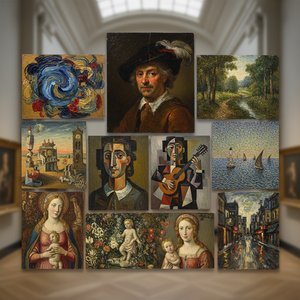
Oil on Board Masters: 10 Paintings That Redefined Art | OriginalUniqueArt
Explore 10 legendary 'Oil on Board' masterpieces by Van Gogh, Monet & more! Discover art history, iconic styles like Impressionism, and find museum-quality reproductions to elevate your home decor. Explore the full collection online at OriginalUniqueArt.com.

The Enduring Power of Painting: A Historical & Contemporary Exploration of Form and Emotion
Explore the rich history & enduring techniques of oil painting with OriginalUniqueArt. Discover masterpieces, learn about art collecting, and find authentic handmade reproductions crafted by skilled artists.