

 Send
Send Share
Share
 Details
 Guide
Guide

 Download
 Similars
 Diaporama
 Stats
StatsPyrmont Bridge and the city


 Read More
Giclée / Art Print
Museum-quality giclée or canvas print with fast production and flexible finish options. ( Buy Hand Made Painting Switch to Digital Image)




































Pick from our preset sizes that match the artwork's original proportions.

You may enter your own dimensions to fit a specific frame or space. If your selected size does not match the original image's proportions, we will either crop the artwork or extend the image with a mirrored or solid-fill edge. A digital mockup will be sent for your approval before production begins.
Please note that the on-screen preview does not reflect the actual cropping or extension. Only the mockup will accurately show the final composition.
While custom sizes are available, we recommend selecting a dimension from the predefined list to preserve the original proportions.
Worldwide Delivery () in 2 weeks instead of standard 4/5 weeks. (26 September)

Free Worldwide Express Shipping

High-Quality Linen Canvas

Full Shipping Insurance

Customs Tax Refund Guarantee

True Color Matching Guarantee

100-Day Return Policy (Defects Only)

100% Money-Back Guarantee

Bulk Discount Offer
 Glass option is only available in size under 110 CM

Pyrmont Bridge and the city
Giclée / Art Print
Reproduction Size
-


Total Price
$ 81
A Silent Witness to Sydney’s Evolution
In the quiet, monochromatic depths of David Moore’s “Pyrmont Bridge and the City,” we find much more than a mere topographical record of an Australian landmark; we encounter a crystallized moment of a nation in transition. Captured during the transformative decades between 1966 and 2003, this photograph serves as a profound visual diary of Sydney’s metamorphosis. As the city expanded and new waves of migration reshaped its cultural fabric, Moore’s lens remained fixed on the intersection of industry and identity. The image captures the Pyrmont Bridge not just as a feat of engineering, but as a silent observer to the burgeoning urban landscape, standing firm amidst the shifting tides of history.
The photograph is a masterclass in documentary photography, where the artist’s restraint allows the raw truth of the scene to emerge. Through the use of stark black and white tones, Moore strips away the distractions of color to reveal the essential textures of the era. The heavy, geometric steelwork of the bridge dominates the upper frame, creating a sense of structural permanence that contrasts beautifully with the ephemeral, hazy atmosphere of the distant skyline. There is a rhythmic tension found in the parallel railway tracks that lead the eye deep into the composition, utilizing linear perspective to pull the viewer through the industrial foreground and toward the soft, obscured silhouettes of the growing metropolis.
The Poetry of Monochrome and Light
Technically, the work achieves a breathtaking sense of depth through atmospheric perspective. A delicate haze settles over the cityscape, softening the edges of distant buildings and imbuing the scene with a dreamlike, almost melancholic quality. This diffusion of light creates a subtle interplay between shadow and highlight, where the rugged, tactile surfaces of the tracks meet the smoother, more ethereal planes of the water and sky. The absence of color amplifies the emotional weight of the piece, turning a landscape study into an evocative meditation on solitude and time.
For the discerning collector or interior designer, this artwork offers a sophisticated anchor for any space. Its palette of deep blacks, nuanced grays, and luminous whites provides a timeless elegance that complements both contemporary minimalist settings and classic, traditional interiors. The bridge itself acts as a powerful visual metaphor—a symbol of connection linking Australia’s industrial heritage to its modern urban future. To hang this reproduction is to invite a sense of quiet grandeur and historical reflection into a room, offering a window into a bygone era that continues to resonate with the pulse of the present.
Artist Biography
David Moore: A Chronicle of Australian Life Through the Lens
Born in Sydney, Australia, in 1927, David Moore’s life and career were inextricably linked to the evolving story of his nation – a story he meticulously documented through the powerful medium of photography. More than simply a photojournalist, Moore was a historian, an observer, and ultimately, a profound interpreter of Australian identity. His extraordinary body of work spanned six decades, encompassing everything from the poignant arrival of migrants in 1966 to intimate portraits of political figures and significant social events. He wasn’t merely recording images; he was capturing moments that defined a nation's trajectory.
Moore’s early life instilled within him a deep appreciation for visual storytelling. His father, an architect and artist, nurtured his interest in photography with a Coronet box camera at the tender age of eleven – a gift that ignited a lifelong passion. This initial foray into the craft evolved through formal education at Tudor House School and Geelong Grammar, culminating in a self-portrait capturing his youthful ambition. This early dedication laid the foundation for a career marked by relentless travel and an unwavering commitment to documenting Australia’s diverse landscape and its people.
His professional journey began with Russell Roberts' advertising studio, where he honed his skills and developed a keen eye for composition and narrative. A pivotal move to London in 1951 opened doors to international assignments for prominent publications like *The New York Times*, *Time*, and *Life*. During this period, Moore’s work gained recognition for its clarity, emotional resonance, and ability to convey complex narratives through a single frame. He skillfully navigated the demands of commercial photography while simultaneously pursuing personal projects that explored Australian themes – a testament to his versatility and artistic vision.
Returning to Australia in 1958, Moore established himself as a leading figure in the country’s photographic landscape. His work with Max Dupain further solidified his reputation, showcasing his ability to capture both technical brilliance and evocative emotion. He then embarked on a prolific career documenting significant events, including the Royal Tour in Nigeria in 1956, capturing moments of cultural exchange and national pride. Moore's commitment extended beyond commercial assignments; he actively contributed to Australian cultural heritage through projects such as his work with the Australian War Memorial, providing invaluable visual records of the nation’s military history.
Notable among his achievements is “Nicholas Hannen and Athene Seyler, London” (2000), a black-and-white portrait now housed at the National Portrait Gallery in Canberra. This photograph exemplifies Moore's ability to distill intimacy into a single image – a quiet moment of connection amidst the bustle of urban life. His documentary work, particularly his images of migrant arrivals in Sydney in 1966, remains profoundly moving, offering a powerful testament to the challenges and triumphs of those seeking new lives in Australia. Moore’s influence can be seen in the work of subsequent generations of Australian photographers, who continue to draw inspiration from his dedication to truthfulness, empathy, and artistic excellence.
Key Works & Photographic Style
David Moore's photographic style was characterized by a remarkable blend of realism and sensitivity. He eschewed overly stylized techniques in favor of capturing the essence of his subjects with honesty and immediacy. His use of black-and-white photography, often employing high contrast and dramatic lighting, heightened the emotional impact of his images. He possessed an innate ability to connect with his subjects, creating portraits that revealed not just their physical appearance but also their inner lives.
His extensive archive includes a diverse range of subjects: migrants arriving in Sydney, political leaders addressing the nation, everyday Australians engaged in their daily routines – all rendered with equal skill and attention. Moore’s compositions were often carefully constructed to draw the viewer's eye to key elements within the frame, creating a sense of depth and narrative flow. His ability to capture fleeting moments of human emotion—joy, sorrow, resilience—is what truly sets his work apart.
Significant works beyond “Nicholas Hannen and Athene Seyler, London” include "Dublin Horse Show Spectators" (1956), a nostalgic snapshot of Australian social life; numerous images documenting the Vietnam War era; and a comprehensive series of portraits capturing the diversity of Australian society. These photographs offer a rich tapestry of visual narratives that illuminate the complexities and contradictions of Australian history.
Legacy & Influence
David Moore’s legacy as Australia's most influential photojournalist is undeniable. His prolific output, combined with his critical acclaim and widespread recognition, cemented his place as a towering figure in Australian art history. He wasn’t simply documenting events; he was shaping the way Australians saw themselves and their nation.
Moore’s work has profoundly influenced subsequent generations of photographers, particularly those working in documentary photography. His commitment to social realism, coupled with his technical mastery, served as a model for aspiring artists seeking to capture the truth of everyday life. His influence can be seen in the works of Mervyn Bishop and other prominent Australian photographers who followed in his footsteps.
Today, David Moore’s photographs are cherished within Australia's cultural heritage, offering invaluable insights into the nation’s past and present. His archive continues to inspire and educate, reminding us of the power of photography to shape our understanding of the world around us. His work is readily available for viewing and purchase on platforms like OriginalUniqueArt, ensuring that his legacy will continue to resonate with audiences for generations to come.
Key Facts & Biographical Details
- Born: Sydney, Australia (1927)
- Died: 2003
- Occupation: Photojournalist, Historian of Australian Photography, Initiator of the Australian Centre for Photography
- Known For: Iconic images of migrants arriving in Sydney (1966), extensive documentation of Australian life and culture.
- Notable Works: “Nicholas Hannen and Athene Seyler, London” (2000)
Useful Links:

David Moore
1927 - 2003 , Australia
Quick Facts
- Artistic Movement Or Style: Photojournalism
- Artists Or Movements Influenced By This Artist: ['Mervyn Bishop']
- Artists Who Influenced This Artist: ['Edward Weston']
- Date Of Birth: 1927
- Date Of Death: 2003
- Full Name: David Moore
- Nationality: Australian
- Notable Artworks:
- Migrants arriving in Sydney
- Nicholas Hannen & Athene Seyler
- Place Of Birth: Sydney, Australia
Related Articles
The Lens of Truth: A Comprehensive History and Legacy of Documentary Photography
Explore the profound history of documentary photography. From early daguerreotypes to social reform movements, discover how the lens captures truth, preserves vanishing cultures, and shapes our global visual narrative through an expert art-historical lens.
The Unfiltered Lens: Curating the Profound Emotional Depth of Documentary Photography Artworks
Explore the profound emotional depth of documentary photography art. Discover how collectors curate powerful historical narratives through museum-quality black and white prints and fine art reproductions that preserve humanity's most resilient moments.
Witnessing History Through Lens & Light: Documentary Photography's Enduring Legacy
Explore the powerful history of documentary photography – from its origins to contemporary masters like Gordon Parks & W. Eugene Smith. Discover how this art form shapes our understanding of society and witness pivotal moments in time.
Witnessing History: Documentary Photography as an Art Movement
Explore the powerful history of documentary photography – from its origins to contemporary masters like Gordon Parks. Discover how this art form shapes our understanding of society and witness pivotal moments in time.
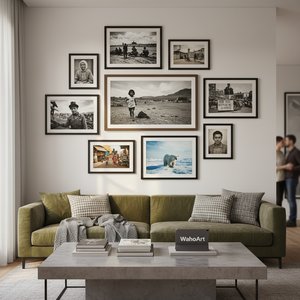
Documentary Photography's Defining Moments: 10 Masterpieces for Your Home |
Explore 10 defining documentary photography masterpieces – from Dorothea Lange to Robert Capa. Discover powerful stories, iconic images & timeless art for your home. Museum-quality prints at .


