Preview
 Send
Send Share
Share
 Details
 Guide
Guide

 Download
 Similars
 X-Ray
X-Ray Diaporama
 Stats
StatsLady Coventry


 Read More
Hand Made Oil Reproduction
Hand-painted oil on canvas in your size and frame, made to order by our artists. ( Switch to Print Switch to Digital Image)




P118B $10

P118H $10

P118W $10

P438Z $10

P508JH $12

P508YH $12

P805H $10

P805Z $10

P919BZ $10

P919G $10

P919XJ $10

P959ZH $10

P968JZ $12

W106C $8

W218G $10

W218JH $8

W218Y $10

W307PJ $10

W316G $10

W316PJ $8

W316Y $10

W398PJ $8

W4111J $10

W500HY $15

W500JH $15

W692G $12

W849H $8

W940BG $15

W953PJ $8




Pick from our preset sizes that match the artwork's original proportions.

You may enter your own dimensions to fit a specific frame or space. If your selected size does not match the original image's proportions, we will either crop the artwork or extend the painting with additional hand-painted elements. A digital mockup will be sent for your approval before production begins.
Please note that the on-screen preview does not reflect the actual cropping or extension. Only the mockup will accurately show the final composition.
While custom sizes are available, we recommend selecting a dimension from the predefined list to preserve the original proportions.
After order, OriginalUniqueArt.com team will email client for instructions and provide a mockup preview
Worldwide Delivery () in 3/4 weeks instead of standard 5 weeks. (10 October). No compromise on quality.

Free Worldwide Express Shipping

High-Quality Linen Canvas

Full Shipping Insurance

Customs Tax Refund Guarantee

True Color Matching Guarantee

100-Day Return Policy (Defects Only)

100% Money-Back Guarantee

Bulk Discount Offer
 Glass option is only available in size under 110 CM

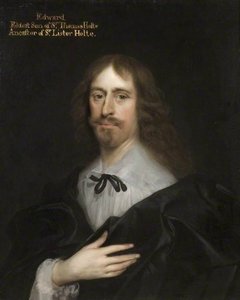
Lady Coventry
Reproduction Medium
Reproduction Size
-


Total Price
$ 300
A Portrait Steeped in Elegance and Intrigue: Exploring Cornelis Janssens van Ceulen’s Lady Coventry
Cornelis Janssens van Ceulen's "Lady Coventry," painted in 1639, transcends mere portraiture; it embodies the spirit of its time—a moment of cultural exchange between England and the Netherlands—and speaks volumes about aristocratic identity and social status. This captivating artwork resides within a broader artistic landscape shaped by the Reformation’s aftermath and the burgeoning humanist ideals that championed observation and psychological realism. The painting depicts a woman dressed in opulent attire, reflecting the wealth and sophistication of the Elizabethan court. Her gown is adorned with delicate lace trimming, meticulously crafted to convey beauty and refinement—a hallmark of Dutch decorative arts during this period.- Style: Van Ceulen’s approach aligns closely with Mannerism, a stylistic movement that prioritized expressive gesture and stylized form over strict naturalism. However, unlike many Mannerist artists, he skillfully blended these influences with elements of Northern Renaissance realism, resulting in an image that feels both emotionally resonant and aesthetically grounded.
- Technique: Executed in oil on canvas, the painting demonstrates Van Ceulen’s mastery of chiaroscuro—the dramatic interplay between light and shadow—creating a palpable sense of depth and dimensionality. The artist meticulously rendered textures, capturing the sheen of satin fabric and the subtle folds of drapery with remarkable precision.
Emotional Impact & Artistic Legacy
“Lady Coventry” continues to captivate viewers today with its understated elegance and psychological insight. The artist's skillful use of light and shadow evokes a sense of serenity and grace, mirroring the idealized vision of femininity prevalent during the Renaissance. More than just a beautiful image, it represents a pivotal moment in artistic history—a demonstration of how cultural exchange could inspire innovation and elevate artistic standards. Reproductions of this masterpiece offer an opportunity to experience firsthand the enduring power of Van Ceulen’s artistry and to appreciate the rich tapestry of European culture in the 17th century.Questions & Answers
What was Cornelis Janssens van Ceulen's age when "Lady Coventry" was created?
Cornelis Janssens van Ceulen was 46 years old when creating "Lady Coventry" in 1639. The age is computed from the artist's birth year, 1593.
Who is the artist behind "Lady Coventry"?
"Lady Coventry" was created by Cornelis Janssens van Ceulen. The information on this page describes Cornelis Janssens van Ceulen's original work.
How does the style of "Lady Coventry" relate to its creator's era?
In "Lady Coventry" by Cornelis Janssens van Ceulen, the Baroque movement meets the Early-Modern era.
What is the luminance of "Lady Coventry" by Cornelis Janssens van Ceulen?
"Lady Coventry" by Cornelis Janssens van Ceulen has a dark luminance. Luminance describes how much light the colors appear to reflect.
What is the creation date of "Lady Coventry" by Cornelis Janssens van Ceulen?
"Lady Coventry" dates from 1639. The date places the work within Cornelis Janssens van Ceulen's career and its era.
Who created "Lady Coventry" and in what year?
The author of "Lady Coventry" is Cornelis Janssens van Ceulen, and the work is dated 1639.
What mood and emotion come together in "Lady Coventry"?
In "Lady Coventry", an elegant mood accompanies a calm emotion.
Artist Biography
A Life Bridging Two Worlds: Cornelis Janssens van Ceulen
Born in London in 1593 to Dutch or Flemish parents who sought refuge from religious persecution, Cornelis Janssens van Ceulen—also known as Cornelius Johnson—embodies the fascinating intersection of cultures that defined the early 17th century. His father, Cornelis Janssens, had fled Antwerp, a city then embroiled in conflict, seeking sanctuary within London’s burgeoning Netherlandish community centered around Austin Friars Dutch Church. This upbringing instilled in young Cornelis a unique perspective, one that would profoundly shape his artistic vision and career. While details of his earliest training remain somewhat elusive, it is widely believed he received foundational instruction in the Netherlands, potentially under the guidance of Michiel Jansz. van Mierevelt. This period likely exposed him to the stylistic nuances of Dutch painting, influences that would subtly permeate his later work even as he established himself within the English artistic landscape. The seeds of a cosmopolitan sensibility were sown early, preparing him for a life lived between nations and artistic traditions.Establishing a Reputation: Portraiture in Jacobean and Caroline England
By around 1618, Cornelis Janssens van Ceulen had firmly established himself as a portrait painter in London. He quickly gained recognition for his ability to capture the likenesses of emerging English gentry with remarkable detail and accuracy. His early portraits are particularly notable for their incorporation of “fictive” oval frames—a fashionable stylistic device of the time that added an air of sophistication and elegance to his compositions. These weren’t merely decorative elements; they served to focus attention on the sitter, enhancing their presence and status within the artwork. Johnson's clientele expanded rapidly, encompassing members of the aristocracy and prominent figures in society. He painted portraits of Charles I, Charles II, and James II as children, securing commissions from the royal family itself—a testament to his growing reputation. Beyond royalty, he immortalized individuals like William Harvey, the renowned physician whose groundbreaking work on circulation revolutionized medical understanding, and Lucius Carey, 2nd Viscount Falkland, a celebrated intellectual and statesman. His portraits weren’t simply representations of physical appearance; they were insightful character studies, revealing glimpses into the personalities and social standing of his sitters. A hallmark of Johnson's practice was his meticulous attention to detail, particularly in the depiction of clothing and accessories—elements that served as powerful indicators of wealth, status, and taste during this period.A Style Defined by Adaptation and Detail
Johnson’s artistic style wasn’t static; it evolved over time, demonstrating a remarkable ability to absorb new influences while maintaining a distinct artistic voice. His early works clearly reflect the impact of Dutch painters, particularly in their restrained palettes and emphasis on realism. However, he adeptly adapted to the prevailing tastes in England, incorporating elements of Elizabethan and Jacobean portraiture into his compositions. This willingness to embrace change allowed him to remain at the forefront of artistic innovation throughout his career. He was a master of texture and surface detail, rendering fabrics with astonishing accuracy and capturing the subtle nuances of light and shadow. His portraits possess a remarkable sense of immediacy, as if the sitters are about to step out of the canvas and engage in conversation. Perhaps most remarkably for his time, Johnson consistently signed and dated his works—a practice relatively uncommon among artists of that era. This meticulous record-keeping not only asserted his authorship but also provided valuable insights into the chronology of his oeuvre.From London to Utrecht: A Life Disrupted by Civil War
The outbreak of the English Civil War in 1643 proved a turning point in Cornelis Janssens van Ceulen’s life. Faced with increasing political instability and social upheaval, he made the difficult decision to relocate to Middelburg in the Netherlands. He subsequently resided in Amsterdam (1646-1652) before finally settling permanently in Utrecht, where he remained until his death in 1661. Despite this geographical shift, Johnson continued to paint prolifically, adapting his style to suit the tastes of his new patrons. His portraits from this period often exhibit a greater emphasis on psychological depth and emotional expression. While no longer at the center of the English art world, he remained connected to it through ongoing commissions and correspondence. His work provides invaluable insights into the social and cultural landscape of 17th-century England—a period of profound transformation and upheaval. Though often overshadowed by more celebrated contemporaries like Anthony van Dyck, Johnson was a significant figure in English portraiture, leaving behind a legacy of detailed, insightful, and beautifully rendered portraits that continue to captivate audiences today. He stands as a testament to the power of art to transcend political boundaries and cultural divides, offering a glimpse into the lives and times of those who shaped a pivotal era in history.
Cornelis Janssens van Ceulen
1593 - 1661 , United Kingdom
Quick Facts
- Artistic Movement Or Style: Baroque portraiture
- Artists Who Influenced This Artist:
- Michiel Jansz. van Mierevelt
- Dutch painters
- Date Of Birth: 1593
- Date Of Death: 1661
- Full Name: Cornelis Janssens van Ceulen
- Nationality: English/Dutch/Flemish
- Notable Artworks:
- Lady Rose Macdonnell
- Charles I portraits
- William Harvey
- Lucius Carey, Viscount Falkland
- Letitia Morison
- Henry Grey, Earl Stamford
- Place Of Birth: London, United Kingdom
Related Articles

Golden Age Reflections: Dutch Baroque Painting & Cultural Innovation
Explore the Dutch Golden Age of painting! Discover key artists like Vermeer & ter Borch, their innovative techniques, and the rich cultural context behind these Baroque masterpieces. Learn about collecting & appreciating this iconic art period.

Rembrandt's Masterpieces: Explore 25 Iconic Paintings & Prints | OriginalUniqueArt
Journey through Rembrandt van Rijn's 25 most iconic paintings & etchings. Explore Dutch Golden Age masterpieces, dramatic chiaroscuro, and timeless portraits. Find museum-quality art reproductions to elevate your home decor on OriginalUniqueArt.com.
Cornelis van Poelenburch: Bridging Mannerism & the Dutch Baroque Landscape
Discover Cornelis van Poelenburch, a pivotal Dutch Baroque landscape painter bridging Mannerism & Italianate styles. Explore his life, key works, and lasting influence on 17th-century art with OriginalUniqueArt.

Dutch Baroque Masters: 10 Paintings That Shaped an Era | OriginalUniqueArt
Journey through the Golden Age with our guide to the Top 10 Dutch Baroque masterpieces! Explore iconic paintings by Rembrandt, Vermeer & Frans Hals. Find museum-quality art reproductions and elevate your home decor at OriginalUniqueArt.com.

Chiaroscuro and Character: A Definitive Guide to Light and Shadow in the Dutch Baroque Era
Explore the dramatic mastery of the Dutch Baroque era. Discover how masters like Rembrandt used chiaroscuro to transform everyday life into timeless art. An expert guide for collectors and enthusiasts seeking to understand the profound interplay of light and shadow.