() ·

A painting made for you, by hand

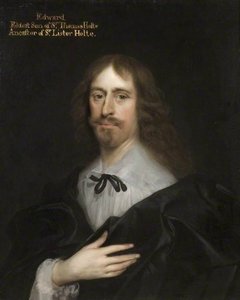
Edward Holte

Hand Made Oil Reproduction

Hand-painted oil on canvas in your size and frame, made to order by our artists. ( Switch to Print Switch to Digital Image)

Collectible Description

Admire Cornelius Janssens van Ceulen’s 1635 portrait of Edward Holte – a stunning English Baroque masterpiece. Detailed realism, dramatic lighting & aristocratic style. Explore this exquisite example of 17th-century art.

Artist Biography

Cornelis Janssens van Ceulen (1593-1661) was a prominent English Baroque portraitist, celebrated for his detailed depictions of the emerging gentry and meticulous clothing styles. Explore his oval portraits & unique artistic vision.

from ·

Chapter 1

How large should it be?

Slide to change the size; the picture on the left shows the frame at its real width. The proportions of the original are kept.

Standard
custom
CM
INCH

Pick from our preset sizes that match the artwork's original proportions.

width
height

Type the width and the height you need, to fit your frame or your wall. This is hand-painted, so for a size with a different shape the artist can paint a bit more around the picture, or cut a bit — you choose. We send you a digital mockup to approve before the painting starts. The picture shown on this page does not show the real result — only the mockup does.

Chapter 2

How should it arrive?

Choose the edges of the stretched canvas

Choose your frame

Corner sample of the WhiteWrap canvas edge finish, stretched on solid wood bars
White $1
Corner sample of the BlurSideWrap canvas edge finish, stretched on solid wood bars
Blurside $1
Corner sample of the ExtendedWrap canvas edge finish, stretched on solid wood bars
Extended $1
Corner sample of the P118B picture frame: moulded polystyrene, 5 cm wide and 3 cm thick
P118B $10
Corner sample of the P118H picture frame: moulded polystyrene, 5 cm wide and 3 cm thick
P118H $10
Corner sample of the P118W picture frame: moulded polystyrene, 5 cm wide and 3 cm thick
P118W $10
Corner sample of the P438Z picture frame: moulded polystyrene, 5.5 cm wide and 3.5 cm thick
P438Z $10
Corner sample of the P508JH picture frame: moulded polystyrene, 7 cm wide and 3.5 cm thick
P508JH $12
Corner sample of the P508YH picture frame: moulded polystyrene, 7 cm wide and 3.5 cm thick
P508YH $12
Corner sample of the P805H picture frame: moulded polystyrene, 5 cm wide and 3.5 cm thick
P805H $10
Corner sample of the P805Z picture frame: moulded polystyrene, 5 cm wide and 3.5 cm thick
P805Z $10
Corner sample of the P919BZ picture frame: moulded polystyrene, 7 cm wide and 3.5 cm thick
P919BZ $10
Corner sample of the P919G picture frame: moulded polystyrene, 7 cm wide and 3.5 cm thick
P919G $10
Corner sample of the P919XJ picture frame: moulded polystyrene, 7 cm wide and 3.5 cm thick
P919XJ $10
Corner sample of the P959ZH picture frame: moulded polystyrene, 5 cm wide and 3 cm thick
P959ZH $10
Corner sample of the P968JZ picture frame: moulded polystyrene, 6 cm wide and 4 cm thick
P968JZ $12
Corner sample of the W106C picture frame: solid wood, 5 cm wide and 3 cm thick
W106C $8
Corner sample of the W218G picture frame: solid wood, 5 cm wide and 3 cm thick
W218G $10
Corner sample of the W218JH picture frame: solid wood, 5 cm wide and 3 cm thick
W218JH $8
Corner sample of the W218Y picture frame: solid wood, 5 cm wide and 3 cm thick
W218Y $10
Corner sample of the W307PJ picture frame: solid wood, 6 cm wide and 3 cm thick
W307PJ $10
Corner sample of the W316G picture frame: solid wood, 6 cm wide and 3 cm thick
W316G $10
Corner sample of the W316PJ picture frame: solid wood, 6 cm wide and 3 cm thick
W316PJ $8
Corner sample of the W316Y picture frame: solid wood, 6 cm wide and 3 cm thick
W316Y $10
Corner sample of the W398PJ picture frame: solid wood, 5 cm wide and 3 cm thick
W398PJ $8
Corner sample of the W4111J picture frame: solid wood, 6.5 cm wide and 3.5 cm thick
W4111J $10
Corner sample of the W500HY picture frame: solid wood, 7 cm wide and 5 cm thick
W500HY $15
Corner sample of the W500JH picture frame: solid wood, 7 cm wide and 5 cm thick
W500JH $15
Corner sample of the W692G picture frame: solid wood, 8 cm wide and 4 cm thick
W692G $12
Corner sample of the W849H picture frame: solid wood, 5 cm wide and 3 cm thick
W849H $8
Corner sample of the W940BG picture frame: solid wood, 7.5 cm wide and 4.5 cm thick
W940BG $15
Corner sample of the W953PJ picture frame: solid wood, 6 cm wide and 3.5 cm thick
W953PJ $8
Corner sample of the H24-GOLD picture frame: carved wood with gesso, 10 cm wide and 6 cm thick
H24-GOLD $30
Corner sample of the H24-SILVER picture frame: carved wood with gesso, 10 cm wide and 6 cm thick
H24-SILVER $30
Corner sample of the H36-GOLD picture frame: carved wood with gesso, 15 cm wide and 6.5 cm thick
H36-GOLD $45
Corner sample of the H36-SILVER picture frame: carved wood with gesso, 15 cm wide and 6.5 cm thick
H36-SILVER $45
Frame preview
Framed

Moulding: . Overall size with the frame: .

Chapter 3

Who paints it, and should anything change?

Examples of what can be changed: Replace face with customer photo; Add pet (e.g., replace cat with dog); Include hidden message in background; Change background landscape or elements.
After order, OriginalUniqueArt.com team will email client for instructions and provide a mockup preview

Worldwide Delivery () in 3/4 weeks instead of standard 5 weeks. (7 November). No compromise on quality.

Chapter 4

The finishing touches

A nameplate, as in a museum?

Engraved Bronze Plaque Details

This elegant plaque features the artist's name and the title of the artwork, finely engraved for a timeless presentation.

It is made from bronze with a refined, elegant finish. The text is precisely laser-engraved for a sharp and permanent result. Measuring 9x2 cm, the plaque is compact yet easy to read. It's built to be durable and scratch-resistant, offering a professional, museum-quality look. Mounting is simple thanks to the included adhesive backing.

Transparent Acrylic Plaque Details

The plaque includes essential engraved details such as the artist's name, the title of the artwork, the date it was created, the type of media used-like oil on canvas or watercolor-a brief description of the piece, and a QR code that links to the complete artwork information.

It is crafted from clear acrylic, offering a sleek, modern appearance. The text is UV-engraved in black to ensure strong visual contrast. With a size of 10x15 cm, it ensures optimal readability. It comes equipped with two metal hooks for secure wall mounting. The plaque is designed to be weather-resistant, making it suitable for various environments, and it includes interactive features that work seamlessly with smartphone scanning.

Black Acrylic Plaque Details

This elegant plaque includes engraved information such as the artist's name, the title of the artwork, the date it was created, the type of media used (like oil on canvas or watercolor), a short description of the artwork, and a QR code for quick access to more information.

The plaque itself is made from refined black acrylic with a premium finish. The text is laser-engraved in white for high contrast and readability. Its size is 10x15 cm, designed to be easy to read. It comes with two metal hooks for professional mounting. The design is sleek and fits any interior style. It is also weather-resistant and durable, with built-in digital integration for mobile compatibility.

A protective varnish?

When do you need it?

Chapter 5

Your painting, as you ordered it

Edward Holte

Reproduction Medium

Reproduction Size

-

Elite Senior Artist

More detail, finesse, and extra production time

-

Reproduction Frame

-

-

For artworks or reproductions larger than 105 cm (approximately 41 inches) on any side, the frame will be shipped as a kit, disassembled. This method ensures safe delivery and prevents damage during transport.

Professional assembly required - this is not a DIY product.
The kit must be assembled and the canvas stretched by an experienced professional framer, using wood glue (not supplied), a canvas stretching plier and clamps to hold the bars square while the glue dries. Incorrect assembly or uneven canvas tension can permanently damage the artwork and is not covered by our warranty.

  • All solid wood bars are included, precisely cut to size.

  • Assembled with the screws provided, plus wood glue for the corner joints, which is not supplied and must be sourced by your framer.

  • Professional tools are required and not included: a canvas stretching plier (tensioner) and clamps to hold the bars square while the glue dries.

Important:
The corner joints require wood glue, the bars must be held with clamps until the glue is fully dry, and tightening the canvas on the assembled frame requires a canvas stretching plier. None of these are included in the kit. Please arrange an experienced professional framer before ordering this size.

Nameplate

-

-

Protective Varnish

Glossy Varnish (enhances colors, protects against light/moisture)

-

Customize My Artwork

Examples of what can be changed: Replace face with customer photo; Add pet (e.g., replace cat with dog); Include hidden message in background; Change background landscape or elements.

-

Urgent

Worldwide Delivery () in 3/4 weeks instead of standard 5 weeks. (7 November). No compromise on quality.

-

Express Shipping

Worldwide Delivery () in 5 weeks. (14 November).

Included

Total Price

$ 300

Total Price $ 300

Glass option is only available in size under 110 CM

Included with every order

  • Free Worldwide Express Shipping
  • High-Quality Linen Canvas
  • Full Shipping Insurance
  • Customs Tax Refund Guarantee
  • True Color Matching Guarantee
  • 100-Day Return Policy (Defects Only)
  • 100% Money-Back Guarantee
  • Bulk Discount Offer

A Portrait of Status and Dignity: Edward Holte by Cornelis Janssens van Ceulen

Cornelis Janssens van Ceulen’s 1635 portrait of Edward Holte is more than just a likeness; it's a meticulously crafted window into the burgeoning world of English Baroque art. This oval composition, radiating an aura of aristocratic poise and quiet authority, captures not merely a man’s appearance but also his social standing and inner character – a hallmark of the era’s finest portraiture. Van Ceulen, a master working across both Dutch and English artistic traditions, skillfully blends realism with dramatic lighting and symbolic detail to create a work that speaks volumes about its subject and the society he represented.

Born in London to Dutch parents seeking refuge from religious persecution, Cornelis Janssens van Ceulen’s upbringing instilled within him a unique perspective – one that profoundly shaped his artistic vision. His early training likely involved exposure to the stylistic nuances of Dutch painting, particularly those of Michiel Jansz. van Mierevelt, subtly influencing his later work while establishing his own distinct approach. The portrait itself reflects this duality; it’s grounded in meticulous observation yet imbued with a theatricality characteristic of the Baroque period.

The Language of Form and Light

Van Ceulen's technique is characterized by an extraordinary level of detail, achieved through layering and blending oil paints to create smooth transitions and subtle gradations in color. The rendering of Edward Holte’s face is particularly remarkable – the delicate modeling of his features, the precise capture of his gaze, and the nuanced shading that imbue his expression with a sense of dignified composure. The artist masterfully employs directional lighting, originating from the upper left, to sculpt the figure's form, casting dramatic shadows that add depth and volume. This technique isn’t merely decorative; it serves to elevate Holte’s status, emphasizing his importance within the composition.

Notice the careful construction of the clothing – a rich velvet doublet adorned with intricate embroidery, a crisp linen shirt meticulously draped, and a richly patterned collar that speaks volumes about wealth and social standing. These details aren't simply decorative; they are symbolic representations of Holte’s position within English society. The geometric shapes of the collar and cuffs contrast beautifully with the flowing lines of the hair and drapery, creating a dynamic interplay between order and movement.

Symbolism and Context

The portrait is deeply rooted in the context of 17th-century England. Edward Holte was a Groom of the Bedchamber to King Charles I, a position of considerable influence and prestige. The painting itself reflects this status – its formality, grandeur, and attention to detail all serve to reinforce Holte’s importance. The dark, indistinct background further emphasizes the sitter, drawing the viewer's eye directly to his face and projecting an image of authority and confidence.

Furthermore, the portrait embodies the broader trends of English Baroque art – a fascination with realism, dramatic lighting, and a focus on capturing the subject’s personality. Van Ceulen’s work stands as a testament to the period's artistic flourishing, offering a captivating glimpse into the lives and aspirations of England’s elite.

A Timeless Masterpiece

Edward Holte by Cornelis Janssens van Ceulen is more than just a portrait; it’s an enduring symbol of status, dignity, and the artistic brilliance of the English Baroque. Its meticulous detail, dramatic lighting, and subtle symbolism continue to captivate viewers today, making it a prized example of 17th-century art.

Questions & Answers

Who is the artist behind "Edward Holte"?

"Edward Holte" was created by Cornelis Janssens van Ceulen. The information on this page describes Cornelis Janssens van Ceulen's original work.

How does the style of "Edward Holte" relate to its creator's era?

"Edward Holte" by Cornelis Janssens van Ceulen is placed in the Baroque movement, within the Early-Modern era of its creator.

Where can I see a preview of "Edward Holte"?

To preview a reproduction of "Edward Holte" by Cornelis Janssens van Ceulen, open the artwork's Preview page.

More about this painting

Preview AR preview Switch to Print Switch to Digital Image Send
Details Guide Add to favorites Download Similars X-Ray Diaporama Q&A Stats

In numbers

  • 1635the year it was painted
  • 29frames to choose from
  • standard sizes, in its own proportions
  • 5weeks to paint and deliver it
Cornelis Janssens van Ceulen

Cornelis Janssens van Ceulen

1593 - 1661, United Kingdom

Quick facts about Cornelis Janssens van Ceulen

  • Artistic Movement Or Style: Baroque portraiture
  • Artists Who Influenced This Artist:
    • Michiel Jansz. van Mierevelt
    • Dutch painters
  • Date Of Birth: 1593
  • Date Of Death: 1661
  • Full Name: Cornelis Janssens van Ceulen
  • Nationality: English/Dutch/Flemish
  • Notable Artworks:
    • Lady Rose Macdonnell
    • Charles I portraits
    • William Harvey
    • Lucius Carey, Viscount Falkland
    • Letitia Morison
    • Henry Grey, Earl Stamford
  • Place Of Birth: London, United Kingdom

Artist Biography

A Life Bridging Two Worlds: Cornelis Janssens van Ceulen

Born in London in 1593 to Dutch or Flemish parents who sought refuge from religious persecution, Cornelis Janssens van Ceulen—also known as Cornelius Johnson—embodies the fascinating intersection of cultures that defined the early 17th century. His father, Cornelis Janssens, had fled Antwerp, a city then embroiled in conflict, seeking sanctuary within London’s burgeoning Netherlandish community centered around Austin Friars Dutch Church. This upbringing instilled in young Cornelis a unique perspective, one that would profoundly shape his artistic vision and career. While details of his earliest training remain somewhat elusive, it is widely believed he received foundational instruction in the Netherlands, potentially under the guidance of Michiel Jansz. van Mierevelt. This period likely exposed him to the stylistic nuances of Dutch painting, influences that would subtly permeate his later work even as he established himself within the English artistic landscape. The seeds of a cosmopolitan sensibility were sown early, preparing him for a life lived between nations and artistic traditions.

Establishing a Reputation: Portraiture in Jacobean and Caroline England

By around 1618, Cornelis Janssens van Ceulen had firmly established himself as a portrait painter in London. He quickly gained recognition for his ability to capture the likenesses of emerging English gentry with remarkable detail and accuracy. His early portraits are particularly notable for their incorporation of “fictive” oval frames—a fashionable stylistic device of the time that added an air of sophistication and elegance to his compositions. These weren’t merely decorative elements; they served to focus attention on the sitter, enhancing their presence and status within the artwork. Johnson's clientele expanded rapidly, encompassing members of the aristocracy and prominent figures in society. He painted portraits of Charles I, Charles II, and James II as children, securing commissions from the royal family itself—a testament to his growing reputation. Beyond royalty, he immortalized individuals like William Harvey, the renowned physician whose groundbreaking work on circulation revolutionized medical understanding, and Lucius Carey, 2nd Viscount Falkland, a celebrated intellectual and statesman. His portraits weren’t simply representations of physical appearance; they were insightful character studies, revealing glimpses into the personalities and social standing of his sitters. A hallmark of Johnson's practice was his meticulous attention to detail, particularly in the depiction of clothing and accessories—elements that served as powerful indicators of wealth, status, and taste during this period.

A Style Defined by Adaptation and Detail

Johnson’s artistic style wasn’t static; it evolved over time, demonstrating a remarkable ability to absorb new influences while maintaining a distinct artistic voice. His early works clearly reflect the impact of Dutch painters, particularly in their restrained palettes and emphasis on realism. However, he adeptly adapted to the prevailing tastes in England, incorporating elements of Elizabethan and Jacobean portraiture into his compositions. This willingness to embrace change allowed him to remain at the forefront of artistic innovation throughout his career. He was a master of texture and surface detail, rendering fabrics with astonishing accuracy and capturing the subtle nuances of light and shadow. His portraits possess a remarkable sense of immediacy, as if the sitters are about to step out of the canvas and engage in conversation. Perhaps most remarkably for his time, Johnson consistently signed and dated his works—a practice relatively uncommon among artists of that era. This meticulous record-keeping not only asserted his authorship but also provided valuable insights into the chronology of his oeuvre.

From London to Utrecht: A Life Disrupted by Civil War

The outbreak of the English Civil War in 1643 proved a turning point in Cornelis Janssens van Ceulen’s life. Faced with increasing political instability and social upheaval, he made the difficult decision to relocate to Middelburg in the Netherlands. He subsequently resided in Amsterdam (1646-1652) before finally settling permanently in Utrecht, where he remained until his death in 1661. Despite this geographical shift, Johnson continued to paint prolifically, adapting his style to suit the tastes of his new patrons. His portraits from this period often exhibit a greater emphasis on psychological depth and emotional expression. While no longer at the center of the English art world, he remained connected to it through ongoing commissions and correspondence. His work provides invaluable insights into the social and cultural landscape of 17th-century England—a period of profound transformation and upheaval. Though often overshadowed by more celebrated contemporaries like Anthony van Dyck, Johnson was a significant figure in English portraiture, leaving behind a legacy of detailed, insightful, and beautifully rendered portraits that continue to captivate audiences today. He stands as a testament to the power of art to transcend political boundaries and cultural divides, offering a glimpse into the lives and times of those who shaped a pivotal era in history.

Quick Facts

  • Subject or theme: Portrait of a gentleman
  • Notable elements: Dramatic lighting, detail
  • Location: Birmingham Museums Trust
  • Artist: Cornelis Janssens van Ceulen
  • Year: 1635

Art Quiz

There is only one correct answer for each question.

Question 1:
What is the primary artistic style of Cornelis Janssens van Ceulen’s ‘Edward Holte’?
Question 2:
The description highlights a specific lighting technique. What is this technique referred to?
Question 3:
In what year was ‘Edward Holte’ painted?
Question 4:
According to the description, what does the elaborate clothing in the portrait symbolize?
Question 5:
What is mentioned about Edward Holte's role during the English Civil War?