Switch to Print
 Read More







































 For artworks or reproductions larger than 105 cm (approximately 41 inches) on any side, the frame will be shipped as a kit, disassembled. This method ensures safe delivery and prevents damage during transport.


Claude Monet's Water Lilies: A Symphony of Light and Reflection
- Artist: Claude Monet
- Birth Year: 1840
- Death Year: 1926
- Date: 1926
A Contemplative Garden and its Artistic Legacy
In 1893, Claude Monet transformed the landscape surrounding his home in Giverny by creating a Japanese-inspired water garden. This deliberate act of cultivation wasn't merely horticultural; it was an invitation to contemplation, a space designed to inspire artistic creation. For the final two decades of his life, this serene environment became the primary subject of Monet’s paintings, culminating in the iconic "Water Lilies" series. This particular canvas is not simply a depiction of water lilies themselves, but rather a masterful exploration of how light and color interact with the pond's surface, creating an ethereal and ever-changing spectacle. Intended as the right-hand panel of a triptych—a set of three identically sized canvases meant to be viewed together—this work exemplifies Monet’s ambition to create immersive environments for the viewer.
Impressionistic Technique: Capturing Fleeting Moments
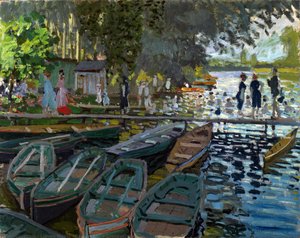
This "Water Lilies" painting is a quintessential example of Impressionism. Monet's technique prioritizes capturing the *impression* of a scene rather than photographic realism. The visible, loose brushstrokes are characteristic of the style, creating a textured surface that vibrates with life and movement. Horizontal lines dominate, mirroring the water’s surface, while subtle curves represent the lily pads and gentle ripples. The color palette is predominantly composed of shades of purple and blue, evoking a sense of tranquility and reflection. Monet employed thin washes of oil paint, layering them to build up both color intensity and textural depth. This approach allows light to play across the canvas, simulating the shimmering effect of sunlight on water.
Symbolism and Emotional Resonance
Beyond its aesthetic beauty, "Water Lilies" carries profound symbolic weight. The pond itself represents a space of peace and introspection, inviting viewers to pause and contemplate the natural world. The recurring motif of water lilies symbolizes purity, serenity, and renewal. Monet’s deliberate flattening of perspective and elimination of spatial context contribute to an overall feeling of dreamlike tranquility. Some art historians and critics have noted that the monumental scale of these paintings, combined with Monet's innovative brushwork, foreshadowed elements of Abstract Expressionism, suggesting a move towards pure visual experience rather than representational accuracy.
A Lasting Impression: Monet’s Vision Realized
Claude Monet’s "Water Lilies" series stands as a testament to his lifelong dedication to capturing the fleeting beauty of nature. This particular panel offers a glimpse into the artist's profound connection with his Giverny garden, transforming a personal sanctuary into a universal symbol of peace and contemplation. The painting’s enduring appeal lies in its ability to evoke a sense of calm and wonder, inviting viewers to lose themselves in the shimmering reflections and vibrant colors of Monet’s aquatic paradise.
Questions & Answers
What emotion does "Water Lilies" by Claude Monet convey?
"Water Lilies" is associated with a tranquil feeling. The emotional tone describes the impression the work gives.
Where is "Water Lilies" by Claude Monet on display today?
"Water Lilies" by Claude Monet is on display at the Nelson-Atkins Museum of Art, Kansas City, United States of America. The museum listing refers to the original work, not to reproductions.
For what occasion is "Water Lilies" by Claude Monet suggested as a present?
As a present, "Water Lilies" by Claude Monet is suggested for anniversary. Other occasions can fit as well.
More about this painting
 Preview
 Send
Send Share
Share
 Details
 Guide
Guide

 Download
 Similars
 X-Ray
X-Ray Diaporama
 Q&A
Q&A Stats
Stats