Switch to Print
 Read More







































 For artworks or reproductions larger than 105 cm (approximately 41 inches) on any side, the frame will be shipped as a kit, disassembled. This method ensures safe delivery and prevents damage during transport.


A Glimpse into Belle Époque Leisure: Claude Monet’s *La Grenouillère* (1869)
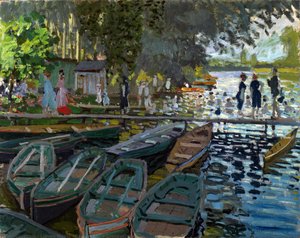
La Grenouillère, painted in 1869, is more than just a depiction of a summer afternoon; it's a pivotal work marking a turning point in the development of Impressionism. This captivating scene transports us to La Grenouillère, a popular floating restaurant and boat-hire location on the Seine at Croissy-sur-Seine, near Paris – a haven for Parisian society seeking respite from the bustling city.Subject & Setting: A Floating World
The painting captures a lively scene of leisure and social interaction. Figures are scattered across boats and a wooden gangplank, engaged in conversation, relaxation, and enjoying the water. A dog adds a touch of domesticity to the vibrant setting. Monet doesn’t focus on individual portraits but rather on capturing the *atmosphere* of this popular gathering place. The location itself – “Flowerpot Island” as it was nicknamed due to its collection of houseboats – embodies a sense of freedom and modern recreation that characterized the Belle Époque. Notably, Pierre-Auguste Renoir worked alongside Monet at La Grenouillère during this period, creating his own interpretations of the same scene.Impressionistic Technique: Capturing Fleeting Moments
Monet’s technique in *La Grenouillère* is distinctly Impressionistic. He employs loose, visible brushstrokes to depict the shimmering reflections on the water and the dappled sunlight filtering through the trees. Rather than meticulously rendering details, Monet prioritizes capturing the impression of light and movement. The colors are vibrant yet subtly blended, creating a sense of atmosphere and immediacy. This approach was revolutionary for its time, moving away from academic precision towards a more subjective and sensory experience of painting.Historical Context & Artistic Innovation
1869 was a crucial year in the development of Impressionism. Artists were beginning to reject the rigid constraints of the Salon system and explore new ways of representing the world around them. *La Grenouillère* exemplifies this shift, embracing plein air painting – working outdoors directly from nature – and focusing on contemporary life rather than historical or mythological subjects. This work also foreshadows Monet’s later “Series” paintings, such as his Haystacks and Water Lilies, where he would repeatedly depict the same subject under varying conditions to explore the effects of light and time.Symbolism & Emotional Impact
While not overtly symbolic, *La Grenouillère* speaks to a broader cultural shift towards leisure and modernity. The scene evokes feelings of joy, relaxation, and social connection. The painting’s emphasis on fleeting moments and sensory experience invites viewers to immerse themselves in the atmosphere and appreciate the beauty of everyday life. It's a celebration of modern recreation and the pleasures of nature.A Timeless Appeal for Collectors & Designers
*La Grenouillère*, now housed in the prestigious Metropolitan Museum of Art, continues to captivate audiences today. Its vibrant colors, dynamic composition, and evocative atmosphere make it a compelling subject for both art lovers and interior designers. A high-quality reproduction of this masterpiece can bring a touch of Impressionistic charm and sophisticated elegance to any space, offering a window into the heart of 19th-century Parisian life. Its enduring appeal lies in its ability to transport us to a moment of pure joy and beauty.- Style: Impressionism
- Medium: Oil on Canvas
- Location: Metropolitan Museum of Art, New York
- Year: 1869
Questions & Answers
Does "La Grenouillere" by Claude Monet use strong contrasts or soft harmonies?
The color analysis of "La Grenouillere" by Claude Monet records a bold contrast and a balanced harmony harmony.
Is "La Grenouillere" by Claude Monet among the sought-after Impressionism artworks?
"La Grenouillere" is recorded as iconic among the Impressionism works in the catalog.
Which room is "La Grenouillere" by Claude Monet recommended for, given its colors?
The earthy colors of "La Grenouillere" by Claude Monet match its recommended space: a living room.
More about this painting
 Preview
 Send
Send Share
Share
 Details
 Guide
Guide

 Download
 Similars
 X-Ray
X-Ray Diaporama
 Q&A
Q&A Stats
Stats