() ·

A painting made for you, by hand

A Pergola

Hand Made Oil Reproduction

Hand-painted oil on canvas in your size and frame, made to order by our artists. ( Switch to Print Switch to Digital Image)

Collectible Description

Step into the serene beauty of Eckersberg's 'A Pergola.' This 1813 Danish masterpiece captures a lush garden retreat, showcasing masterful light and detail. Admire the pergola, vines, and peaceful benches – a timeless work of art.

Artist Biography

Christoffer Wilhelm Eckersberg (1783-1853): The 'Father of Danish Painting'! Explore his Neoclassical masterpieces, realistic portraits & captivating landscapes from the Golden Age.

from ·

Chapter 1

How large should it be?

Slide to change the size; the picture on the left shows the frame at its real width. The proportions of the original are kept.

Standard
custom
CM
INCH

Pick from our preset sizes that match the artwork's original proportions.

width
height

Type the width and the height you need, to fit your frame or your wall. This is hand-painted, so for a size with a different shape the artist can paint a bit more around the picture, or cut a bit — you choose. We send you a digital mockup to approve before the painting starts. The picture shown on this page does not show the real result — only the mockup does.

Chapter 2

How should it arrive?

Choose the edges of the stretched canvas

Choose your frame

Corner sample of the WhiteWrap canvas edge finish, stretched on solid wood bars
White $1
Corner sample of the BlurSideWrap canvas edge finish, stretched on solid wood bars
Blurside $1
Corner sample of the ExtendedWrap canvas edge finish, stretched on solid wood bars
Extended $1
Corner sample of the P118B picture frame: moulded polystyrene, 5 cm wide and 3 cm thick
P118B $10
Corner sample of the P118H picture frame: moulded polystyrene, 5 cm wide and 3 cm thick
P118H $10
Corner sample of the P118W picture frame: moulded polystyrene, 5 cm wide and 3 cm thick
P118W $10
Corner sample of the P438Z picture frame: moulded polystyrene, 5.5 cm wide and 3.5 cm thick
P438Z $10
Corner sample of the P508JH picture frame: moulded polystyrene, 7 cm wide and 3.5 cm thick
P508JH $12
Corner sample of the P508YH picture frame: moulded polystyrene, 7 cm wide and 3.5 cm thick
P508YH $12
Corner sample of the P805H picture frame: moulded polystyrene, 5 cm wide and 3.5 cm thick
P805H $10
Corner sample of the P805Z picture frame: moulded polystyrene, 5 cm wide and 3.5 cm thick
P805Z $10
Corner sample of the P919BZ picture frame: moulded polystyrene, 7 cm wide and 3.5 cm thick
P919BZ $10
Corner sample of the P919G picture frame: moulded polystyrene, 7 cm wide and 3.5 cm thick
P919G $10
Corner sample of the P919XJ picture frame: moulded polystyrene, 7 cm wide and 3.5 cm thick
P919XJ $10
Corner sample of the P959ZH picture frame: moulded polystyrene, 5 cm wide and 3 cm thick
P959ZH $10
Corner sample of the P968JZ picture frame: moulded polystyrene, 6 cm wide and 4 cm thick
P968JZ $12
Corner sample of the W106C picture frame: solid wood, 5 cm wide and 3 cm thick
W106C $8
Corner sample of the W218G picture frame: solid wood, 5 cm wide and 3 cm thick
W218G $10
Corner sample of the W218JH picture frame: solid wood, 5 cm wide and 3 cm thick
W218JH $8
Corner sample of the W218Y picture frame: solid wood, 5 cm wide and 3 cm thick
W218Y $10
Corner sample of the W307PJ picture frame: solid wood, 6 cm wide and 3 cm thick
W307PJ $10
Corner sample of the W316G picture frame: solid wood, 6 cm wide and 3 cm thick
W316G $10
Corner sample of the W316PJ picture frame: solid wood, 6 cm wide and 3 cm thick
W316PJ $8
Corner sample of the W316Y picture frame: solid wood, 6 cm wide and 3 cm thick
W316Y $10
Corner sample of the W398PJ picture frame: solid wood, 5 cm wide and 3 cm thick
W398PJ $8
Corner sample of the W4111J picture frame: solid wood, 6.5 cm wide and 3.5 cm thick
W4111J $10
Corner sample of the W500HY picture frame: solid wood, 7 cm wide and 5 cm thick
W500HY $15
Corner sample of the W500JH picture frame: solid wood, 7 cm wide and 5 cm thick
W500JH $15
Corner sample of the W692G picture frame: solid wood, 8 cm wide and 4 cm thick
W692G $12
Corner sample of the W849H picture frame: solid wood, 5 cm wide and 3 cm thick
W849H $8
Corner sample of the W940BG picture frame: solid wood, 7.5 cm wide and 4.5 cm thick
W940BG $15
Corner sample of the W953PJ picture frame: solid wood, 6 cm wide and 3.5 cm thick
W953PJ $8
Corner sample of the H24-GOLD picture frame: carved wood with gesso, 10 cm wide and 6 cm thick
H24-GOLD $30
Corner sample of the H24-SILVER picture frame: carved wood with gesso, 10 cm wide and 6 cm thick
H24-SILVER $30
Corner sample of the H36-GOLD picture frame: carved wood with gesso, 15 cm wide and 6.5 cm thick
H36-GOLD $45
Corner sample of the H36-SILVER picture frame: carved wood with gesso, 15 cm wide and 6.5 cm thick
H36-SILVER $45
Frame preview
Framed

Moulding: . Overall size with the frame: .

Chapter 3

Who paints it, and should anything change?

Examples of what can be changed: Replace face with customer photo; Add pet (e.g., replace cat with dog); Include hidden message in background; Change background landscape or elements.
After order, OriginalUniqueArt.com team will email client for instructions and provide a mockup preview

Worldwide Delivery () in 3/4 weeks instead of standard 5 weeks. (2 November). No compromise on quality.

Chapter 4

The finishing touches

A nameplate, as in a museum?

Engraved Bronze Plaque Details

This elegant plaque features the artist's name and the title of the artwork, finely engraved for a timeless presentation.

It is made from bronze with a refined, elegant finish. The text is precisely laser-engraved for a sharp and permanent result. Measuring 9x2 cm, the plaque is compact yet easy to read. It's built to be durable and scratch-resistant, offering a professional, museum-quality look. Mounting is simple thanks to the included adhesive backing.

Transparent Acrylic Plaque Details

The plaque includes essential engraved details such as the artist's name, the title of the artwork, the date it was created, the type of media used-like oil on canvas or watercolor-a brief description of the piece, and a QR code that links to the complete artwork information.

It is crafted from clear acrylic, offering a sleek, modern appearance. The text is UV-engraved in black to ensure strong visual contrast. With a size of 10x15 cm, it ensures optimal readability. It comes equipped with two metal hooks for secure wall mounting. The plaque is designed to be weather-resistant, making it suitable for various environments, and it includes interactive features that work seamlessly with smartphone scanning.

Black Acrylic Plaque Details

This elegant plaque includes engraved information such as the artist's name, the title of the artwork, the date it was created, the type of media used (like oil on canvas or watercolor), a short description of the artwork, and a QR code for quick access to more information.

The plaque itself is made from refined black acrylic with a premium finish. The text is laser-engraved in white for high contrast and readability. Its size is 10x15 cm, designed to be easy to read. It comes with two metal hooks for professional mounting. The design is sleek and fits any interior style. It is also weather-resistant and durable, with built-in digital integration for mobile compatibility.

A protective varnish?

When do you need it?

Chapter 5

Your painting, as you ordered it

A Pergola

Reproduction Medium

Reproduction Size

-

Elite Senior Artist

More detail, finesse, and extra production time

-

Reproduction Frame

-

-

For artworks or reproductions larger than 105 cm (approximately 41 inches) on any side, the frame will be shipped as a kit, disassembled. This method ensures safe delivery and prevents damage during transport.

Professional assembly required - this is not a DIY product.
The kit must be assembled and the canvas stretched by an experienced professional framer, using wood glue (not supplied), a canvas stretching plier and clamps to hold the bars square while the glue dries. Incorrect assembly or uneven canvas tension can permanently damage the artwork and is not covered by our warranty.

  • All solid wood bars are included, precisely cut to size.

  • Assembled with the screws provided, plus wood glue for the corner joints, which is not supplied and must be sourced by your framer.

  • Professional tools are required and not included: a canvas stretching plier (tensioner) and clamps to hold the bars square while the glue dries.

Important:
The corner joints require wood glue, the bars must be held with clamps until the glue is fully dry, and tightening the canvas on the assembled frame requires a canvas stretching plier. None of these are included in the kit. Please arrange an experienced professional framer before ordering this size.

Nameplate

-

-

Protective Varnish

Glossy Varnish (enhances colors, protects against light/moisture)

-

Customize My Artwork

Examples of what can be changed: Replace face with customer photo; Add pet (e.g., replace cat with dog); Include hidden message in background; Change background landscape or elements.

-

Urgent

Worldwide Delivery () in 3/4 weeks instead of standard 5 weeks. (2 November). No compromise on quality.

-

Express Shipping

Worldwide Delivery () in 5 weeks. (9 November).

Included

Total Price

$ 300

Total Price $ 300

Glass option is only available in size under 110 CM

Included with every order

  • Free Worldwide Express Shipping
  • High-Quality Linen Canvas
  • Full Shipping Insurance
  • Customs Tax Refund Guarantee
  • True Color Matching Guarantee
  • 100-Day Return Policy (Defects Only)
  • 100% Money-Back Guarantee
  • Bulk Discount Offer

A Moment Frozen in Time: Christoffer Wilhelm Eckersberg’s “A Pergola”

Christoffer Wilhelm Eckersberg's "A Pergola," painted in 1813, isn’t merely a depiction of a picturesque garden; it’s a carefully constructed tableau brimming with quiet contemplation and the subtle poetry of Danish light. This work, now housed within esteemed collections, offers a captivating glimpse into the burgeoning Romanticism that was reshaping European art at the time – a movement prioritizing emotional resonance and an intimate connection to nature over the rigid formality of Neoclassicism.

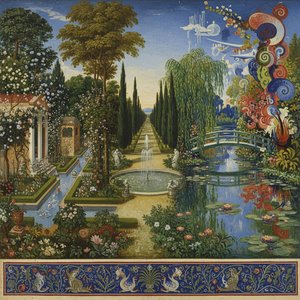
The scene unfolds with remarkable serenity. A weathered pergola, draped in climbing vines bursting with verdant life, dominates the composition. Beneath its arched canopy sits a simple stone bench, inviting rest and reflection. The surrounding landscape is meticulously rendered – ancient trees stand sentinel, their branches reaching skyward like supplicating arms, while a gentle stream meanders through the foreground, reflecting the soft hues of the afternoon light. Eckersberg’s skill lies not just in his technical proficiency but in his ability to capture a fleeting moment, imbuing it with an atmosphere of profound peace.

The Painter's Hand: Technique and Style

Eckersberg was renowned for his mastery of *sfumato*, a technique borrowed from Leonardo da Vinci that employs subtle gradations of tone and color to create a hazy, atmospheric effect. Here, this is particularly evident in the dappled light filtering through the leaves, casting dancing shadows across the stone bench and the surrounding foliage. The brushstrokes are loose yet controlled, contributing to an overall sense of fluidity and movement – as if the scene itself were breathing.

He employed a palette dominated by muted greens, blues, and browns, reflecting the naturalistic tendencies of his style. However, Eckersberg wasn’t simply replicating reality; he was interpreting it through the lens of Romanticism. The composition is carefully balanced, drawing the eye towards the central bench and creating a sense of depth and perspective that invites the viewer to step into the scene. Notice how he uses atmospheric perspective – distant elements are rendered paler and less distinct, further enhancing the illusion of space.

A Danish Golden Age Master

Born in Kolding, Denmark, in 1783, Christoffer Wilhelm Eckersberg’s life was inextricably linked to the artistic flourishing of his nation. He initially apprenticed under Jes Jessen, a prominent Aabenraa painter, absorbing the principles of classical composition and technique. However, it was his time spent studying in Copenhagen that truly shaped his artistic vision. During this period, he became a pivotal figure in the establishment of the Royal Danish Academy of Art, where he championed a more naturalistic and emotionally expressive style – a departure from the prevailing academic traditions.

Eckersberg’s influence extended far beyond his own paintings. He was a dedicated teacher, mentoring generations of Danish artists, including Wilhelm Schütte and C.L. Dal Piva. His emphasis on observation, light, and color profoundly impacted the development of Danish painting, solidifying its reputation as one of Europe's leading artistic centers. His work during this period is considered quintessential Romanticism in Denmark, capturing both the beauty of the landscape and the introspective mood of the era.

Symbolic Resonance: Nature’s Embrace

Beyond its aesthetic qualities, “A Pergola” resonates with symbolic meaning. The pergola itself represents a transition space – a bridge between the interior and exterior worlds, a place for contemplation and connection with nature. The bench invites us to pause, to reflect on our place within the larger scheme of things. The abundance of greenery symbolizes life, growth, and renewal, while the stream suggests the flow of time and the cyclical rhythms of nature.

Eckersberg’s choice of subject matter – a simple garden scene – is deliberate. He wasn't interested in grand historical narratives or mythological themes; instead, he sought to capture the beauty of everyday life and the profound emotional experiences that could be found within it. “A Pergola” is a testament to Eckersberg’s ability to transform the ordinary into something extraordinary, offering viewers a moment of quiet solace and artistic contemplation.

Questions & Answers

What technique was used for "A Pergola", and when was it created?

"A Pergola" was made in 1813, in acrylic on canvas.

At what age did Christoffer Wilhelm Eckersberg make "A Pergola"?

Christoffer Wilhelm Eckersberg was 30 years old when creating "A Pergola" in 1813. The age is computed from the artist's birth year, 1783.

What atmosphere would a reproduction of "A Pergola" by Christoffer Wilhelm Eckersberg bring to a room?

The serene atmosphere of "A Pergola" by Christoffer Wilhelm Eckersberg matches its recommended space: a living room.

More about this painting

Preview AR preview Switch to Print Switch to Digital Image Send
Details Guide Add to favorites Download Similars X-Ray Diaporama Q&A Stats

In numbers

  • 1813the year it was painted
  • 29frames to choose from
  • standard sizes, in its own proportions
  • 5weeks to paint and deliver it
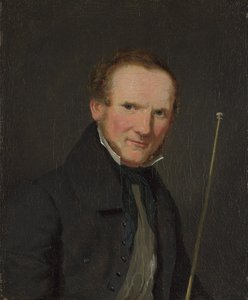
Christoffer Wilhelm Eckersberg

Christoffer Wilhelm Eckersberg

1783 - 1853, Denmark

Quick facts about Christoffer Wilhelm Eckersberg

  • Artistic Movement Or Style: Neoclassical, Realism
  • Artists Or Movements Influenced By This Artist:
    • Christen Købke
    • Wilhelm Marstrand
    • Martinus Rørbye
  • Artists Who Influenced This Artist:
    • Jacques-Louis David
    • Bertel Thorvaldsen
  • Date Of Birth: 1783
  • Date Of Death: 1853
  • Full Name: Christoffer Wilhelm Eckersberg
  • Nationality: Danish
  • Notable Artworks:
    • Seated Nude Model
    • View of the Garden...
    • A Courtyard in Rome
    • Asow and a Frigate
  • Place Of Birth: Kolding, Denmark

Artist Biography

The Dawn of Danish Modernity: Christoffer Wilhelm Eckersberg’s Artistic Vision

Christoffer Wilhelm Eckersberg, born in 1783 in the small Duchy of Schleswig – a landscape that would forever imprint itself upon his artistic sensibility – stands as a monumental figure in the history of Danish art. Often lauded as the “Father of Danish Painting,” Eckersberg wasn’t merely a skilled practitioner; he was a revolutionary, a pedagogue who fundamentally reshaped the nation's artistic identity during its Golden Age. His early life, spent between his father’s carpentry workshop and the windswept shores near Alssund, instilled in him both a meticulous attention to detail and a profound appreciation for the natural world – qualities that would define his oeuvre. These formative years weren’t confined to idyllic observation; he actively sketched and sailed, honing skills that foreshadowed his later mastery of light, form, and atmospheric perspective. Formal training began with Jes Jessen in Aabenraa and continued with Josiah Jacob Jessen in Flensburg, providing a solid foundation before Eckersberg ventured towards the artistic heart of Europe: Copenhagen.

Paris, Rome, and the Forging of a Neoclassical Ideal

Eckersberg’s arrival at the Royal Danish Academy of Art in 1803 marked a pivotal moment, yet his relationship with the prevailing academic authority, Nikolaj Abraham Abildgaard, was fraught with tension. This friction, however, may have inadvertently spurred Eckersberg to seek further refinement abroad. The years 1811-1812 found him in Paris, studying under the towering figure of Jacques-Louis David. David’s Neoclassical principles – an emphasis on clarity, precise draftsmanship, and a return to classical forms – deeply resonated with Eckersberg's inherent inclinations towards order and realism. This period wasn’t simply about adopting a style; it was about internalizing a philosophy of artistic rigor. The subsequent sojourn in Rome (1813-1816) proved equally transformative. Immersed in the Italian light and landscape, Eckersberg developed an unparalleled sensitivity to atmospheric effects and tonal nuances. Crucially, he forged a lasting friendship with Bertel Thorvaldsen, the celebrated Danish sculptor whose influence extended beyond the realm of sculpture into Eckersberg’s compositional thinking and understanding of form. Personal hardship also marked this period; his divorce from Christine Rebekka Hyssing added another layer to his evolving character, perhaps deepening his introspective approach to art.

A Professor's Revolution: Shaping a Generation

Returning to Denmark in 1818, Eckersberg assumed the role of professor at the Royal Danish Academy of Art – a position he would hold for decades and utilize to enact a sweeping pedagogical reform. He challenged the established curriculum, prioritizing drawing from life and, most radically, *plein air* painting. This insistence on direct observation—of capturing light and atmosphere as they truly existed—was revolutionary for its time, breaking with tradition and encouraging artists to engage directly with the world around them. Eckersberg’s influence extended far beyond his formal lectures; he fostered a spirit of meticulous study and independent thought among his students. Among those profoundly impacted were Christen Købke, Wilhelm Marstrand, and Martinus Rørbye – artists who would become leading figures in the Golden Age of Danish Painting. His artistic style itself is characterized by an unwavering commitment to realism, a painstaking attention to detail, and a masterful handling of light. He painted over 500 works throughout his career, encompassing portraits of the royal family, dramatic maritime scenes like The Russian Ship of the Line “Asow” and a Frigate at Anchor in the Elsinore Roads, and intimate depictions of everyday life in Copenhagen.

Legacy: The Father’s Enduring Influence

Christoffer Wilhelm Eckersberg's historical significance lies not only in his own artistic achievements but also in his transformative impact on Danish painting as a whole. He shifted the focus away from grandiose historical narratives towards a more grounded, contemporary vision – one that celebrated the beauty of the everyday and the subtleties of the natural world. He laid the groundwork for a distinctly Danish artistic identity, characterized by its realism, clarity, and quiet introspection. His emphasis on observation and technique instilled in his students a commitment to quality and a willingness to challenge convention. Eckersberg’s legacy continues to resonate today, inspiring artists and art historians alike to appreciate the profound impact of this remarkable painter and pedagogue – the true “Father of Danish Painting.” His works remain testaments to an era where artistic skill was coupled with intellectual curiosity, and where the pursuit of beauty was inextricably linked to a deep understanding of the world.

Quick Facts

  • Subject: Garden scene
  • Year: 1813
  • Title: A Pergola
  • Style: Realist
  • Medium: Oil on canvas