Switch to Print
 Read More







































 For artworks or reproductions larger than 105 cm (approximately 41 inches) on any side, the frame will be shipped as a kit, disassembled. This method ensures safe delivery and prevents damage during transport.


Still Life with Spoon – A Precisionist Reflection on Domestic Abundance
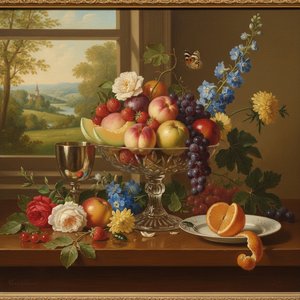
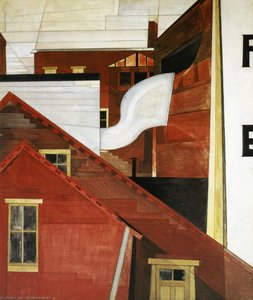
Charles Demuth’s “Still Life with Spoon,” painted in 1927, stands as a quintessential example of American Precisionism—a movement that sought to capture the essence of industrial life and everyday objects with meticulous detail and unwavering clarity. This oval canvas depicts a deceptively simple arrangement: a bowl brimming with grapes alongside a pear and plums, resting upon a dark red cup and draped white cloth.
- Composition & Form: The painting’s dense composition immediately draws the eye, emphasizing the abundance of fruit—a visual metaphor for prosperity—and highlighting the tactile qualities of domesticity. Soft, blended brushstrokes contribute to a smooth surface texture, prioritizing form over elaborate ornamentation. Geometric shapes dominate – rounded fruits and curved edges of the cup – reflecting the influence of Cubism while maintaining a grounded realism.
- Color Palette & Lighting: Warm reds and pinks permeate the color scheme, creating an atmosphere that is both rich and subtly muted. Diffused lighting casts gentle shadows, defining shapes without resorting to dramatic contrasts, furthering the painting’s contemplative mood.
- Technique & Materials: Primarily executed in oil paints on canvas, Demuth employed a technique characterized by meticulous brushwork—a hallmark of Precisionism—to achieve subtle tonal variations and seamless blending. This careful layering ensures that every element contributes to the overall visual harmony.
Historical Context – The Rise of Industrial Modernity
Painted during the Jazz Age, “Still Life with Spoon” reflects the broader cultural shift towards embracing industrial progress and simplifying aesthetic sensibilities. Precisionism emerged as a reaction against Impressionism’s focus on fleeting impressions of light and color, advocating instead for an objective depiction of reality—often capturing scenes from factories or urban landscapes—albeit imbued with artistic vision.
Symbolism – Beyond the Fruits
While seemingly straightforward, “Still Life with Spoon” carries symbolic weight. The fruit itself represents abundance and indulgence, yet its careful arrangement suggests a deliberate consideration of form and balance. The dark red cup symbolizes warmth and comfort, while the draped white cloth evokes purity and stillness—elements that coalesce to convey a sense of serene contemplation.
Emotional Impact – Quiet Elegance
Demuth’s masterful handling of color and texture creates an emotionally resonant experience for the viewer. The painting's understated beauty speaks to a deeper appreciation for craftsmanship and observation, inviting contemplation on themes of domestic tranquility and artistic precision. It exemplifies the enduring power of still life as a genre—a testament to its ability to capture both visual splendor and profound psychological nuance.
Questions & Answers
What mood and emotion come together in "Still Life with Spoon"?
The recorded mood of "Still Life with Spoon" by Charles Demuth is serene, and its emotional tone is calm.
What does "Still Life with Spoon" by Charles Demuth depict?
The themes present in "Still Life with Spoon" by Charles Demuth include still life, fruit, spoon, domesticity, abundance, red color, oval frame, precisionism. Together they summarize the artwork's subject matter.
What is a reproduction of "Still Life with Spoon" by Charles Demuth recommended for?
A reproduction of "Still Life with Spoon" by Charles Demuth is recommended for accent. This suggestion follows from the work's subject, mood and colors.
More about this painting
 Preview
 Send
Send Share
Share
 Details
 Guide
Guide

 Download
 Similars
 X-Ray
X-Ray Diaporama
 Q&A
Q&A Stats
Stats