Preview
 Send
Send Share
Share
 Details
 Guide
Guide

 Download
 Similars
 X-Ray
X-Ray Diaporama
 Stats
StatsMARIE LECZINSKA


 Read More
Giclée / Art Print
Museum-quality giclée or canvas print with fast production and flexible finish options. ( Buy Hand Made Painting Switch to Digital Image)




P118B $10

P118H $10

P118W $10

P438Z $10

P508JH $12

P508YH $12

P805H $10

P805Z $10

P919BZ $10

P919G $10

P919XJ $10

P959ZH $10

P968JZ $12

W106C $8

W218G $10

W218JH $8

W218Y $10

W307PJ $10

W316G $10

W316PJ $8

W316Y $10

W398PJ $8

W4111J $10

W500HY $15

W500JH $15

W692G $12

W849H $8

W940BG $15

W953PJ $8




Pick from our preset sizes that match the artwork's original proportions.

Type the width and the height you need, to fit your frame or your wall. A print can only be cut, never made bigger than the picture, so a size with a different shape loses a part of the image. We send you a digital mockup to approve before we print anything. The picture shown on this page does not show the real cut — only the mockup does.
Worldwide Delivery () in 2 weeks instead of standard 4/5 weeks. (21 October)

Free Worldwide Express Shipping

High-Quality Linen Canvas

Full Shipping Insurance

Customs Tax Refund Guarantee

True Color Matching Guarantee

100-Day Return Policy (Defects Only)

100% Money-Back Guarantee

Bulk Discount Offer
 Glass option is only available in size under 110 CM

MARIE LECZINSKA
Giclée / Art Print
Reproduction Size
-


Total Price
$ 81
A Portrait of Grace: Marie Leczinska and the Rococo Embrace
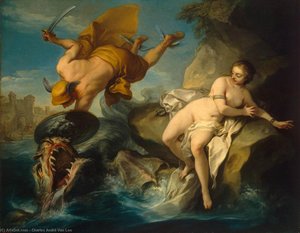
Charles-André van Loo’s “Marie Leczinska” isn't merely a portrait; it’s a carefully constructed tableau vivant, a glimpse into the refined world of 18th-century French court life. Painted in 1747, this work captures Marie as she sat for the artist, a woman poised between duty and delight, radiating an understated elegance that speaks volumes about her position and personality. The scene unfolds within a meticulously rendered formal garden, a deliberate setting designed to elevate her status and subtly convey themes of nobility, leisure, and the delicate balance of power inherent in royal life.
Van Loo’s signature Rococo style is immediately apparent – an abundance of swirling drapery, pastel hues, and intricate ornamentation. The composition is remarkably balanced, with Marie positioned centrally yet gently offset by the architectural elements of the garden: a classical column, a glimpse of a distant building, and the suggestion of a shaded loggia. The artist masterfully employs light to create a sense of depth and atmosphere; diffused sunlight filters through the foliage, casting soft shadows that enhance the textures of fabrics and skin. The color palette is restrained yet luminous – creams, pale blues, and delicate pinks dominate, creating an air of serenity and refinement.
The Queen’s Garden: Symbolism in a Rococo Setting
Beyond its aesthetic beauty, “Marie Leczinska” is rich with symbolic meaning. The formal garden itself represents the queen's role as a patron of the arts and a figure of grace and refinement. Her pose – relaxed yet dignified, hand gently resting on a delicate vase – suggests both composure and an openness to pleasure. The inclusion of flowers, particularly those held in her hands, is laden with symbolism; they likely represent virtues or sentiments associated with queenship—beauty, fertility, and prosperity. The distant architectural elements hint at the grandeur of Versailles and the weight of royal responsibility, subtly reminding the viewer of Marie’s position within the complex tapestry of French courtly society.
The presence of a man seated behind her, observing her with quiet attentiveness, adds another layer to the narrative. This figure is likely her husband, Louis XV, and his gaze suggests both admiration and perhaps a touch of protective concern. The arrangement subtly underscores the power dynamics within the marriage – Marie as the beautiful subject, Louis as the watchful guardian of the realm.
A Master’s Technique: Oil on Canvas and the Van Loo Legacy
Van Loo's skill is evident in his meticulous attention to detail and his ability to capture the nuances of texture and light. The painting was executed in oil on canvas, a medium that allowed him to achieve remarkable subtlety and depth of color. The layering of paint creates a sense of luminosity, particularly in the fabrics and skin tones. Note the delicate rendering of the folds in Marie’s dress, the intricate details of the flowers, and the subtle gradations of light and shadow—all hallmarks of Van Loo's masterful technique.
This work stands as a testament to the artist’s legacy within the Rococo movement. As a member of a prominent family of painters, Charles-André van Loo built upon his predecessors’ traditions while establishing his own distinctive style. His portraits were highly sought after by royalty and nobility throughout Europe, and “Marie Leczinska” remains one of his most celebrated achievements—a captivating example of Rococo elegance and artistic skill.
- Artist: Charles-André van Loo
- Date: 1747
- Medium: Oil on Canvas
- Style: Rococo
- Dimensions: Unknown
Questions & Answers
Which room is "MARIE LECZINSKA" by Charles-André van Loo recommended for, given its colors?
With its earthy palette, "MARIE LECZINSKA" by Charles-André van Loo is recommended for a living room. The colors are part of the reason for this suggestion.
Where can I buy a print of "MARIE LECZINSKA" by Charles-André van Loo?
To get a print of "MARIE LECZINSKA" by Charles-André van Loo, simply order it on its Fine Art Print page: a fine art print on cotton canvas or archival canvas paper.
Where can I find artworks similar to "MARIE LECZINSKA" by Charles-André van Loo?
The Similars page of "MARIE LECZINSKA" by Charles-André van Loo presents related artworks.
Artist Biography
Early Life and Training
- Born: February 15, 1705, in Nice, France
- Family Background: Son of Louis-Abraham van Loo and younger brother of Jean-Baptiste van Loo. Member of a successful dynasty of Dutch painters.
- Early Education: Initial training in Turin, followed by studies in Rome (1712) under Benedetto Luti and Pierre Legros.
- Parisian Studies: Attended the Académie royale, winning first prize for drawing in 1723 and historical painting in 1727.
Artistic Career and Notable Works
- Style: Primarily known as a Rococo painter, characterized by elegance, grace, and ornate detail.
- Subject Matter: Diverse range including portraits, mythological scenes, historical paintings, allegories, and genre scenes.
- Significant Works:
- Venus and Amor (Kunsthalle Bremen) - Demonstrates mastery of the Rococo style.
- Halt of the Hunt (The Metropolitan Museum of Art) – Captures aristocratic activities.
- Portrait of Marie Leszczynska, Queen of France – A notable royal portrait.
- Jupiter and Antiope - Showcases mythological themes.
- Self Portrait – Provides insight into the artist's self-perception.
- Perseus and Andromeda (multiple versions) – Illustrates skill in depicting classical mythology.
- Mademoiselle Clairon as Medea (small version) - A captivating Rococo portrait of 1760.
Patronage and Royal Recognition
- Royal Patronage: Enjoyed the patronage of Madame de Pompadour and the French court.
- Appointment to the Court: Became First Painter to King Louis XV in 1762, a prestigious position.
- Order of Saint Michael: Decorated with the Order of Saint Michael, signifying royal favor.
Influences and Legacy
- Family Influence: Heavily influenced by his father and brother, both accomplished painters.
- Rivalry: Competed with François Boucher, another prominent Rococo artist.
- Modern French School: His "simplicity of style and correctness of design" significantly influenced the modern French school of painting.
- Critical Fortune: While his critical standing fluctuated over time, his skill and the breadth of his work command respect.
Museum Collections & Further Exploration
- Museum Presence: Works are featured in prominent museums including the Louvre (The Marriage of the Virgin), Kunsthalle Bremen, and The Metropolitan Museum of Art.
- Further Resources:
- OriginalUniqueArt's Charles-André van Loo page: https://www.OriginalUniqueArt.com/artists/charles-andre-van-loo/
- OriginalUniqueArt's Greatest Artists of All Time page: https://www.OriginalUniqueArt.com/greatest-artists
- OriginalUniqueArt Virtual Museum: https://www.OriginalUniqueArt.com/
- Wikipedia Article: https://en.wikipedia.org/wiki/Charles-Andr%C3%A9_van_Loo
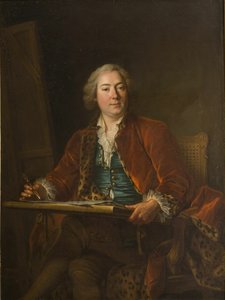
Charles-André van Loo
1705 - 1765 , France
Quick Facts
- Full Name: Charles-André van Loo
- Nationality: French
- Date Of Birth: 1705
- Date Of Death: 1765
- Place Of Birth: Nice, France
- Notable Artworks:
- Venus and Amor
- Halt of the Hunt
- Portrait of Marie Leszczynska
- Jupiter and Antiope
- Self Portrait
- Perseus and Andromeda
- Artistic Movement Or Style: Rococo painting
- Artists Who Influenced This Artist:
- Benedetto Luti
- Pierre Le Gros
- Artists Or Movements Influenced By This Artist: ['Modern French school']
Related Articles

Rococo's Radiant Legacy: 10 Masterpieces for Your Home |
Indulge in the elegance of Rococo! Explore 10 masterpieces by Fragonard, Boucher & Watteau. Discover the stories behind these iconic paintings and bring timeless art to your home with museum-quality reproductions from .

Rembrandt's Masterpieces: Explore 25 Iconic Paintings & Prints | OriginalUniqueArt
Journey through Rembrandt van Rijn's 25 most iconic paintings & etchings. Explore Dutch Golden Age masterpieces, dramatic chiaroscuro, and timeless portraits. Find museum-quality art reproductions to elevate your home decor on OriginalUniqueArt.com.

Charles-André van Loo: A Study in Rococo Portraiture & the French Court's Artistic Dynamics
Explore the elegant world of Charles-André van Loo, a master of Rococo portraiture at the French court. Discover his life, techniques, and enduring influence on 18th-century art. Hand-painted reproductions available.

Early Netherlandish Masters: 10 Paintings That Revolutionized Art & Decor
Journey into the Early Netherlandish Renaissance! Explore 10 iconic paintings by Jan van Eyck, Rogier van der Weyden & more. Discover stunning detail, symbolism, and oil painting techniques. Find museum-quality art reproductions for your home at OriginalUniqueArt.com.

Early Netherlandish Masters: 10 Paintings That Revolutionized Art & Decor
Journey into the world of Early Netherlandish painting! Explore 10 masterpieces by Jan van Eyck, Rogier van der Weyden & more. Discover stunning detail, symbolism & Renaissance art for your home decor. Find museum-quality reproductions on OriginalUniqueArt.com