Text size

() ·

A painting made for you, by hand

German Sägegrube

Hand Made Oil Reproduction

Hand-painted oil on canvas in your size and frame, made to order by our artists. ( Switch to Print Switch to Digital Image)

Collectible Description

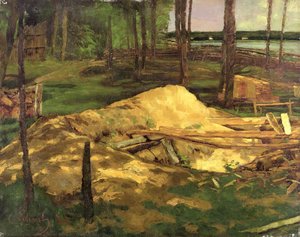
A tranquil forest scene bathed in diffused sunlight captures the Impressionist spirit of Carl Eduard Schuchs 1881 masterpiece German Sagegrube, inviting you to explore this evocative piece of late Romantic realism.

Artist Biography

Explore the evocative landscapes & still lifes of Carl Eduard Schuch (1846-1903), a pivotal Austrian painter bridging realism & modernism, influenced by Monet & Rembrandt.

from ·

Chapter 1

How large should it be?

Slide to change the size; the picture on the left shows the frame at its real width. The proportions of the original are kept.

Standard
custom
CM
INCH

Pick from our preset sizes that match the artwork's original proportions.

width
height

Type the width and the height you need, to fit your frame or your wall. This is hand-painted, so for a size with a different shape the artist can paint a bit more around the picture, or cut a bit — you choose. We send you a digital mockup to approve before the painting starts. The picture shown on this page does not show the real result — only the mockup does.

Chapter 2

How should it arrive?

Choose the edges of the stretched canvas

Choose your frame

Corner sample of the WhiteWrap canvas edge finish, stretched on solid wood bars
White $1
Corner sample of the BlurSideWrap canvas edge finish, stretched on solid wood bars
Blurside $1
Corner sample of the ExtendedWrap canvas edge finish, stretched on solid wood bars
Extended $1
Corner sample of the P118B picture frame: moulded polystyrene, 5 cm wide and 3 cm thick
P118B $10
Corner sample of the P118H picture frame: moulded polystyrene, 5 cm wide and 3 cm thick
P118H $10
Corner sample of the P118W picture frame: moulded polystyrene, 5 cm wide and 3 cm thick
P118W $10
Corner sample of the P438Z picture frame: moulded polystyrene, 5.5 cm wide and 3.5 cm thick
P438Z $10
Corner sample of the P508JH picture frame: moulded polystyrene, 7 cm wide and 3.5 cm thick
P508JH $12
Corner sample of the P508YH picture frame: moulded polystyrene, 7 cm wide and 3.5 cm thick
P508YH $12
Corner sample of the P805H picture frame: moulded polystyrene, 5 cm wide and 3.5 cm thick
P805H $10
Corner sample of the P805Z picture frame: moulded polystyrene, 5 cm wide and 3.5 cm thick
P805Z $10
Corner sample of the P919BZ picture frame: moulded polystyrene, 7 cm wide and 3.5 cm thick
P919BZ $10
Corner sample of the P919G picture frame: moulded polystyrene, 7 cm wide and 3.5 cm thick
P919G $10
Corner sample of the P919XJ picture frame: moulded polystyrene, 7 cm wide and 3.5 cm thick
P919XJ $10
Corner sample of the P959ZH picture frame: moulded polystyrene, 5 cm wide and 3 cm thick
P959ZH $10
Corner sample of the P968JZ picture frame: moulded polystyrene, 6 cm wide and 4 cm thick
P968JZ $12
Corner sample of the W106C picture frame: solid wood, 5 cm wide and 3 cm thick
W106C $8
Corner sample of the W218G picture frame: solid wood, 5 cm wide and 3 cm thick
W218G $10
Corner sample of the W218JH picture frame: solid wood, 5 cm wide and 3 cm thick
W218JH $8
Corner sample of the W218Y picture frame: solid wood, 5 cm wide and 3 cm thick
W218Y $10
Corner sample of the W307PJ picture frame: solid wood, 6 cm wide and 3 cm thick
W307PJ $10
Corner sample of the W316G picture frame: solid wood, 6 cm wide and 3 cm thick
W316G $10
Corner sample of the W316PJ picture frame: solid wood, 6 cm wide and 3 cm thick
W316PJ $8
Corner sample of the W316Y picture frame: solid wood, 6 cm wide and 3 cm thick
W316Y $10
Corner sample of the W398PJ picture frame: solid wood, 5 cm wide and 3 cm thick
W398PJ $8
Corner sample of the W4111J picture frame: solid wood, 6.5 cm wide and 3.5 cm thick
W4111J $10
Corner sample of the W500HY picture frame: solid wood, 7 cm wide and 5 cm thick
W500HY $15
Corner sample of the W500JH picture frame: solid wood, 7 cm wide and 5 cm thick
W500JH $15
Corner sample of the W692G picture frame: solid wood, 8 cm wide and 4 cm thick
W692G $12
Corner sample of the W849H picture frame: solid wood, 5 cm wide and 3 cm thick
W849H $8
Corner sample of the W940BG picture frame: solid wood, 7.5 cm wide and 4.5 cm thick
W940BG $15
Corner sample of the W953PJ picture frame: solid wood, 6 cm wide and 3.5 cm thick
W953PJ $8
Corner sample of the H24-GOLD picture frame: carved wood with gesso, 10 cm wide and 6 cm thick
H24-GOLD $30
Corner sample of the H24-SILVER picture frame: carved wood with gesso, 10 cm wide and 6 cm thick
H24-SILVER $30
Corner sample of the H36-GOLD picture frame: carved wood with gesso, 15 cm wide and 6.5 cm thick
H36-GOLD $45
Corner sample of the H36-SILVER picture frame: carved wood with gesso, 15 cm wide and 6.5 cm thick
H36-SILVER $45
Frame preview
Framed

Moulding: . Overall size with the frame: .

Chapter 3

Who paints it, and should anything change?

Examples of what can be changed: Replace face with customer photo; Add pet (e.g., replace cat with dog); Include hidden message in background; Change background landscape or elements.
After order, OriginalUniqueArt.com team will email client for instructions and provide a mockup preview

Worldwide Delivery () in 3/4 weeks instead of standard 5 weeks. (5 November). No compromise on quality.

Chapter 4

The finishing touches

A nameplate, as in a museum?

Engraved Bronze Plaque Details

This elegant plaque features the artist's name and the title of the artwork, finely engraved for a timeless presentation.

It is made from bronze with a refined, elegant finish. The text is precisely laser-engraved for a sharp and permanent result. Measuring 9x2 cm, the plaque is compact yet easy to read. It's built to be durable and scratch-resistant, offering a professional, museum-quality look. Mounting is simple thanks to the included adhesive backing.

Transparent Acrylic Plaque Details

The plaque includes essential engraved details such as the artist's name, the title of the artwork, the date it was created, the type of media used-like oil on canvas or watercolor-a brief description of the piece, and a QR code that links to the complete artwork information.

It is crafted from clear acrylic, offering a sleek, modern appearance. The text is UV-engraved in black to ensure strong visual contrast. With a size of 10x15 cm, it ensures optimal readability. It comes equipped with two metal hooks for secure wall mounting. The plaque is designed to be weather-resistant, making it suitable for various environments, and it includes interactive features that work seamlessly with smartphone scanning.

Black Acrylic Plaque Details

This elegant plaque includes engraved information such as the artist's name, the title of the artwork, the date it was created, the type of media used (like oil on canvas or watercolor), a short description of the artwork, and a QR code for quick access to more information.

The plaque itself is made from refined black acrylic with a premium finish. The text is laser-engraved in white for high contrast and readability. Its size is 10x15 cm, designed to be easy to read. It comes with two metal hooks for professional mounting. The design is sleek and fits any interior style. It is also weather-resistant and durable, with built-in digital integration for mobile compatibility.

A protective varnish?

When do you need it?

Chapter 5

Your painting, as you ordered it

German Sägegrube

Reproduction Medium

Reproduction Size

-

Elite Senior Artist

More detail, finesse, and extra production time

-

Reproduction Frame

-

-

For artworks or reproductions larger than 105 cm (approximately 41 inches) on any side, the frame will be shipped as a kit, disassembled. This method ensures safe delivery and prevents damage during transport.

Professional assembly required - this is not a DIY product.
The kit must be assembled and the canvas stretched by an experienced professional framer, using wood glue (not supplied), a canvas stretching plier and clamps to hold the bars square while the glue dries. Incorrect assembly or uneven canvas tension can permanently damage the artwork and is not covered by our warranty.

  • All solid wood bars are included, precisely cut to size.

  • Assembled with the screws provided, plus wood glue for the corner joints, which is not supplied and must be sourced by your framer.

  • Professional tools are required and not included: a canvas stretching plier (tensioner) and clamps to hold the bars square while the glue dries.

Important:
The corner joints require wood glue, the bars must be held with clamps until the glue is fully dry, and tightening the canvas on the assembled frame requires a canvas stretching plier. None of these are included in the kit. Please arrange an experienced professional framer before ordering this size.

Nameplate

-

-

Protective Varnish

Glossy Varnish (enhances colors, protects against light/moisture)

-

Customize My Artwork

Examples of what can be changed: Replace face with customer photo; Add pet (e.g., replace cat with dog); Include hidden message in background; Change background landscape or elements.

-

Urgent

Worldwide Delivery () in 3/4 weeks instead of standard 5 weeks. (5 November). No compromise on quality.

-

Express Shipping

Worldwide Delivery () in 5 weeks. (12 November).

Included

Total Price

$ 300

Total Price $ 300

Glass option is only available in size under 110 CM

Included with every order

  • Free Worldwide Express Shipping
  • High-Quality Linen Canvas
  • Full Shipping Insurance
  • Customs Tax Refund Guarantee
  • True Color Matching Guarantee
  • 100-Day Return Policy (Defects Only)
  • 100% Money-Back Guarantee
  • Bulk Discount Offer

A Moment Frozen in Light: The Soul of German Sägegrube

In the quiet corners of the Kunsthalle Hamburg resides a masterpiece that transcends mere landscape painting; it is a window into a fleeting moment of late nineteenth-century tranquility. Carl Eduard Schuch’s 1881 work, German Sägegrube, invites the viewer to step away from the frantic pace of modern life and enter a realm of profound stillness. At first glance, the subject appears humble—a simple saw pit, or Sägegrube, nestled within a dense forest of towering pines and slender birches. Yet, beneath this rustic exterior lies an extraordinary exploration of atmosphere. Schuch does not merely paint trees and earth; he captures the very breath of the forest, presenting a scene bathed in diffused sunlight that evokes a sense of deep, meditative contemplation.

The painting serves as a beautiful bridge between eras, standing at the intersection of late Romanticism and the burgeoning Impressionist movement. While Schuch’s roots were planted in the rigorous academic traditions of Vienna, his spirit wandered toward the revolutionary light-studies of Claude Monet. In German Sälygrube, one can sense this transition vividly. The artist eschews the dramatic, theatrical shadows often found in academic landscapes, opting instead for subtle gradations of color that create a luminous, velvety depth. This technique allows the viewer to feel the humidity of the forest air and the soft, dappled light filtering through the canopy, making the scene feel less like a static image and more like a living, breathing memory.

The Artistry of Texture and Tone

For the discerning collector or interior designer, the true allure of this piece lies in its masterful execution. Schuch’s technique is a testament to his dedication to plein air observation. Using oil on canvas, he applied layers of pigment with a precision that suggests both strength and delicacy. His brushstrokes are purposeful—loose enough to convey the organic movement of nature, yet controlled enough to maintain a sense of structural integrity. This balance creates a tactile quality; the dirt piles and fallen logs possess a weight and texture that feel almost tangible to the touch.

The color palette is a sophisticated study in earth tones, greens, and muted highlights. By avoiding jarring contrasts, Schuch achieves a harmonious unity that makes this artwork an ideal centerpiece for any refined space. Whether placed in a sunlit gallery or a moody, contemporary study, the painting’s ability to harmonize with its surroundings is unparalleled. It does not demand attention through loudness, but rather commands respect through its quiet, enduring elegance.

Symbolism and the Human Connection

Beyond its aesthetic brilliance, German Sägegrube carries a poignant symbolic weight. The saw pit itself—a site of human industry and resource extraction—serves as a subtle metaphor for the intersection of man and nature. We see figures scattered throughout the landscape, engaged in the labor of logging, yet they do not dominate the composition. Instead, they are integrated into the forest, appearing almost as transient elements within the enduring cycle of the natural world. This creates a powerful emotional resonance, reminding us of our place within the larger, more permanent rhythms of the earth.

To possess a reproduction of this work is to bring a piece of art history into one's personal sanctuary. It offers more than just decoration; it provides an emotional anchor—a sense of peace, a connection to the past, and a constant reminder of the beauty found in the most unassuming corners of our world. For those seeking to inspire awe and tranquility in their homes or professional spaces, Schuch’s vision remains an eternal source of inspiration.

Questions & Answers

Is "German Sägegrube" more bright or more dark overall?

"German Sägegrube" is balanced overall, and its luminance is soft shadow.

Can I watch "German Sägegrube" as a full-screen slideshow?

A slideshow is available: the Diaporama page of "German Sägegrube" by Carl Eduard Schuch.

What are the format and size of "German Sägegrube"?

The format of "German Sägegrube" is landscape, and the original measures 44 x 56 cm. Both are useful when planning a reproduction.

More about this painting

Preview AR preview Switch to Print Switch to Digital Image Send
Details Guide Add to favorites Download Similars X-Ray Diaporama Q&A Stats

In numbers

  • 1881the year it was painted
  • 29frames to choose from
  • standard sizes, in its own proportions
  • 5weeks to paint and deliver it
Carl Eduard Schuch

Carl Eduard Schuch

1846 - 1903, Austria

Quick facts about Carl Eduard Schuch

  • Full Name: Carl Eduard Schuch
  • Nationality: Austrian
  • Date Of Birth: 1846
  • Date Of Death: 1903
  • Place Of Birth: Vienna, Austria
  • Artistic Movement Or Style: Realism to Modernism
  • Artists Who Influenced This Artist:
    • Claude Monet
    • Rembrandt

Artist Biography

The Luminous Transition: Carl Eduard Schuch's Artistic Journey

Carl Eduard Schuch, an Austrian painter whose life spanned the vibrant and tumultuous late nineteenth century, remains a fascinating figure at the crossroads of artistic movements. Born in Vienna in 1846, his creative spirit, however, found its most fertile ground far from his birthplace. His travels took him through the cultural melting pots of Germany, Italy, and France, geographies that profoundly shaped the palette and philosophy of his art. Schuch’s primary focus settled upon the quiet dignity of still lifes and the expansive breath of landscapes. Early in his formal training, between 1865 and 1867, he studied landscape painting under the esteemed academician Ludwig Halauska, an apprenticeship that laid a foundational understanding of composition and light.

Yet, even in these early studies, Schuch harbored a unique intellectual curiosity. He once described his initial attempts at studying heads as if they were still lifes—a desire to capture tone by painstaking tone, stripping away the ephemeral veil of overt emotion. This very approach—the meticulous observation underlying seemingly simple subjects—would become a hallmark of his mature style.

Echoes of Masters: Influences and Development

Schuch’s artistic development was marked by an intense absorption of history's great masters, particularly during his time in Paris between 1882 and 1894. It was here that the revolutionary spirit of Impressionism began to resonate deeply within him. He found himself profoundly impressed by Claude Monet, whom he admired enough to compare him favorably to Rembrandt in the realm of plein-air painting. However, his gaze often drifted back through time, finding a deeper kinship with the profound chiaroscuro and psychological depth inherent in the work of Rembrandt himself, alongside the earthy realism championed by the Barbizon School artists.

His dedication to color was perhaps most evident during summers spent in the Netherlands. In 1884 and 1885, he immersed himself in the legacy of the Dutch Old Masters, meticulously filling his notebooks with detailed chromatic observations gleaned from admired canvases. This deep study of pigment and light connected him closely with the circle surrounding Wilhelm Leibl, a group to which Schuch proved himself most devotedly attuned regarding the sheer power of color.

A Life Shared: Friendship and Artistic Partnership

Among the many relationships that colored his life, perhaps none was as formative or dramatic as his bond with the artist Karl Hagemeister. The two men met in Bavaria and embarked on a shared journey across Central Europe, eventually settling for three years in the small village of Ferch, south of Berlin. In this intimate setting, they shared not only a meager dwelling but an entire artistic existence. While the robust Hagemeister tended to the more sensitive Schuch through acts of daily care—cooking, hunting, and fishing—their connection deepened into something speculated by biographers to be far more than mere friendship.

This idyllic period eventually fractured when Schuch returned to Paris. The final meeting between them was fraught with tension, culminating in a disagreement over the merits of Hagemeister’s recently completed work, "Teller mit Austern." This falling out led to a dramatic severance: Hagemeister reportedly disposed of six of his own works into the Seine, marking an abrupt and painful end to their shared chapter.

Bridging Eras: Schuch's Historical Significance

Carl Eduard Schuch’s oeuvre is not merely a collection of beautiful paintings; it represents a crucial moment in art history. His work stands as a tangible bridge, charting the passage from the established conventions of academic realism toward the burgeoning freedoms of modern artistic expression in Vienna and beyond. He absorbed the structured observation of the Old Masters while embracing the immediacy of the plein-air movement. Whether capturing the quiet dignity of a still life or the shifting light across a landscape, Schuch’s touch speaks to an artist deeply engaged with both tradition and inevitable change.

His legacy invites us to view art not as a destination, but as a continuous conversation between what has been and what is yet to come.

Quick Facts

  • Artist: Carl Eduard Schuch
  • Influences: Rembrandt
  • Dimensions: 44 x 56 cm
  • Year: 1881
  • Location: Kunsthalle Hamburg (Hamburg, Germany)
  • Subject or theme: Forest Scene

Art Quiz

There is only one correct answer for each question.

Question 1:
What is the primary subject matter depicted in ‘German Sägegrube’?
Question 2:
In what year was ‘German Sägegrube’ painted?
Question 3:
Which artistic movement is Carl Eduard Schuch associated with?
Question 4:
Who influenced Schuch's style significantly, particularly regarding his approach to plein air painting?
Question 5:
What technique did Schuch employ in ‘German Sägegrube’?