

 Preview
 Send
Send Share
Share
 Details
 Guide
Guide

 Download
 Similars
 X-Ray
X-Ray Diaporama
 Stats
StatsUntitled (917)

 Read More
The artwork displayed on this page is protected by copyright law, which means we cannot legally create or sell an identical reproduction. This protection is enforced under international agreements such as the Berne Convention and by national laws, including those outlined by the U.S. Copyright Law - Title 17.
This method fully complies with copyright regulations because it does not involve copying or duplicating the protected artwork. Instead, it is a creative reinterpretation - a new painting that is influenced by the original but not identical to it.
Giclée / Art Print
Museum-quality giclée or canvas print with fast production and flexible finish options. ( Buy Hand Made Painting Switch to Digital Image)




P118B $10

P118H $10

P118W $10

P438Z $10

P508JH $12

P508YH $12

P805H $10

P805Z $10

P919BZ $10

P919G $10

P919XJ $10

P959ZH $10

P968JZ $12

W106C $8

W218G $10

W218JH $8

W218Y $10

W307PJ $10

W316G $10

W316PJ $8

W316Y $10

W398PJ $8

W4111J $10

W500HY $15

W500JH $15

W692G $12

W849H $8

W940BG $15

W953PJ $8




Pick from our preset sizes that match the artwork's original proportions.

Type the width and the height you need, to fit your frame or your wall. A print can only be cut, never made bigger than the picture, so a size with a different shape loses a part of the image. We send you a digital mockup to approve before we print anything. The picture shown on this page does not show the real cut — only the mockup does.
Worldwide Delivery () in 2 weeks instead of standard 4/5 weeks. (23 October)

Free Worldwide Express Shipping

High-Quality Linen Canvas

Full Shipping Insurance

Customs Tax Refund Guarantee

True Color Matching Guarantee

100-Day Return Policy (Defects Only)

100% Money-Back Guarantee

Bulk Discount Offer
 Glass option is only available in size under 110 CM

Untitled (917)
Giclée / Art Print
Reproduction Size
-


Total Price
$ 81
Artist Biography
The Architect of Melancholy
Bernard Buffet (1928–1999) remains one of the most evocative and polarizing figures in twentieth-century French art. Born in Paris during a period of profound global upheaval, his very existence was shaped by the shadows of the Second World War. This early exposure to the fragility of life left an indelible mark on his psyche, manifesting in a style that many critics famously labeled miserabilist. Yet, to reduce his work to mere despair is to overlook the profound technical mastery and the quiet, structural elegance that define his oeuvre. Buffet did not merely paint sadness; he constructed it through a rigorous, almost architectural application of line and form, creating a visual language that spoke to the collective anxieties of a post-war generation.
His formative years were marked by both artistic awakening and personal tragedy. A student at the École Nationale Supérieure des Beaux-Arts, Buffet was deeply influenced by the stark realism of Gustave Courbet, whose presence could be felt in Buffet’s later tributes to the master. However, it was the loss of his mother to cancer in 1945 that perhaps most significantly anchored his artistic preoccupation with mortality and decay. This personal grief found a voice in his early works, where the sharp, angular lines and muted palettes began to coalesce into a signature style—one that captured the skeletal essence of his subjects, whether they were lonely figures or decaying still lifes.
A Lineage of Expressionism
Buffet’s rise to international prominence in the 1950s was nothing short of meteoric. He emerged as a central figure of the L'homme témoin (The Witness Man) movement, a group that embraced the raw, emotional intensity of Expressionism to reflect the disillusionment of the era. His work during this period often featured a hauntingly beautiful tension between order and chaos. Through his meticulous use of fine, nervous lines, he could transform a simple arrangement of flowers or a piece of meat into a meditation on the passage of time. This technique allowed him to bridge the gap between the figurative tradition and a modern, psychological depth that resonated with a public seeking meaning in a fractured world.
The influence of masters like Edvard Munch and Giorgio Morandi is evident in his ability to evoke profound solitude through minimalist compositions. His paintings often possess a rhythmic, almost musical quality, where the starkness of the subject matter is balanced by a sophisticated sense of space. This period of his career saw him achieving a level of fame that drew frequent comparisons to Pablo Picasso, making him a household name and a dominant force in the Parisian art scene. His ability to command both the attention of the avant-garde and the broader public was a rare feat in an era increasingly divided between abstraction and figuration.
Legacy and the Persistence of Vision
Despite his immense success, Buffet’s journey was not without its tribulations. By the late 1950s, shifting artistic tides toward total abstraction and criticisms regarding his prolific output and lavish lifestyle led to a period of professional alienation. The very qualities that had made him a star—his accessibility and his commitment to the figurative—became targets for a changing art establishment. Nevertheless, Buffet’s dedication to his craft never wavered. He continued to produce an astonishing volume of work, including paintings, prints, and sculptures, ensuring that his artistic vision remained a constant, even when the spotlight dimmed.
In recent decades, a profound reassessment of his importance has taken place within the art historical community. Collectors and curators are rediscovering the nuanced complexity of his later works and recognizing the enduring power of his early masterpieces. His significance lies not only in his role as a chronicler of post-war malaise but also in his ability to find a haunting, structural beauty within the themes of loss and decay. Today, Bernard Buffet is remembered as an artist who dared to look directly at the uncomfortable truths of existence, leaving behind a legacy that continues to haunt and inspire the modern imagination.

Bernard Buffet
1928 - 1999 , France
Quick Facts
- Full Name: Bernard Buffet
- Nationality: French
- Date Of Birth: 1928
- Date Of Death: 1999
- Place Of Birth: Paris, France
- Notable Artworks:
- Untitled (154)
- Untitled (612)
- Untitled (917)
- Artistic Movement Or Style: Expressionism
- Artists Who Influenced This Artist: ['Eugène Narbonne']
- Artists Or Movements Influenced By This Artist: ['Lhomme témoin']
Related Articles
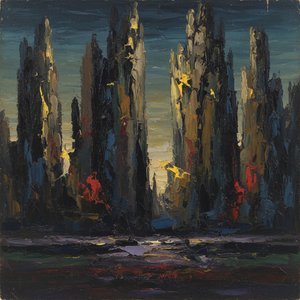
Clyfford Still's Abstract Expressionism: A Study of Color, Form & the Existential Landscape
Explore the profound world of Clyfford Still's Abstract Expressionism with OriginalUniqueArt. Discover his unique style, existential themes & investment potential. Expert analysis for discerning collectors.

Silent Narratives: Exploring the Enduring Appeal of Still Life Painting Across Centuries
Explore the rich history of still life painting with OriginalUniqueArt. Discover Dutch Masters, decode vanitas symbolism & learn about collecting timeless art. Expert insights and museum-quality reproductions.

Blossoms of Time: A Historical Journey Through Flower Painting
Explore the captivating history of flower painting! Discover Dutch masters, symbolic meanings, & botanical art. Expert insights & high-quality reproductions at OriginalUniqueArt.
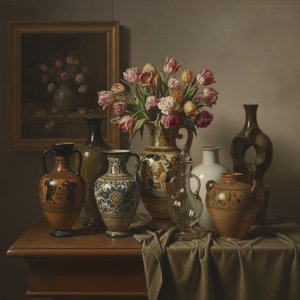
Timeless Vessels: Exploring the Artistry and Symbolism of Vases in Masterpiece Still Life Paintings
Discover the profound artistry and symbolism of vases in masterpiece still life paintings. Explore historical insights from the Baroque and Dutch Golden Age eras, and bring these timeless treasures into your home with our museum-grade, hand-painted oil reproductions.
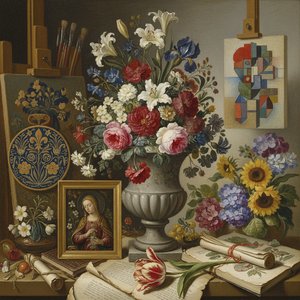
Blossoming Symbolism: A Historical Journey Through Flowers in Western Painting
Explore the rich history of flower symbolism in Western painting! Discover how artists from the Renaissance to Modernism used blossoms to convey meaning, emotion & beauty. Learn about iconic artworks and movements.


