The Ancient Roots: Flowers as Symbolism Before Representation
Before the meticulous brushstrokes of Dutch masters captured their ephemeral beauty, flowers held a profound symbolic weight for ancient civilizations. Far from mere decoration, blossoms were interwoven with mythology, religion, and the very fabric of daily life. In ancient Egypt, the lotus flower wasn’t simply admired; it was revered as a potent emblem of creation and rebirth, its nightly closing and diurnal opening mirroring the sun's journey and the cyclical nature of existence. Depicted on tomb walls and temple friezes, the lotus signified hope and resurrection, often associated with deities like Osiris and Nefertum. Similarly, in ancient Greece, laurel wreaths crowned victors, embodying honor and Apollo’s favor, while myrtle symbolized Aphrodite's grace and enduring love. These early floral motifs weren’t attempts at realistic portrayal; they were visual shorthand for complex beliefs, imbued with spiritual significance. Even the earliest manuscripts of the medieval period, though stylized in their depictions, carried symbolic weight – flowers representing virtues or serving as allegorical elements within religious narratives. This foundational connection between flora and meaning set the stage for the artistic blossoming to come.
Dutch Golden Age Flourishes: Masters of Floral Still Life
 Flower Still Life, c. 1734
Admire Jan van Huysum's 'Flower Still Life,' c. 1734 – a stunning Dutch masterpiece showcasing exquisite floral arrangements, delicate details, and a timeless elegance.
The 17th-century Dutch Republic witnessed an unprecedented flourishing of floral still life painting, a testament to both burgeoning wealth and a newfound appreciation for natural observation. Artists like Jan van Huysum epitomized this era, elevating the genre from decorative craft to high art. His works, such as “Flower Still Life” (c. 1734) and “Fruit and Flowers” (1720), are breathtaking displays of exquisite detail – each petal, leaf, and stem rendered with astonishing precision. But these paintings were more than just exercises in technical skill; they were imbued with a subtle symbolism reflecting the Dutch preoccupation with transience and mortality. Van Huysum’s masterful use of light, creating luminous effects on delicate surfaces, drew viewers into an intimate encounter with nature's fleeting beauty. The opulent arrangements weren’t random; each flower carried specific connotations – roses for love, lilies for purity, tulips representing wealth – creating a complex visual language understood by contemporary audiences. Elias van den Broeck also contributed significantly to this tradition, his banquet scenes often incorporating lavish floral displays alongside fruits and delicacies, further emphasizing the abundance and pleasures of life.
Vanitas & Beyond: The Transient Beauty and Moral Lessons in Blooms
Vanitas is a genre of memento mori symbolizing the transience of life, the futility of pleasure, and the certainty of death, and thus the vanity of ambition and all worldly desires. The paintings involved still life imagery of transitory items. The g...
Underlying much of the Dutch Golden Age still life was a profound awareness of *vanitas* – the Latin term for vanity, signifying the futility of earthly possessions and the inevitability of death. This philosophical current manifested itself in paintings that juxtaposed beautiful flowers with symbols of mortality: skulls, wilting petals, decaying fruit, extinguished candles. The message wasn’t simply about gloom; it was a call to contemplate life's brevity and focus on spiritual values. Artists used these visual cues to remind viewers that material wealth and earthly pleasures were fleeting, urging them towards a more meaningful existence. Antonio de Pereda’s “Allegory of Vanity” (1632/1636) exemplifies this genre, presenting a woman surrounded by luxurious objects alongside memento mori symbols, prompting reflection on the ephemeral nature of worldly possessions. However, the vanitas theme wasn't monolithic; some artists offered a more hopeful perspective, suggesting that earthly beauty could serve as a reminder of divine creation and an afterlife beyond the temporal realm. The inclusion of musical instruments or books hinted at intellectual pursuits and spiritual enrichment, offering alternatives to fleeting pleasures.
Botanical Precision: From Scientific Illustration to Artistic Expression
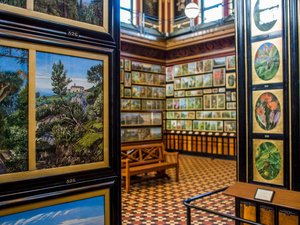 Marianne North Gallery
Discover the captivating world of Victorian botanical artist Marianne North at Kew Gardens! Explore over 800 vibrant paintings from her global travels, showcasing exotic plants and challenging artistic conventions.
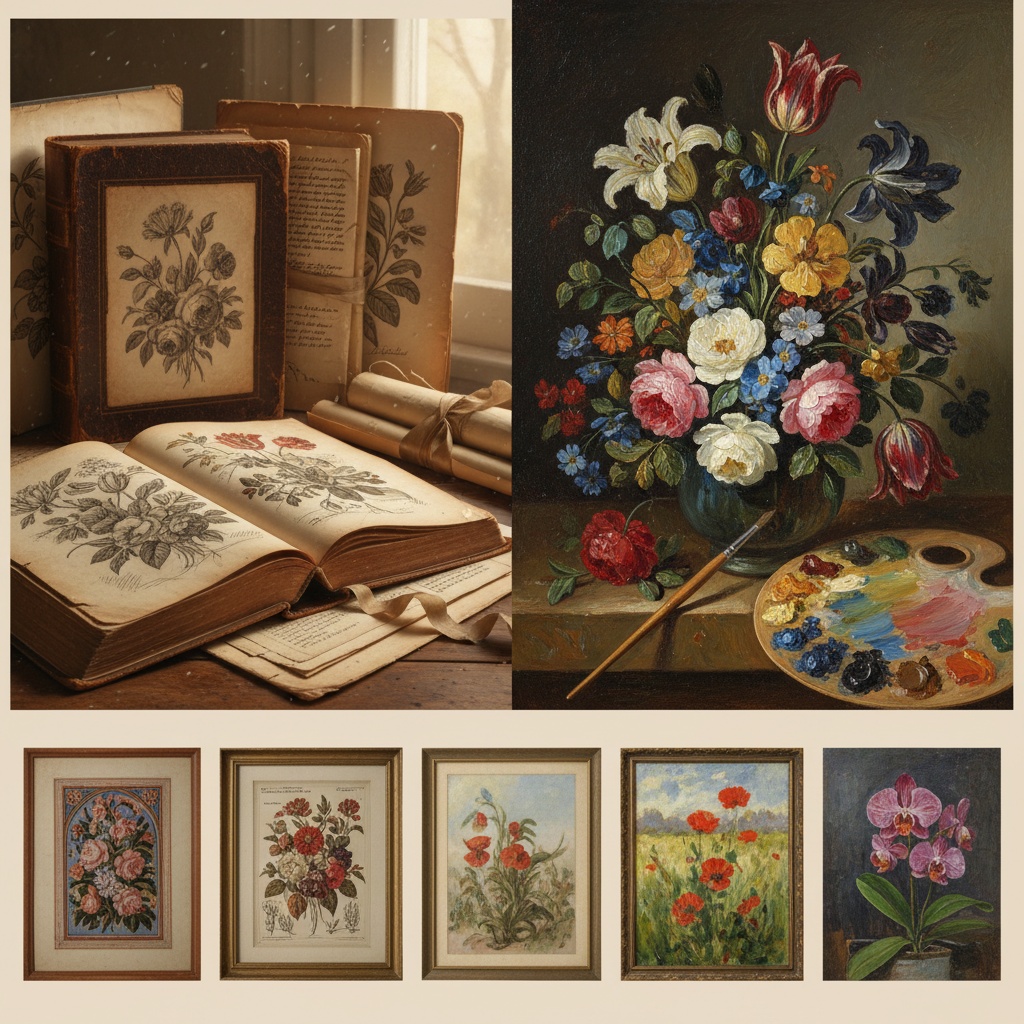
Parallel to the artistic exploration of flowers ran a growing interest in botanical accuracy. Botanical illustration emerged as a distinct discipline, dedicated to meticulously documenting plant species for scientific purposes. These illustrations weren’t merely aesthetic; they were intended to be precise records of form, color, and detail, often accompanying botanical descriptions in books and journals. The creation of these works demanded a deep understanding of plant morphology and access to specimens – a combination of artistic skill and scientific knowledge. While early herbals featured stylized depictions, later illustrations aimed for greater realism, becoming invaluable resources for taxonomists and physicians. Marianne North, a Victorian artist who traveled the globe painting exotic flora, exemplifies this intersection of art and science. Her over 800 paintings, housed at Kew Gardens, showcase her dedication to botanical accuracy while also capturing the vibrant beauty of plants from diverse ecosystems. The need for precise representation led to innovations in technique and materials, influencing even the more expressive floral painters.
Impressionism's Embrace: Capturing the Fleeting Essence of Flowers
By the late 19th century, Impressionist artists abandoned meticulous detail in favor of capturing the fleeting effects of light and atmosphere. Flowers became a favorite subject for these innovators, offering opportunities to explore color, texture, and movement. Unlike the Dutch masters’ focus on individual blooms, Impressionists like Claude Monet often depicted entire gardens or fields of flowers, emphasizing their overall impression rather than precise botanical accuracy. The broken brushstrokes and vibrant palettes aimed to convey the sensory experience of being surrounded by blossoms – the warmth of sunlight, the gentle breeze, the play of shadows. This shift in focus reflected a broader artistic movement that prioritized subjective perception over objective representation. The emphasis moved from symbolic meaning to capturing the ephemeral beauty of a moment in time, celebrating the transient nature of light and color as much as the flowers themselves.
Modern Visions: Reimagining Floral Painting for a New Era
The 20th and 21st centuries have witnessed a diverse range of approaches to floral painting, reflecting the fragmentation and experimentation characteristic of modern art. From abstract interpretations to photorealistic depictions, artists continue to explore the symbolic potential and aesthetic qualities of flowers. Some artists revisit the vanitas theme, using floral imagery to comment on consumerism and environmental degradation, while others embrace bold colors and unconventional compositions. The legacy of Dutch masters and botanical illustrators continues to inspire contemporary painters, but with a distinctly modern sensibility. Whether used as symbols of hope, reminders of mortality, or simply as objects of beauty, flowers remain a powerful and enduring subject for artistic expression. At OriginalUniqueArt, we celebrate this rich history by offering high-quality reproductions of iconic floral paintings, allowing you to bring the timeless beauty of blossoms into your own home. Explore our collection today and discover the captivating world of flower art – from ancient symbolism to modern visions.