
 Preview
 Send
Send Share
Share
 Details
 Guide
Guide

 Download
 Similars
 X-Ray
X-Ray Diaporama
 Q&A
Q&A Stats
StatsTwo Jamaican Girls

- 76.0 x 64.0 cm


 Read More
The artwork displayed on this page is protected by copyright law, which means we cannot legally create or sell an identical reproduction. This protection is enforced under international agreements such as the Berne Convention and by national laws, including those outlined by the U.S. Copyright Law - Title 17.
This method fully complies with copyright regulations because it does not involve copying or duplicating the protected artwork. Instead, it is a creative reinterpretation - a new painting that is influenced by the original but not identical to it.
Giclée / Art Print
Museum-quality giclée or canvas print with fast production and flexible finish options. ( Buy Hand Made Painting Switch to Digital Image)




P118B $10

P118H $10

P118W $10

P438Z $10

P508JH $12

P508YH $12

P805H $10

P805Z $10

P919BZ $10

P919G $10

P919XJ $10

P959ZH $10

P968JZ $12

W106C $8

W218G $10

W218JH $8

W218Y $10

W307PJ $10

W316G $10

W316PJ $8

W316Y $10

W398PJ $8

W4111J $10

W500HY $15

W500JH $15

W692G $12

W849H $8

W940BG $15

W953PJ $8




Pick from our preset sizes that match the artwork's original proportions.

Type the width and the height you need, to fit your frame or your wall. A print can only be cut, never made bigger than the picture, so a size with a different shape loses a part of the image. We send you a digital mockup to approve before we print anything. The picture shown on this page does not show the real cut — only the mockup does.
Worldwide Delivery () in 2 weeks instead of standard 4/5 weeks. (6 November)

Free Worldwide Express Shipping

High-Quality Linen Canvas

Full Shipping Insurance

Customs Tax Refund Guarantee

True Color Matching Guarantee

100-Day Return Policy (Defects Only)

100% Money-Back Guarantee

Bulk Discount Offer
 Glass option is only available in size under 110 CM

Two Jamaican Girls
Giclée / Art Print
Reproduction Size
-


Total Price
$ 81
Two Jamaican Girls - A Portrait of Innocence Amidst Resilience
Augustus Edwin John’s “Two Jamaican Girls,” painted in 1937, transcends mere representation; it embodies the spirit of Jamaica itself – a nation grappling with colonial legacies yet radiating youthful optimism. This captivating portrait captures two young girls seated on a porch, their gaze directed towards the viewer with an expression that blends curiosity and quiet contemplation.
- Subject Matter: The painting focuses on two Jamaican girls, symbolizing innocence and youthfulness against the backdrop of Jamaica’s history.
- Style: John adhered to Post-Impressionism, prioritizing expressive brushstrokes and tonal harmonies over meticulous realism. This stylistic choice lends an ethereal quality to the scene, emphasizing mood and emotion rather than precise detail.
- Technique: Executed in oil paint on canvas, John employed a layering technique—building up color gradually—to achieve depth and luminosity. His masterful blending of pigments creates subtle gradations of tone that capture the nuances of light and shadow, particularly evident in the girls’ faces and clothing.
The historical context is crucial to understanding “Two Jamaican Girls.” Painted during John's visit to Jamaica amidst the burgeoning independence movement, it reflects a desire to portray Jamaican beauty and resilience. The inclusion of a chair and a bottle subtly suggests a moment of domestic tranquility—a respite from the larger political struggles unfolding around them.
Symbolism permeates the artwork. The girls’ posture conveys composure and dignity despite their youth, hinting at an inner strength rooted in Jamaican culture. Furthermore, the porch setting symbolizes stability and tradition – elements vital to Jamaica's identity as it navigated its path toward self-governance. John’s deliberate use of color—particularly warm hues—evokes feelings of warmth, comfort, and connection to the land.
“Two Jamaican Girls” resonates emotionally with viewers through its portrayal of youthful innocence juxtaposed against a backdrop of historical significance. It serves as a poignant reminder of Jamaica's heritage while celebrating the beauty and spirit of its young people—a timeless masterpiece that continues to inspire admiration for its artistic merit and evocative storytelling.
Questions & Answers
What is the color identity of "Two Jamaican Girls" by Augustus Edwin John?
The color identity of "Two Jamaican Girls" by Augustus Edwin John: an earthy palette, dominated by gray (#918684).
Which artistic current is "Two Jamaican Girls" by Augustus Edwin John part of?
"Two Jamaican Girls" by Augustus Edwin John belongs to the Post-Impressionism movement. This movement provides the stylistic context of the work.
What medium is "Two Jamaican Girls" by Augustus Edwin John executed in?
The medium of "Two Jamaican Girls" by Augustus Edwin John is acrylic. Reproductions aim to render the appearance of this technique.
Artist Biography
A Welsh Bohemian: The Life and Art of Augustus Edwin John
Augustus Edwin John emerged as a pivotal figure in early 20th-century British art, a painter whose life was as vibrant and unconventional as the canvases he produced. Born in Tenby, Wales, on January 4, 1878, his artistic journey began under the nurturing influence of his mother, who instilled in him a love for drawing from a young age. This early encouragement led him to the Tenby School of Art at seventeen, where his natural aptitude quickly became apparent. However, it was his subsequent enrollment at the Slade School of Fine Art, University College London (1894-1898), that truly ignited his artistic development. There, under the tutelage of Henry Tonks, he honed his draughtsmanship to an exceptional degree, earning accolades and establishing himself as a prodigious talent even before graduation. A dramatic turning point arrived in 1897 with a head injury sustained during a diving accident in Tenby. This incident profoundly altered his personality, unleashing a newfound spontaneity and boldness that would characterize both his life and art.Influences and the Shaping of a Style
John’s artistic sensibilities were deeply rooted in the Old Masters, particularly Peter Paul Rubens, whose dynamic compositions and rich color palettes resonated with him. Simultaneously, he absorbed the innovations of French contemporaries like Matisse and Gauguin, embracing their expressive use of color and rejection of traditional academic constraints. The subtle tonal harmonies of Puvis de Chavannes also left an indelible mark on his aesthetic vision. These diverse influences coalesced into a distinctive style characterized by vibrant hues, fluid brushwork, and a compelling focus on capturing the essence of his subjects. He wasn’t merely interested in likeness; he sought to reveal the inner life, the fleeting emotions that defined each individual. This pursuit led him to excel in portraiture, where he possessed an uncanny ability to seize what he called an “instantaneous attitude” – a momentary glimpse into the soul of his sitter.Portraits and Gypsy Lore: A Life Lived Fully
Augustus Edwin John is perhaps best remembered for his striking portraits of prominent figures from the aristocratic and literary worlds. His canvases brought to life personalities such as David Lloyd George, James Joyce, and George Bernard Shaw, each rendered with a psychological depth that transcended mere representation. Notable works like *Caspar* (1909), a poignant depiction of youthful innocence, and portraits of Archibald Henry Macdonald Sinclair (1924) and Francis Henry Crittall (1919) exemplify his mastery of the genre. However, John’s artistic interests extended beyond the confines of conventional portraiture. A profound fascination with Romani culture led him to embrace a nomadic lifestyle, traveling in a caravan with his family for an extended period. This immersive experience profoundly influenced his art, infusing it with themes of freedom, wanderlust, and the beauty of the natural world. His deep connection to this community culminated in his presidency of the Gypsy Lore Society, solidifying his commitment to understanding and celebrating their unique way of life. *Air Mechanic Shaw* (1935), a portrait of T.E. Lawrence, stands as another testament to his ability to capture complex characters with remarkable sensitivity.A Complex Legacy: Recognition and Reassessment
Throughout his career, John experienced both widespread acclaim and periods of critical fluctuation. Initially celebrated for his innovative oil sketching techniques and figure drawings, some critics later found his work to be overly flamboyant or lacking in painterly finesse. His service as a war artist during World War I, attached to the Canadian forces, yielded memorable portraits of soldiers, but an unfortunate incident led to his recall to England. Despite these challenges, Augustus Edwin John remained a significant force in British art history. He was one of the few artists of his time to achieve widespread public recognition and played a crucial role in popularizing Post-Impressionism within the United Kingdom. Awarded the Order of Merit in 1942, he also documented his life and artistic philosophy in two volumes of autobiography: *Chiaroscuro* (1952) and *Finishing Touches* (published posthumously in 1964). While his reputation waned somewhat after World War II, there has been a renewed appreciation for his work in recent years, particularly for the vibrancy and originality of his early pieces. His legacy is further enriched by the artistic achievements of his sister, Gwen John, whose own unique vision contributed significantly to the modernist movement.- Born: January 4, 1878, Tenby, Wales
- Died: October 31, 1961, Fordingbridge, England

Augustus Edwin John
1878 - 1961 , United States of America
Quick Facts
- Full Name: Augustus Edwin John
- Nationality: Welsh
- Date Of Birth: 1878
- Date Of Death: 1961
- Place Of Birth: Tenby, United States of America
- Notable Artworks:
- Caspar
- Air Mechanic Shaw
- David John
- Artistic Movement Or Style: Post-Impressionism
- Artists Who Influenced This Artist:
- Rubens
- Matisse
- Gauguin
- Artists Or Movements Influenced By This Artist: ['Modern British painting']
Related Articles

Impressionism vs. Post-Impressionism: A Masterclass in the Revolution of Light, Color, and Emotion
Master the nuances of Impressionism vs. Post-Impressionism with our expert guide. Explore the revolutionary shift from Monet’s fleeting light to Van Gogh’s emotional depth. Discover how these iconic movements continue to inspire fine art collectors and modern interiors today.
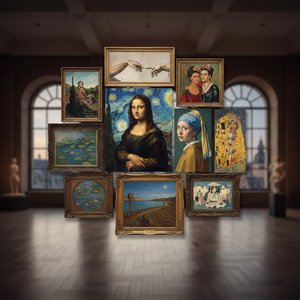
Oil on Canvas Masters: 10 Paintings That Redefined Art History |
Journey through art history with our guide to 10 legendary oil on canvas masterpieces! Explore iconic works by Van Gogh, Monet & Rembrandt. Find museum-quality reproductions and elevate your home decor at . Discover all masterpieces online.

The Soul of Impressionism: Why Oil on Canvas Captures Eternal Light and Timeless Emotion
Discover the enchanting alchemy of Impressionism. Explore how the mastery of oil on canvas, through glazing and impasto, captures eternal light and emotion. Perfect for lovers of Monet and Van Gogh seeking the profound depth of hand-painted fine art.

The Enduring Legacy of Oil on Canvas: Technique, History & Aesthetic Impact
Explore the rich history & techniques of oil painting – from Renaissance masters to Impressionism. Discover pigments, layering methods, and why this timeless medium endures. Expert insights for artists & art enthusiasts.

Oil on Canvas: A Historical & Technical Exploration of a Timeless Artistic Medium
Explore the rich history & enduring techniques of oil painting on canvas. Discover the science behind its longevity, conservation practices, and contemporary relevance. Expert insights for art enthusiasts.


