

 Preview
 Send
Send Share
Share
 Details

 Download
 Similars
 X-Ray
X-Ray Diaporama
 Stats
StatsWoman in a Green Jacket
 Oil On Canvas
- WallArt
- Expressionism
 1913
1913- Modern
 44.0 x 44.0 cm
 Read More
Giclée / Art Print
Museum-quality giclée or canvas print with fast production and flexible finish options. ( Buy Hand Made Painting Switch to Digital Image)




P118B $10

P118H $10

P118W $10

P438Z $10

P508JH $12

P508YH $12

P805H $10

P805Z $10

P919BZ $10

P919G $10

P919XJ $10

P959ZH $10

P968JZ $12

W106C $8

W218G $10

W218JH $8

W218Y $10

W307PJ $10

W316G $10

W316PJ $8

W316Y $10

W398PJ $8

W4111J $10

W500HY $15

W500JH $15

W692G $12

W849H $8

W940BG $15

W953PJ $8




Pick from our preset sizes that match the artwork's original proportions.

You may enter your own dimensions to fit a specific frame or space. If your selected size does not match the original image's proportions, we will either crop the artwork or extend the image with a mirrored or solid-fill edge. A digital mockup will be sent for your approval before production begins.
Please note that the on-screen preview does not reflect the actual cropping or extension. Only the mockup will accurately show the final composition.
While custom sizes are available, we recommend selecting a dimension from the predefined list to preserve the original proportions.
Worldwide Delivery () in 2 weeks instead of standard 4/5 weeks. (11 September)

Free Worldwide Express Shipping

High-Quality Linen Canvas

Full Shipping Insurance

Customs Tax Refund Guarantee

True Color Matching Guarantee

100-Day Return Policy (Defects Only)

100% Money-Back Guarantee

Bulk Discount Offer
 Glass option is only available in size under 110 CM

Woman in a Green Jacket
Giclée / Art Print
Reproduction Size
-


Total Price
$ 81
A Glimpse into Modern Life: August Macke’s Vibrant Scene
Painted in 1913, this captivating artwork by German Expressionist August Macke offers a vibrant snapshot of leisure and social interaction. More than just a depiction of figures strolling through a park-like setting, it's a masterful exploration of color, form, and the burgeoning modern spirit of the early 20th century.
Expressionism & The Der Blaue Reiter Movement
Macke was a pivotal member of “Der Blaue Reiter” (The Blue Rider), a groundbreaking group of artists who rejected traditional artistic conventions in favor of emotional expression and spiritual content. This painting exemplifies the movement’s core tenets: bold, non-naturalistic color palettes; simplified forms; and a focus on conveying inner experience rather than objective reality. It reflects Macke's evolving style, influenced by Fauvism and, crucially, his encounter with Robert Delaunay’s Orphic Cubism – a synthesis visible in the painting’s dynamic interplay of shapes and hues.
Technique & Compositional Harmony
Executed with loose, energetic brushstrokes and a confident layering of oil paint, the artwork showcases Macke's masterful technique. The composition is deliberately balanced yet asymmetrical, guiding the eye through the scene without a single dominant focal point. Figures are rendered from the back or side, creating a sense of anonymity and inviting viewers to project their own narratives onto them. Diagonal lines subtly lead the gaze into the background, enhancing the feeling of depth despite the flattened perspective.
Symbolism & Emotional Resonance
While seemingly straightforward in its subject matter – people enjoying a walk – the painting invites deeper contemplation. The anonymity of the figures suggests themes of social connection alongside individual solitude. The vibrant colors evoke feelings of joy, vitality, and optimism, yet the lack of detailed facial expressions introduces an element of mystery and introspection. Is this a celebration of modern life, or a subtle commentary on its alienation? Macke leaves room for interpretation.
Historical Context & Artistic Legacy
Created just before the outbreak of World War I, this artwork captures a fleeting moment of peace and prosperity in Europe. Tragically, Macke himself would perish in the war only a year later, adding a poignant layer to his artistic legacy. Today, his work is celebrated for its innovative use of color, its expressive power, and its insightful portrayal of modern life.
Bringing Modernity into Your Space
A reproduction of this painting offers more than just aesthetic appeal; it’s an investment in a piece of art history. The vibrant colors and dynamic composition will enliven any interior, adding a touch of sophisticated modernity to living rooms, offices, or studies. Its timeless quality ensures it will remain a captivating focal point for years to come.
Artist Biography
A Life Cut Short: The Vibrant World of August Macke
August Robert Ludwig Macke, a name synonymous with German Expressionism’s brief but incandescent flowering, lived a life tragically curtailed by the outbreak of the First World War. Born in 1887 in Meschede, Westphalia, his artistic journey was one of rapid evolution and fervent exploration, marked by an insatiable curiosity for new styles and a deep desire to capture the essence of modern experience. Macke’s early life saw a move to Bonn with his family, where he received his initial education and began to nurture his burgeoning talent. Though formally trained at the Düsseldorf Art Academy from 1904-1906, under Adolf Maennchen, it was through independent study and travel that his artistic voice truly began to emerge. These formative years were characterized by an absorption of Impressionist and Post-Impressionist techniques, laying a foundation for the bolder expressions to come. He supplemented his income with stage design work, honing his compositional skills and developing a keen sense of color.Influences and Artistic Development
Macke’s artistic trajectory was profoundly shaped by encounters with key figures and movements of the early 20th century. A pivotal moment arrived in Paris in 1912, where he met Robert Delaunay, a leading proponent of Orphism – a branch of Cubism focused on pure abstraction and vibrant color harmonies. This encounter proved transformative, introducing Macke to the concept of simultaneous contrast and influencing his work towards a more dynamic and non-representational approach. He began experimenting with broken planes of color and abstracted forms, seeking to convey not just what he saw, but how he *felt* about what he saw. Simultaneously, his close friendship with Franz Marc, a fellow artist and member of the influential group Der Blaue Reiter (The Blue Rider), drew him into the orbit of Wassily Kandinsky and other avant-garde thinkers. While Macke’s style remained distinct from Kandinsky's more purely abstract explorations, he embraced the group’s spirit of artistic freedom and spiritual inquiry. His paintings began to reflect a growing interest in depicting the emotional resonance of landscapes and everyday life, imbued with a sense of joy and optimism.The Blue Rider and Beyond: A Unique Expressionist Vision
As an integral member of Der Blaue Reiter, Macke contributed significantly to the group’s exhibitions and publications, helping to disseminate its radical ideas about art and spirituality. However, he wasn't simply a follower; he forged his own unique path within the movement. Unlike some of his colleagues who leaned towards darker, more angst-ridden themes, Macke consistently sought to portray beauty and harmony in the world around him. His paintings, such as Bathing Girls with Town in the Background, exemplify this approach – vibrant colors, simplified forms, and a sense of idyllic tranquility characterize his work. He masterfully blended elements of Fauvism, Cubism, and Futurism into a distinctly personal style, creating compositions that are both visually striking and emotionally resonant. Woman in a Green Jacket, painted in 1913, is another prime example – a portrait radiating warmth and vitality through its bold color palette and confident brushwork. His later works, like Türkisches Café, demonstrate his luminist approach, capturing the play of light and shadow with remarkable sensitivity.A Tragic End and Lasting Legacy
The outbreak of World War I brought a sudden and devastating end to Macke’s promising career. Driven by patriotic fervor, he volunteered for military service in 1914. Tragically, he was killed in action just weeks later, on September 26th, at the front near Champagne, France, at the young age of 27. His final painting, Farewell, poignantly captures the somber mood that descended upon Europe as war engulfed the continent. Though his life was tragically short, August Macke left behind a body of work that continues to captivate and inspire. He remains a significant figure in the history of Expressionism, celebrated for his vibrant colors, dynamic compositions, and optimistic vision. His paintings offer a glimpse into a world on the cusp of change, imbued with a sense of beauty and hope amidst growing uncertainty.Exploring Macke’s World Today
Today, August Macke's works are held in prominent collections worldwide, including the Staatsgalerie Moderner Kunst in Munich, the Museum Ludwig in Cologne, and the Kunsthaus Zürich. Several museums dedicated to Expressionism feature his paintings prominently, offering visitors a chance to experience the power of his art firsthand. The Westfälisches Landesmuseum Münster and the Kunstmuseum Bonn are particularly noteworthy for their holdings of Macke’s work. His influence can be seen in the continued exploration of color and emotion by contemporary artists. For those seeking to delve deeper into his world, resources like Artnet and Wikipedia provide valuable biographical information and insights into his artistic development. Exploring his paintings through online databases such as OriginalUniqueArt allows for a closer examination of his technique and subject matter, revealing the enduring appeal of this remarkable artist whose life was tragically cut short but whose legacy continues to shine brightly.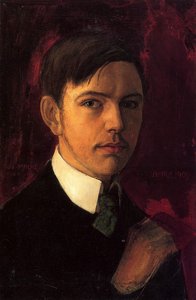
August Macke
1887 - 1914 , Germany
Quick Facts
- Artistic Movement Or Style: Expressionism
- Artists Or Movements Influenced By This Artist: ['Der Blaue Reiter']
- Artists Who Influenced This Artist:
- Robert Delaunay
- Franz Marc
- Date Of Birth: January 3, 1887
- Date Of Death: September 26, 1914
- Full Name: August Robert Ludwig Macke
- Nationality: German
- Notable Artworks:
- Woman in a Green Jacket
- Bathing Girls with Town
- Türkisches Café
- Gartentor
- Landscape with Cows
- Place Of Birth: Meschede, Germany
Related Articles
Chrome Green Masterpieces: 10 Famous Paintings & Their Alluring Hues |
Explore 10 famous paintings where 'Chrome Green' reigns supreme! Discover Monet, Manet & Van Gogh’s masterpieces. Learn the stories behind these iconic artworks and find museum-quality art reproductions for your home at .
Renoir's Masterpieces: Explore 25 Iconic Paintings & Bring Art Home | OriginalUniqueArt
Explore 25 iconic Pierre-Auguste Renoir paintings! Discover the stories behind Impressionist masterpieces like 'Dance at Le Moulin de la Galette' & 'Luncheon of the Boating Party'. Find museum-quality art reproductions and elevate your home decor with OriginalUniqueArt.com.
Verdant Visions: Exploring the Symbolism & Aesthetic Impact of Green in Art History
Explore the rich history & symbolism of green in art! Discover iconic paintings, techniques, and how to bring verdant harmony into your home with OriginalUniqueArt's expert guide.

Emerald Visions: Top 10 Paintings Dominated by Cadmium Green |
Explore 10 iconic paintings where cadmium green reigns supreme! From Monet to Van Gogh, discover the stories behind these masterpieces & the power of color. Find museum-quality art reproductions and elevate your home decor on .
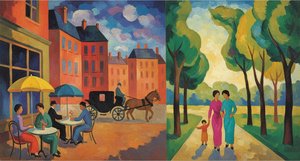
August Macke: Expressionist Visions of Harmony & Modern Life
Explore the vibrant Expressionist paintings of August Macke (1887-1914). Discover his key role in Der Blaue Reiter, Fauvist influences, and captivating depictions of modern life. A comprehensive guide for art enthusiasts & collectors.


