Early Life & Influences: The Foundations of Macke’s Artistic Vision
 Wikipedia: August Macke
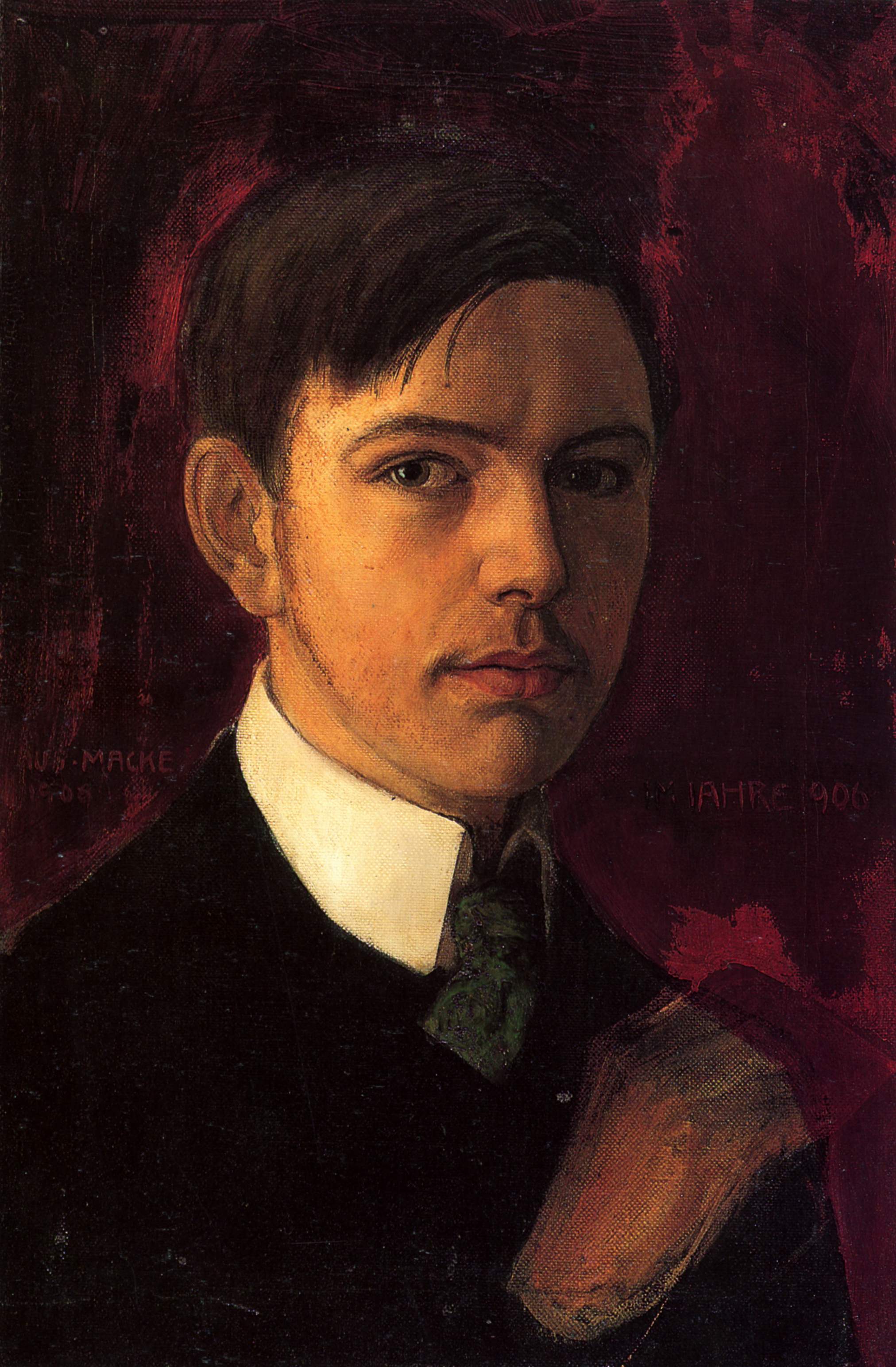
August Robert Ludwig Macke (3 January 1887 – 26 September 1914) was a German Expressionist painter. He was one of the leading members of the German Expressionist group Der Blaue Reiter (The Blue Rider). He lived during a particularly active time for ...
August Robert Ludwig Macke, born in Meschede, Westphalia, in 1887, emerged from a relatively conventional upbringing to become one of the most luminous figures of early German Expressionism. His initial artistic inclinations were nurtured not within formal academies—though he did briefly attend the Düsseldorf Kunstakademie—but through a familial appreciation for art and exposure to Japanese prints collected by friends. These early influences instilled in him a sensitivity to line, composition, and a burgeoning fascination with color that would define his later work. However, it was a journey through Italy and Belgium in 1906 that truly ignited Macke’s passion, exposing him to the Impressionist masters and setting him on a path of artistic exploration. This period wasn't about slavish imitation; rather, it sparked a desire to capture fleeting moments of light and atmosphere, a quality that remained central even as his style evolved beyond pure Impressionism.
The seeds of Macke’s unique vision were also sown during his time in Bonn, where he developed close friendships with fellow artists like Hans Gerhardt. These connections fostered a spirit of experimentation and intellectual exchange, crucial for the development of any young artist seeking to break from established norms. While initially drawn to the descriptive realism of Impressionism, Macke’s artistic temperament yearned for something more—a means of conveying not just *what* he saw, but *how* he felt about it. This nascent emotional drive would soon find its full expression through his involvement with the revolutionary circles of German Expressionism.
The Blue Rider Circle: Collaboration, Spirituality, and Shared Aesthetics
 Wikipedia: Der Blaue Reiter
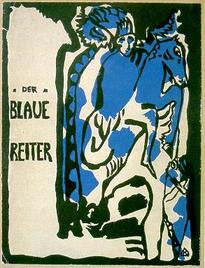
Der Blaue Reiter (English: The Blue Rider) was a group of artists and a designation by Wassily Kandinsky and Franz Marc for their exhibition and publication activities, in which both artists acted as sole editors in the almanac of the same name (firs...
Macke’s artistic trajectory took a pivotal turn in 1907 with his first trip to Paris. There, he encountered the vibrant Fauvist movement, absorbing its bold use of color and rejection of naturalistic representation. But it was his connection with Franz Marc in 1910 that proved truly transformative. Marc, a fellow artist deeply invested in spiritual themes and the expressive power of color, introduced Macke to Wassily Kandinsky and the burgeoning group known as Der Blaue Reiter (The Blue Rider). This wasn’t merely an artistic alliance; it was a shared quest for a deeper understanding of art's potential—a belief that painting could be a vehicle for expressing inner truths and connecting with something beyond the material world.
The Blue Rider, unlike other Expressionist groups like Die Brücke, wasn’t defined by a rigid stylistic manifesto. Instead, it was characterized by an openness to diverse influences – from medieval art and primitive cultures to contemporary Cubism and abstraction. Macke embraced this eclectic spirit, experimenting with non-objective forms and exploring the symbolic associations of color alongside Kandinsky and Marc. The group's almanacs, filled with reproductions of their own work and that of artists they admired, served as a powerful platform for disseminating their ideas and challenging conventional artistic boundaries. The collaborative exhibitions organized by Der Blaue Reiter were not simply displays of art; they were attempts to forge a new aesthetic language—one rooted in spirituality, emotion, and the expressive potential of pure form.
Capturing Modernity: Macke's Depiction of Everyday Life and Urban Spaces
 Sailing boat on the Tegernsee
August Macke (1887-1914) was a pivotal figure in German Expressionism and a key member of Der Blaue Reiter. Influenced by Fauvism and Orphism, his art explored the interplay of color, light, and form to capture modern life with vibrant energy. Tragic
While deeply engaged with abstract concepts, Macke never entirely abandoned his fascination with the tangible world. He possessed a remarkable ability to find beauty in the ordinary—to elevate everyday scenes into moments of profound significance. Unlike some Expressionists who focused on angst-ridden depictions of urban alienation, Macke’s paintings often celebrate the vibrancy and dynamism of modern life. His cityscapes are filled with bustling streets, colorful shops, and figures engaged in leisurely pursuits. However, this isn't a naive celebration; there’s an underlying sense of transience and fragility to these scenes, hinting at the anxieties simmering beneath the surface of early 20th-century society.
Sailing Boat on the Tegernsee, for example, exemplifies Macke’s ability to capture both the joy of a summer afternoon and a subtle sense of melancholy. The bright colors and simplified forms evoke a feeling of idyllic harmony, yet there's also a quiet stillness that suggests a fleeting moment in time. He wasn’t interested in merely documenting reality; he sought to distill it—to extract its essence and convey the emotional resonance of a particular place or experience. This focus on capturing the *feeling* of modernity, rather than simply its appearance, sets Macke apart from many of his contemporaries.
Color as Emotion: Exploring Macke’s Fauvist & Orphist Palette
 Gartentor
Experience August Macke's 'Gartentor,' a serene 1914 watercolor capturing everyday beauty with Fauvist influences. Explore German Expressionism & tranquility.
Central to Macke's artistic vision was his masterful use of color. Initially influenced by the bold, unmodulated hues of Fauvism, he gradually developed a more nuanced and sophisticated palette inspired by Robert Delaunay’s Orphic theories. Orphism, an offshoot of Cubism, emphasized the expressive power of pure color and its ability to evoke emotional responses independent of representational form. Macke embraced this concept wholeheartedly, believing that color could be used to create a sense of harmony and spiritual resonance.
His paintings are characterized by vibrant juxtapositions of complementary colors—blues and oranges, reds and greens—creating a dynamic interplay of light and shadow. He wasn’t interested in replicating naturalistic color schemes; instead, he employed color as a symbolic language, using it to convey mood, emotion, and inner states of being. Gartentor, with its serene watercolor washes, demonstrates this sensitivity beautifully. The delicate interplay of greens, yellows, and blues creates a feeling of tranquility and harmony, capturing the fleeting beauty of an everyday garden scene. Macke’s exploration of color wasn't merely aesthetic; it was deeply connected to his spiritual beliefs and his desire to express the underlying unity of all things.
A Tragic Prematurity: The Impact of World War I on Macke’s Oeuvre
The outbreak of World War I in 1914 cast a long shadow over Macke's life and work. Driven by patriotic fervor, he volunteered for military service despite being exempt due to his artistic status. His final painting, Farewell, poignantly captures the gloom and uncertainty that settled over Europe as war loomed. The somber colors and melancholic figures foreshadow the tragedy that was about to unfold.
Macke’s untimely death in September 1914 at the age of just 27 cut short a career brimming with potential. His final works, created during his brief time on the front lines, reflect a growing sense of disillusionment and despair. While he continued to explore themes of harmony and beauty, there's an undeniable undercurrent of anxiety and foreboding in these later paintings. The loss of Macke was a devastating blow to the Expressionist movement, robbing it of one of its most gifted and innovative voices.
Macke’s Enduring Legacy: Influence and Rediscovery in 20th-Century Art
Despite his short life, August Macke left an indelible mark on the landscape of modern art. His paintings continue to captivate audiences with their vibrant colors, expressive forms, and profound emotional resonance. He bridged the gap between Impressionism, Fauvism, and Expressionism, forging a unique artistic language that influenced generations of artists.
His emphasis on capturing the feeling of modernity, rather than simply its appearance, continues to resonate with contemporary artists seeking to explore the complexities of the human condition. Macke’s work serves as a powerful reminder of art's ability to express inner truths and connect us to something beyond the material world. For those seeking to delve deeper into his oeuvre, OriginalUniqueArt.com offers high-quality reproductions of Macke’s masterpieces, allowing you to experience the beauty and emotional power of his paintings firsthand. Explore our collection today and discover the enduring legacy of this remarkable Expressionist artist.