Preview
 Send
Send Share
Share
 Details
 Guide
Guide

 Download
 Similars
 X-Ray
X-Ray Diaporama
 Stats
StatsAriadne
 Oil On Canvas
- WallArt
- French Academic Art
 1831
1831- 19th Century
 44.0 x 49.0 cm
 Metropolitan Museum of Art
 Read More
Giclée / Art Print
Museum-quality giclée or canvas print with fast production and flexible finish options. ( Buy Hand Made Painting Switch to Digital Image)




P118B $10

P118H $10

P118W $10

P438Z $10

P508JH $12

P508YH $12

P805H $10

P805Z $10

P919BZ $10

P919G $10

P919XJ $10

P959ZH $10

P968JZ $12

W106C $8

W218G $10

W218JH $8

W218Y $10

W307PJ $10

W316G $10

W316PJ $8

W316Y $10

W398PJ $8

W4111J $10

W500HY $15

W500JH $15

W692G $12

W849H $8

W940BG $15

W953PJ $8




Pick from our preset sizes that match the artwork's original proportions.

Type the width and the height you need, to fit your frame or your wall. A print can only be cut, never made bigger than the picture, so a size with a different shape loses a part of the image. We send you a digital mockup to approve before we print anything. The picture shown on this page does not show the real cut — only the mockup does.
Worldwide Delivery () in 2 weeks instead of standard 4/5 weeks. (26 October)

Free Worldwide Express Shipping

High-Quality Linen Canvas

Full Shipping Insurance

Customs Tax Refund Guarantee

True Color Matching Guarantee

100-Day Return Policy (Defects Only)

100% Money-Back Guarantee

Bulk Discount Offer
 Glass option is only available in size under 110 CM

Ariadne
Giclée / Art Print
Reproduction Size
-


Total Price
$ 81
Asher Brown Durand’s ‘Ariadne’: A Symphony of Romantic Softness
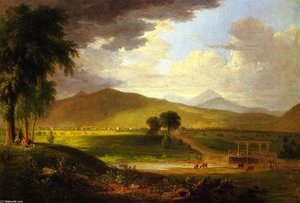
Asher Brown Durand's “Ariadne,” completed in 1831, is more than just a painting; it’s a poignant meditation on isolation and beauty rendered with the meticulous skill honed during his years as America’s foremost engraver. Measuring 44 x 49 cm, this oil-on-canvas work, currently residing within The Metropolitan Museum of Art in New York, offers a captivating glimpse into the artistic currents of its time – specifically, the delicate interplay between Neoclassicism and Romanticism that defined the early 19th century.
- Subject Matter: The painting depicts Ariadne, the Cretan princess abandoned on the island of Naxos, a figure steeped in myth and representing vulnerability and despair.
- Inspiration: Durand’s work is a carefully considered copy of John Vanderlyn's original history painting, itself a Neoclassical masterpiece. This lineage informs the piece’s formal structure while Durand subtly shifts the emphasis towards a more emotionally resonant interpretation.
The Echoes of Neoclassicism and Romanticism
Durand’s artistic approach is profoundly shaped by his background as an engraver, a skill that instilled in him an unparalleled attention to detail and a deep understanding of tonal gradation. This technical mastery is evident in the painting's remarkably smooth surfaces and precise rendering of form. However, “Ariadne” transcends mere technical proficiency; it’s infused with the burgeoning Romantic sensibility that was beginning to challenge the rigid ideals of Neoclassicism. While Vanderlyn’s work prioritized clarity and order, Durand introduces a deliberate softness into the drapery and an overall atmosphere of melancholy. This shift reflects the broader artistic movement's embrace of emotional expression and subjective experience – a move away from purely objective representation.
The painting’s creation occurred during a period of significant social and political change in America, following the Napoleonic Wars. The French Academic Art Movement, which Durand aligned with, sought to revive classical ideals while simultaneously acknowledging the power of human emotion. This fusion is powerfully realized in “Ariadne,” where the serene natural setting – trees and mountains – serves not as a backdrop for heroic action but as a contemplative space for the princess’s sorrow.
Symbolism and Emotional Resonance
The composition itself speaks volumes. Ariadne lies prone, her hands gently placed behind her head, suggesting both vulnerability and a quiet acceptance of her fate. The muted color palette – dominated by blues, grays, and browns – reinforces the mood of desolation and isolation. Even the inclusion of a bird adds to the painting’s symbolic weight; birds are often associated with freedom and hope, yet here they seem equally trapped within the scene, mirroring Ariadne's predicament.
Comparing “Ariadne” to Pompeo Batoni’s *Diana and Cupid* reveals striking similarities in subject matter and setting – both depict mythological figures in idyllic natural landscapes. However, where Batoni’s work exudes a sense of joyous celebration, Durand’s rendition is imbued with a profound sadness, highlighting the artist's deliberate adaptation of Neoclassical principles to suit American tastes and his own Romantic sensibilities.
A Timeless Masterpiece
"Ariadne" stands as a testament to Asher Brown Durand’s artistic vision and technical skill. It represents a pivotal moment in American art history, bridging the gap between classical tradition and burgeoning Romanticism. Its enduring appeal lies not only in its exquisite detail but also in its ability to evoke a powerful emotional response – a reminder of human vulnerability and the poignant beauty found even in moments of profound solitude.
Questions & Answers
Is "Ariadne" by Asher Brown Durand in the public domain?
"Ariadne" by Asher Brown Durand is in the public domain - its copyright has expired. This status governs how the image of the work may be reproduced.
Can I preview "Ariadne" by Asher Brown Durand before ordering?
To preview a reproduction of "Ariadne" by Asher Brown Durand, open the artwork's Preview page.
What are the format and size of "Ariadne"?
"Ariadne" by Asher Brown Durand is proportioned as a landscape work of 44 x 49 cm.
Artist Biography
A Life Rooted in the American Landscape
Asher Brown Durand, born August 21, 1796, in Maplewood, New Jersey, wasn’t initially destined for a life steeped in paint and canvas. His early years were shaped by the practical world of his father, a watchmaker and silversmith, instilling in him a meticulous attention to detail that would later profoundly influence his artistic approach. This foundation in craftsmanship led to an apprenticeship with engraver Peter Maverick in 1812, a path that initially seemed to define his career. Durand quickly proved himself exceptionally skilled, becoming a partner in the firm and establishing its New York City branch. His reputation as an engraver soared after completing the intricate reproduction of John Trumbull’s *The Declaration of Independence* in 1823 – a feat that cemented his standing within the artistic community. However, beneath the precision of engraving lay a burgeoning passion for capturing the raw beauty of the natural world, a calling that would ultimately lead him to become a pivotal figure in American art.From Engraving to Embracing Nature’s Palette
The transition from meticulous engraver to celebrated landscape painter wasn't immediate. Durand continued his engraving work while simultaneously exploring painting, initially focusing on portraiture and genre scenes. A crucial turning point arrived with the patronage of Luman Reed in the 1830s, who encouraged him to fully embrace his artistic inclinations. Reed’s support allowed Durand to dedicate himself more completely to painting, a pursuit further ignited by a transformative sketching expedition with his close friend, Thomas Cole, in the Adirondacks in 1837. This journey into the untamed wilderness proved pivotal; it was here that Durand truly discovered his calling – to capture the sublime grandeur of the American landscape. He began to spend summers immersed in nature, meticulously documenting the Catskills, Adirondacks, and White Mountains through countless drawings and oil sketches. These studies weren’t merely preparatory exercises but became integral to his artistic process, informing the compositions and details of his finished paintings.A Founding Voice of the Hudson River School
Durand's dedication to landscape painting aligned him with a growing circle of artists who shared a similar vision – a group that would become known as the Hudson River School. He was among its founding members, alongside Cole, and played a vital role in establishing the school’s distinctive aesthetic. The Hudson River School wasn’t simply about depicting scenery; it was about imbuing landscapes with emotional resonance and spiritual significance. Durand's work embodies this philosophy, characterized by a meticulous realism combined with a romantic sensibility. He believed in observing nature with unwavering accuracy but also recognized its power to evoke feelings of awe, reverence, and the sublime. His paintings weren’t just representations of places; they were expressions of his deep connection to the American wilderness and a celebration of God's creation.Legacy and Enduring Influence
Durand’s influence extended beyond his own artistic output. He served as president of the National Academy of Design from 1845 to 1861, using his position to champion American art and nurture emerging talent. He also penned insightful “Letters on Landscape Painting” published in *The Crayon* – a significant art periodical – articulating his artistic principles and advocating for direct observation from nature. His commitment to realism and detailed representation set a high standard for subsequent generations of landscape painters. Works like *Kindred Spirits*, painted in 1849 as a tribute to Thomas Cole, became iconic representations of the Hudson River School aesthetic and continue to resonate with viewers today. The painting’s depiction of Cole and poet William Cullen Bryant amidst a serene woodland scene encapsulates the school's reverence for nature and its belief in the power of art to connect humanity with the divine. Durand’s paintings offer more than just picturesque views; they provide a window into 19th-century America, reflecting its evolving relationship with the natural world and its burgeoning sense of national identity. His legacy endures not only through his captivating canvases but also through his enduring influence on American landscape painting and his unwavering commitment to capturing the beauty and spiritual significance of the land.
Asher Brown Durand
1796 - 1886 , United States of America
Quick Facts
- Full Name: Asher Brown Durand
- Nationality: American
- Date Of Birth: 1796
- Date Of Death: 1886
- Place Of Birth: Maplewood, United States of America
- Notable Artworks:
- Landscape, Composition
- The Solitary Oak
- Sketch in the Woods
- Canoes in rapids
- Artistic Movement Or Style: Hudson River School
- Artists Who Influenced This Artist: ['Thomas Cole']
- Artists Or Movements Influenced By This Artist: ['Hudson River School']
Related Articles

The Enduring Power of Painting: A Historical & Contemporary Exploration of Form and Emotion
Explore the rich history & enduring techniques of oil painting with OriginalUniqueArt. Discover masterpieces, learn about art collecting, and find authentic handmade reproductions crafted by skilled artists.

The Enduring Legacy of Oil on Canvas: Technique, History & Aesthetic Impact
Explore the rich history & techniques of oil painting – from Renaissance masters to Impressionism. Discover pigments, layering methods, and why this timeless medium endures. Expert insights for artists & art enthusiasts.
Oil on Canvas Masters: 10 Paintings That Redefined Art History |
Journey through art history with our guide to 10 legendary oil on canvas masterpieces! Explore iconic works by Van Gogh, Monet & Rembrandt. Find museum-quality reproductions and elevate your home decor at . Discover all masterpieces online.

The Enduring Legacy of Oil on Canvas: Technique, History & Contemporary Practice
Explore the rich history & enduring techniques of oil painting on canvas. Discover the science behind its longevity, conservation practices, and contemporary relevance. Expert insights for art enthusiasts.

Oil on Canvas: A Historical & Technical Exploration of a Timeless Artistic Medium
Explore the rich history & enduring techniques of oil painting on canvas. Discover the science behind its longevity, conservation practices, and contemporary relevance. Expert insights for art enthusiasts.