Fauvism · 1923
Nude (André Derain, 1923)
André Derain (1880–1954) made Nude. It dates from 1923. It belongs to the Fauvism movement. It is made in oil on canvas. It measures 44 × 58 cm.
- 1923
- Oil On Canvas
- 44 × 58 cm

 Preview

 Hand Made Oil Painting
 Send
 Share
 Fact sheet


 Download
 Similars
 X-Ray
 Diaporama
 Q&A

 Stats
Nude, in brief
- Title
- Nude
- Artist
- André Derain (1880–1954)
- Artist born in
- Chatou, France
- Date
- 1923
- Medium
- Oil On Canvas
- Dimensions
- 44 × 58 cm
- Movement
- Fauvism
- Period
- Modern
- Subject
- woman, nude, female figure, grayscale, seated woman
What does Nude depict?
Identification of the Nude by André Derain
In this 1923 work, titled Nude, André Derain turns his attention to the quietude of the human form. The painting presents a nude female figure, captured in a moment of stillness that invites a closer, more intimate observation. It is a study of presence and form, rendered with a focus on the essential character of the subject.
The artist, André Derain, approaches the figure with a sense of restraint. Rather than relying on the loud, unmixed hues of his earlier Fauvist period, this piece reflects a more disciplined sensibility. The subject is seated and facing forward, occupying the central space of the composition. There is a certain gravity to her pose, suggesting a state of introspection or perhaps a quiet contemplation of her surroundings.
This work belongs to a period in the artist's career where structure and form began to take precedence. The figure is defined by simplified shapes and a deliberate use of line. It is a direct encounter with the subject, stripped of unnecessary distraction, allowing the viewer to focus entirely on the weight and volume of the female form as it exists within the frame.
Composition and Visual Elements
The figure is centrally positioned within the frame, creating a quiet sense of balance that draws the eye immediately to the subject. She is seated in a moment of stillness, her pose defined by arms crossed and resting upon her legs. This arrangement suggests a state of introspection or perhaps a simple, unhurried relaxation. The composition avoids complex spatial arrangements, opting instead for a relatively flat perspective that lacks a strong sense of depth, keeping the viewer's attention fixed on the immediate presence of the form.
There is a deliberate simplification in how the human form is rendered. The artist employs simplified geometric shapes to represent the body, using curves to trace the silhouette while sharper angles define the features of the face, such as the nose and eyebrows. This structural approach gives the figure a certain weight and presence despite the lack of environmental detail. The background remains largely undefined, which serves to isolate the subject and emphasize the contours of her body.
The palette is strictly monochromatic, relying on a controlled range of shades including gray, white, and black. Rather than using color to create volume, the artist uses subtle variations in tone to model the figure. Strong, visible brushstrokes define the contours of the body and the facial features. These lines are not blended into smooth transitions; instead, they retain an individual character that adds a tactile energy to the surface. The interplay between these textured strokes and the softer areas of the skin creates a visual rhythm that is both disciplined and expressive.
Technique and Material Details
This work is an oil on canvas, executed with a deliberate and tactile approach to the medium. The artist employs visible brushstrokes that remain unblended in many areas, creating a surface defined by its physical texture. These marks are not merely marks of application but are essential to the structural definition of the figure, providing a sense of energy and movement across the form.
There is a clear evidence of layering and careful blending used to achieve subtle tonal variations. This technique allows for a nuanced transition between light and shadow, giving the subject a sense of volume and presence. The interplay of these layers creates a depth that relies on the weight of the paint rather than a reliance on linear perspective. The result is a surface where the materiality of the oil paint is as much a part of the composition as the subject itself.
High-resolution images of Nude

André Derain, Nude (1923). Public domain.
Colours matched to the original by a digital expert, the file finely retouched, faithful to the artist's brushwork.
Own the high-resolution fileQuestions on Nude, answered
What is the creation date of "Nude" by André Derain?
"Nude" by André Derain was created in 1923.
What medium is "Nude" by André Derain executed in?
"Nude" is executed in oil on canvas.
How big is the original "Nude"?
"Nude" measures 44 x 58 cm in its original form. Original dimensions are a useful reference when choosing a reproduction size.
What subjects appear in "Nude" by André Derain?
The themes present in "Nude" by André Derain include woman, nude, female figure, grayscale, seated woman. Together they summarize the artwork's subject matter.
Can the image of "Nude" by André Derain be freely reproduced?
"Nude" by André Derain is in the public domain - its copyright has expired. This status governs how the image of the work may be reproduced.
Who is the artist behind "Nude"?
"Nude" is attributed to André Derain.
Which artistic current is "Nude" by André Derain part of?
"Nude" is a work of Fauvism. The movement indicates the artistic tradition the work is part of.
Where does "Nude" fall in André Derain's career?
Within André Derain's career, "Nude" falls in the Return to order. The phase helps compare it with the artist's other works.
How old was André Derain when creating "Nude" in 1923?
When "Nude" was created in 1923, André Derain - born in 1880 - was 43 years old.
About the artist, André Derain
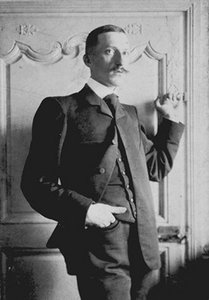
1880–1954, France
André Derain
Early Life, Family and Training In the year 1880, André Derain entered the world in Chatou, a village nestled within the Yvelines region of France. His early years were shaped by the quiet landscapes of the Île-de-France, where a natural curiosity for the surroundings began to take root. By 1895, he had already commenced studying on his own, seeking to understand the visual world through his own eyes rather than through formal instruction. This period of self-directed exploration allowed him to develop a personal way of seeing before the rigors of an academy could impose their will upon him.
Also by André Derain
 bathers1907
 London Bridge1906
 Charing Cross from sw1906
 Landscape at L'Estaque1906
Essays around Nude
 French artworks of the 1920sIconic French works by Matisse and Léger define the 1920s. Explore the full collection online at OriginalUniqueArt.com.
 The Evolving Human Form: Tracing Light and Flesh from Impressionism to Post-ImpressionismExplore the evolution of the human form from academic realism to Post-Impressionism. Trace the history of light and flesh with us.
 The Architecture of Stillness: A Curated Study of Seated Figures in Art HistoryExplore the psychological depth of seated figures from Rembrandt to Roman realism. Discover the secrets of art history now.