

 Preview
 Send
Send Share
Share
 Details
 Guide
Guide

 Download
 Similars
 X-Ray
X-Ray Diaporama
 Stats
StatsGeorge III (1738–1820)
 Oil On Canvas
- WallArt
- Baroque
 1764
1764- Early Modern
 246.0 x 163.0 cm
 Guildhall Art Gallery
 Read More
Purchase a high-resolution, enhanced digital image, far superior to the online preview.
Each file is meticulously prepared by our in-house specialists using advanced tools and expert manual retouching. We ensure every image has exceptional clarity, precise color accuracy, and fine detail.
The final file is delivered via email within 72 hours, optimized for immediate use in professional, editorial, and print environments. This is the same quality trusted by top-tier design studios, publishers, and galleries.
Digital Image
Download a high-resolution file for personal display, printing, and creative projects. ( Switch to Print Buy Hand Made Painting)
Included in Every Digital Image Order
Expert Digital Delivery, Guaranteed
When you choose OriginalUniqueArt.com, you're not just getting an image - you're receiving a professionally enhanced digital artwork, crafted with precision and backed by a satisfaction guarantee. Here's everything that comes with your order, automatically:

Fast Email Delivery
Your high-resolution digital image file will be emailed to you within 72 hours of ordering - ready for immediate use.

AI-Enhanced Digital File
Your artwork is professionally optimized using advanced AI tools and manual editing, ensuring maximum detail, clarity, and color accuracy.

Free Lifetime Re-Delivery
Accidentally deleted or lost your file? No worries - we'll resend it to you anytime, free of charge.

No Import Fees - Ever
Enjoy your artwork instantly with zero customs, duties, or delivery fees - digital downloads are always tax-free.

Color Accuracy Guarantee
We ensure your digital image reflects the original colors as closely as possible using professional tools and color management.

100-Day Satisfaction Guarantee
If you're not satisfied with your digital image, we'll revise it or refund 100% within 100 days - no questions asked.

100% Money-Back Guarantee
Not satisfied? Get a full refund within 100 days of receiving your digital file - no questions asked.

Bulk Order Discounts
Buy 3 images, save 10% - Buy 5, save 15% - Buy 10+, save 20%. Great for creative projects, galleries, and agencies.
A Vision of Royal Majesty
In the grand tapestry of eighteenth-century portraiture, few works command the room with as much authoritative grace as Allan Ramsay’s 1764 masterpiece, George III. This breathtaking portrait serves as more than a mere likeness; it is a profound window into the heart of the British monarchy during an era of immense transition. As the viewer gazes upon the King, they are immediately struck by the sheer scale and presence of the composition. Ramsay, a master of capturing both the physical essence and the psychological weight of his subjects, utilizes a rich, vibrant palette to breathe life into the royal figure. The deep, velvety tones of the drapery and the shimmering gold trim of the royal robes create a sensory experience that transcends the canvas, inviting collectors and art enthusiasts alike to step back into the gilded age of the Enlightenment.
The technical brilliance of this work lies in Ramsay’s ability to balance the meticulous detail of neoclassical precision with the dramatic flair of his Italian training. Having studied under masters like Francesco Solimena, Ramsay brought a sophisticated understanding of light and shadow—chiaroscroll—to the English court. In this portrait, the light does not merely illuminate; it sculpts. It catches the intricate textures of the King’s regalia, from the heavy, embroidered fabric of his mantle to the cold, hard glint of the scepter and sword. Every brushstroke serves a purpose, contributing to a sense of tactile reality that makes the royal splendor feel almost tangible. For the interior designer, such a piece offers an unparalleled focal point, providing a sense of historical weight and architectural grandeur to any sophisticated space.
Symbolism and the Language of Power
Beyond its aesthetic allure, the portrait is a complex semiotic map of sovereign authority. Every element held by George III is a deliberate symbol of his divine and temporal right to rule. The scepter, gripped firmly in one hand, represents his judicial power, while the sword serves as a reminder of his role as the protector of the realm. These instruments of statecraft are set against a backdrop of heavy, theatrical curtains, a classic trope in royal portraiture that creates an intimate yet staged atmosphere, suggesting that we are witnessing a moment of profound historical significance. The composition is designed to evoke awe, instilling a sense of stability and continuity in the viewer.
To possess a reproduction of this caliber is to invite a conversation about heritage, leadership, and the enduring beauty of classical art into one's home. It is an investment in atmosphere. Whether placed in a formal study, a grand dining hall, or a curated gallery wall, Ramsay’s depiction of George III acts as an anchor of elegance. The painting does not merely decorate a wall; it commands the environment, offering a timeless connection to the artistry and the political drama of the eighteenth century. It remains a captivating testament to the power of portraiture to immortalize not just a man, but an entire epoch of human history.
Artist Biography
Allan Ramsay: A Life of Elegance and Artistry
Early Life and Training
Born in Edinburgh, Scotland on October 13, 1713, Allan Ramsay emerged as a prominent Scottish portrait-painter whose work captured the elegance and refinement of his era. His artistic journey began at the age of twenty when he travelled to London for studies under the Swedish painter Hans Hysing, followed by instruction at the St. Martin's Lane Academy. This foundational training provided him with a solid base in technique and composition.
Italian Influences & Artistic Development
Ramsay’s artistic development took a significant turn with his travels to Rome and Naples, where he spent three years (1736-1738) working under the tutelage of Francesco Solimena and Imperiali (Francesco Fernandi). These Italian masters profoundly influenced his style, fostering a greater understanding of classical principles and enhancing his skills in capturing likeness and character. He absorbed the prevailing Rococo aesthetic while also developing an appreciation for Neoclassical ideals.
A Flourishing Career & Notable Works
Upon returning to Britain in 1738, Ramsay quickly established a successful career as a portraitist. His ability to portray his subjects with both accuracy and grace soon garnered him a distinguished clientele. Some of his most notable works include:
- Queen Charlotte (1744-1818) with her two eldest sons (Royal Collection, London): A regal depiction showcasing the Queen’s maternal presence.
- Mary Degg, Lady Robert Manners (Scottish National Gallery, Edinburgh): An elegant portrait demonstrating Ramsay's skill in capturing aristocratic beauty.
- Head of Duncan Forbes of Culloden: This early work brought him to the attention of the Duke of Argyll and was later featured on Royal Bank of Scotland banknotes.
Royal Appointment & Peak Achievement
A pivotal moment in Ramsay’s career arrived in 1761 with his appointment as Principal Painter in Ordinary to George III. This prestigious position cemented his status among the art elite and ensured a steady stream of commissions from the royal family and high society. He became *the* portraitist of the Georgian era.
Later Life & Legacy
Ramsay’s later life saw a shift towards literary pursuits, reflecting his broad intellectual interests. However, personal tragedies – an accidental dislocation of his right arm and the passing of his second wife in 1782 – impacted his health and productivity. He died in 1784.
Despite these challenges, Ramsay left behind a lasting legacy as one of Scotland’s most celebrated portrait painters. As Samuel Johnson noted, “I love Ramsay. You will not find a man in whose conversation there is more instruction, more information, and more elegance, than in Ramsay's.” His works continue to be admired for their technical skill, refined aesthetic, and insightful portrayals of 18th-century society.
Historical Significance
Allan Ramsay’s contribution extends beyond his artistic talent. He played a crucial role in shaping the visual culture of Scotland during a period of significant social and political change. His portraits provide valuable insights into the lives, fashions, and values of the Scottish nobility and gentry. His works can be found at locations such as Ayr Town Hall, and the Scottish National Portrait Gallery.
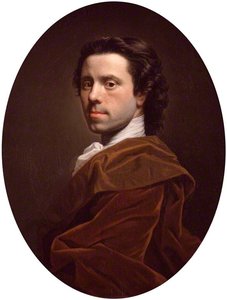
allen ramsay
1713 - 1784 , United Kingdom
Quick Facts
- Birth Date: 1713-10-13
- Birth Place: Edinburgh, United Kingdom
- Death Date: 1784
- Influenced By:
- Hans Hysing
- Francesco Solimena
- Imperiali (Francesco Fernandi)
- Movement:
- Rococo
- Neoclassical
- Name: Allan Ramsay
- Nationality: Scottish
- Notable Works:
- Queen Charlotte with her two eldest sons
- Mary Degg, Lady Robert Manners
- Head of Duncan Forbes of Culloden