Preview
 Send
Send Share
Share
 Details
 Guide
Guide

 Download
 Similars
 X-Ray
X-Ray Diaporama
 Stats
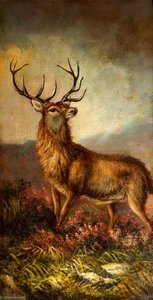
StatsTwo Stags
 Oil On Canvas
- WallArt
- Realism
 1925
1925- 19th Century
 62.0 x 88.0 cm
 Amgueddfa Ceredigion Museum
 Read More
Hand Made Oil Reproduction
Hand-painted oil on canvas in your size and frame, made to order by our artists. ( Switch to Print Switch to Digital Image)




P118B $10

P118H $10

P118W $10

P438Z $10

P508JH $12

P508YH $12

P805H $10

P805Z $10

P919BZ $10

P919G $10

P919XJ $10

P959ZH $10

P968JZ $12

W106C $8

W218G $10

W218JH $8

W218Y $10

W307PJ $10

W316G $10

W316PJ $8

W316Y $10

W398PJ $8

W4111J $10

W500HY $15

W500JH $15

W692G $12

W849H $8

W940BG $15

W953PJ $8




Pick from our preset sizes that match the artwork's original proportions.

Type the width and the height you need, to fit your frame or your wall. This is hand-painted, so for a size with a different shape the artist can paint a bit more around the picture, or cut a bit — you choose. We send you a digital mockup to approve before the painting starts. The picture shown on this page does not show the real result — only the mockup does.
After order, OriginalUniqueArt.com team will email client for instructions and provide a mockup preview
Worldwide Delivery () in 3/4 weeks instead of standard 5 weeks. (27 October). No compromise on quality.

Free Worldwide Express Shipping

High-Quality Linen Canvas

Full Shipping Insurance

Customs Tax Refund Guarantee

True Color Matching Guarantee

100-Day Return Policy (Defects Only)

100% Money-Back Guarantee

Bulk Discount Offer
 Glass option is only available in size under 110 CM

Two Stags
Reproduction Medium
Reproduction Size
-


Total Price
$ 300
A Golden Moment in the Wild
In the quietude of a fading afternoon, Alfred Worthington’s "Two Stags" invites the viewer into a sanctuary of profound stillness. Painted in 1925, this exquisite oil on canvas serves as a window into a world where time seems to suspend itself. The composition centers on two majestic deer, positioned within a lush, grassy expanse that glows under the amber warmth of a setting sun. One stag stands with a commanding presence, its larger frame suggesting the seasoned strength of an adult male, while its companion, perhaps a younger or more delicate figure, turns its head in a moment of quiet curiosity. There is an intimate dialogue occurring between these creatures, a silent interaction captured in the soft tilt of their heads and the gentle way they occupy the landscape.
Worthington’s mastery lies in his ability to translate the fleeting atmosphere of the golden hour into permanent pigment. Through delicate brushwork and a sophisticated use of light, he captures the way sunset shadows stretch across the meadow, softening the contours of the animals and blending them into the verdant earth. The technique is both precise and painterly; while the anatomical details of the stags are rendered with careful attention to their noble forms, the surrounding environment is treated with a soft, impressionistic touch that evokes the hazy, warm air of a summer evening. This balance between realism and atmosphere creates a sense of depth that draws the eye deep into the heart of the English countryside.
Symbolism and the Spirit of Nature
Beyond its technical brilliance, "Two Stags" resonates with a deeper, more primal symbolism. The stag has long been an icon of majesty, resilience, and the untamed spirit of the forest. By depicting two such creatures in a moment of peaceful coexistence, Worthington touches upon themes of companionship, the cycle of life, and the delicate harmony found within the natural order. The warm, descending light of the sunset acts as a metaphor for tranquility and the reflective nature of the twilight hours, evoking a sense of nostalgia for a pastoral era that feels increasingly distant from our modern, frenetic pace of life.
For the discerning collector or interior designer, this piece offers more than mere decoration; it provides an emotional anchor. The painting possesses a restorative quality, making it an ideal centerpiece for spaces designed for contemplation, such as a library, a study, or a sophisticated living area. Its palette of warm golds, deep greens, and soft earth tones complements a wide variety of classical and contemporary interiors, bringing a touch of the organic world indoors. To possess a reproduction of this work is to invite the serene, enduring beauty of the natural world into one's home, serving as a constant reminder of the quiet wonders that exist just beyond the edge of the woods.
Questions & Answers
What was Alfred Worthington's age when "Two Stags" was created?
Alfred Worthington was 91 years old when creating "Two Stags" in 1925. The age is computed from the artist's birth year, 1834.
Which museum holds the original "Two Stags"?
"Two Stags" by Alfred Worthington is on display at the Amgueddfa Ceredigion Museum, Aberystwyth, United Kingdom. The museum listing refers to the original work, not to reproductions.
How can I get a print of "Two Stags" by Alfred Worthington?
"Two Stags" is available as a fine art print on cotton canvas or archival canvas paper. Orders are placed on its Fine Art Print page, in the size of your choice.
Artist Biography
The Quiet Majesty of Alfred Worthington
Alfred Worthington, born in 1834, was a British landscape painter whose serene depictions of rural England and wildlife captivated audiences during the Victorian era. Though relatively unknown today compared to his contemporaries like Constable or Turner, Worthington’s meticulous observation and skillful brushwork cemented his place as a significant contributor to the artistic landscape of his time. His legacy resides in canvases that convey not just visual beauty but also a deep appreciation for the natural world—a sentiment profoundly felt by artists and viewers alike.
Worthington’s formative years were spent in Lincolnshire, where he received an education focused on classical studies alongside artistic pursuits. Recognizing his talent, he embarked on a formal apprenticeship with George Frederic Watts, a prominent sculptor and painter known for his Symbolist style—a movement that prioritized emotional expression over realistic representation. This influential mentorship instilled in Worthington a dedication to capturing the essence of subjects through symbolic imagery and nuanced tonal gradations, techniques that would characterize his entire oeuvre.
A Vision Rooted in the Natural World
Worthington’s artistic vision centered on portraying landscapes with remarkable accuracy and sensitivity. He meticulously studied geological formations, plant life, and animal behavior—skills honed during extensive expeditions to Wales and Cornwall. Unlike many of his peers who sought grand vistas or dramatic storms, Worthington favored quieter scenes: rolling hills dotted with sheep, tranquil estuaries teeming with birds, and intimate portraits of animals in their habitats. His canvases are imbued with a palpable stillness, inviting contemplation and fostering an awareness of the sublime beauty inherent in everyday existence.
The artist possessed a unique ability to blend the scientific precision of a naturalist with the poetic soul of a romanticist. Through his work, one can observe:
- Meticulous Detail: An unwavering focus on the textures of flora and the subtle anatomy of wildlife.
- Atmospheric Depth: The use of light and shadow to create a sense of breathing, living space within the English countryside.
- Symbolic Tranquility: A mastery of composition that directs the viewer toward moments of profound peace and pastoral harmony.
Legacy and Historical Significance
As the 19th century progressed, Worthington’s work served as a gentle counterpoint to the increasingly industrial landscape of Britain. While the world around him underwent rapid transformation, his paintings remained anchored in the timeless rhythms of nature. His ability to capture the spirit of place—seen in notable works such as 'Aberystwyth Castle'—ensured that his contribution to British landscape art was marked by a sense of enduring permanence.
Today, the works of Alfred Worthington continue to resonate with those who seek solace in the pastoral. His paintings are more than mere records of scenery; they are emotional journeys into a lost era of quietude. By elevating the humble elements of the countryside to the status of high art, Worthington left behind a profound testament to the beauty found in the small, the still, and the overlooked.

Alfred Worthington
1834 - 1927
Quick Facts
- Full Name: Alfred Worthington
- Nationality: British
- Date Of Birth: 1834
- Date Of Death: 1927
- Place Of Birth: England
- Notable Artworks:
- Aberystwyth Castle and Castle Point
- Stag
- Artistic Movement Or Style: Rural Landscape Painting
Related Articles
Anthony Vandyke Copley Fielding: Rediscovering a Master of Romantic Landscape
Discover the captivating landscapes of Anthony Vandyke Copley Fielding, a master of Romantic watercolour painting. Explore his life, technique, and legacy with OriginalUniqueArt – your source for museum-quality art reproductions & expert appraisal.
Chromatic Atmospheres: Exploring the Subtleties of Color Field Painting's Emotional Resonance
Explore the profound world of Color Field painting with OriginalUniqueArt. Discover key artists like Rothko & Newman, its philosophical roots, and lasting impact on modern art. Expert insights for collectors.

Chromatic Atmospheres: Exploring the Evolution & Impact of Color Field Painting
Explore the captivating world of Color Field painting! Discover its origins, key artists like Rothko & Newman, philosophical depth, and lasting influence on modern art. Expert insights for collectors.
Golden Hours: Sunset Motifs in Western Art History
Explore the captivating history of sunset motifs in Western art! Discover iconic paintings by Monet, Van Gogh & Kuindzhi. Learn about Romanticism, Impressionism & collecting these timeless masterpieces. Expert insights at OriginalUniqueArt.
Beyond the Brushstroke: A Definitive Guide to the Emotional Power of Color Field Painting
Explore the profound history and emotional depth of Color Field painting. From Mark Rothko to Barnett Newman, discover how pure color redefined modern art through our expert-led guide for students and collectors alike.