The Quiet Majesty of Alfred Worthington
Alfred Worthington, born in 1834, was a British landscape painter whose serene depictions of rural England and wildlife captivated audiences during the Victorian era. Though relatively unknown today compared to his contemporaries like Constable or Turner, Worthington’s meticulous observation and skillful brushwork cemented his place as a significant contributor to the artistic landscape of his time. His legacy resides in canvases that convey not just visual beauty but also a deep appreciation for the natural world—a sentiment profoundly felt by artists and viewers alike.
Worthington’s formative years were spent in Lincolnshire, where he received an education focused on classical studies alongside artistic pursuits. Recognizing his talent, he embarked on a formal apprenticeship with George Frederic Watts, a prominent sculptor and painter known for his Symbolist style—a movement that prioritized emotional expression over realistic representation. This influential mentorship instilled in Worthington a dedication to capturing the essence of subjects through symbolic imagery and nuanced tonal gradations, techniques that would characterize his entire oeuvre.
A Vision Rooted in the Natural World
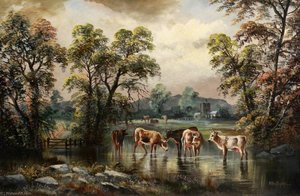
Worthington’s artistic vision centered on portraying landscapes with remarkable accuracy and sensitivity. He meticulously studied geological formations, plant life, and animal behavior—skills honed during extensive expeditions to Wales and Cornwall. Unlike many of his peers who sought grand vistas or dramatic storms, Worthington favored quieter scenes: rolling hills dotted with sheep, tranquil estuaries teeming with birds, and intimate portraits of animals in their habitats. His canvases are imbued with a palpable stillness, inviting contemplation and fostering an awareness of the sublime beauty inherent in everyday existence.
The artist possessed a unique ability to blend the scientific precision of a naturalist with the poetic soul of a romanticist. Through his work, one can observe:
- Meticulous Detail: An unwavering focus on the textures of flora and the subtle anatomy of wildlife.
- Atmospheric Depth: The use of light and shadow to create a sense of breathing, living space within the English countryside.
- Symbolic Tranquility: A mastery of composition that directs the viewer toward moments of profound peace and pastoral harmony.
Legacy and Historical Significance
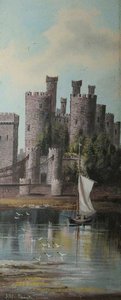
As the 19th century progressed, Worthington’s work served as a gentle counterpoint to the increasingly industrial landscape of Britain. While the world around him underwent rapid transformation, his paintings remained anchored in the timeless rhythms of nature. His ability to capture the spirit of place—seen in notable works such as 'Aberystwyth Castle'—ensured that his contribution to British landscape art was marked by a sense of enduring permanence.
Today, the works of Alfred Worthington continue to resonate with those who seek solace in the pastoral. His paintings are more than mere records of scenery; they are emotional journeys into a lost era of quietude. By elevating the humble elements of the countryside to the status of high art, Worthington left behind a profound testament to the beauty found in the small, the still, and the overlooked.