Preview
 Send
Send Share
Share
 Details
 Guide
Guide

 Download
 Similars
 X-Ray
X-Ray Diaporama
 Stats
StatsTiger
 Oil
Oil- WallArt
- Realism
 1925
1925- 19th Century
 31.0 x 31.0 cm
 Amgueddfa Ceredigion Museum
 Read More
Hand Made Oil Reproduction
Hand-painted oil on canvas in your size and frame, made to order by our artists. ( Switch to Print Switch to Digital Image)




P118B $10

P118H $10

P118W $10

P438Z $10

P508JH $12

P508YH $12

P805H $10

P805Z $10

P919BZ $10

P919G $10

P919XJ $10

P959ZH $10

P968JZ $12

W106C $8

W218G $10

W218JH $8

W218Y $10

W307PJ $10

W316G $10

W316PJ $8

W316Y $10

W398PJ $8

W4111J $10

W500HY $15

W500JH $15

W692G $12

W849H $8

W940BG $15

W953PJ $8




Pick from our preset sizes that match the artwork's original proportions.

You may enter your own dimensions to fit a specific frame or space. If your selected size does not match the original image's proportions, we will either crop the artwork or extend the painting with additional hand-painted elements. A digital mockup will be sent for your approval before production begins.
Please note that the on-screen preview does not reflect the actual cropping or extension. Only the mockup will accurately show the final composition.
While custom sizes are available, we recommend selecting a dimension from the predefined list to preserve the original proportions.
After order, OriginalUniqueArt.com team will email client for instructions and provide a mockup preview
Worldwide Delivery () in 3/4 weeks instead of standard 5 weeks. (3 October). No compromise on quality.

Free Worldwide Express Shipping

High-Quality Linen Canvas

Full Shipping Insurance

Customs Tax Refund Guarantee

True Color Matching Guarantee

100-Day Return Policy (Defects Only)

100% Money-Back Guarantee

Bulk Discount Offer
 Glass option is only available in size under 110 CM

Tiger
Reproduction Medium
Reproduction Size
-


Total Price
$ 300
A Gaze from the Past: The Ferocity of Alfred Worthington’s Tiger
In the quiet corners of art history, certain works possess an uncanny ability to break through the veil of time and command immediate attention. Alfred Worthington’s Tiger, painted in 1925, is one such masterpiece. This intimate portrait does not merely depict a predator; it captures a moment of raw, unbridled vitality. As the viewer encounters this close-up study, they are met with an intense, unwavering stare from the tiger’s wide eyes, creating a psychological connection that feels startlingly modern despite its early 20th-century origins. The composition focuses entirely on the face of the beast, stripping away the distractions of the jungle to force a confrontation between the observer and the observed.
The technical mastery displayed in this work lies in Worthington’s ability to balance vibrant color with meticulous detail. The striking contrast between the fiery orange and deep black stripes of the tiger is set against a lush, verdant green background, a choice that serves to push the subject forward, making it appear almost three-dimensional. Every element, from the delicate, sweeping lines of the long whiskers to the textured rendering of the fur, speaks to the artist's profound observation of nature. The way the light catches the tiger’s open mouth adds a sense of movement and breath, as if the creature is caught in a mid-snarl, ready to spring from the canvas.
Beyond its visual splendor, the painting carries a heavy emotional weight that makes it an exceptional choice for discerning collectors and interior designers alike. There is a primal energy within this piece—a sense of danger tempered by the serene, classical technique characteristic of Worthington’s era. For those looking to curate a space with character, this artwork offers more than just decoration; it provides a focal point of strength and drama. Whether placed in a sophisticated study or as a bold statement in a contemporary living area, the Tiger serves as a window into the wild, inviting a sense of awe and a deep appreciation for the untamed beauty of the natural world.
Questions & Answers
What is the perceived brightness of "Tiger" by Alfred Worthington?
Overall, "Tiger" is recorded as shadow. Perceived brightness describes how light or dark the work appears.
In what year was "Tiger" by Alfred Worthington created?
The creation of "Tiger" by Alfred Worthington is dated 1925.
What color intensity does "Tiger" by Alfred Worthington have?
The color intensity of "Tiger" is balanced. Intensity describes how strong the colors appear.
What mood would "Tiger" bring to a space?
With its bold mood, "Tiger" is suggested for a living room.
How old was Alfred Worthington when creating "Tiger" in 1925?
Alfred Worthington was 91 years old when creating "Tiger" in 1925. The age is computed from the artist's birth year, 1834.
Who is the artist behind "Tiger"?
"Tiger" is attributed to Alfred Worthington.
Which reproduction size is suggested for "Tiger" by Alfred Worthington?
The recommended print size for "Tiger" by Alfred Worthington is small.
Artist Biography
The Quiet Majesty of Alfred Worthington
Alfred Worthington, born in 1834, was a British landscape painter whose serene depictions of rural England and wildlife captivated audiences during the Victorian era. Though relatively unknown today compared to his contemporaries like Constable or Turner, Worthington’s meticulous observation and skillful brushwork cemented his place as a significant contributor to the artistic landscape of his time. His legacy resides in canvases that convey not just visual beauty but also a deep appreciation for the natural world—a sentiment profoundly felt by artists and viewers alike.
Worthington’s formative years were spent in Lincolnshire, where he received an education focused on classical studies alongside artistic pursuits. Recognizing his talent, he embarked on a formal apprenticeship with George Frederic Watts, a prominent sculptor and painter known for his Symbolist style—a movement that prioritized emotional expression over realistic representation. This influential mentorship instilled in Worthington a dedication to capturing the essence of subjects through symbolic imagery and nuanced tonal gradations, techniques that would characterize his entire oeuvre.
A Vision Rooted in the Natural World
Worthington’s artistic vision centered on portraying landscapes with remarkable accuracy and sensitivity. He meticulously studied geological formations, plant life, and animal behavior—skills honed during extensive expeditions to Wales and Cornwall. Unlike many of his peers who sought grand vistas or dramatic storms, Worthington favored quieter scenes: rolling hills dotted with sheep, tranquil estuaries teeming with birds, and intimate portraits of animals in their habitats. His canvases are imbued with a palpable stillness, inviting contemplation and fostering an awareness of the sublime beauty inherent in everyday existence.
The artist possessed a unique ability to blend the scientific precision of a naturalist with the poetic soul of a romanticist. Through his work, one can observe:
- Meticulous Detail: An unwavering focus on the textures of flora and the subtle anatomy of wildlife.
- Atmospheric Depth: The use of light and shadow to create a sense of breathing, living space within the English countryside.
- Symbolic Tranquility: A mastery of composition that directs the viewer toward moments of profound peace and pastoral harmony.
Legacy and Historical Significance
As the 19th century progressed, Worthington’s work served as a gentle counterpoint to the increasingly industrial landscape of Britain. While the world around him underwent rapid transformation, his paintings remained anchored in the timeless rhythms of nature. His ability to capture the spirit of place—seen in notable works such as 'Aberystwyth Castle'—ensured that his contribution to British landscape art was marked by a sense of enduring permanence.
Today, the works of Alfred Worthington continue to resonate with those who seek solace in the pastoral. His paintings are more than mere records of scenery; they are emotional journeys into a lost era of quietude. By elevating the humble elements of the countryside to the status of high art, Worthington left behind a profound testament to the beauty found in the small, the still, and the overlooked.

Alfred Worthington
1834 - 1927
Quick Facts
- Full Name: Alfred Worthington
- Nationality: British
- Date Of Birth: 1834
- Date Of Death: 1927
- Place Of Birth: England
- Notable Artworks:
- Aberystwyth Castle and Castle Point
- Stag
- Artistic Movement Or Style: Rural Landscape Painting
Related Articles

Dark Masterpieces: 10 Iconic Paintings Dominated by Black Tones |
Explore 10 iconic paintings dominated by black tones, from Rembrandt’s chiaroscuro to Goya's dark expressions. Discover the stories behind these masterpieces & find museum-quality art reproductions for your home at .
Ivory Black Masters: 10 Paintings That Define Dramatic Art |
Delve into the power of 'Ivory Black' with 10 iconic paintings by masters like Rembrandt & Caravaggio. Explore dramatic chiaroscuro, gothic moods & timeless art history. Find museum-quality reproductions and elevate your home decor at
Mark Rothko's Masterpieces: 25 Paintings That Define Abstract Expressionism | OriginalUniqueArt
Explore 25 iconic Mark Rothko paintings that define Abstract Expressionism. Discover the stories, colors & emotions behind these masterpieces. Find museum-quality art reproductions and curated decor ideas at OriginalUniqueArt.com.
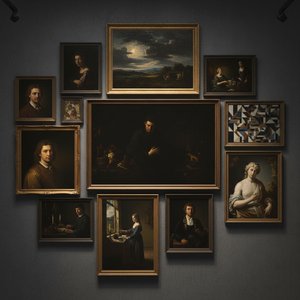
Lamp Black & Masterpieces: 10 Paintings That Define Shadow & Light |
Delve into the captivating world of 'Lamp Black' tones with 10 iconic paintings by masters like Rembrandt & Caravaggio. Explore Baroque chiaroscuro, dramatic lighting & shadow in art history. Find museum-quality reproductions at

Mars Black Masterpieces: 10 Iconic Paintings & Timeless Art Decor Ideas
Delve into the power of 'Mars Black' with 10 iconic paintings by masters like Rembrandt & Caravaggio. Explore dramatic chiaroscuro, gothic art, and timeless beauty. Find museum-quality reproductions & elevate your home decor on .