Preview
 Send
Send Share
Share
 Details
 Guide
Guide

 Download
 Similars
 X-Ray
X-Ray Diaporama
 Stats
StatsLion
 Oil
Oil- WallArt
- Realism
 1925
1925- 19th Century
 31.0 x 31.0 cm
 Amgueddfa Ceredigion Museum
 Read More
Hand Made Oil Reproduction
Hand-painted oil on canvas in your size and frame, made to order by our artists. ( Switch to Print Switch to Digital Image)




P118B $10

P118H $10

P118W $10

P438Z $10

P508JH $12

P508YH $12

P805H $10

P805Z $10

P919BZ $10

P919G $10

P919XJ $10

P959ZH $10

P968JZ $12

W106C $8

W218G $10

W218JH $8

W218Y $10

W307PJ $10

W316G $10

W316PJ $8

W316Y $10

W398PJ $8

W4111J $10

W500HY $15

W500JH $15

W692G $12

W849H $8

W940BG $15

W953PJ $8




Pick from our preset sizes that match the artwork's original proportions.

You may enter your own dimensions to fit a specific frame or space. If your selected size does not match the original image's proportions, we will either crop the artwork or extend the painting with additional hand-painted elements. A digital mockup will be sent for your approval before production begins.
Please note that the on-screen preview does not reflect the actual cropping or extension. Only the mockup will accurately show the final composition.
While custom sizes are available, we recommend selecting a dimension from the predefined list to preserve the original proportions.
After order, OriginalUniqueArt.com team will email client for instructions and provide a mockup preview
Worldwide Delivery () in 3/4 weeks instead of standard 5 weeks. (6 October). No compromise on quality.

Free Worldwide Express Shipping

High-Quality Linen Canvas

Full Shipping Insurance

Customs Tax Refund Guarantee

True Color Matching Guarantee

100-Day Return Policy (Defects Only)

100% Money-Back Guarantee

Bulk Discount Offer
 Glass option is only available in size under 110 CM

Lion
Reproduction Medium
Reproduction Size
-


Total Price
$ 300
The Majesty of the Wild: A Gaze Through Time
In the quiet corners of art history, few subjects command attention quite like the predator in repose, and nowhere is this more profoundly captured than in Alfred Worthington’s 1925 masterpiece, Lion. This striking portrait transcends a mere biological study, offering instead a window into the soul of one of nature's most formidable monarchs. As the viewer encounters this piece, they are immediately met with an unwavering gaze; the lion’s eyes are wide and piercing, establishing an intimate, almost confrontational connection that bridges the gap between the nineteenth-century canvas and the modern observer. The composition is anchored by a sense of immense physical presence, where the heavy, powerful weight of a large paw serves as a grounding element, reminding us of the raw, muscular strength hidden beneath a cloak of golden splendor.
Worthington, a painter deeply rooted in the tradition of British naturalism, utilizes a sophisticated interplay of light and shadow to elevate this portrait from a simple animal study to a dramatic work of art. The technique employed here relies heavily on a stark, monochromatic backdrop—a swirling dance of black and white that strips away the distractions of the savannah to focus entirely on the subject. This high-contrast environment acts as a theatrical stage, allowing the vibrant, warm tones of the lion’s mane to erupt from the canvas with breathtaking intensity. The flowing, rhythmic brushwork used to render the long, cascading hair of the mane lends the creature an ethereal, almost regal quality, suggesting that this is not just a beast of prey, but a symbol of enduring sovereignty.
For the discerning collector or interior designer, Lion offers more than just aesthetic beauty; it provides a focal point of profound emotional resonance. The painting embodies the duality of nature—the tension between stillness and sudden, explosive power. Its presence in a room can transform an atmosphere, lending a sense of classical dignity to a contemporary study or adding a layer of sophisticated drama to a curated gallery wall. Because the work captures such a primal essence through refined Victorian-era sensibilities, it remains timeless. Whether one is drawn to the meticulous detail of the fur or the psychological depth of the lion's stare, this reproduction serves as a magnificent tribute to the untamed beauty of the natural world, making it an indispensable acquisition for those who seek art that speaks of strength, grace, and the eternal spirit of the wild.
Questions & Answers
Where can I see a preview of "Lion"?
A preview of "Lion" by Alfred Worthington is available on the artwork's Preview page.
What feeling is "Lion" associated with?
The emotional tone recorded for "Lion" by Alfred Worthington is powerful. It summarizes the feeling the work expresses.
When was "Lion" made?
The creation of "Lion" by Alfred Worthington is dated 1925.
Who is the artist behind "Lion"?
"Lion" is attributed to Alfred Worthington.
When was "Lion" created, and to which movement does it belong?
"Lion" was created in 1925 as a work of the Realism movement. Date and movement anchor the artwork in art history.
What was Alfred Worthington's age when "Lion" was created?
Alfred Worthington made "Lion" at the age of 91. The artist was born in 1834 and the work is dated 1925.
What shape and dimensions is "Lion" by Alfred Worthington?
"Lion" by Alfred Worthington is a square composition measuring 31 x 31 cm in the original.
Artist Biography
The Quiet Majesty of Alfred Worthington
Alfred Worthington, born in 1834, was a British landscape painter whose serene depictions of rural England and wildlife captivated audiences during the Victorian era. Though relatively unknown today compared to his contemporaries like Constable or Turner, Worthington’s meticulous observation and skillful brushwork cemented his place as a significant contributor to the artistic landscape of his time. His legacy resides in canvases that convey not just visual beauty but also a deep appreciation for the natural world—a sentiment profoundly felt by artists and viewers alike.
Worthington’s formative years were spent in Lincolnshire, where he received an education focused on classical studies alongside artistic pursuits. Recognizing his talent, he embarked on a formal apprenticeship with George Frederic Watts, a prominent sculptor and painter known for his Symbolist style—a movement that prioritized emotional expression over realistic representation. This influential mentorship instilled in Worthington a dedication to capturing the essence of subjects through symbolic imagery and nuanced tonal gradations, techniques that would characterize his entire oeuvre.
A Vision Rooted in the Natural World
Worthington’s artistic vision centered on portraying landscapes with remarkable accuracy and sensitivity. He meticulously studied geological formations, plant life, and animal behavior—skills honed during extensive expeditions to Wales and Cornwall. Unlike many of his peers who sought grand vistas or dramatic storms, Worthington favored quieter scenes: rolling hills dotted with sheep, tranquil estuaries teeming with birds, and intimate portraits of animals in their habitats. His canvases are imbued with a palpable stillness, inviting contemplation and fostering an awareness of the sublime beauty inherent in everyday existence.
The artist possessed a unique ability to blend the scientific precision of a naturalist with the poetic soul of a romanticist. Through his work, one can observe:
- Meticulous Detail: An unwavering focus on the textures of flora and the subtle anatomy of wildlife.
- Atmospheric Depth: The use of light and shadow to create a sense of breathing, living space within the English countryside.
- Symbolic Tranquility: A mastery of composition that directs the viewer toward moments of profound peace and pastoral harmony.
Legacy and Historical Significance
As the 19th century progressed, Worthington’s work served as a gentle counterpoint to the increasingly industrial landscape of Britain. While the world around him underwent rapid transformation, his paintings remained anchored in the timeless rhythms of nature. His ability to capture the spirit of place—seen in notable works such as 'Aberystwyth Castle'—ensured that his contribution to British landscape art was marked by a sense of enduring permanence.
Today, the works of Alfred Worthington continue to resonate with those who seek solace in the pastoral. His paintings are more than mere records of scenery; they are emotional journeys into a lost era of quietude. By elevating the humble elements of the countryside to the status of high art, Worthington left behind a profound testament to the beauty found in the small, the still, and the overlooked.

Alfred Worthington
1834 - 1927
Quick Facts
- Full Name: Alfred Worthington
- Nationality: British
- Date Of Birth: 1834
- Date Of Death: 1927
- Place Of Birth: England
- Notable Artworks:
- Aberystwyth Castle and Castle Point
- Stag
- Artistic Movement Or Style: Rural Landscape Painting
Related Articles
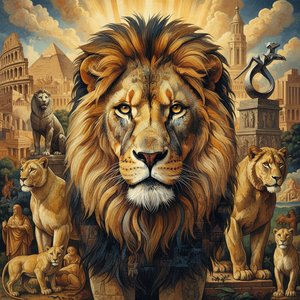
Majestic Lions: Capturing the Power and Soul of the King of Beasts through Art History
Explore the majesty of the King of Beasts through art history. From Baroque drama to Romantic realism, discover how master painters capture the power and soul of lions in exquisite oil reproductions and fine art prints for discerning collectors.
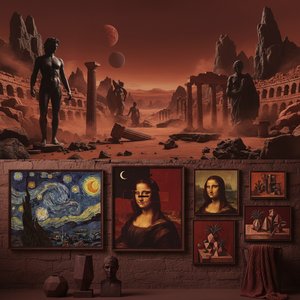
Mars Black Masterpieces: 10 Iconic Paintings & Timeless Art Decor Ideas
Delve into the power of 'Mars Black' with 10 iconic paintings by masters like Rembrandt & Caravaggio. Explore dramatic chiaroscuro, gothic art, and timeless beauty. Find museum-quality reproductions & elevate your home decor on .
Ivory Black Masters: 10 Paintings That Define Dramatic Art |
Delve into the power of 'Ivory Black' with 10 iconic paintings by masters like Rembrandt & Caravaggio. Explore dramatic chiaroscuro, gothic moods & timeless art history. Find museum-quality reproductions and elevate your home decor at
Lamp Black & Masterpieces: 10 Paintings That Define Shadow & Light |
Delve into the captivating world of 'Lamp Black' tones with 10 iconic paintings by masters like Rembrandt & Caravaggio. Explore Baroque chiaroscuro, dramatic lighting & shadow in art history. Find museum-quality reproductions at

Dark Masterpieces: 10 Iconic Paintings Dominated by Black Tones |
Explore 10 iconic paintings dominated by black tones, from Rembrandt’s chiaroscuro to Goya's dark expressions. Discover the stories behind these masterpieces & find museum-quality art reproductions for your home at .