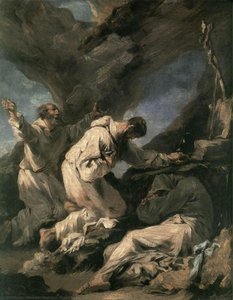
Preview
 Send
Send Share
Share
 Details

 Download
 Similars
 X-Ray
X-Ray Diaporama
 Stats
StatsBacchanalian Scene
 Oil On Canvas
- WallArt
- Baroque
 1710
1710 110.0 x 167.0 cm
 Hermitage Museum
 Read More
Giclée / Art Print
Museum-quality giclée or canvas print with fast production and flexible finish options. ( Buy Hand Made Painting Switch to Digital Image)




P118B $10

P118H $10

P118W $10

P438Z $10

P508JH $12

P508YH $12

P805H $10

P805Z $10

P919BZ $10

P919G $10

P919XJ $10

P959ZH $10

P968JZ $12

W106C $8

W218G $10

W218JH $8

W218Y $10

W307PJ $10

W316G $10

W316PJ $8

W316Y $10

W398PJ $8

W4111J $10

W500HY $15

W500JH $15

W692G $12

W849H $8

W940BG $15

W953PJ $8




Pick from our preset sizes that match the artwork's original proportions.

You may enter your own dimensions to fit a specific frame or space. If your selected size does not match the original image's proportions, we will either crop the artwork or extend the image with a mirrored or solid-fill edge. A digital mockup will be sent for your approval before production begins.
Please note that the on-screen preview does not reflect the actual cropping or extension. Only the mockup will accurately show the final composition.
While custom sizes are available, we recommend selecting a dimension from the predefined list to preserve the original proportions.
Worldwide Delivery () in 2 weeks instead of standard 4/5 weeks. (9 September)

Free Worldwide Express Shipping

High-Quality Linen Canvas

Full Shipping Insurance

Customs Tax Refund Guarantee

True Color Matching Guarantee

100-Day Return Policy (Defects Only)

100% Money-Back Guarantee

Bulk Discount Offer
 Glass option is only available in size under 110 CM

Bacchanalian Scene
Giclée / Art Print
Reproduction Size
-


Total Price
$ 81
Bacchanalian Scene: A Symphony of Decay and Delight
The Bacchanalian Scene by Alessandro Magnasco (1710) isn’t merely a depiction of revelry; it's an arresting meditation on the precarious balance between ecstasy and ruin—a hallmark of Baroque art that continues to resonate with audiences today. Housed in The Hermitage Museum in St. Petersburg, Russia, this monumental canvas measures 110 x 167 cm and immediately draws the eye into a dramatic tableau brimming with vibrant color and restless movement. Magnasco’s masterful handling of light and shadow contributes significantly to the painting's emotive power, creating an atmosphere thick with anticipation and hinting at hidden anxieties beneath the surface gaiety.Composition and Style: Baroque Dynamism Embodied
Magnasco adheres rigorously to the conventions of the Baroque period, prioritizing dynamism over static representation. The central focus is undeniably a grand archway adorned with columns—a compositional device frequently employed during this era—which serves as a stage for an exuberant procession of figures. Loose brushstrokes dominate the surface, conveying a palpable sense of energy and spontaneity. Unlike earlier Renaissance styles that prioritized idealized beauty, Magnasco embraces imperfection, mirroring the turbulent spirit of his time. The artist’s deliberate disregard for linear perspective enhances the illusionistic depth of the scene, immersing viewers in its immersive environment.Color Palette and Technique: Earth Tones Illuminated
The painting's color palette is dominated by earthy hues—browns, beiges, and greens—reflecting a preoccupation with materiality and decay that characterizes Baroque aesthetics. Magnasco skillfully utilizes chiaroscuro – the dramatic interplay of light and dark – to sculpt the figures’ forms and heighten their emotional impact. Notice how the drapery glows with luminescence, contrasting sharply with the shadowy recesses of the archway and surrounding space. Clemente Spera collaborated on the architectural backdrop, ensuring meticulous detail and reinforcing the painting's grandeur. Magnasco’s technique is characterized by layering thin glazes over a preparatory underpainting, resulting in luminous surfaces that capture the subtleties of color and texture.Historical Context: Mythological Echoes and Venetian Influence
Created during Magnasco’s formative years in Florence—where he served Cosimo III—the Bacchanalian Scene draws inspiration from classical mythology, specifically Dionysian rituals celebrating fertility and liberation. However, Magnasco transcends mere imitation; he imbues the scene with a distinctly Venetian sensibility, evident in the artist's penchant for atmospheric perspective and his masterful rendering of textures. The painting’s subject matter speaks to broader anxieties about mortality and transcendence—themes prevalent throughout Baroque art—suggesting that Magnasco sought not only to depict a joyous occasion but also to explore the darker side of human experience.Symbolism: Decay as Beauty – A Reflection of Baroque Thought
Beyond its visual splendor, the Bacchanalian Scene carries profound symbolic weight. The decaying foliage and crumbling columns serve as reminders of impermanence—a central preoccupation of Baroque philosophers like Descartes and Leibniz who wrestled with questions of determinism and free will. Yet, amidst this melancholic backdrop, figures dance with abandon, symbolizing the pursuit of pleasure and escape from worldly cares. Magnasco’s deliberate juxtaposition of beauty and decay underscores the Baroque belief that true contemplation involves confronting both joy and sorrow—a timeless message conveyed through a breathtaking artistic achievement.- Magnasco's style is characterized by loose brushstrokes and dramatic chiaroscuro.
- The painting utilizes earthy tones, enhanced by luminous glazes.
- It draws inspiration from Dionysian rituals and Venetian artistic traditions.
Artist Biography
A Life Shrouded in Gloom: The Enigmatic World of Alessandro Magnasco
Alessandro Magnasco, a name perhaps less familiar than those of his Baroque contemporaries, nevertheless occupies a unique and compelling position within the history of Italian art. Born in Genoa in 1667, he spent the majority of his working life in Milan, returning to his birthplace only towards the end of his career in 1735. This geographical shift mirrors a subtle but significant evolution in his artistic vision—a journey from collaborative projects and established traditions toward an intensely personal and often unsettling style. Magnasco wasn’t merely painting what he saw; he was translating a particular mood, a sense of melancholy and decay, onto canvas with a boldness that set him apart. A period between 1703 and 1709 found him in Florence, serving the Grand Duke Cosimo III, an experience that undoubtedly broadened his artistic horizons, though its direct impact on his mature style remains open to interpretation. Early in his career, he frequently partnered with other artists, skillfully integrating figures into the landscapes of Giovanni Battista Tavella and utilizing architectural ruins crafted by Clemente Spera—collaborations that honed his technical skills while hinting at a burgeoning independence.An Unusual Vision: Style and Subject Matter
Magnasco’s artistic signature lies in his distinctive approach to both scale and palette. He favored small-scale canvases, often employing a hypochromatic range of subdued colors—grays, browns, ochres—that contribute to the somber atmosphere pervading his work. These aren't paintings that shout for attention; they whisper secrets from dimly lit corners. His scenes frequently depict crumbling ruins, eerie landscapes shrouded in mist, or crowded interiors populated by elongated figures rendered with nervous, flickering brushstrokes. It is these figures – often ragged beggars, solitary monks, or shadowy groups engaged in mysterious activities – that truly define his oeuvre. Magnasco’s choice of subject matter was remarkably unconventional for his time. He didn't shy away from depicting scenes considered marginal or even taboo: synagogue services, Quaker meetings, gatherings of robbers, interrogations by the Inquisition, and depictions of catastrophes. The artist’s intent remains ambiguous; were these paintings expressions of social commentary, explorations of religious tolerance (or intolerance), or simply exercises in capturing a particular mood? This ambiguity is precisely what makes his work so captivating. Later in his career, after 1710, he became known for gothic churches, solitary hermits and monks, scoundrels assembled in town squares, and soldiers in barracks – scenes that further solidified his reputation as an artist drawn to the fringes of society.Influences and Artistic Development
Pinpointing the precise influences on Magnasco’s artistic development is a complex undertaking. He clearly absorbed elements from various sources, yet synthesized them into something wholly original. The loose painterly style of his Venetian contemporary, Sebastiano Ricci, undoubtedly played a role, though Ricci's work tended towards grander scales and more overtly mythological themes. Closer to home, the Genoese artists Domenico Piola and Gregorio de Ferrari offered stylistic precedents, but Magnasco’s vision was far darker and more introspective. The emotional intensity of Milanese artist Il Morazzone also resonated with him, particularly in his ability to convey psychological depth through expressive brushwork. His seascapes reveal an affinity for the romantic depictions of stormy seas and brigands favored by Salvatore Rosa, while the diminutive scale of his figures relative to expansive landscapes echoes the airy compositions of Claude Lorraine. Comparisons have also been drawn to Giuseppe Maria Crespi’s genre scenes featuring beggars, though Crespi's figures are generally more substantial and individualized. Some scholars even suggest that Magnasco may have influenced Crespi himself. Furthermore, the artist was likely impacted by late Baroque Italian genre painters, the Roman Bamboccianti, and the detailed engravings of Jacques Callot.Legacy and Historical Significance
Alessandro Magnasco’s style stood in stark contrast to the prevailing artistic norms of Genoa, which emphasized polished surfaces and harmonious color blending. His bold approach and unique vision were not immediately appreciated in his native city but found favor among collectors and patrons elsewhere, particularly within the aristocratic circles of Milan. Rudolf Wittkower famously described him as a “solitary, tense, strange” artist, detached from the dominant Venetian school. Despite this initial lack of recognition, Magnasco’s work exerted a subtle yet significant influence on subsequent generations of artists, including Marco Ricci, Giuseppe Bazzani, Francesco Maffei, and the famed Venetian painters Gianantonio and Francesco Guardi. While these later Rococo painters adopted his loose brushwork for decorative purposes, Magnasco himself employed it to capture a sense of gloom, reality, and psychological unease. His depictions of torture and other dark aspects of humanity have even been compared to the social commentary found in Francisco Goya’s 19th-century etchings—a testament to the enduring power and relevance of his unsettling vision. Magnasco remains an enigmatic figure, a master of mood and atmosphere whose paintings continue to captivate and provoke contemplation centuries after their creation. His art is a reminder that beauty can be found even in the shadows, and that true artistic expression often lies beyond the boundaries of convention.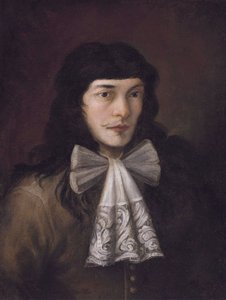
Alessandro Magnasco
1667 - 1749 , Italy
Quick Facts
- Artistic Movement Or Style: Baroque, Genre painting
- Artists Or Movements Influenced By This Artist:
- Marco Ricci
- Giuseppe Bazzani
- Francesco Maffei
- Artists Who Influenced This Artist:
- Sebastiano Ricci
- Domenico Piola
- Gregorio de Ferrari
- Date Of Birth: 1667
- Date Of Death: 1749
- Full Name: Alessandro Magnasco
- Nationality: Italian
- Notable Artworks:
- Three Camaldolese Monks
- Carthusian Monks in a Landscape
- The Raising of Lazarus
- Place Of Birth: Genoa, Italy
Related Articles
Hermitage Masterpieces: 25 Art Treasures to Inspire Your Home Decor
Journey through the Hermitage Museum's 25 greatest artworks! Explore masterpieces by Rembrandt, Leonardo da Vinci & Vermeer. Find museum-quality art reproductions and curated decor ideas to bring timeless beauty home. Discover all masterpieces on OriginalUniqueArt.com.

Baroque Drama: Bringing Opulence & Emotion into Contemporary Interiors
Explore the opulent world of Baroque interior design! Discover key elements, modern applications & how to bring dramatic elegance into your home with OriginalUniqueArt.com's authentic reproductions.

Oil on Canvas: A Historical & Technical Exploration of a Timeless Artistic Medium
Explore the rich history & enduring techniques of oil painting on canvas. Discover the science behind its longevity, conservation practices, and contemporary relevance. Expert insights for art enthusiasts.

The Enduring Power of Painting: A Historical & Contemporary Exploration of Form and Emotion
Explore the rich history & enduring techniques of oil painting with OriginalUniqueArt. Discover masterpieces, learn about art collecting, and find authentic handmade reproductions crafted by skilled artists.

The Dramatic Flourish: Exploring the Baroque Movement's Enduring Legacy in Art History
Explore the dramatic world of Baroque art! Discover iconic artists like Caravaggio & Rubens, defining techniques, and its lasting impact on art history. Expert insights for collectors & enthusiasts at OriginalUniqueArt.