Text size

() ·

A painting made for you, by hand

Interrogations in Jail

Hand Made Oil Reproduction

Hand-painted oil on canvas in your size and frame, made to order by our artists. ( Switch to Print Switch to Digital Image)

Collectible Description

Experience Baroque anxiety with Magnasco's dramatic chiaroscuro in Interrogations in Jail; discover the unsettling power of this 1710 masterpiece.

Artist Biography

Discover Alessandro Magnasco (1667-1749), a Baroque master of haunting landscapes & peculiar figures! Explore his unique vision, eerie scenes & enigmatic artistry.

from ·

Chapter 1

How large should it be?

Slide to change the size; the picture on the left shows the frame at its real width. The proportions of the original are kept.

Standard
custom
CM
INCH

Pick from our preset sizes that match the artwork's original proportions.

width
height

Type the width and the height you need, to fit your frame or your wall. This is hand-painted, so for a size with a different shape the artist can paint a bit more around the picture, or cut a bit — you choose. We send you a digital mockup to approve before the painting starts. The picture shown on this page does not show the real result — only the mockup does.

Chapter 2

How should it arrive?

Choose the edges of the stretched canvas

Choose your frame

Corner sample of the WhiteWrap canvas edge finish, stretched on solid wood bars
White $1
Corner sample of the BlurSideWrap canvas edge finish, stretched on solid wood bars
Blurside $1
Corner sample of the ExtendedWrap canvas edge finish, stretched on solid wood bars
Extended $1
Corner sample of the P118B picture frame: moulded polystyrene, 5 cm wide and 3 cm thick
P118B $10
Corner sample of the P118H picture frame: moulded polystyrene, 5 cm wide and 3 cm thick
P118H $10
Corner sample of the P118W picture frame: moulded polystyrene, 5 cm wide and 3 cm thick
P118W $10
Corner sample of the P438Z picture frame: moulded polystyrene, 5.5 cm wide and 3.5 cm thick
P438Z $10
Corner sample of the P508JH picture frame: moulded polystyrene, 7 cm wide and 3.5 cm thick
P508JH $12
Corner sample of the P508YH picture frame: moulded polystyrene, 7 cm wide and 3.5 cm thick
P508YH $12
Corner sample of the P805H picture frame: moulded polystyrene, 5 cm wide and 3.5 cm thick
P805H $10
Corner sample of the P805Z picture frame: moulded polystyrene, 5 cm wide and 3.5 cm thick
P805Z $10
Corner sample of the P919BZ picture frame: moulded polystyrene, 7 cm wide and 3.5 cm thick
P919BZ $10
Corner sample of the P919G picture frame: moulded polystyrene, 7 cm wide and 3.5 cm thick
P919G $10
Corner sample of the P919XJ picture frame: moulded polystyrene, 7 cm wide and 3.5 cm thick
P919XJ $10
Corner sample of the P959ZH picture frame: moulded polystyrene, 5 cm wide and 3 cm thick
P959ZH $10
Corner sample of the P968JZ picture frame: moulded polystyrene, 6 cm wide and 4 cm thick
P968JZ $12
Corner sample of the W106C picture frame: solid wood, 5 cm wide and 3 cm thick
W106C $8
Corner sample of the W218G picture frame: solid wood, 5 cm wide and 3 cm thick
W218G $10
Corner sample of the W218JH picture frame: solid wood, 5 cm wide and 3 cm thick
W218JH $8
Corner sample of the W218Y picture frame: solid wood, 5 cm wide and 3 cm thick
W218Y $10
Corner sample of the W307PJ picture frame: solid wood, 6 cm wide and 3 cm thick
W307PJ $10
Corner sample of the W316G picture frame: solid wood, 6 cm wide and 3 cm thick
W316G $10
Corner sample of the W316PJ picture frame: solid wood, 6 cm wide and 3 cm thick
W316PJ $8
Corner sample of the W316Y picture frame: solid wood, 6 cm wide and 3 cm thick
W316Y $10
Corner sample of the W398PJ picture frame: solid wood, 5 cm wide and 3 cm thick
W398PJ $8
Corner sample of the W4111J picture frame: solid wood, 6.5 cm wide and 3.5 cm thick
W4111J $10
Corner sample of the W500HY picture frame: solid wood, 7 cm wide and 5 cm thick
W500HY $15
Corner sample of the W500JH picture frame: solid wood, 7 cm wide and 5 cm thick
W500JH $15
Corner sample of the W692G picture frame: solid wood, 8 cm wide and 4 cm thick
W692G $12
Corner sample of the W849H picture frame: solid wood, 5 cm wide and 3 cm thick
W849H $8
Corner sample of the W940BG picture frame: solid wood, 7.5 cm wide and 4.5 cm thick
W940BG $15
Corner sample of the W953PJ picture frame: solid wood, 6 cm wide and 3.5 cm thick
W953PJ $8
Corner sample of the H24-GOLD picture frame: carved wood with gesso, 10 cm wide and 6 cm thick
H24-GOLD $30
Corner sample of the H24-SILVER picture frame: carved wood with gesso, 10 cm wide and 6 cm thick
H24-SILVER $30
Corner sample of the H36-GOLD picture frame: carved wood with gesso, 15 cm wide and 6.5 cm thick
H36-GOLD $45
Corner sample of the H36-SILVER picture frame: carved wood with gesso, 15 cm wide and 6.5 cm thick
H36-SILVER $45
Frame preview
Framed

Moulding: . Overall size with the frame: .

Chapter 3

Who paints it, and should anything change?

Examples of what can be changed: Replace face with customer photo; Add pet (e.g., replace cat with dog); Include hidden message in background; Change background landscape or elements.
After order, OriginalUniqueArt.com team will email client for instructions and provide a mockup preview

Worldwide Delivery () in 3/4 weeks instead of standard 5 weeks. (3 November). No compromise on quality.

Chapter 4

The finishing touches

A nameplate, as in a museum?

Engraved Bronze Plaque Details

This elegant plaque features the artist's name and the title of the artwork, finely engraved for a timeless presentation.

It is made from bronze with a refined, elegant finish. The text is precisely laser-engraved for a sharp and permanent result. Measuring 9x2 cm, the plaque is compact yet easy to read. It's built to be durable and scratch-resistant, offering a professional, museum-quality look. Mounting is simple thanks to the included adhesive backing.

Transparent Acrylic Plaque Details

The plaque includes essential engraved details such as the artist's name, the title of the artwork, the date it was created, the type of media used-like oil on canvas or watercolor-a brief description of the piece, and a QR code that links to the complete artwork information.

It is crafted from clear acrylic, offering a sleek, modern appearance. The text is UV-engraved in black to ensure strong visual contrast. With a size of 10x15 cm, it ensures optimal readability. It comes equipped with two metal hooks for secure wall mounting. The plaque is designed to be weather-resistant, making it suitable for various environments, and it includes interactive features that work seamlessly with smartphone scanning.

Black Acrylic Plaque Details

This elegant plaque includes engraved information such as the artist's name, the title of the artwork, the date it was created, the type of media used (like oil on canvas or watercolor), a short description of the artwork, and a QR code for quick access to more information.

The plaque itself is made from refined black acrylic with a premium finish. The text is laser-engraved in white for high contrast and readability. Its size is 10x15 cm, designed to be easy to read. It comes with two metal hooks for professional mounting. The design is sleek and fits any interior style. It is also weather-resistant and durable, with built-in digital integration for mobile compatibility.

A protective varnish?

When do you need it?

Chapter 5

Your painting, as you ordered it

Interrogations in Jail

Reproduction Medium

Reproduction Size

-

Elite Senior Artist

More detail, finesse, and extra production time

-

Reproduction Frame

-

-

For artworks or reproductions larger than 105 cm (approximately 41 inches) on any side, the frame will be shipped as a kit, disassembled. This method ensures safe delivery and prevents damage during transport.

Professional assembly required - this is not a DIY product.
The kit must be assembled and the canvas stretched by an experienced professional framer, using wood glue (not supplied), a canvas stretching plier and clamps to hold the bars square while the glue dries. Incorrect assembly or uneven canvas tension can permanently damage the artwork and is not covered by our warranty.

  • All solid wood bars are included, precisely cut to size.

  • Assembled with the screws provided, plus wood glue for the corner joints, which is not supplied and must be sourced by your framer.

  • Professional tools are required and not included: a canvas stretching plier (tensioner) and clamps to hold the bars square while the glue dries.

Important:
The corner joints require wood glue, the bars must be held with clamps until the glue is fully dry, and tightening the canvas on the assembled frame requires a canvas stretching plier. None of these are included in the kit. Please arrange an experienced professional framer before ordering this size.

Nameplate

-

-

Protective Varnish

Glossy Varnish (enhances colors, protects against light/moisture)

-

Customize My Artwork

Examples of what can be changed: Replace face with customer photo; Add pet (e.g., replace cat with dog); Include hidden message in background; Change background landscape or elements.

-

Urgent

Worldwide Delivery () in 3/4 weeks instead of standard 5 weeks. (3 November). No compromise on quality.

-

Express Shipping

Worldwide Delivery () in 5 weeks. (10 November).

Included

Total Price

$ 300

Total Price $ 300

Glass option is only available in size under 110 CM

Included with every order

  • Free Worldwide Express Shipping
  • High-Quality Linen Canvas
  • Full Shipping Insurance
  • Customs Tax Refund Guarantee
  • True Color Matching Guarantee
  • 100-Day Return Policy (Defects Only)
  • 100% Money-Back Guarantee
  • Bulk Discount Offer

A Descent Into Baroque Anxiety

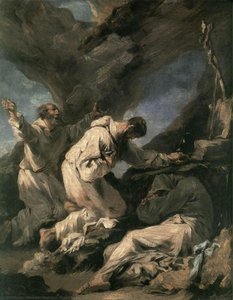
In the shadowy recesses of the Kunsthistorisches Museum in Vienna lies one of Alessandro Magnasco’s most harrowing masterworks, "Interrogations in Jail." Created around 1710, this painting is far more than a mere historical tableau of cruelty; it is a visceral, psychological descent into the heart of Baroque anxiety. The composition centers on a figure suspended by ropes, his body contorted in a state of agonizing vulnerability above a cold table. Surrounding him, a group of grim jailers move through the gloom, their presence marked by the glint of swords and the terrifying silhouette of an iron maiden. Through this scene, Magnasco invites the viewer to witness not just a moment of physical torment, but a profound meditation on the fragility of human existence when confronted by the crushing weight of institutional authority.

The atmosphere of the work is thick with dread, achieved through Magnasco’s signature use of chiaroscuro. The stark, dramatic contrast between deep, impenetrable shadows and sudden, piercing flashes of light creates a sense of instability and movement. This technique does not merely illuminate the scene; it heightens the emotional tension, making the viewer feel as though they are peering into a secret, forbidden corner of history. The artist’s brushwork is remarkably expressive, utilizing rapid, fragmented strokes that mirror the agitation and chaos of the interrogation itself. There is a restless energy in every line, a flickering quality that suggests the very air in the stone cell is heavy with the scent of decay and the echoes of silent screams.

The Language of Shadows and Symbolism

Magnasco’s mastery lies in his ability to weave complex historical anxieties into a singular, haunting image. Painted during an era of intense religious fervor and political upheaval following the Thirty Years’ War, the artwork reflects a broader European preoccupation with justice, persecution, and the abuse of power. Every object within the frame serves as a symbol of this systemic oppression. The iron maiden, a centerpiece of dread, stands as a silent sentinel of mechanical cruelty, while the book resting on the table suggests the cold, bureaucratic recording of confessions—a chilling reminder that even pain is documented by the state. The muted palette of browns, grays, and ochres reinforces this sense of claustrophobia, stripping away any possibility of warmth or escape.

For the discerning collector or interior designer, "Interrogations in Jail" offers a profound opportunity to introduce a piece of immense character and intellectual depth into a space. A high-quality reproduction of this work serves as a powerful focal point, commanding attention through its dramatic narrative and sophisticated tonal range. It is an artwork for those who appreciate the darker, more contemplative side of the Baroque period—a piece that does not merely decorate a wall but provokes thought, invites conversation, and brings a sense of historical gravity to any curated environment. To possess such a work is to hold a fragment of the human struggle, rendered with unparalleled expressive power.

Questions & Answers

Can I see "Interrogations in Jail" by Alessandro Magnasco on my own wall before buying?

The AR Preview page of "Interrogations in Jail" by Alessandro Magnasco uses augmented reality to show the artwork in your own space, on a compatible device.

Is "Interrogations in Jail" held in the country of its creator?

No - the artwork is kept abroad. The birth country of Alessandro Magnasco is Italy, and the museum holding the original of "Interrogations in Jail" is in Austria.

When was "Interrogations in Jail" made?

The creation of "Interrogations in Jail" by Alessandro Magnasco is dated 1710.

More about this painting

Preview AR preview Switch to Print Switch to Digital Image Send
Details Guide Add to favorites Download Similars X-Ray Diaporama Q&A Stats

In numbers

  • 1710the year it was painted
  • 29frames to choose from
  • standard sizes, in its own proportions
  • 5weeks to paint and deliver it
Alessandro Magnasco

Alessandro Magnasco

1667 - 1749, Italy

Quick facts about Alessandro Magnasco

  • Artistic Movement Or Style: Baroque, Genre painting
  • Artists Or Movements Influenced By This Artist:
    • Marco Ricci
    • Giuseppe Bazzani
    • Francesco Maffei
  • Artists Who Influenced This Artist:
    • Sebastiano Ricci
    • Domenico Piola
    • Gregorio de Ferrari
  • Date Of Birth: 1667
  • Date Of Death: 1749
  • Full Name: Alessandro Magnasco
  • Nationality: Italian
  • Notable Artworks:
    • Three Camaldolese Monks
    • Carthusian Monks in a Landscape
    • The Raising of Lazarus
  • Place Of Birth: Genoa, Italy

Artist Biography

A Life Shrouded in Gloom: The Enigmatic World of Alessandro Magnasco

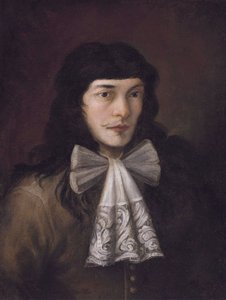
Alessandro Magnasco, a name perhaps less familiar than those of his Baroque contemporaries, nevertheless occupies a unique and compelling position within the history of Italian art. Born in Genoa in 1667, he spent the majority of his working life in Milan, returning to his birthplace only towards the end of his career in 1735. This geographical shift mirrors a subtle but significant evolution in his artistic vision—a journey from collaborative projects and established traditions toward an intensely personal and often unsettling style. Magnasco wasn’t merely painting what he saw; he was translating a particular mood, a sense of melancholy and decay, onto canvas with a boldness that set him apart. A period between 1703 and 1709 found him in Florence, serving the Grand Duke Cosimo III, an experience that undoubtedly broadened his artistic horizons, though its direct impact on his mature style remains open to interpretation. Early in his career, he frequently partnered with other artists, skillfully integrating figures into the landscapes of Giovanni Battista Tavella and utilizing architectural ruins crafted by Clemente Spera—collaborations that honed his technical skills while hinting at a burgeoning independence.

An Unusual Vision: Style and Subject Matter

Magnasco’s artistic signature lies in his distinctive approach to both scale and palette. He favored small-scale canvases, often employing a hypochromatic range of subdued colors—grays, browns, ochres—that contribute to the somber atmosphere pervading his work. These aren't paintings that shout for attention; they whisper secrets from dimly lit corners. His scenes frequently depict crumbling ruins, eerie landscapes shrouded in mist, or crowded interiors populated by elongated figures rendered with nervous, flickering brushstrokes. It is these figures – often ragged beggars, solitary monks, or shadowy groups engaged in mysterious activities – that truly define his oeuvre. Magnasco’s choice of subject matter was remarkably unconventional for his time. He didn't shy away from depicting scenes considered marginal or even taboo: synagogue services, Quaker meetings, gatherings of robbers, interrogations by the Inquisition, and depictions of catastrophes. The artist’s intent remains ambiguous; were these paintings expressions of social commentary, explorations of religious tolerance (or intolerance), or simply exercises in capturing a particular mood? This ambiguity is precisely what makes his work so captivating. Later in his career, after 1710, he became known for gothic churches, solitary hermits and monks, scoundrels assembled in town squares, and soldiers in barracks – scenes that further solidified his reputation as an artist drawn to the fringes of society.

Influences and Artistic Development

Pinpointing the precise influences on Magnasco’s artistic development is a complex undertaking. He clearly absorbed elements from various sources, yet synthesized them into something wholly original. The loose painterly style of his Venetian contemporary, Sebastiano Ricci, undoubtedly played a role, though Ricci's work tended towards grander scales and more overtly mythological themes. Closer to home, the Genoese artists Domenico Piola and Gregorio de Ferrari offered stylistic precedents, but Magnasco’s vision was far darker and more introspective. The emotional intensity of Milanese artist Il Morazzone also resonated with him, particularly in his ability to convey psychological depth through expressive brushwork. His seascapes reveal an affinity for the romantic depictions of stormy seas and brigands favored by Salvatore Rosa, while the diminutive scale of his figures relative to expansive landscapes echoes the airy compositions of Claude Lorraine. Comparisons have also been drawn to Giuseppe Maria Crespi’s genre scenes featuring beggars, though Crespi's figures are generally more substantial and individualized. Some scholars even suggest that Magnasco may have influenced Crespi himself. Furthermore, the artist was likely impacted by late Baroque Italian genre painters, the Roman Bamboccianti, and the detailed engravings of Jacques Callot.

Legacy and Historical Significance

Alessandro Magnasco’s style stood in stark contrast to the prevailing artistic norms of Genoa, which emphasized polished surfaces and harmonious color blending. His bold approach and unique vision were not immediately appreciated in his native city but found favor among collectors and patrons elsewhere, particularly within the aristocratic circles of Milan. Rudolf Wittkower famously described him as a “solitary, tense, strange” artist, detached from the dominant Venetian school. Despite this initial lack of recognition, Magnasco’s work exerted a subtle yet significant influence on subsequent generations of artists, including Marco Ricci, Giuseppe Bazzani, Francesco Maffei, and the famed Venetian painters Gianantonio and Francesco Guardi. While these later Rococo painters adopted his loose brushwork for decorative purposes, Magnasco himself employed it to capture a sense of gloom, reality, and psychological unease. His depictions of torture and other dark aspects of humanity have even been compared to the social commentary found in Francisco Goya’s 19th-century etchings—a testament to the enduring power and relevance of his unsettling vision. Magnasco remains an enigmatic figure, a master of mood and atmosphere whose paintings continue to captivate and provoke contemplation centuries after their creation. His art is a reminder that beauty can be found even in the shadows, and that true artistic expression often lies beyond the boundaries of convention.

Quick Facts

  • Movement: Baroque
  • Influences: Callot's etchings
  • Subject or theme: Torture; Inquisition; Psychological tension
  • Notable elements or techniques: Detailed rendering; Dramatic lighting; Use of iron maiden
  • Artistic style: Stylized; Fantasmagoric; Hypochromatic

Art Quiz

There is only one correct answer for each question.

Question 1:
What artistic period is Alessandro Magnasco's 'Interrogations in Jail' primarily associated with?
Question 2:
What is the central, dramatic action depicted in the painting?
Question 3:
Which artistic technique is most evident in the painting, contributing to its intense emotional impact?
Question 4:
The color palette of the painting is generally dominated by which tones, reinforcing the mood?
Question 5:
What broader theme does Magnasco's preoccupation with torture in this work reflect?