Menu
FREE ART CONSULTATION
Switch to Print Switch to PrintSwitch to Image Switch to Image SendSend
DetailsDetails Add to favorites Add to favorites DownloadDownload SimilarsSimilars DiaporamaDiaporama

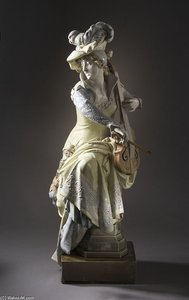
Torchère

Discover "Torchère" by Albert-Ernest Carrier Belleuse – a dramatic sculpture of intertwined figures embodying passion and strength, showcasing neoclassical elegance.

Albert-Ernest Carrier-Belleuse (1824-1887) was a prolific French sculptor known for Neoclassical & Realist works, including terra cotta masterpieces and architectural sculpture. Mentor to Rodin, he bridged styles from Rococo elegance to naturalism.

Hand Made Oil Reproduction

Hand-painted oil on canvas in your size and frame, made to order by our artists. (Switch to Print Switch to PrintSwitch to Image Switch to Image)

Standard
custom
CM
INCH

Pick from our preset sizes that match the artwork's original proportions.

width
height

You may enter your own dimensions to fit a specific frame or space. If your selected size does not match the original image's proportions, we will either crop the artwork or extend the painting with additional hand-painted elements. A digital mockup will be sent for your approval before production begins.

Please note that the on-screen preview does not reflect the actual cropping or extension. Only the mockup will accurately show the final composition.
While custom sizes are available, we recommend selecting a dimension from the predefined list to preserve the original proportions.

Examples of what can be changed: Replace face with customer photo; Add pet (e.g., replace cat with dog); Include hidden message in background; Change background landscape or elements.
After order, OriginalUniqueArt.com team will email client for instructions and provide a mockup preview

Worldwide Delivery () in 3/4 weeks instead of standard 5 weeks. (5 August). No compromise on quality.

why_choose_icon
Free Worldwide Express Shipping
why_choose_icon
High-Quality Linen Canvas
why_choose_icon
Full Shipping Insurance
why_choose_icon
Customs Tax Refund Guarantee
why_choose_icon
True Color Matching Guarantee
why_choose_icon
60-Day Return Policy (Defects Only)
why_choose_icon
100% Money-Back Guarantee
why_choose_icon
Bulk Discount Offer

Total Price

$ 325

reproduction

Torchère

Reproduction Medium

Reproduction Size

-

Total Price

$ 325

Quick Facts

  • Year: 1873
  • Movement: Neoclassical/Academic
  • Location: Musée d'Orsay, Paris
  • Artist: Albert-Ernest Carrier Belleuse
  • Notable elements: Dynamic pose, drapery
  • Subject or theme: Mythological scene
  • Influences:
    • Rococo
    • Romanticism

Art Quiz

There is only one correct answer for each question.

Question 1:
What is the primary subject depicted in Albert Ernest Carrier Belleuse’s ‘Torchère’?
Question 2:
The ‘Torchère’ sculpture is primarily associated with which artistic movement?
Question 3:
What material was used to create the base for the ‘Torchère’ sculpture?
Question 4:
According to the image description, what is a key characteristic of the photograph's lighting?
Question 5:
Albert Ernest Carrier Belleuse is known for his work with which of the following?

Artwork Description

The Dramatic Dance of Light and Shadow: Exploring Albert-Ernest Carrier Belleuse’s “Torchère”

Albert-Ernest Carrier Belleuse's "Torchère," a captivating black and white photograph capturing the original marble sculpture, is more than just a depiction of figures; it’s a study in dynamic tension, theatrical drama, and the masterful manipulation of light and shadow. Created in 1873, this work embodies the spirit of Academic Neoclassicism while subtly hinting at the burgeoning Romanticism that would soon dominate the artistic landscape. The sculpture itself, housed within the Palais Garnier opera house in Paris, immediately commands attention with its arresting composition – a powerful male figure supporting a graceful female form, bathed in an ethereal glow.

At first glance, the scene appears to be one of quiet contemplation. The woman, poised and elegant, holds aloft what could be interpreted as a torch, though its precise form is obscured by drapery. Her posture suggests both strength and vulnerability, while her downward gaze hints at an offering or perhaps even a plea for assistance. Beneath her, the male figure is rendered with a striking physicality – his body contorted in a dramatic pose that speaks to struggle and support. This interplay of opposing forces—grace versus power, supplication versus strength—creates a compelling narrative tension that anchors the entire composition.

A Masterclass in Sculptural Technique

Carrier Belleuse was renowned for his technical prowess, particularly his ability to evoke movement and emotion through meticulously crafted marble. “Torchère” exemplifies this skill perfectly. The artist’s attention to anatomical detail is evident in the musculature of the male figure, while the flowing drapery of the woman’s gown demonstrates a deep understanding of fabric texture and form. The use of light and shadow is particularly noteworthy; it's not merely decorative but integral to conveying the sculpture’s narrative. Deep shadows accentuate the contours of the figures, emphasizing their weight and solidity, while strategically placed highlights draw attention to key details – the curve of her hand, the tension in her muscles, the subtle shift in her gaze.

Interestingly, Carrier Belleuse's approach was influenced by his time working with industrial processes. He experimented with electro-chemical techniques, such as galvanoplasty, to create intricate surface finishes and textures. This innovative spirit is reflected in the polished sheen of the marble, which catches and reflects light in a way that enhances the sculpture’s overall impact. The photograph itself captures this brilliance, showcasing the remarkable quality of the original work.

Historical Context and Artistic Influences

“Torchère” was created during a period of significant artistic transition. Following the Romantic era's emphasis on emotion and individualism, artists were increasingly drawn to the principles of Neoclassicism – a return to classical ideals of order, balance, and harmony. Carrier Belleuse skillfully blended these influences, creating a work that is both formally sophisticated and emotionally resonant. The sculpture’s narrative echoes themes found in classical mythology, particularly those involving heroic figures and divine assistance.

Furthermore, the commission for “Torchère” was part of a larger project to decorate the opulent Palais Garnier opera house. Carrier Belleuse collaborated with other prominent artists, including Auguste Rodin, creating a cohesive ensemble of sculptures and architectural elements that transformed the building into a masterpiece of artistic expression. The photograph provides a valuable glimpse into this collaborative environment, revealing the interplay of styles and techniques employed by these diverse talents.

Symbolism and Emotional Resonance

Beyond its technical brilliance, “Torchère” is rich in symbolic meaning. The sculpture can be interpreted as an allegory for human relationships – the dynamic between strength and vulnerability, support and dependence. The woman’s outstretched arm suggests a willingness to offer assistance, while the man's contorted pose hints at the challenges of navigating life’s complexities. The torch itself may represent enlightenment, guidance, or even hope in the face of adversity.

Ultimately, “Torchère” is a powerfully evocative work that transcends its literal subject matter. It invites viewers to contemplate themes of human connection, struggle, and resilience. The photograph serves as a testament to Carrier Belleuse’s artistic vision and his ability to capture the essence of sculpture in a single, unforgettable image. Reproductions of this iconic piece offer a chance to bring this dramatic narrative into any space, adding a touch of timeless elegance and intellectual depth.


Artist Biography

The Sculptural Legacy of Albert Ernest Carrier Belleuse

In the vibrant, shifting landscape of nineteenth-century French art, few figures possessed the versatility and technical mastery of Albert Ernest Carrier Belleuse. Born in 1824 in Anizy-le-Château, his journey into the world of fine art began not with the grand marble of academies, but with the delicate, precise hands of a goldsmith’s apprentice. This early immersion in the intricate details of precious metals instilled in him a lifelong reverence for texture and form, a foundation that would later allow him to navigate the complex transition from Neoclassical rigidity to the fluid grace of the burgeoning Art Nouveau movement.

His formal education at the École des Beaux-Arts under the tutelage of David D'Angers provided the structural discipline necessary for his ascent. Under D'Angers, Carrier Belleuse mastered the anatomical precision and classical ideals that would define much of his early repertoire. Yet, he was never a mere imitator of the past. As his career progressed, he began to infuse his works with a Romantic fervor, moving away from static perfection toward a more expressive, emotive realism. This evolution is perhaps most evident in his ability to capture movement and vitality, whether through the delicate porcelain collaborations during his time in England or his monumental bronze achievements in Paris.

A Master of Form and Fluidity

The brilliance of Carrier Belleuse lay in his remarkable ability to synthesize disparate artistic movements into a singular, cohesive aesthetic. He possessed a unique talent for bridging the gap between the ornate elegance of the Rococo era and the raw, naturalistic energy of Realism. His works often feature a captivating interplay of light and shadow, particularly when working in bronze or terra cotta, where he could manipulate surfaces to suggest the softness of skin or the heavy drape of fabric.

His sculptural repertoire was as diverse as his influences:

  • The Portraiture of Greatness: In works such as his silvered bronze bust of Miguel Ángel, he demonstrated an unparalleled ability to blend classical reverence with a psychological depth that honors the subject's legendary spirit.
  • Allegorical Elegance: Pieces like his Torchère showcase his mastery of the allegorical form, using intertwined figures to embody complex human emotions such as passion and strength through neoclassical grace.
  • The Capture of Motion: His ability to translate the ephemeral nature of life into permanent medium is seen in his more impressionistic explorations, where the boundaries between figure and atmosphere begin to blur.

Mentorship and Historical Significance

Beyond his individual achievements, Carrier Belleuse holds a profound place in art history due to his role as a bridge between generations. Most notably, he served as a mentor to Auguste Rodin. While Rodin would eventually shatter the conventions of sculpture to create a new language of modernism, it was the foundational training and stylistic breadth provided by Carrier Belleuse that helped shape the early trajectory of the master of movement. Their collaborative efforts, such as those seen in the Brussels Stock Exchange, represent a fascinating intersection of established tradition and emerging innovation.

Decorated with the Légion d'honneur and a member of the Société Nationale des Beaux-Arts, his recognition was a testament to his immense contribution to French culture. As he transitioned from the delicate "carrier" signature to the more established "carrier-belleuse," his work became synonymous with the sophisticated aesthetic of the late nineteenth century. Today, his legacy endures not just in museums, but in the very DNA of modern sculpture, reminding us of a time when art could be simultaneously grand, decorative, and deeply human.

albert ernest carrier belleuse

albert ernest carrier belleuse

1824 - 1887 , France

Quick Facts

  • Artistic Movement Or Style: Neoclassical & Realist
  • Artists Or Movements Influenced By This Artist: Auguste Rodin
  • Artists Who Influenced This Artist: David D'angers
  • Date Of Birth: June 12, 1824
  • Date Of Death: June 4, 1887
  • Full Name: Albert Ernest Carrier-Belleuse
  • Nationality: French
  • Notable Artworks:
    • The Rape of Hippodamia
    • At The Couturier
  • Place Of Birth: Anizy-le-Château, France
Explore artworks organized by themes, styles, and characteristics.