



A History Forged in Metal: The Evolution of Bronze Sculpture
From the dawn of civilization, humanity has sought to immortalize its beliefs, heroes, and ideals through art. Among the myriad materials employed, bronze stands apart – a testament to ingenuity, artistry, and enduring power. Its story is interwoven with the very fabric of human history, beginning in the ancient Near East around 3500 BC with early examples utilizing arsenic bronze before transitioning to the more refined copper-tin alloy we recognize today. This wasn’t merely a technological advancement; it was a cultural shift. Bronze offered a strength and malleability previously unattainable, allowing for increasingly complex and lifelike representations. The ancient Greeks elevated bronze sculpture to its zenith, mastering techniques like lost-wax casting – cire perdue as the French call it – to create works of breathtaking realism and emotional depth. Think of the iconic Riace bronzes, recovered from the sea, their muscular forms radiating a sense of heroic vitality that continues to captivate viewers millennia later.
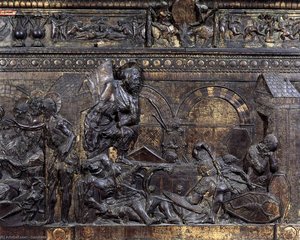
The Romans, inheriting Greek artistic traditions, further expanded bronze’s application in portraiture and monumental sculpture, often celebrating emperors and military victories. However, with the fall of the Roman Empire, knowledge of sophisticated bronze casting techniques diminished in Europe for centuries. It wasn't until the Renaissance that this art form experienced a dramatic revival. Artists like Donatello, whose *David* embodies the humanist ideals of the era – youthful triumph over adversity and divine favor – rediscovered and refined lost-wax casting, ushering in a new golden age of bronze sculpture. The Renaissance masters weren’t simply replicating ancient forms; they were imbuing them with renewed emotional intensity and artistic innovation.
The Art & Science of Bronze Casting: From Lost-Wax to Modern Techniques
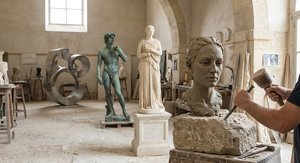
The creation of a bronze sculpture is a fascinating interplay between artistry and technical precision. The lost-wax method, still widely practiced today, remains remarkably consistent with its ancient origins. It begins with an original sculpture – often in clay or wax – from which a mold is created. This mold is then used to produce a wax positive, meticulously refined to capture every detail of the artist’s vision. Multiple layers of ceramic shell are applied over the wax model, creating a robust outer casing. The wax is then melted out (hence “lost-wax”), leaving a hollow cavity into which molten bronze – typically an alloy of 88% copper and 12% tin – is poured.
The process doesn’t end there. Once cooled, the ceramic shell is carefully removed, revealing the rough bronze casting. This undergoes extensive chasing and welding to correct imperfections and assemble multiple sections. The surface is then meticulously polished and patinated – a crucial step that imparts color, texture, and protective qualities. Patination isn't merely cosmetic; it’s an art form in itself, allowing sculptors to manipulate chemical reactions to achieve a wide range of hues, from rich browns and greens to subtle blues and golds. Modern techniques have introduced variations like sand casting for larger-scale works and direct wax modeling, but the fundamental principles remain rooted in centuries of tradition.
Iconic Works & Master Sculptors: Exploring the Canon of Bronze Art
Throughout history, certain sculptors have left an indelible mark on the world of bronze. Beyond Donatello, Auguste Rodin stands as a towering figure, his emotionally charged works like *The Thinker* and *The Kiss* pushing the boundaries of realism and psychological depth. His ability to convey complex emotions through the human form remains unparalleled. In the 20th century, Henry Moore revolutionized sculpture with his abstract forms, often inspired by the human body and natural landscapes. Works like *Pointed Torso*, with its smooth lines and elegant curves, exemplify his exploration of volume, space, and the interplay between interior and exterior forms.
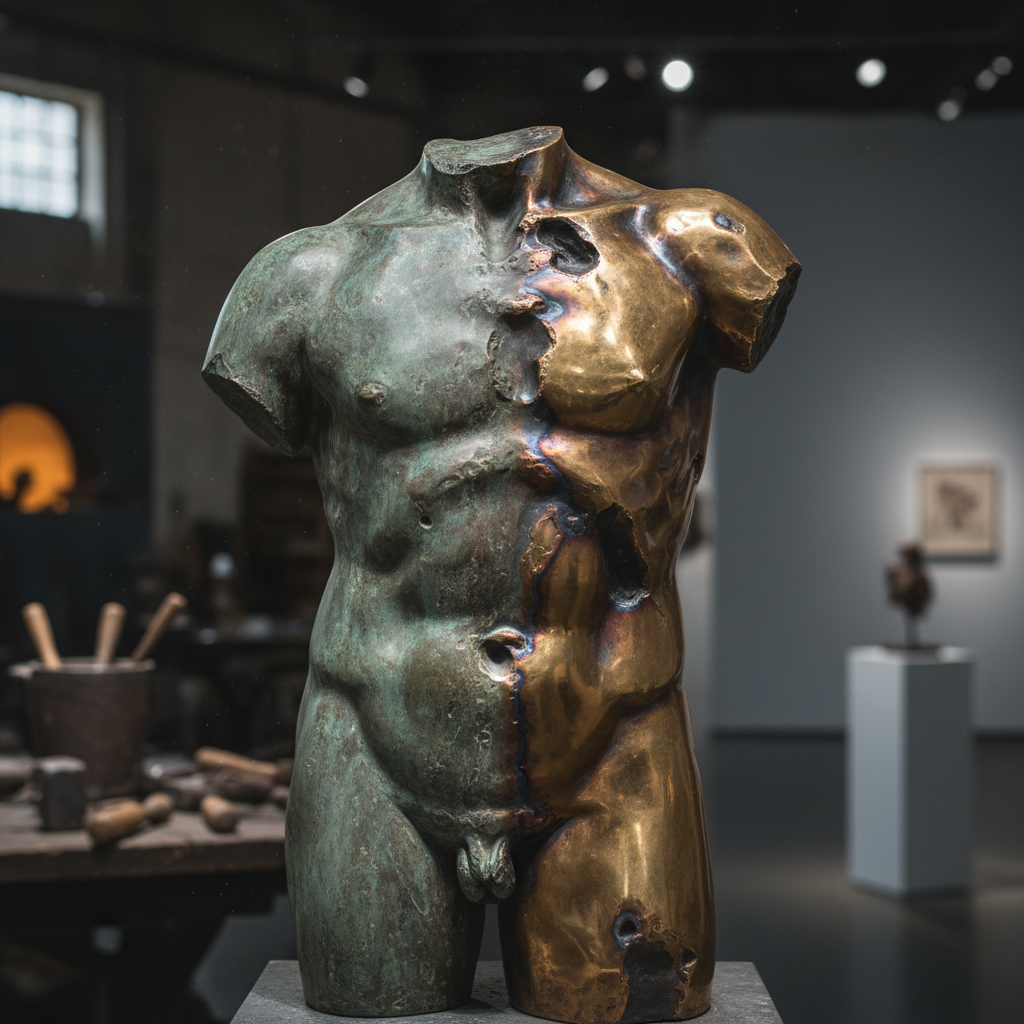
The power of bronze lies in its ability to convey both permanence and vulnerability. Consider Ayad Hamad’s “Smashing Defeat,” a powerful sculpture exploring themes of conflict and resilience. The fractured form speaks volumes about the human cost of war, while the enduring material symbolizes hope and perseverance. These artists demonstrate that bronze is not merely a medium but a vehicle for profound artistic expression, capable of capturing the full spectrum of human experience.
Bronze in Contemporary Art: Innovation and Enduring Appeal
Today, bronze continues to thrive as a favored medium among contemporary sculptors. Artists are pushing the boundaries of traditional techniques, experimenting with new patination methods, incorporating mixed media, and exploring abstract forms that challenge conventional notions of representation. The inherent qualities of bronze – its strength, durability, and ability to capture intricate detail – make it ideally suited for large-scale public art installations, adding a sense of permanence and gravitas to urban landscapes.
The appeal of bronze extends beyond its aesthetic qualities. It possesses a tactile quality that invites interaction, a warmth and richness that digital media simply cannot replicate. In an increasingly ephemeral world, the enduring nature of bronze offers a reassuring sense of stability and connection to the past. Contemporary artists are also drawn to its environmental sustainability – bronze is recyclable, making it a responsible choice for environmentally conscious creators.
Collecting Bronze Sculpture: A Guide for Discerning Investors
For those considering adding bronze sculpture to their collection, careful consideration is paramount. Authenticity is key; provenance research and expert appraisal are essential steps in verifying the artwork’s history and value. Condition also plays a crucial role – look for signs of damage or restoration, and assess the quality of the patination. Consider the artist's reputation, the sculpture’s historical significance, and its aesthetic appeal.
- Provenance: Trace the artwork’s ownership history to establish authenticity.
- Condition Report: Obtain a professional assessment of the sculpture's condition.
- Artist Research: Understand the artist’s background, style, and market value.
- Investment Potential: Consider long-term appreciation potential based on market trends.
Investing in bronze sculpture is not merely acquiring an object of beauty; it's investing in a legacy. These works represent centuries of artistic innovation, technical mastery, and cultural significance – a tangible connection to the past that will continue to inspire and enrich generations to come. As with any art investment, due diligence and expert guidance are essential, but the rewards—both aesthetic and financial—can be substantial.