Preview
 Send
Send Share
Share
 Details

 Download
 Similars
 X-Ray
X-Ray Diaporama
 Stats
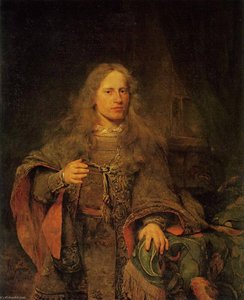
StatsSelf-Portrait
 Oil On Canvas
- WallArt
- Baroque
 Early Modern
 79.0 x 64.0 cm
 Hermitage Museum
 Read More
Hand Made Oil Reproduction
Hand-painted oil on canvas in your size and frame, made to order by our artists. ( Switch to Print Switch to Digital Image)




P118B $10

P118H $10

P118W $10

P438Z $10

P508JH $12

P508YH $12

P805H $10

P805Z $10

P919BZ $10

P919G $10

P919XJ $10

P959ZH $10

P968JZ $12

W106C $8

W218G $10

W218JH $8

W218Y $10

W307PJ $10

W316G $10

W316PJ $8

W316Y $10

W398PJ $8

W4111J $10

W500HY $15

W500JH $15

W692G $12

W849H $8

W940BG $15

W953PJ $8




Pick from our preset sizes that match the artwork's original proportions.

You may enter your own dimensions to fit a specific frame or space. If your selected size does not match the original image's proportions, we will either crop the artwork or extend the painting with additional hand-painted elements. A digital mockup will be sent for your approval before production begins.
Please note that the on-screen preview does not reflect the actual cropping or extension. Only the mockup will accurately show the final composition.
While custom sizes are available, we recommend selecting a dimension from the predefined list to preserve the original proportions.
After order, OriginalUniqueArt.com team will email client for instructions and provide a mockup preview
Worldwide Delivery () in 3/4 weeks instead of standard 5 weeks. (19 September). No compromise on quality.

Free Worldwide Express Shipping

High-Quality Linen Canvas

Full Shipping Insurance

Customs Tax Refund Guarantee

True Color Matching Guarantee

100-Day Return Policy (Defects Only)

100% Money-Back Guarantee

Bulk Discount Offer
 Glass option is only available in size under 110 CM

Self-Portrait
Reproduction Medium
Reproduction Size
-


Total Price
$ 300
A Legacy in Shadow: The Soul of Aert de Gelder
To encounter Aert de Gelder’s Self-Portrait is to step into a profound dialogue between a student and his master. Painted during the twilight of the Dutch Golden Age, this work serves as much more than a mere reflection of the artist's own visage; it is a deeply personal homage to Rembrandt van Rijn. In this dimly lit interior, De Gelder presents himself not just as a painter, but as a custodian of a specific, emotive tradition. The atmosphere is thick with chiaroscuro, where the dramatic interplay of light and shadow does more than define form—it sculpts the very essence of human introspection. As the viewer's eye wanders through the murky depths of the composition, they are met with a sense of quiet reverence, as if witnessing a private moment of artistic communion.
The subject matter is anchored by a powerful symbolic gesture: De Gelder holds Rembrandt’s famous etching, “The Hundred Guilder Print,” close to his person. This inclusion is a masterstroke of narrative depth, signaling his intellectual and spiritual connection to the Rembrandt lineage. Through this single object, the painting explores themes of knowledge, legacy, and the weight of artistic heritage. The way the light catches the edges of the etching and the textures of De Gelver's weathered features suggests a life spent in contemplation of greatness, making the piece an essential study for anyone captivated by the psychological complexities of the Baroque era.
Mastery of Texture and Light
Technically, the painting is a triumph of the late Rembrandt style, characterized by a rich, tactile quality that invites the touch. De Gelder employs a meticulous technique of layering thin glazes of oil paint, a method that allows light to penetrate the surface and reflect back, creating a luminous, inner glow that seems to emanate from within the canvas itself. There is a deliberate emphasis on texture; the heavy, organic folds of his drapery and the rugged contours of his face are rendered with a brushwork that prioritizes emotional truth over clinical precision. This approach creates a sense of palpable realism, where the weight of the fabric and the warmth of the skin feel strikingly present.
For the discerning collector or interior designer, this artwork offers an unparalleled sense of drama and sophistication. The composition, though primarily vertical and focused on the figure, utilizes a flattened perspective that directs all attention toward the subject's expressive face and the symbolic book. This focus creates a powerful focal point that can anchor a room, providing a sense of historical gravity and intellectual depth. Whether placed in a curated gallery setting or as a centerpiece in a classically styled study, this reproduction brings with it the somber beauty and timeless wisdom of the Dutch masters, making it an evocative choice for those looking to infuse their space with a narrative of enduring artistic integrity.
Artist Biography
The Echo of a Master: Aert de Gelder's Devotion to the Rembrandt Spirit
To stand before the works of Aert de Gelder is to encounter an echo—a vibrant, passionate resonance of one of history’s greatest masters. Though his earthly journey was tragically brief, De Gelder carved out a significant niche in the annals of Dutch art, forever linked by devotion to the profound chiaroscuro and emotional depth of Rembrandt van Rijn. Born in Dordrecht around 1645, his life seems almost too short to encompass such an intense artistic output. Yet, within those fleeting years, he absorbed the very essence of a master’s technique, channeling it into a body of work that speaks volumes about human drama and spiritual fervor.
His training was not merely academic; it was an immersion. Studying in Rembrandt's own studio between 1661 and 1663 placed him at the epicenter of artistic innovation. This apprenticeship proved formative, allowing him to absorb not just brushstrokes, but a philosophy—a way of seeing the inherent drama in everyday moments and sacred narratives alike.
Mastering the Late Rembrandt Style
De Gelder’s signature style is inseparable from the late period brilliance of his mentor. It is a style characterized by an almost palpable emotional charge. His canvases do not simply depict scenes; they breathe them into existence, drawing the viewer into moments of profound contemplation or intense action. Whether tackling grand biblical narratives or intimate character studies, the human element remains paramount.
Consider the dramatic sweep of pieces like "The Baptism of Christ" or the charged tension captured in "Ahimelech Giving the Sword of Goliath to David." These works are not merely illustrations; they are meditations on faith and conflict. De Gelder possessed a remarkable gift for narrative storytelling, using light and shadow—that signature Rembrandtian technique—to guide the eye and deepen the emotional resonance of every figure.
His portraiture further attests to this mastery. In works such as "Esther and Mordecai" or his depiction of "King David," one senses not just likeness, but soul. He had an uncanny ability to convey the inner turmoil, quiet dignity, or triumphant spirit residing within his sitters.
Historical Significance and Legacy
Aert de Gelder’s career serves as a fascinating bridge in art history. His adherence to the emotionalism and narrative weight of the Dutch Golden Age masters allowed him to maintain a powerful connection to that era's zenith, even as artistic tastes began to shift toward the 18th century. He acted as a custodian of Rembrandt’s legacy, ensuring that his dramatic vocabulary remained vibrant.
His enduring significance lies in this continuation. He proved that one could build upon the monumental achievements of a master without simply mimicking them; rather, he internalized the spirit and adapted it. The fact that institutions like the Rijksmuseum house his pieces underscores his place within the canon of Dutch genius, solidifying his reputation alongside giants like Jan Lievens.
To view De Gelder’s art is to witness devotion made visible—a commitment to capturing the sublime drama inherent in the human condition, all filtered through the unforgettable lens of Rembrandt's unparalleled vision.

aert de gelder
1645 - 1645 , Netherlands
Quick Facts
- Artistic Movement Or Style: Rembrandt's late style
- Artists Who Influenced This Artist: ['rembrandt van rijn']
- Date Of Birth: 1645
- Date Of Death: 1645
- Full Name: aert de gelder
- Nationality: Dutch
- Notable Artworks:
- The baptism of christ
- King David
- Place Of Birth: Dordrecht, Netherlands
Related Articles

Willem van de Velde the Elder: Master of Maritime Painting & Chronicler of the Dutch Golden Age
Discover the captivating maritime paintings of Willem van de Velde the Elder, a master chronicler of the Dutch Golden Age. Explore his unparalleled realism and lasting influence on naval art history.

Mastering Light & Shadow: A Journey Through the Dutch Golden Age's Luminous Legacy
Embark on a cultural journey through the Dutch Golden Age. Explore the masterful interplay of light and shadow in 17th-century masterpieces, from Rembrandt to Vermeer, and discover how this era of profound realism continues to inspire fine art collectors today.

Golden Light & Dutch Skies: The Timeless Magic of Dutch Golden Age Landscapes
Discover the breathtaking beauty of Dutch Golden Age landscapes. Explore the mastery of light, chiaroscuro, and 17th-century realism through an expert art history lens, celebrating the enduring legacy of the Dutch Masters for discerning collectors and art lovers.

Dutch Masters: 10 Golden Age Paintings That Still Inspire |
Journey into the Dutch Golden Age! Explore 10 iconic paintings by Rembrandt, Vermeer & Hals. Discover the stories behind these Baroque masterpieces and find museum-quality art reproductions to elevate your home decor on .
Pieter de Hooch: Illuminating Dutch Domestic Life & Golden Age Charm
Explore the captivating world of Pieter de Hooch, a master of Dutch Golden Age painting. Discover his innovative use of light, intimate domestic scenes, and lasting influence on art history. Learn more at OriginalUniqueArt.