

1


Updated November 2026 · ranked by our popularity score (searches, visits and orders for each work) · 115 works by Paul Jenkins in our catalogue
In short
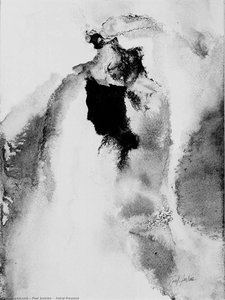
Of all the originals Paul Jenkins left, the most famous is Astral Presence (1958). Close behind it come Agate Profile (1958) and Maltese Hunter (1958). Our catalog holds 115 works by Paul Jenkins; the gallery has kept the 100 the world admires most, each shown with its date, its museum and its story.


 Untitled (678)
12
 Willow Run1957
13
 Phenomena Wing Span1961
14
 Phenomena Yellow Low1961
15
 Phenomena Lunar Height1961
16
 Two Angels1958
17
 Mather, Cotton1958
18
 Phenomena over Sound1961
19
 Phenomena Cloven Image1961
20
 Phenomena Ring Rang Rung1961
21
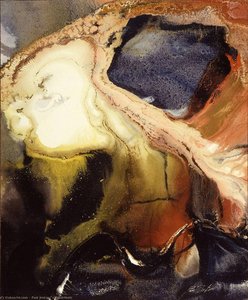 Toadstools1958
22
 Dakota Ridge1958
23
 Phenomena Mistral Nordique1966 · John and Mable Ringling Museum of Art
24
 Phenomena Off from Shore1965
25
 Phenomena Reverse Spell1963
26
 Phenomena Sun over the Hour Glass1966
27
 Phenomena Sun over the Hour Glass1966
28
 Phenomena Kwan Yin1969 · Whitney Museum of American Art
29
 Phenomena Sound of Sundials1971
30
 Phenomena Tibetan Flange1973
31
 Phenomena Tibetan Banner1973
32
 Phenomena Field Of Color1973
33
 Phenomena Tibetan Flange1973
34
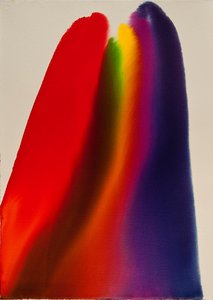 Phenomena Voyager1972
35
 Phenomena Lands End1974 · Smithsonian American Art Museum
36
 Phenomena Franklin's Kite1974
37
 Phenomena Lands End1974
38
 Continental Divide1981 · National Gallery of Australia
39
 Phenomena Prism Yield1986
40
 Phenomena Tibetan Clay Offering1990
41
 Phenomena Solstice Encounter2003
42
 Phenomena Phoenix Equinox2006
43
 Phenomenon, vanishing by greenNational Gallery of Victoria
44
 Untitled (533)
45
 Untitled (931)
46
 Untitled (123)
47
 Untitled (2)
48
 Untitled (389)
49
 Untitled (549)
50
 Untitled (664)
51
 Untitled (185)
52
 Untitled (246)
53
 Untitled (116)
54
 Untitled (409)
55
 Untitled (111)
56
 Untitled (438)
57
 Untitled (325)
58
 Untitled (947)
59
 Phenomena merlins mantle
60
 Untitled (176)
61
 Untitled
62
 Phenomena tarot over
63
 Phenomena compass bearing
64
 Abstract composition
65
 Phenomenon prism yield
66
 Side of St. George
67
 Phenomena sung mantle
68
 Untitled (653)
69
 Phenomena calling
70
 Untitled (878)
71
 Untitled (330)
72
 Untitled (816)
73
 Untitled (158)
74
 Untitled (534)
75
 Untitled (180)
76
 Untitled (306)
77
 Untitled (693)
78
 Untitled (500)
79
 Phenomena Cave of the Prism Winds Year
80
 Phenomena pointed eas
81
 Untitled (681)
82
 Wanderland express
83
 Untitled (385)
84
 Pompey-s head
85
 Phenomena wind arch
86
 Untitled (836)
87
 Untitled (872)
88
 Untitled (136)
89
 Untitled (693)
90
 Redfern composition
91
 Untitled (916)
92
 Phenomena sherman vortex
93
 Untitled (861)
94
 Phenomena lands end
95
 Untitled (940)
96
 Untitled (147)
97
 Untitled (764)
98
 Distance finding mozart
99
 Rainbow bleed
100
 Phenomena waiting gables
The four subjects that come back most often in these originals, each with its finest example.
The 6 museums that hold the most of the paintings on this page.
| Museum | City | Works by Paul Jenkins | Paintings from this list |
|---|---|---|---|
 Bavarian State Painting Collections |
Munich | 1 | Phenomena Chinese Light Wall |
 John and Mable Ringling Museum of Art |
Sarasota | 1 | Phenomena Mistral Nordique |
 Whitney Museum of American Art |
New York | 1 | Phenomena Kwan Yin |
 Smithsonian American Art Museum |
Washington, D.C. | 1 | Phenomena Lands End |
 National Gallery of Australia |
Canberra | 1 | Continental Divide |
 National Gallery of Victoria |
Melbourne | 1 | Phenomenon, vanishing by green |
Pick a decade to see the original that defines it.


Astral Presence (1958). Agate Profile (1958) and Maltese Hunter (1958) come next.
35 years old: Astral Presence dates from 1958, and Paul Jenkins was born in 1923.
Astral Presence, Agate Profile, Maltese Hunter, Blue Coat Chief, Phenomena Chinese Light Wall, Untitled (683), Untitled (553), Untitled (523), Untitled (216) and Untitled (3). The ranking above gives each one's year and museum.
Our catalog holds 115 works by Paul Jenkins, dated from 1957 to 2006.
Mostly in Bavarian State Painting Collections (Munich), John and Mable Ringling Museum of Art (Sarasota) and Whitney Museum of American Art (New York). The museum table above lists them all.
In 1960s: 12 of the 100 works on this page were made then, Phenomena Wing Span among them.
On this page, the earliest is Willow Run (1957) and the latest Phenomena Phoenix Equinox (2006).
Color field painting (5), Layered texture (5) and Organic forms (4), across the 100 works on this page.
Abstract expressionism, judging by the originals on this page.
Paul Jenkins stands as a singular figure in the landscape of American abstract expressionism, a master who transformed the canvas into a stage for fluid motion and luminous discovery. Born in Kansas City, Missouri, in 1923, his artistic journey began with formal training at the Art Students League of New York under the guidance of Yasuo Kuniyoshi. This early mentorship was profound, fostering an appreciation for Japanese aesthetics that would later infuse his work with a sense of delicate balance and organic grace. Jenkins did not merely paint; he orchestrated a dance between pigment and gravity, creating a visual language that moved away from representational imagery toward a deeply emotive, lyrical abstraction.
The trajectory of his career was irrevocably altered in 1953 during a transformative journey through Europe. His time in Sicily, particularly within the vibrant atmosphere of Taormina, acted as a catalyst for a new way of seeing. This Mediterranean immersion broadened his horizons and solidified his commitment to experimentation, eventually propelling him toward Paris. In the intellectual and creative crucible of both New York and Paris, Jenkins navigated the dynamic currents of mid-century modernism, establishing a studio practice that would redefine the boundaries of the medium through his revolutionary "phenomena" technique.
At the heart of Jenkins’ contribution to art history lies his signature method, a process that bridged the gap between meticulous intention and the beautiful unpredictability of nature. By incorporating Goethe’s color theories into his practice, he began layering pigments in streams of varying thicknesses across the canvas. These were not mere random gestures; they were carefully considered pours designed to generate mesmerizing patterns and textures. This approach allowed him to capture a sense of "phenomena"—a term that served as both a conceptual anchor and a way to explore the very essence of observation.
In his works, such as the evocative Untitled (664) or the energetic Phenomena compass bearing, one can witness the breathtaking interplay of light and liquid. His technique involved:
The historical significance of Paul Jenkins lies in his ability to evolve the much-discussed drip techniques of his contemporaries into something more ethereal and atmospheric. While often compared to the raw energy of Jackson Pollock, Jenkins’ work possesses a unique, translucent quality that feels more like a celestial event than a physical struggle. His ability to capture dynamic energy through watercolor and oil alike—as seen in the vibrant Untitled (872)—ensured his place as a pioneer of lyrical abstraction.
Throughout his long and prolific career, which spanned from his early training in New York to his final years in 2012, Jenkins remained dedicated to the idea that art is an act of discovery. His legacy is found in every flowing line and every bleeding hue that invites the viewer to lose themselves in a world of pure color. He remains a vital figure for anyone seeking to understand the intersection of scientific theory, spontaneous movement, and the profound emotional power of the abstract form.
