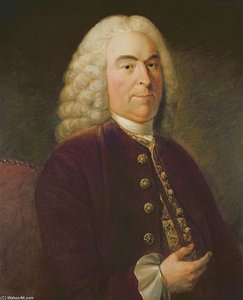
Portrait of John Peter Russell

The 89 Most Famous John Peter Russell Paintings, Each One of a Kind

Updated November 2026 · ranked by our popularity score (searches, visits and orders for each work) · 94 works by John Peter Russell in our catalogue

In short

Portrait of a Lady (1768) is the John Peter Russell painting that draws the most eyes; the original belongs to the Yale Center for British Art, New Haven. After it, the eye goes to George IV (1762-1830), when Prince of Wales (1791) and Samuel Moody the elder (1790). Among the 94 works of John Peter Russell in our catalog, these 89 are the most famous, each a unique original presented with its year, its museum and the reason it endures.

1858 – 1930, Darlinghurst Neoclassicism Most works: Metropolitan Museum of Art

Top 10 paintings by John Peter Russell, through the gallery's eye

1
Portrait of a Lady (1768) by John Peter Russell

Portrait of a Lady

1768 · Oil · Yale Center for British Art, New Haven

A single light source from the upper left carves the features of an aristocratic woman against a dark, muted void. She is framed within an oval vignette, her presence felt from the chest up. The skin of her face possesses a soft, luminous quality, transitioning into gentle shadows that define the curve of her cheek. There is a stillness here, a sense of dignity held in the slight turn of…

2
George IV (1762-1830), when Prince of Wales (1791) by John Peter Russell

George IV (1762-1830), when Prince of Wales

1791 · Oil On Canvas · Buckingham Palace, London

The Prince of Wales leans with an air of effortless confidence against a weathered stone pedestal, his posture a study in relaxed nobility. He is captured in a moment of quiet repose amidst a romanticized landscape, where the soft, directional light from the upper left brushes across his features and the fine textures of his hunting attire. The deep greens of the foliage and the warm ochres of the earth…

3
Samuel Moody the elder (1790) by John Peter Russell

Samuel Moody the elder

1790 · Oil On Canvas · Dulwich Picture Gallery, London

The gaze of Samuel Moody the elder meets us from across the years, captured in a formal bust-length portrait. This depiction presents the man with a quiet dignity, his presence held within an oval format that focuses all attention on his character. He sits slightly off-center, his body turned toward the right while his eyes remain fixed upon the viewer, creating an immediate sense of connection. The portrait, painted by…

4
Lieutenant Colonel Thomas Lloyd (1801) by John Peter Russell

Lieutenant Colonel Thomas Lloyd

1801 · Oil On Canvas

Lieutenant Colonel Thomas Lloyd, painted by John Russell in 1801, captures the commanding presence of the Colonel of the Leeds Volunteers. A Leeds cloth merchant from Horsforth Hall, Lloyd held command of the regiment throughout the hostilities against France until its disbandment in 1802. This portrait was commissioned by the combined strength of the officers, men, and non-commissioned officers of the regiment.

5
Mrs. Robert Shurlock Sr. (Ann Manwaring) (1801) by John Peter Russell

Mrs. Robert Shurlock Sr. (Ann Manwaring)

1801 · Oil On Panel · Metropolitan Museum of Art, New York

The soft light catches the contours of a face that seems to hold a quiet, dignified composure. This portrait of Mrs. Robert Shurlock Sr., known as Ann Manwaring, emerges from a dark, muted background, pulling the viewer into her immediate presence. Every brushstroke works to define the delicate folds of her clothing and the intricate, carefully arranged details of her hairstyle. There is a sense of stillness here, as if…

6
George Birkbeck (1805) by John Peter Russell

George Birkbeck

1805 · Oil On Canvas

The portrait presents a man, George Birkbeck, captured in a moment of quiet introspection. He is positioned in a three-quarter pose, his gaze directed downward and away from the viewer, suggesting a state of deep thought or perhaps a heavy weariness. The composition is intimate, focusing on the upper body against a backdrop of deep red drapery. This dark, saturated setting pushes the figure forward, creating a sense of physical…

7
Fabián de Castro (1888) by John Peter Russell

Fabián de Castro

1888 · Oil On Canvas · Harvard Art Museums, Cambridge

The gaze of the subject meets us in this impressionistic oil portrait, a work that captures a man likely known as Fabián de Castro. He sits before us, a figure caught in a moment of quiet presence, rendered through the expressive hand of the Australian painter John Peter Russell. The portrait emerges from the canvas with a sense of immediate life, as if the artist has just stepped back from…

9
Dadone (1900) by John Peter Russell

Dadone

1900 · Oil

Dadone is an oil portrait by John Peter Russell, executed about 1900. The work presents a close-up profile view of an elderly man, focusing on the head and shoulders. The subject possesses a prominent white beard that extends down from the chin. This facial hair is rendered with thick, energetic brushstrokes that create a coarse texture against the skin.

10
Five studies of Vincent van Gogh (1888) by John Peter Russell

Five studies of Vincent van Gogh

1888 · Charcoal · Art Gallery of New South Wales, Sydney

In the quiet, charcoal-smudged pages of John Peter Russell’s "Five studies of Vincent van Gogh," we are invited into a deeply personal moment of artistic observation. Created in 1888, this series of sketches transcends mere portraiture, offering instead a raw and unvarnished glimpse into the soul of one of history's most turbulent geniuses. Rather than presenting a single, polished image, Russell has arranged five distinct studies around a central, frontal…

John Peter Russell's famous paintings, numbers 11 to 89

11A Porter of the Royal Academy (1792) by John Peter RussellA Porter of the Royal Academy1792 · Courtauld Gallery 12Rural Employment by John Peter RussellRural Employment 13William Wilberforce by John Peter RussellWilliam Wilberforce 14George Whitefield by John Peter RussellGeorge WhitefieldNational Portrait Gallery 15Small Girl Presenting Cherries (1780) by John Peter RussellSmall Girl Presenting Cherries1780 16Mrs. William Man Godschall (Sarah Godschall, 1730 1795) (1791) by John Peter RussellMrs. William Man Godschall (Sarah Godschall, 1730 1795)1791 · Metropolitan Museum of Art 17William Man Godschall (1720 1802) (1791) by John Peter RussellWilliam Man Godschall (1720 1802)1791 · Metropolitan Museum of Art 18Mrs. Robert Shurlock (Henrietta Ann Jane Russell, 1775 1849) and Her Daughter Ann (1801) by John Peter RussellMrs. Robert Shurlock (Henrietta Ann Jane Russell, 1775 1849) and Her Daughter Ann1801 · Metropolitan Museum of Art 19Portrait of a Girl in a Bonnet (1800) by John Peter RussellPortrait of a Girl in a Bonnet1800 20Landscape, Antibes (The Bay of Nice) (1891) by John Peter RussellLandscape, Antibes (The Bay of Nice)1891 · National Gallery of Australia 21A clearing in the forest (1891) by John Peter RussellA clearing in the forest1891 · Art Gallery of South Australia 22Madame Sisley on the banks of the Loing at Moret (1887) by John Peter RussellMadame Sisley on the banks of the Loing at Moret1887 · Art Gallery of New South Wales 23Rough sea, Morestil (1900) by John Peter RussellRough sea, Morestil1900 · Art Gallery of New South Wales 24Earl Of Bedford by John Peter RussellEarl Of BedfordScottish National Gallery 25Alexander Turner by John Peter RussellAlexander Turner 26Duke Of Bedford by John Peter RussellDuke Of Bedford 27Portrait of Mrs David Russell by John Peter RussellPortrait of Mrs David Russell 28Portrait of a lady wearing a lace bonnet by John Peter RussellPortrait of a lady wearing a lace bonnet 29Charles Wesley by John Peter RussellCharles Wesley 30Samuel Wesley by John Peter RussellSamuel Wesley 31Henrietta Shelley by John Peter RussellHenrietta Shelley 32Portrait of a gentleman half length in a blue coat by John Peter RussellPortrait of a gentleman half length in a blue coat 33William Wilberforce by John Peter RussellWilliam WilberforceNational Portrait Gallery 34Martha Gunn And The Prince Of Wales by John Peter RussellMartha Gunn And The Prince Of Wales 35Miss Murray by John Peter RussellMiss Murray 36Portrait of miss e and miss l earle with a lamb by John Peter RussellPortrait of miss e and miss l earle with a lamb 37The Blind Beggar And His Granddaughter by John Peter RussellThe Blind Beggar And His Granddaughter 38Portrait of a turk by John Peter RussellPortrait of a turk 39Cliffs at Falaise, (1904) by John Peter RussellCliffs at Falaise, (1904) 40In the morning, Alpes Maritimes from Antibes (1891) by John Peter RussellIn the morning, Alpes Maritimes from Antibes1891 · National Gallery of Australia 41Doña Peppa Mattiocco (1886) by John Peter RussellDoña Peppa Mattiocco1886 · National Gallery of Victoria 42Robert Shurlock (1772–1847) (1801) by John Peter RussellRobert Shurlock (1772–1847)1801 · Metropolitan Museum of Art 43Portrait of Mr David Russell by John Peter RussellPortrait of Mr David Russell 44Mrs Russell And Child by John Peter RussellMrs Russell And Child 45Webbe Weston of Sutton Place by John Peter RussellWebbe Weston of Sutton Place 46The Right Honourable Selina by John Peter RussellThe Right Honourable SelinaGroninger Museum 47Susannah Walker by John Peter RussellSusannah Walker 48The Girl with the Basket of Eggs by John Peter RussellThe Girl with the Basket of Eggs 49Castello brown, portofino, (1920) by John Peter RussellCastello brown, portofino, (1920) 50Portrait Of An Unknown Girl In A White Dress by John Peter RussellPortrait Of An Unknown Girl In A White Dress 51Sir Richard Onslow by John Peter RussellSir Richard Onslow 52Philip Champion De Crespigny by John Peter RussellPhilip Champion De Crespigny 53Anthony Knowles by John Peter RussellAnthony Knowles 54Lee, And His Family by John Peter RussellLee, And His Family 55Philip Stanhope by John Peter RussellPhilip Stanhope 56Bay of Roses, Sydney by John Peter RussellBay of Roses, Sydney 57Orta, (1910) by John Peter RussellOrta, (1910) 58Bernard Gates by John Peter RussellBernard Gates 59Portrait of Anne and Maria Russell by John Peter RussellPortrait of Anne and Maria Russell 60Colonel James Capper And His Daughter by John Peter RussellColonel James Capper And His Daughter 61Dr Andrew Gifford by John Peter RussellDr Andrew Gifford 62Thomas Thompson by John Peter RussellThomas Thompson 63A Young John Wesley by John Peter RussellA Young John Wesley 64Sir William Herschel by John Peter RussellSir William HerschelNational Maritime Museum 65Portrait of Miss Augusta Hirst by John Peter RussellPortrait of Miss Augusta Hirst 66Samuel Arnold by John Peter RussellSamuel Arnold 67Captain Braithwaite by John Peter RussellCaptain Braithwaite 68The favourite rabbit by John Peter RussellThe favourite rabbit 69Mrs Janet Grizel Cuming by John Peter RussellMrs Janet Grizel Cuming 70Tugboat on the Seine by John Peter RussellTugboat on the Seine 71Captain And Mrs Hardcastle by John Peter RussellCaptain And Mrs Hardcastle 72Micoc And Tootac by John Peter RussellMicoc And Tootac 73Portrait Of A Lady With Her Child by John Peter RussellPortrait Of A Lady With Her Child 74Chalk Cliffs at Goulphar Bay, (1907) by John Peter RussellChalk Cliffs at Goulphar Bay, (1907) 75Joshua Walker by John Peter RussellJoshua Walker 76Cook Cooper Taylor And Sons by John Peter RussellCook Cooper Taylor And Sons 77The Two Daughters Of The Artist by John Peter RussellThe Two Daughters Of The Artist 78Mary Phoebe Spencer Nelson Taylor And Daughters by John Peter RussellMary Phoebe Spencer Nelson Taylor And Daughters 79Auchien Rock at Belle-Ile by John Peter RussellAuchien Rock at Belle-Ile 80William Dodd by John Peter RussellWilliam DoddNational Portrait Gallery 81Reverend Charles Wesley by John Peter RussellReverend Charles Wesley 82Portrait Of A Man by John Peter RussellPortrait Of A Man 83Stormy Sky and Sea, Belle-Ile, off Brittany by John Peter RussellStormy Sky and Sea, Belle-Ile, off Brittany 84Mrs Charles Wesley In Old Age by John Peter RussellMrs Charles Wesley In Old Age 85Portrait Of A Boy In A Red Coat by John Peter RussellPortrait Of A Boy In A Red Coat 86Boys on the Beach, Belle-Ile by John Peter RussellBoys on the Beach, Belle-Ile 87Portrait of Mary Sheppard Portrait of Thomas Sheppard A Pair by John Peter RussellPortrait of Mary Sheppard Portrait of Thomas Sheppard A Pair 88The bay of Nice, (1891) by John Peter RussellThe bay of Nice, (1891) 89Vincent van Gogh (1886) by John Peter RussellVincent van Gogh1886 · Van Gogh Museum

The subjects that held John Peter Russell's eye

The four subjects that come back most often in these originals, each with its finest example.

The museums that keep John Peter Russell's originals

The 8 museums that hold the most of the paintings on this page.

Museum City Works by John Peter Russell Paintings from this list
Metropolitan Museum of Art, New YorkMetropolitan Museum of Art New York 5 Mrs. Robert Shurlock Sr. (Ann Manwaring), Mrs. William Man Godschall (Sarah Godschall, 1730 1795), William Man Godschall (1720 1802)
Art Gallery of New South Wales, SydneyArt Gallery of New South Wales Sydney 4 Mon ami 'Polite, Five studies of Vincent van Gogh, Madame Sisley on the banks of the Loing at Moret
National Portrait Gallery, LondonNational Portrait Gallery London 3 George Whitefield, William Wilberforce, William Dodd
National Gallery of Australia, CanberraNational Gallery of Australia Canberra 2 Landscape, Antibes (The Bay of Nice), In the morning, Alpes Maritimes from Antibes
Yale Center for British Art, New HavenYale Center for British Art New Haven 1 Portrait of a Lady
Buckingham Palace, LondonBuckingham Palace London 1 George IV (1762-1830), when Prince of Wales
Dulwich Picture Gallery, LondonDulwich Picture Gallery London 1 Samuel Moody the elder
Harvard Art Museums, CambridgeHarvard Art Museums Cambridge 1 Fabián de Castro

John Peter Russell across the decades: one unique original for each

Works per decade

Pick a decade to see the original that defines it.

John Peter Russell's paintings: questions for the gallery

What is the single most famous work of John Peter Russell?Reveal the answer

Portrait of a Lady (1768), Yale Center for British Art, New Haven. George IV (1762-1830), when Prince of Wales (1791) and Samuel Moody the elder (1790) come next.

Which ten paintings by John Peter Russell are the most famous?Reveal the answer

Portrait of a Lady, George IV (1762-1830), when Prince of Wales, Samuel Moody the elder, Lieutenant Colonel Thomas Lloyd, Mrs. Robert Shurlock Sr. (Ann Manwaring), George Birkbeck, Fabián de Castro, Mon ami 'Polite, Dadone and Five studies of Vincent van Gogh. The ranking above gives each one's year and museum.

How many works by John Peter Russell are known?Reveal the answer

Our catalog holds 94 works by John Peter Russell, dated from 1886 to 1900.

Where can the most famous John Peter Russell originals be seen?Reveal the answer

Mostly in Metropolitan Museum of Art (New York), Art Gallery of New South Wales (Sydney) and National Portrait Gallery (London). The museum table above lists them all.

During which period did John Peter Russell create the best-known paintings?Reveal the answer

In 1880s: 5 of the 89 works on this page were made then, Fabián de Castro among them.

Which famous John Peter Russell painting is the earliest, and which the latest?Reveal the answer

On this page, the earliest is Doña Peppa Mattiocco (1886) and the latest Mon ami 'Polite (1900).

What subjects did John Peter Russell favour?Reveal the answer

Portrait (17), Portraits (8) and Man (7), across the 89 works on this page.

What materials did John Peter Russell paint with most?Reveal the answer

Oil On Canvas, for 9 of the 89 works on this page.

Which movement does the work of John Peter Russell belong to?Reveal the answer

Neoclassicism and Impressionism, judging by the originals on this page.

What John Peter Russell originals can I see at the Metropolitan Museum of Art?Reveal the answer

Mrs. Robert Shurlock Sr. (Ann Manwaring), Mrs. William Man Godschall (Sarah Godschall, 1730 1795) and William Man Godschall (1720 1802): the Metropolitan Museum of Art, New York holds 5 of the works on this page.

John Peter Russell: a portrait of the artist

The Rediscovered World of John Peter Russell

John Peter Russell remains a compelling, almost paradoxical figure in the history of Australian art. Often dubbed “Australia’s Lost Impressionist,” his story is one of transatlantic artistic exchange, personal tragedy, and eventual rediscovery. Born in Sydney in 1858, Russell's path diverged from the typical colonial trajectory when, at eighteen, he embarked for Europe – initially to pursue engineering, but swiftly drawn into the vibrant world of art. This decision would place him at the very heart of the burgeoning Impressionist movement and forge connections with some of its most iconic figures. His early education at Goulburn School provided a foundation, yet it was his studies under Alphonse Legros at the Slade School of Fine Art in London (1881-1883) that truly ignited his artistic ambitions. This formal training instilled in him a strong draughtsmanship, but it was his subsequent move to Paris and tutelage under Fernand Cormon that unlocked his passion for color and light.

Parisian Circles and the Dawn of Impressionism

Paris in the 1880s was a crucible of artistic innovation, and Russell quickly immersed himself within its dynamic circles. It was here he formed a particularly close friendship with Vincent van Gogh, a relationship documented by Russell’s striking 1886 portrait of the artist – considered one of the most important depictions of Van Gogh created by a contemporary. This portrait offers a poignant glimpse into Van Gogh's character and foreshadows the emotional intensity that would come to define his work. Beyond Van Gogh, Russell’s artistic development was profoundly shaped by his encounter with Claude Monet. Spending time painting alongside Monet at Belle Île, he absorbed the techniques of *plein air* painting, embracing broken brushstrokes and a heightened sensitivity to atmospheric effects. This period marked a turning point in Russell's style, as he began to fully embrace the principles of Impressionism. However, his influence wasn’t solely received; Russell also proved to be a significant source of inspiration for others. Henri Matisse himself credited Russell with introducing him to the core tenets of Impressionism and color theory during a visit to Belle Île in the 1890s – a testament to Russell's understanding and articulation of these artistic principles.

Belle Île: A Sanctuary of Light and Color

The island of Belle Île, off the coast of Brittany, became central to Russell’s life and art. He settled there with his wife, Marianna Mattiocco – a model for Auguste Rodin – and established a home that served as both studio and sanctuary. The rugged coastline, dramatic cliffs, and ever-changing light of Belle Île provided endless inspiration. His seascapes from this period are particularly noteworthy, capturing the raw energy and beauty of the Atlantic Ocean with vibrant color and loose brushwork. Works like *Les aiguilles de Coton, Belle-Île* (1897), a delicate watercolor depicting the island’s distinctive rock formations, exemplify his ability to translate fleeting impressions into enduring images. Russell's style during this time was characterized by an optimistic portrayal of landscapes and figures, infused with a joyful sense of light and color. He wasn’t merely replicating what he saw; he was interpreting it through the lens of his own unique sensibility. Paintings like *Mon Ami 'Polite'* (c. 1900), a portrait of a local fisherman, demonstrate his skill in capturing not only physical likeness but also the character and atmosphere of his subjects.

Tragedy, Obscurity, and Lasting Legacy

The course of Russell’s life took a tragic turn with the death of his wife, Marianna, in 1907. Overwhelmed by grief, he made the devastating decision to destroy approximately 400 of his paintings – an immeasurable loss to art history. He eventually returned to Sydney in old age, living a relatively quiet life and largely withdrawing from the artistic community. Following his death in 1930, Russell’s work fell into obscurity for decades. However, thanks to the efforts of his niece, Thea Proctor, and subsequent scholarship, his reputation began to be restored in the late 20th century. Biographies were published, exhibitions were mounted, and a growing appreciation emerged for his unique contribution to both Australian and European art. Today, Russell’s works are held in major galleries around the world, including the Musée d'Orsay and the Musée Rodin in Paris, as well as prominent institutions in Australia. His story serves as a powerful reminder of the often-overlooked contributions of artists who operate outside the mainstream, and his work stands as a testament to the enduring power of Impressionism and the beauty of light and color. He remains a vital bridge between Australian and French artistic traditions, finally receiving the recognition he deserved as a pioneering figure in modern art.