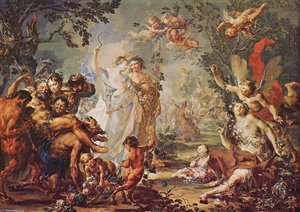
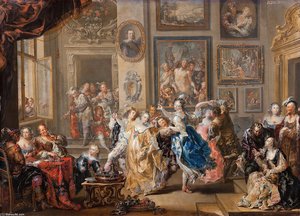
Portrait of Johann Georg Platzer

The 60 Most Famous Johann Georg Platzer Paintings, a Gallery Selection

Updated November 2026 · ranked by our popularity score (searches, visits and orders for each work) · 62 works by Johann Georg Platzer in our catalogue

In short

Of all the originals Johann Georg Platzer left, the most famous is The Assumption of Mary (1735), in the collection of the Staatliche Kunsthalle Karlsruhe, Carlsruhe. Close behind it come Bacchic Revels (1740) and Nymphs and Satyrs Drinking (1740). Our catalog holds 62 works by Johann Georg Platzer; the gallery has kept the 60 the world admires most, each shown with its date, its museum and its story.

1704 – 1761, Eppan an der Weinstraße Baroque Most works: Minneapolis Institute of Art

Johann Georg Platzer's top 10 paintings: the gallery's choice

1
The Assumption of Mary (1735) by Johann Georg Platzer

The Assumption of Mary

1735 · Oil On Canvas · Staatliche Kunsthalle Karlsruhe, Carlsruhe

A vertical composition directs the gaze from the terrestrial realm toward the divine heavens. At the base, apostles gather around an open tomb, their faces marked by awe and devotion. Above them, the Virgin Mary ascends amidst a host of angels, her form enveloped in a blue mantle. The movement is upward and fluid, driven by swirling cloud formations and the sweeping gestures of the figures. Light emanates from the…

2
Bacchic Revels (1740) by Johann Georg Platzer

Bacchic Revels

1740 · Oil · Art Institute of Chicago, Chicago

The air feels thick with the scent of damp earth and the echoes of distant music. In this monochrome world, a celebration unfolds amidst a lush, wooded landscape where the boundaries between the human and the divine blur. Figures move with a fluid, swirling energy, their bodies entwined in a rhythmic chaos that defies stillness. Drapery flows like water around muscular limbs, catching a soft light that descends from the…

3
Nymphs and Satyrs Drinking (1740) by Johann Georg Platzer

Nymphs and Satyrs Drinking

1740 · Oil On Copper · Art Institute of Chicago, Chicago

In this mythological painting, titled Nymphs and Satyrs Drinking, we encounter a scene of classical indulgence. The work was executed by the Austrian artist Johann Georg Platzer, who lived from 1704 to 1761. It is a composition that captures a moment of revelry, focusing on the figures of nymphs and satyrs as they gather together. The piece dates to about 1740, a period when the artist was refining his approach…

4
Artist's atelier with Hungarian patrons (1720) by Johann Georg Platzer

Artist's atelier with Hungarian patrons

1720 · Oil · National Museum in Warsaw, Warsaw

The studio is a cavern of amber and deep shadow. A central golden urn anchors the composition, its metallic sheen catching a light that seems to emerge from a hidden window. Around this pillar of light, the space is crowded with the tools of creation and the weight of history. Marble busts stare from the gloom, their cold surfaces contrasting with the heavy, tactile folds of velvet drapery. The air…

5
Social Scene (1732) by Johann Georg Platzer

Social Scene

In "Social Scene" by Johann Georg Platzer, a monochrome reproduction of an 18th-century work, the eye meets a crowded, theatrical arrangement. The space is shallow, packed with multiple groups of figures gathered in a formal garden. To the left, the scene is anchored by the heavy, geometric stability of classical architecture, featuring an arched doorway and a pedestal supporting a sculptural figure. On the right, the rigid lines of stone…

6
Card Player (Ace is Trump) (1730) by Johann Georg Platzer

Card Player (Ace is Trump)

1730 · Oil

The scene unfolds in Card Player (Ace is Trump), a work that captures a fleeting moment of social tension. Johann Georg Platzer, the hand behind this composition, invites us into a crowded, intimate interior where the stakes of a game hang in the air. This painting, dating to about 1730, finds its creator in the midst of a flourishing career. Born in 1704 in Eppan an der Weinstraße, the artist…

7
Making avances after the meal (1725) by Johann Georg Platzer

Making avances after the meal

1725 · Oil On Canvas

In this 1725 oil on canvas, four figures are positioned around a table in a tightly grouped composition. The scene depicts a moment of leisure following a meal, characterized by the presence of musical instruments and refreshments. A figure holds a wine glass, while others are situated near a violin, a tambourine, and sheet music. The lighting is directional, casting soft shadows across the faces of the subjects and highlighting…

8
The Bath of Diana (1730) by Johann Georg Platzer

The Bath of Diana

1730 · Oil · Minneapolis Institute of Art, Minneapolis

The Bath of Diana is a Rococo-style mythological scene from 1730 that depicts a group of nymphs bathing within a forest setting. The composition is dense and dynamic, utilizing a pyramidal arrangement of figures that leads the eye across a landscape of rocky outcrops and verdant foliage. The subject matter portrays Diana and her nymphs in a moment of leisure, evoking themes of purity, nature, and classical mythology.

9
Latona Turning the Lycian Peasants into Frogs (1730) by Johann Georg Platzer

Latona Turning the Lycian Peasants into Frogs

1730 · Minneapolis Institute of Art, Minneapolis

This Rococo-style oil painting depicts a dynamic mythological scene where Latona transforms Lycian peasants into frogs. The composition is complex and asymmetrical, utilizing a swirling arrangement of figures that directs the eye from the left foreground toward a luminous central figure on the right. The subject matter is evidenced by the transition of human limbs into amphibian forms and the presence of actual frogs in the foreground water.

The Johann Georg Platzer selection continues, 11 to 60

11David Meeting Abigail (1727) by Johann Georg PlatzerDavid Meeting Abigail1727 · National Gallery Prague 12Garden-party (1729) by Johann Georg PlatzerGarden-party1729 13Rebecca at the Fountain (1735) by Johann Georg PlatzerRebecca at the Fountain1735 14Samson's Revenge (1735) by Johann Georg PlatzerSamson's Revenge1735 15The Rape of the Sabine women (1744) by Johann Georg PlatzerThe Rape of the Sabine women1744 · Moravian Gallery in Brno 16The Marriage Feast at Cana (1743) by Johann Georg PlatzerThe Marriage Feast at Cana1743 17Ill-matched couple. (1737) by Johann Georg PlatzerIll-matched couple.1737 · National Museum in Warsaw 18Merry company in the park. (1740) by Johann Georg PlatzerMerry company in the park.1740 · National Museum in Warsaw 19Merry Company on a Patio (1735) by Johann Georg PlatzerMerry Company on a Patio1735 · Gemäldegalerie 20The abduction of Helena (1750) by Johann Georg PlatzerThe abduction of Helena1750 · Moravian Gallery in Brno 21sketch for allegoric plafond-picture (1750) by Johann Georg Platzersketch for allegoric plafond-picture1750 22Antony And Cleopatra At The Battle Of Actium by Johann Georg PlatzerAntony And Cleopatra At The Battle Of Actium 23The Death Of Cleopatra by Johann Georg PlatzerThe Death Of Cleopatra 24Das Atelier Des Malers by Johann Georg PlatzerDas Atelier Des MalersCleveland Museum of Art 25Allegorie Der Vier Jahreszeiten by Johann Georg PlatzerAllegorie Der Vier Jahreszeiten 26Dancing Scene With Palace Interior by Johann Georg PlatzerDancing Scene With Palace Interior 27Rescue of Alexander the Great by Johann Georg PlatzerRescue of Alexander the GreatStaatliche Kunsthalle Karlsruhe 28Alexander the Great Cuts the Gordian Knot by Johann Georg PlatzerAlexander the Great Cuts the Gordian KnotStaatliche Kunsthalle Karlsruhe 29Musical Company in the Salon by Johann Georg PlatzerMusical Company in the SalonNational Gallery Prague 30Concerto by Johann Georg PlatzerConcerto 31Sommer by Johann Georg PlatzerSommerMinneapolis Institute of Art 32Winter by Johann Georg PlatzerWinter 33Autumn by Johann Georg PlatzerAutumn 34Orientalisches Fest by Johann Georg PlatzerOrientalisches Fest 35An Allegory Of Misrule by Johann Georg PlatzerAn Allegory Of MisruleBirmingham Museum and Art Gallery 36Allegory Of Five Senses by Johann Georg PlatzerAllegory Of Five Senses 37The Judgement Of Paris by Johann Georg PlatzerThe Judgement Of Paris 38Salome Dancing Before Herod by Johann Georg PlatzerSalome Dancing Before Herod 39The Concert by Johann Georg PlatzerThe Concert 40Winter by Johann Georg PlatzerWinterMinneapolis Institute of Art 41The Abduction Of Helen by Johann Georg PlatzerThe Abduction Of HelenWallace Collection 42Kinder Beim Unterricht Im Freien by Johann Georg PlatzerKinder Beim Unterricht Im Freien 43Das Gastmal Der Kleopatra by Johann Georg PlatzerDas Gastmal Der Kleopatra 44The Concert by Johann Georg PlatzerThe ConcertNational Museum in Warsaw 45Saint John The Baptist Preaching In The Wilderness by Johann Georg PlatzerSaint John The Baptist Preaching In The Wilderness 46Alexander And The Queen Of The Amazons, Thalestris by Johann Georg PlatzerAlexander And The Queen Of The Amazons, Thalestris 47Frühling by Johann Georg PlatzerFrühlingMinneapolis Institute of Art 48Orientalisches Fest by Johann Georg PlatzerOrientalisches Fest 49Alexander And The Family Of Darius by Johann Georg PlatzerAlexander And The Family Of Darius 50Kinder Beim Unterricht Im Freien by Johann Georg PlatzerKinder Beim Unterricht Im Freien 51Herbst by Johann Georg PlatzerHerbstMinneapolis Institute of Art 52Die Hochzeit Zu Kana by Johann Georg PlatzerDie Hochzeit Zu Kana 53St. Michael In Eppan With Croesus And Solon by Johann Georg PlatzerSt. Michael In Eppan With Croesus And Solon 54Fountain Scene In Front Of A Palace by Johann Georg PlatzerFountain Scene In Front Of A Palace 55Marriage Of Aphrodite And Hephaestus by Johann Georg PlatzerMarriage Of Aphrodite And Hephaestus 56Das Gastmal Der Kleopatra by Johann Georg PlatzerDas Gastmal Der Kleopatra 57Das Gastmal Der Kleopatra by Johann Georg PlatzerDas Gastmal Der Kleopatra 58Summer by Johann Georg PlatzerSummer 59Spring by Johann Georg PlatzerSpring 60Miraculous Catch of Fish by Johann Georg PlatzerMiraculous Catch of FishResidenzgalerie

Johann Georg Platzer's famous paintings, period by period

The subjects that held Johann Georg Platzer's eye

The four subjects that come back most often in these originals, each with its finest example.

The museums that keep Johann Georg Platzer's originals

The 8 museums that hold the most of the paintings on this page.

Museum City Works by Johann Georg Platzer Paintings from this list
Minneapolis Institute of Art, MinneapolisMinneapolis Institute of Art Minneapolis 6 The Bath of Diana, Latona Turning the Lycian Peasants into Frogs, Sommer
National Museum in Warsaw, WarsawNational Museum in Warsaw Warsaw 4 Artist's atelier with Hungarian patrons, Ill-matched couple., Merry company in the park.
Staatliche Kunsthalle Karlsruhe, CarlsruheStaatliche Kunsthalle Karlsruhe Carlsruhe 3 The Assumption of Mary, Rescue of Alexander the Great, Alexander the Great Cuts the Gordian Knot
Art Institute of Chicago, ChicagoArt Institute of Chicago Chicago 2 Bacchic Revels, Nymphs and Satyrs Drinking
National Gallery Prague, PragueNational Gallery Prague Prague 2 David Meeting Abigail, Musical Company in the Salon
Moravian Gallery in Brno, BrnoMoravian Gallery in Brno Brno 2 The Rape of the Sabine women, The abduction of Helena
Bavarian State Painting Collections, MunichBavarian State Painting Collections Munich 1 Social Scene
Art Gallery of New South Wales, SydneyArt Gallery of New South Wales Sydney 1 The Sculptor's Studio

Johann Georg Platzer decade by decade: the original that defines each

Works per decade

Pick a decade to see the original that defines it.

Collectors' questions about Johann Georg Platzer's paintings

Which work is Johann Georg Platzer most famous for?Reveal the answer

The Assumption of Mary (1735), Staatliche Kunsthalle Karlsruhe, Carlsruhe. Bacchic Revels (1740) and Nymphs and Satyrs Drinking (1740) come next.

What age was Johann Georg Platzer when The Assumption of Mary was made?Reveal the answer

31 years old: The Assumption of Mary dates from 1735, and Johann Georg Platzer was born in 1704.

What are the ten most famous Johann Georg Platzer paintings?Reveal the answer

The Assumption of Mary, Bacchic Revels, Nymphs and Satyrs Drinking, Artist's atelier with Hungarian patrons, Social Scene, Card Player (Ace is Trump), Making avances after the meal, The Bath of Diana, Latona Turning the Lycian Peasants into Frogs and The Sculptor's Studio. The ranking above gives each one's year and museum.

How many paintings did Johann Georg Platzer leave?Reveal the answer

Our catalog holds 62 works by Johann Georg Platzer, dated from 1720 to 1750.

In which museums do Johann Georg Platzer's masterpieces hang?Reveal the answer

Mostly in Minneapolis Institute of Art (Minneapolis), National Museum in Warsaw (Warsaw) and Staatliche Kunsthalle Karlsruhe (Carlsruhe). The museum table above lists them all.

In which years did Johann Georg Platzer paint the most famous works?Reveal the answer

In 1730s: 10 of the 60 works on this page were made then, The Assumption of Mary among them.

What are the first and the last famous originals of Johann Georg Platzer?Reveal the answer

On this page, the earliest is Artist's atelier with Hungarian patrons (1720) and the latest The abduction of Helena (1750).

Which subjects did Johann Georg Platzer choose most often?Reveal the answer

People (18), Drapery (12) and Figures (11), across the 60 works on this page.

Which technique did Johann Georg Platzer use most?Reveal the answer

Oil, for 15 of the 60 works on this page.

To which art movement does Johann Georg Platzer belong?Reveal the answer

Baroque and Rococo, judging by the originals on this page.

Which Johann Georg Platzer works hang at the Minneapolis Institute of Art?Reveal the answer

The Bath of Diana, Latona Turning the Lycian Peasants into Frogs and Sommer: the Minneapolis Institute of Art, Minneapolis holds 6 of the works on this page.

Johann Georg Platzer: life and work

A Life Immersed in Rococo Splendor

Johann Georg Platzer, born in the idyllic Tyrolean village of Eppan in 1704, emerged as a pivotal figure within Austrian Rococo painting. His life unfolded against a backdrop of evolving artistic tastes and aristocratic patronage, shaping him into a master of capturing both the opulence and the intimate moments of 18th-century society. Coming from a family deeply rooted in artistic tradition—his uncle, Jakob Christoff Platzer, served as a court painter—the young Johann Georg was immersed in a world where brushstrokes and pigments were not merely tools but conduits to beauty and status. His initial training within the family workshop provided a solid foundation, which he later expanded through experience and study, ultimately defining his unique artistic voice. While specific influences remain elusive, Platzer’s work reveals an understanding of Venetian color palettes and compositional techniques, blended with stylistic trends prevalent in Southern Germany during the Rococo period. He wasn't simply replicating styles; he was synthesizing them into something distinctly his own—a vibrant expression of Austrian sensibilities.

From Courtly Commissions to Mythological Narratives

Platzer’s artistic journey began with an apprenticeship under his uncle in Passau, a formative experience that exposed him to the demands and expectations of courtly patronage. This early exposure profoundly influenced both his subject matter and style. He quickly gained recognition for his ability to depict scenes brimming with detail, elegance, and a palpable sense of aristocratic life. However, Platzer’s talent wasn't confined to portraying the lives of the nobility. He also excelled in bringing classical mythology and historical events to life on canvas. Works like *Das Gastmal Der Kleopatra* (Cleopatra’s Banquet) demonstrate his flair for dramatic storytelling, while his depictions of mythological narratives—such as the Marriage of Aphrodite and Hephaestus—reveal a mastery of allegorical representation. His frequent exploration of themes such as the Four Seasons further showcases his versatility and intellectual depth. Beyond grand historical or mythical scenes, Platzer also became known for his “conversation pieces”—lively portrayals of aristocratic gatherings and social interactions that offered intimate glimpses into the daily lives of the elite.

A Master of Detail and Luminous Color

The hallmarks of Platzer’s style are immediately recognizable: meticulous composition, a vibrant color palette, dynamic figures, and a strong narrative focus. He possessed an extraordinary ability to craft scenes with intricate detail, particularly in architectural settings and costume design. Every element within his paintings—from the folds of fabric to the ornamentation of buildings—is rendered with painstaking precision. This attention to detail isn’t merely decorative; it serves to immerse the viewer in the world he creates, making each scene feel remarkably real and tangible. Equally important is Platzer's masterful use of color. He employed a rich and luminous palette typical of the Rococo aesthetic, favoring pastel shades, delicate highlights, and subtle gradations that create an atmosphere of elegance and refinement. His figures are rarely static; they are depicted in graceful poses, conveying movement, emotion, and a sense of vitality. This dynamic quality further enhances the narrative power of his works, drawing the viewer into the unfolding drama or intimate moment.

Legacy and Lasting Influence

Throughout his career, Platzer created a substantial body of work that continues to captivate audiences today. Paintings such as *Fountain Scene in front of a Palace* and *Dancing Scene with Palace Interior* exemplify his ability to capture the opulence and grace of aristocratic life, while *Allegory of the Four Seasons* demonstrates his skill in allegorical representation. The Joanneum Alte Galerie in Graz, Austria, holds the largest single collection of Platzer’s paintings, serving as an invaluable resource for scholars and art enthusiasts alike. Johann Georg Platzer represents a significant figure within Austrian Rococo painting. His work provides valuable insight into the artistic tastes and social customs of 18th-century aristocratic society. While perhaps not as internationally renowned as some of his contemporaries, Platzer’s contributions to regional art history are substantial. He helped establish a distinct stylistic identity within Austrian painting during this period, blending Italianate influences with local traditions. He continued working in Eppan until his death in 1761, leaving behind a legacy of vibrant and meticulously crafted paintings that continue to resonate with viewers centuries later—a testament to the enduring power of Rococo splendor.